

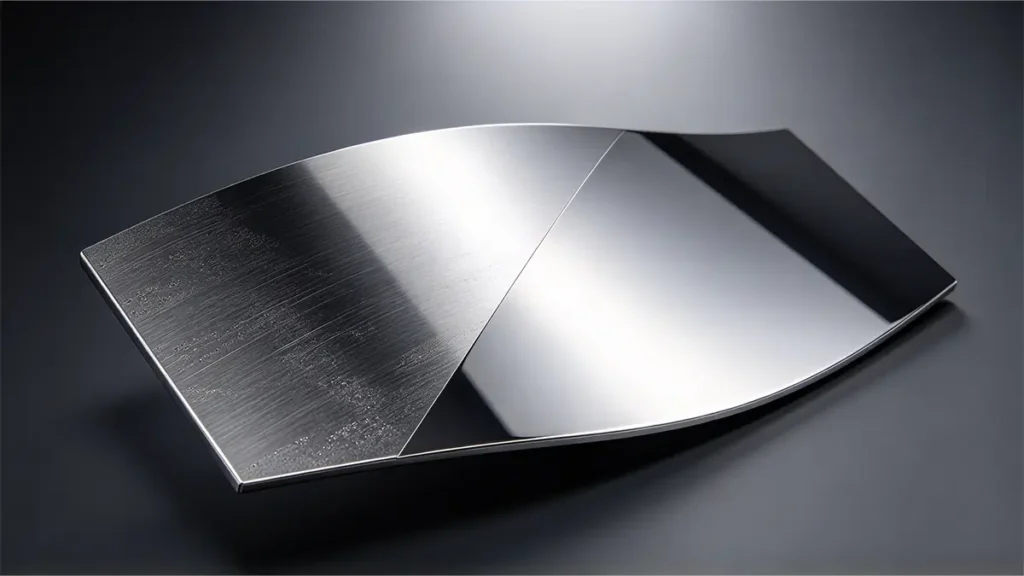
Metal polishing removes fine material from a component surface to eliminate irregularities. The process uses fine abrasives to strike the surface to produce a strong, coherent reflection. Metal polishing is not just a straightforward process. It involves a series of parameters that experienced personnel must control. The material removal process is iterative, and it depends on the level of fineness the manufacturer intends to achieve.
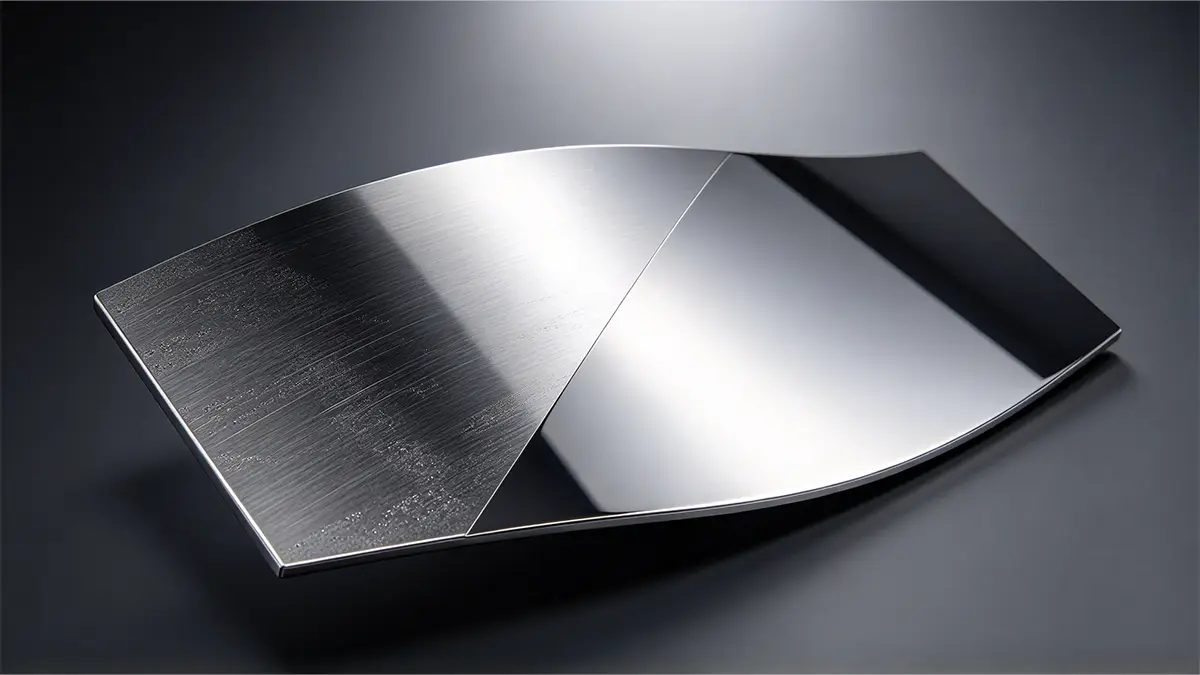
Consider, for instance, a stainless steel automotive exhaust. When you visit a fabrication workshop, the surface may appear freshly machined or brushed, with visible tool marks. However, after polishing, the surface becomes bright and reflective, like a mirror.
This discussion explains how the metal polishing process achieves a mirror finish, including the steps followed, the choice of abrasives, and surface preparation.
What Is a Mirror Finish on a Metal Part?
A mirror finish is a highly reflective metal surface. You can achieve it mechanically or electrochemically. Polishing improves visual reflectivity and surface texture by reducing CNC machining marks, grinding lines, weld discoloration, and oxide layers. A polished surface has directional defects small enough to reflect incident light. Norton describes a mirror finish for stainless steel as a highly polished, bright, and reflective surface. According to Norton, stainless steel is so smooth that its Ra is below 0.2 µm.
The Ra values do not entirely define visual mirror quality. For instance, two exhaust pipes can have the same Ra values yet look different. Other factors determine component appearance, such as geometric distortion, waviness, embedded particles, and directional scratches.
How Does Metal Polishing Produce a Mirror Finish?
A mirror finish is basically achieved by progressive abrasive removal. First, the coarse abrasive process removes large surface defects from the component surface. A finer abrasive process then removes scratches caused by the coarse abrasion. This material-removal process continues iteratively until all surface defects are sufficiently removed. At this point, the surface is smoother and therefore more reflective. The following summarizes the events leading to a mirror finish.
Machined surface → coarse abrasion → intermediate refinement → fine abrasion → buffing/polishing compound → cleaning → inspection
| Stadium | Hoofddoelstelling | Typical abrasive scale |
|---|---|---|
| Voorbereiding van het oppervlak | Remove contamination and major defects | - |
| Coarse grinding | Level machining marks, welds, deep scratches | ~36–120 grit |
| Intermediate finishing | Remove coarse abrasive scratches | ~120–320+ grit |
| Fine finishing | Refine remaining scratch pattern | ~320–1000+ grit |
| Micro finishing | Produce a polish-ready surface | Micron-grade abrasives |
| Final polishing | Increase reflectivity and remove fine defects | Fine compounds / micron abrasives |
| Polijsten | Produce high-gloss appearance | Fine polishing compound |
What Surface Preparation Is Required Before Metal Polishing?
The effectiveness of metal polishing depends on the surface preparedness. The first step in polishing a CNC-machined or formed component is to identify any defects. Proper inspection can identify tool marks, deep scratches, possible oxidation, and dimensional features that prevent material removal. This inspection is essential because it helps manufacturers maintain CNC part precision. Once inspection and coarse polishing are done, burrs should be removed before executing fine polishing. Removing burrs is a form of surface preparation for subsequent polishing stages. Burrs create defects that may be difficult to remove later.
Some defects, such as deep scratches and welds, require an aggressive abrasive approach to eliminate them effectively. However, the nature of abrasion must be effectively monitored to avoid possible side effects. For instance, if a manufacturing team aims for a stainless steel mirror finish, Norton’s guidance suggests using 80-grit abrasion. Once other surface-preparation requirements are met, engineers must achieve a smooth surface before applying finer abrasive polishing. It is not advisable to advance to fine abrasion when the surface still has deep scratches.
What Is the Typical Metal Polishing Process?
A typical mechanical abrasion process for CNC-machined parts starts from coarse polishing to fine polishing.
- Oppervlaktevoorbereiding
Voordat met het polijsten wordt begonnen, wordt het oppervlak eerst voorbereid. Dit omvat het reinigen om stof, olie, vet, vingerafdrukken enz. te verwijderen. Het reinigen maakt deel uit van de oppervlaktevoorbereiding en vindt bij elke polijststap plaats.
- Grove schuring
Grof schuren heeft tot doel de Ra-waarden te verlagen van maximaal 3,2 µm tot minimaal 0,8 µm. Bij grof schuren wordt korrelgrootte 120-180 gebruikt op toegankelijke buitenoppervlakken om bewerkingssporen te verwijderen en het oppervlak te egaliseren. De materiaalafname in deze fase kan aanzienlijk zijn, vaak rond de 20-50 µm per oppervlak, wat van belang is bij onderdelen met nauwe toleranties.
- Stap 3: Matige schuring
Dit is een materiaalafname met korrelgrootte 240 tot 320. Deze bewerking richt zich op de krassen uit fase één en zorgt voor een gelijkmatiger oppervlaktestructuur. De Ra-waarden zijn in deze fase aanzienlijk laag, ongeveer 0,5 µm. Na deze fase ziet het oppervlak er duidelijk gladder uit. Onder schuin invallend licht is er echter nog steeds een zichtbare structuur waarneembaar.
- Stap 4: Fijn schuren
Deze polijstfase met korrelgrootte 400-600 levert een satijn- of voorpolijstafwerking op. De Ra-waarden die in deze fase worden behaald, liggen tussen 0,2 en 0,4 µm. Op roestvrij staal levert deze fase een typische satijn- of geborstelde metalen afwerking op, die in veel industriële toepassingen als eindafwerking wordt voorgeschreven.
- Stap 5: Microafwerking en polijsten
Om de satijnen afwerking uit stap 4 om te zetten in een echte spiegelafwerking, moet het onderdeel worden gepolijst. In deze fase wordt gebruikgemaakt van zachte doeken of katoenen schijven in combinatie met ultrafijne polijstmiddelen (zoals rouge of aluminiumoxidepasta’s). De polijstschijf draait op hoge snelheid, waardoor lichte wrijving en warmte ontstaan die de microscopisch kleine oneffenheden, achtergelaten door eerdere schuurmiddelen, doen smelten en uitsmeren. Door deze laatste egalisatie daalt de Ra-waarde tot ruim onder 0,2 µm, wat resulteert in een sterk reflecterend, optisch helder en onberispelijk spiegeloppervlak.
- Final Cleaning and Inspection
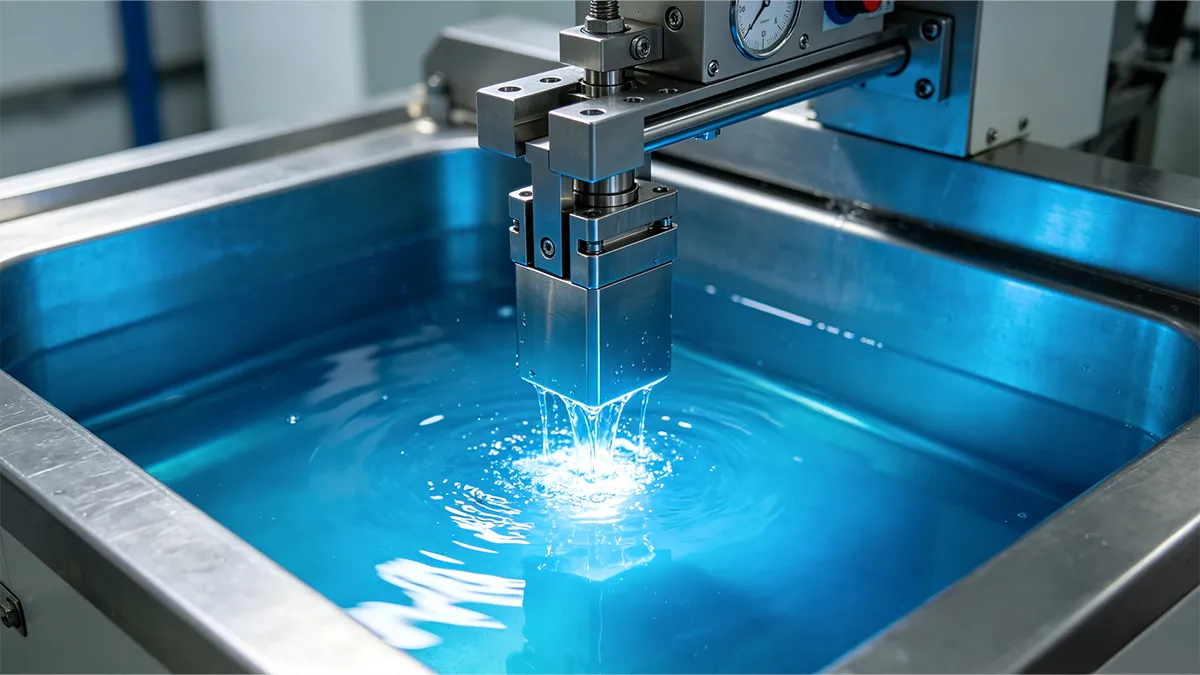
After fine abrasion, clean parts to remove residual compounds. If not removed, these compounds can interfere with visual or roughness evaluation. Ultrasonic cleaning is often used when blind holes or recessed features are difficult to wipe clean. Mirror polishing is an iterative process. For instance, before undertaking fine abrasion, medium abrasion may be repeated until Ra is significantly reduced. Final inspection ensures the achieved Ra is acceptable. This is achieved using a surface profilometer, visual inspection under appropriate lighting for polishing defects, and dimensional checks on any close-tolerance features the metal polishing process may have affected.
When Should Mechanical Polishing Be Used Instead of Electropolishing?
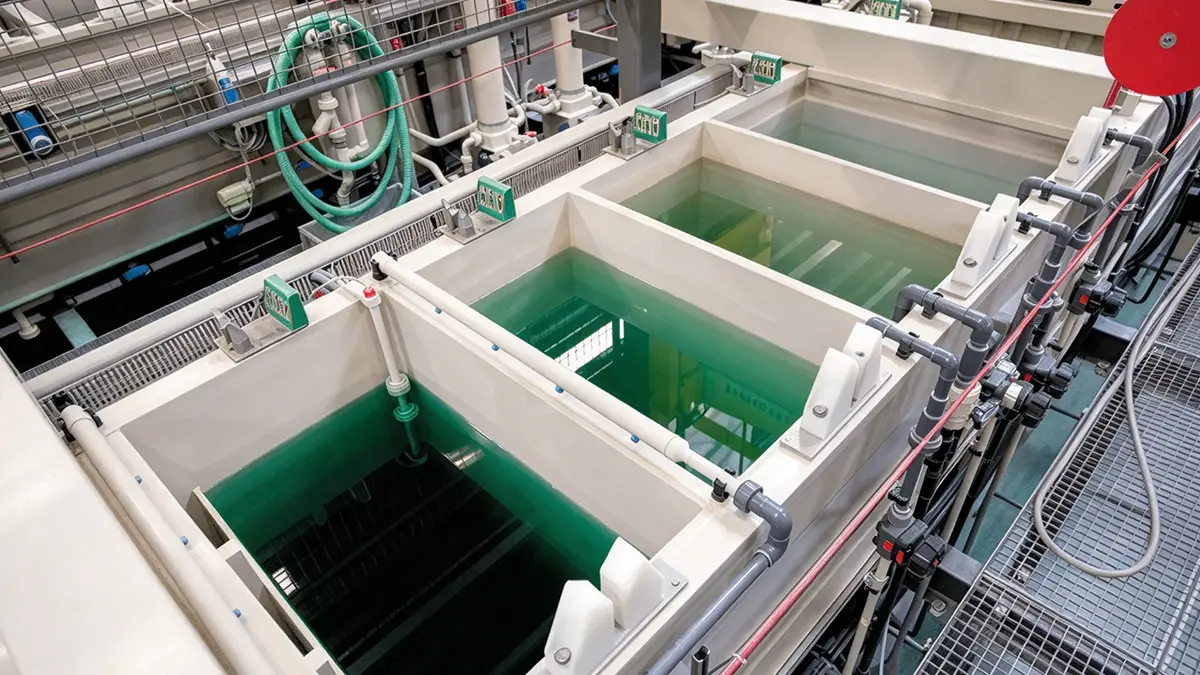
In many cases, engineers struggle to choose between mechanical polishing and electropolishing. This is true in numerous applications, such as stainless steel semiconductor process equipment or pharmaceutical vessels. Mechanical polishing is not the same as electropolishing. The two processes are not competing. They address different problems at different stages of the finishing workflow. Electropolishing is an electrochemical dissolution process. The workpiece is submerged in an acidic electrolyte (typically a phosphoric/sulfuric acid blend) and connected as the anode in a DC circuit, aligning with standard passivation and electropolishing specifications such as ASTM B912 [1]. Surface material dissolves preferentially at asperities (higher current density at peaks), levelling the surface at the atomic scale. No abrasive contact occurs.
The following table summarises instances where engineers should choose between mechanical polishing and electropolishing.
Budget is constrained and corrosion risk is low
- Surface has significant damage: deep pits, weld marks, scratches, mill scale
- Application is non-critical: dry product vessels, structural components
- Acting as a pre-treatment step before electropolishing
- On-site field repair is required with portable equipment
- Target finish is #4 to #7 for non-sanitary applications
When to use electropolishing
Particle and outgassing requirements preclude mechanical finishing alone
- Biopharmaceutical, semiconductor chemical delivery, or UHP gas system
- Application demands ASME BPE SF4–SF6 compliance
- Corrosion resistance and validated cleanability are critical
- Regulatory documentation requires Cr:Fe surface ratio verification
- Complex internal geometry (tanks, tubing bores) requires uniform finish
What Are the Most Common Metal Polishing Defects?
Defects are common in metal polishing, even with the best efforts to achieve a flawless surface. Understanding these defects is important because it forms the basis for preventing them.
Pitting
These are small, localized areas of corrosion or damage on the metal surface. It results from contamination during polishing or improper techniques, such as using the wrong abrasives. Pitting is a dangerous structural strength defect, as it can affect the structural integrity of the metal and accelerate localized failure, a mechanism heavily monitored in aerospace corrosion control guidelines such as FAA AC 43-4B [2].
Uneven Finishes
Sometimes, certain areas of a metal surface may be polished more than others, resulting in uneven finishing. This results from inconsistent pressure during polishing, variations in abrasive quality, or issues with the polishing machine itself. An uneven finish affects the component’s appearance and functionality.
Micro-Scratches
Micro-scratches are small scratches that can form on the surface during polishing. They are often invisible to the naked eye. Micro-scratches typically result from abrasive particles, worn-out polishing pads, or improper machine settings. Micro-scratches can lead to bigger problems. They can create weak spots in the metal, leading to potential fractures, corrosion, or increased wear and tear, as surface irregularities are known stress concentrators that significantly reduce fatigue life according to SAE surface texture standards [3].
Conclusie
Ultimately, creating a flawless mirror finish requires strictly following the progressive abrasive sequence to level surface peaks without altering the component’s critical dimensions.
Referenties
[1] ASTM International. (2018). ASTM B912-02(2018) Standaardspecificatie voor het passiveren van roestvrij staal door middel van elektrolytisch polijsten. ASTM Standards Database. Retrieved from https://www.astm.org/b0912-02r18.html
[2] Federal Aviation Administration (FAA). (2018). Advisory Circular 43-4B: Corrosion Control for Aircraft. FAA-documentenbibliotheek. Ontleend aan https://www.faa.gov/documentLibrary/media/Advisory_Circular/AC_43-4B.pdf
[3] SAE International. (n.d.). J448_196306: Surface Texture. SAE Standards. Retrieved from https://www.sae.org/standards/content/j448_196306/



 NL
NL  EN
EN  ES
ES  FR
FR  DE
DE  IT
IT  PT
PT  PL
PL  AR
AR  JA
JA  KO
KO  ZH
ZH