


で CNC加工切削油剤を正しく選択することは、機械加工の効率、品質、安全性を確保する上で非常に重要です。切削油剤は、「クーラント」、「金属加工油剤」、または「加工油剤」とも呼ばれ、切削部分を潤滑・冷却するだけでなく、切屑を除去し、機械の過熱や摩耗を防ぎます。
この記事では、クーラントの基本的な分類と特性について詳しく説明し、加工性能の最適化、工具寿命の延長、加工コストの削減を実現するために、さまざまな材料の種類と加工工程に基づいて最適な切削油を選択する方法を探ります。 加工費.CNC加工に情熱を注ぐ方々のお役に立てれば幸いです。
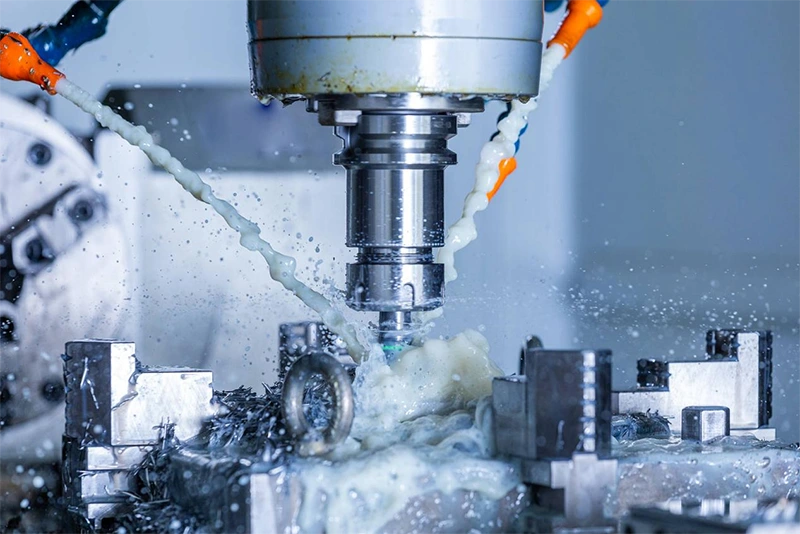
切削油剤の基本分類
切削油剤の主流には主に以下の種類があり、それぞれの特徴を理解した上で使用することが肝要である。
(1) エマルジョン(水性切削油剤)
水、乳化油、各種添加剤を主成分とする。このクーラントの長所は、低コストで冷却性能が高いことであり、特に大きな放熱を必要とする機械加工に適している。しかし、細菌が繁殖しやすい、腐食性が高いなどの欠点もあり、使用時には厳重な管理と定期的なメンテナンスが必要となる。
(2) 完全合成フルード
石油系油分を含まない切削液で、主にさまざまな化学添加剤で構成されています。その主な利点としては、優れた冷却性能が挙げられます(多くの場合、ASTM D2881などの業界規格に分類されます [1])に加え、潤滑性能や細菌の増殖に対する耐性にも優れているため、極めて清浄な加工環境が求められる用途で広く利用されています。しかし、完全合成油は比較的高価であり、一部の化学成分が機械を腐食させる恐れがあります。.
(3) 半合成流体
エマルジョンと完全合成油の中間に位置し、石油オイルベースと水を一定の割合で含む。このクーラントは、エマルジョンの冷却効果と完全合成油の潤滑性を併せ持ち、両者の長所をバランスさせようとしている。しかしながら、その生体安定性と腐食性には注意を払わなければならない。これは、特定の加工環境での適用性に影響を与える可能性がある。
(4) ストレート・カッティング・オイル(油性の切削油剤)
主に鉱物油または植物油を原料としており、水分を一切含まないため、優れた潤滑性を発揮し、被加工物の 腐食と錆. 。このため、高い潤滑性を必要とする加工に特に適しています。しかし、直切削油の熱容量は比較的低く、その冷却効果は水性切削液ほど良くないため、高速加工や高温加工においては制約となる可能性があります。.
(5) 可溶性オイル:
これは、カテゴリー(1)で説明したエマルジョンを形成する、濃縮された油性前駆体です。通常、鉱物油の含有量が高く(多くの場合50~80%)、高負荷の機械加工ニーズに対応する優れた潤滑性を発揮します。 ただし、可溶性油を使用する際は、腐食や細菌の繁殖を防ぐために、希釈比率と水質を厳格に管理し、加工プロセスの安全性と効率を確保する必要があります。.
さまざまな加工油剤の特性を明確に理解した上で、さまざまな材料や作業に応じて適切な金属加工油剤を選択し、加工性能を最適化することができます。
さまざまな材料に適した切削油
適切なクーラントを選択することは、効率的で高品質な加工を保証するために非常に重要です。
(1) アルミニウムなどの軽金属
この材料は柔らかく粘着性があり、切削工具に付着しやすい(ビルトアップエッジの原因となる)ため、冷却能力が高く、粘度の低い水性切削液の使用をお勧めします。この切削液は、工具への切りくずの付着を効果的に防止し、加工時の摩擦を低減して過熱を防ぎ、滑らかな表面仕上げを実現します。.
(2) ステンレス鋼などの難削材
ステンレス鋼は強度と靭性が高いため、工具の著しい摩耗を引き起こす可能性があることから、極圧(EP)添加剤を含む切削液の使用が不可欠です。これらの添加剤は、工具と被削材の接触面に保護膜を形成し、摩耗や溶着を低減するとともに、切削効率を向上させます。.
(3) 銅とその合金
加工物の表面変色や腐食を防ぐ切削油を使用すること。銅は比較的柔らかく、加工中に付着しやすい。硫黄の含有量が少ないか全くないクーラントを選ぶことで、銅本来の色と光沢を保ちながら、加工表面の黒い斑点やその他の酸化反応を避けることができる。
(4) チタン合金材料
チタン合金は高強度で熱伝導率が低いため、高温合金用に特別に設計された切削油剤を使用することが推奨され、一般的に効率的な潤滑と冷却成分を含んでいます。適切なクーラントは、良好な潤滑を提供し、摩擦熱を低減し、化学反応や付着を効果的に防止し、工具寿命を延ばします。
(5) ニッケル基合金、コバルト基合金などの高温合金
これらの材料は、耐熱性があるため、切断時に多量の熱を発生させ、 高硬度. これらの材料を加工する際は、不活性な硫黄またはリン化合物を配合した極圧切削液の使用を強く推奨します。これらの化合物は高温下で保護膜を形成し、摩擦や摩耗を低減します。さらに、優れた冷却性能が求められ、多くの場合、70~100 barで動作する高圧冷却液(HPC)システムの導入が必要となります。 [2] 熱蒸気バリアを克服するために。.
各素材には固有の物理的・化学的特性があり、最適なクーラントを選択することで、機械や工具の寿命を最大限に延ばすと同時に、加工効率と品質を向上させることができます。
さまざまな作業に適した切削油剤
機械加工の種類によっても、冷却、潤滑、切り屑処理、防錆など、金属加工油剤の選択に特有の要件があります。
(1) ターン操作
多くの場合、連続的な材料除去を伴うため、工具と加工物を保護するために、優れた冷却性能と潤滑性能を持つ切削油剤が必要となります。鋼や硬質合金の旋削加工では、極圧添加剤入りの油性加工油を選択することで、さらなる潤滑を提供し、発熱と摩耗を抑えることができます。アルミニウムやその他の非鉄金属の加工では、工具への材料の付着を防ぐため、切削油剤の冷却能力が重視されます。
(2) フライス作業
より複雑な工具経路や多点切削を伴うため、切削液には優れた冷却性能と切りくず除去性能が求められます。 ステンレス鋼や耐熱合金など、加工が困難な材料を加工する場合、高性能な完全合成または半合成の切削液を使用することで、工具の摩耗やワークピースの著しい熱変形を効果的に低減できます。これらは切削部の温度を低く抑え、加工精度を向上させます。.
(3) 掘削作業
深穴加工では、穴の底まで切削液を浸透させ、潤滑と冷却を行う必要があります。 効率的な切削液は、切りくずを迅速に除去し、目詰まりや過熱を防ぎ、穴壁の損傷や寸法誤差を回避するのに役立ちます。深穴加工には、低粘度で冷却性能の高い水性切削液の使用が特に適しています。これは、これらの切削液が小さな穴や狭い空間にも容易に浸透できるためです。.
(4) 研磨作業
加工時に多量の熱が発生するため、被削材の過熱や熱による損傷を防ぐには、優れた冷却性能を持つ切削液が必要です。水性切削液は、熱を素早く吸収・伝導し、研削部の温度を低く保つことができるため、通常はこれが好まれます。 さらに、微細な切屑を洗い流し、砥石の目詰まりを防ぎ、表面仕上げ品質を向上させるためには、高い洗浄力(洗浄能力)が不可欠です。.
まとめると、適切なクーラントを選択することは、加工効率と品質を向上させるだけでなく、機械や工具の寿命を延ばすことにもつながります。これにより、作業の安全性が確保され、経済的利益が最大化されます。
切削液使用上の注意
切削油剤を選択する際には、その性能、安全性、環境への影響を総合的に考慮し、費用対効果を最大化する必要がある。
(1) 環境保護
環境保護はますます重視されており、環境にやさしい切削油剤は重要なテーマとなっている。環境に優しい切削油剤は、主に生分解性材料から作られており、環境汚染を低減する。さらに、これらの切削油剤は通常、有害な化学物質を含まないため、廃液処理の難易度とコストを低減することができる。環境に優しい切削油剤を使用することで、企業はますます厳しくなる環境規制を遵守し、環境に優しいブランドイメージを高めることができる。
(2) 安全性
安全は職場環境において不可欠な要素であり、特に切削液が使用される場合にはなおさらです。 従来の切削液には、硫酸塩、塩素、重金属などの有害な化学物質が含まれている場合があり、これらは皮膚の炎症や呼吸器系の問題、さらにはより深刻な健康被害を引き起こす可能性があります。したがって、低毒性または無毒の切削液を選択し、空気中のミスト濃度をNIOSHの基準値である0.4 mg/m³を厳格に下回るように維持することが重要です。 [3] これは、作業員の健康を守り、健康リスクを低減し、作業員にとってより安全な職場環境を提供するための鍵となります。.
(3) 経済
経済的な観点から言えば、適切な切削液を選ぶことは、生産コストを管理する上で極めて重要です。環境に優しく高性能な切削液は、初期購入コストが高くなる場合があります。しかし、長期的には、工具の摩耗を軽減し、工作機械の効率を向上させ、廃棄物処理費用を削減することで、総運営コストを大幅に抑えることができます。 さらに、高品質な切削液を使用することで、設備の寿命を延ばし、生産中断を減らし、生産コストをさらに最適化することができます。.
概要
この記事では、さまざまな材料や加工作業に対するクーラントの種類とその選択基準について包括的に説明します。エマルジョンから完全合成流体まで、それぞれの切削油剤には独自の利点と適用シーンがあり、環境、安全性、経済性を考慮しながら、特定の材料と加工ニーズに最適な冷却、潤滑、防錆効果を提供します。
適切な切削液を厳選し、適切に使用するを通じて、以下のサービスを提供する施設は カスタムCNC加工サービス これにより、加工効率と製品品質を向上させ、安全な作業環境を確保し、生産コストを最適化することで、効率的かつ経済的で持続可能な生産を実現することができます。.
参考
[1] ASTM International. (2019). ASTM D2881-19 金属加工用流体および関連材料の標準分類。. https://doi.org/10.1520/D2881-19
[2] Raykar, S. J.、および D’Addona, D. M. (2019)。. インコネル718の高圧冷却液補助旋削における工具温度分布の熱モデル。『Materials』, 12(3), 408. https://doi.org/10.3390/ma12030408
[3] 国立労働安全衛生研究所(NIOSH)。(1998年)。. 推奨基準の策定基準:金属加工液への職業的曝露。米国疾病予防管理センター(CDC)。. https://stacks.cdc.gov/view/cdc/5175




 JA
JA  EN
EN  ES
ES  FR
FR  DE
DE  IT
IT  PT
PT  NL
NL  PL
PL  AR
AR  KO
KO  ZH
ZH