


In CNC-bewerkingDe juiste keuze van een snijvloeistof is van cruciaal belang om de efficiëntie, kwaliteit en veiligheid van verspanende bewerkingen te garanderen. Snijvloeistoffen, ook bekend als "koelvloeistof", "metaalbewerkingsvloeistof" of "bewerkingsvloeistof", smeren en koelen niet alleen het snijgedeelte, maar helpen ook spanen te verwijderen, waardoor oververhitting en slijtage van de machine voorkomen worden.
In dit artikel worden de basisclassificaties en eigenschappen van koelvloeistof beschreven en wordt uitgelegd hoe de meest geschikte snijvloeistof kan worden gekozen op basis van verschillende materiaalsoorten en bewerkingen om de bewerkingsprestaties te optimaliseren, de levensduur van het gereedschap te verlengen en de kosten te verlagen. bewerkingskosten. We hopen dat dit degenen helpt die gepassioneerd zijn over CNC-verspaning.
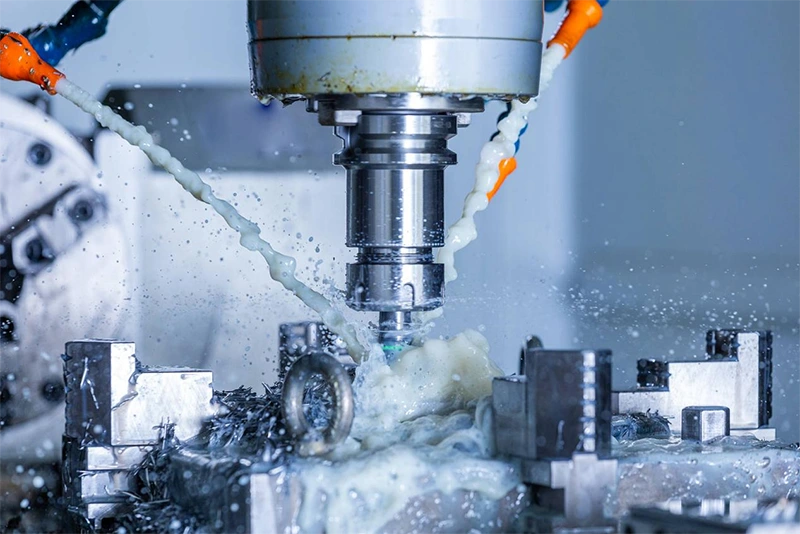
Basisclassificaties van snijvloeistoffen
Gangbare snijvloeistoffen omvatten voornamelijk de volgende types, en het is essentieel om de eigenschappen van elk type te begrijpen voordat je het toepast.
(1) Emulsie (snijvloeistof op waterbasis)
Bestaat voornamelijk uit water, geëmulgeerde olie en verschillende additieven. De voordelen van deze koelvloeistof zijn lage kosten en goede koelprestaties, vooral geschikt voor machinale bewerkingen waarbij veel warmte moet worden afgevoerd. Het heeft echter ook nadelen, zoals bacteriegroei en een hoge corrosiviteit, waardoor strenge controle en regelmatig onderhoud tijdens het gebruik nodig zijn.
(2) Volledig synthetische vloeistof
Snijvloeistof zonder basis van aardolie, die voornamelijk bestaat uit diverse chemische additieven. Tot de belangrijkste voordelen behoren de uitstekende koeling (vaak geclassificeerd volgens industrienormen zoals ASTM D2881 [1]) en hun smerende eigenschappen en weerstand tegen bacteriegroei, waardoor ze zeer populair zijn in toepassingen waar een uiterst schone bewerkingsomgeving vereist is. Volledig synthetische vloeistoffen zijn echter relatief duur, en sommige chemische bestanddelen kunnen corrosief zijn voor de machine.
(3) Halfsynthetische vloeistof
Bevindt zich tussen emulsie en volsynthetische vloeistof, met een bepaalde verhouding van petroleumolie en water. Deze koelvloeistof combineert het koelende effect van emulsie en de smering van volsynthetische vloeistof en probeert beide voordelen in balans te brengen. Toch moeten we aandacht besteden aan de biostabiliteit en corrosiviteit. Dit kan de toepasbaarheid in bepaalde bewerkingsomgevingen beïnvloeden.
(4) Enkelvoudige snijolie (snijvloeistof op oliebasis)
Het bestaat voornamelijk uit minerale olie of plantaardige olie en bevat geen water, waardoor het een uitstekend smerend vermogen biedt en voorkomt dat het werkstuk corrosie en roest. Hierdoor is deze olie bijzonder geschikt voor bewerkingen waarbij een hoge mate van smering vereist is. De warmtecapaciteit van recht snijdende olie is echter relatief laag en het koelend effect ervan is niet zo goed als dat van snijvloeistoffen op waterbasis, wat een beperking kan vormen bij bewerkingen met hoge snelheden of bij hoge temperaturen.
(5) Oplosbare olie:
Dit is de geconcentreerde voorloper op oliebasis waarmee de in categorie (1) besproken emulsies worden gevormd. Het bevat doorgaans een hoog gehalte aan minerale olie (vaak 50-80%), wat zorgt voor uitstekende smering bij zware verspaningswerkzaamheden. Het gebruik van oplosbare olie vereist echter een strikte controle van de verdunningsverhouding en de waterkwaliteit om corrosie en bacteriegroei te voorkomen, waardoor de veiligheid en efficiëntie van het bewerkingsproces worden gewaarborgd.
Na een goed begrip van de eigenschappen van verschillende bewerkingsvloeistoffen kunnen we de juiste metaalbewerkingsvloeistof selecteren voor verschillende materialen en bewerkingen om de bewerkingsprestaties te optimaliseren.
Geschikte snijvloeistoffen voor verschillende materialen
Het kiezen van het juiste koelmiddel is cruciaal voor een efficiënte en hoogwaardige bewerking, omdat verschillende materialen verschillende snijvloeistoffen vereisen.
(1) Lichte metalen zoals aluminium
Vanwege de zachte, kleverige aard van het materiaal en de neiging om aan het snijgereedschap te kleven (wat leidt tot opbouw van spanen), raden wij aan een snijvloeistof op waterbasis te gebruiken met een hoog koelvermogen en een lage viscositeit. Deze bewerkingsvloeistof voorkomt op effectieve wijze de ophoping van spanen op het gereedschap, vermindert de wrijving tijdens het bewerken, voorkomt oververhitting en zorgt voor een gladde oppervlakteafwerking.
(2) Moeilijk te bewerken materialen zoals roestvrij staal
Aangezien de hoge sterkte en taaiheid van roestvrij staal tot ernstige slijtage van het gereedschap kunnen leiden, is het van cruciaal belang om metaalbewerkingsvloeistoffen met additieven voor extreme druk (EP) te gebruiken. Deze additieven vormen een beschermende film op het contactoppervlak tussen het gereedschap en het werkstuk, waardoor slijtage en vastplakken worden verminderd en de snij-efficiëntie wordt verbeterd.
(3) Koper en zijn legeringen
Er moeten snijvloeistoffen worden gebruikt die oppervlakteverkleuring en corrosie van het werkstuk voorkomen. Koper is relatief zacht en gevoelig voor aanhechting tijdens het bewerken. Door koelvloeistoffen te kiezen met een laag of geen zwavelgehalte kunnen zwarte vlekken en andere oxidatiereacties op het bewerkingsoppervlak worden voorkomen, terwijl de oorspronkelijke kleur en glans van koper behouden blijven.
(4) Materialen met titaniumlegering
Vanwege de hoge sterkte en lage thermische geleidbaarheid van titaniumlegeringen wordt het aanbevolen om snijvloeistoffen te gebruiken die speciaal zijn ontworpen voor legeringen met hoge temperaturen, die meestal efficiënte smeer- en koelcomponenten bevatten. Geschikte koelvloeistoffen zorgen voor een goede smering, verminderen wrijvingswarmte en voorkomen effectief chemische reacties en hechting, waardoor de levensduur van het gereedschap wordt verlengd.
(5) Hoge-temperatuurlegeringen zoals nikkel- en kobaltlegeringen
Deze materialen geven tijdens het snijden veel warmte af vanwege hun hittebestendigheid en hoge hardheid. Bij het bewerken van deze materialen wordt sterk aangeraden om snijvloeistoffen voor extreme druk te gebruiken die zijn samengesteld uit inactieve zwavel- of fosforverbindingen, die bij hoge temperaturen een beschermende film vormen en zo wrijving en slijtage verminderen. Daarnaast is een uitstekende koelprestatie vereist, waardoor vaak gebruik moet worden gemaakt van hogedrukkoelsystemen (HPC) die werken bij een druk van 70 tot 100 bar [2] om de thermische dampbarrière te overwinnen.
Elk materiaal heeft zijn eigen unieke fysische en chemische eigenschappen en de keuze van het meest geschikte koelmiddel kan de bewerkingsefficiëntie en -kwaliteit verbeteren en tegelijkertijd de levensduur van machines en gereedschappen maximaliseren.
Geschikte snijvloeistoffen voor verschillende bewerkingen
Verschillende soorten bewerkingen stellen ook specifieke eisen aan de keuze van metaalbewerkingsvloeistoffen, zoals koeling, smering, spaanafvoer en corrosiewering.
(1) Draaien
Vaak gaat het om continue materiaalverwijdering, waarbij snijvloeistoffen met goede koel- en smeerprestaties nodig zijn om gereedschap en werkstuk te beschermen. Bij het draaien van staal of harde legeringen kunnen bewerkingsvloeistoffen op oliebasis met extremedrukadditieven voor extra smering zorgen, waardoor warmteontwikkeling en slijtage worden verminderd. Voor aluminium of andere non-ferrometalen ligt de nadruk op de koelcapaciteit van de snijvloeistof om materiaalaanhechting aan het gereedschap te voorkomen.
(2) Freesbewerkingen
Dit gaat gepaard met complexere gereedschapspaden en meerpuntsverspaning, waardoor snijvloeistoffen uitstekende koel- en spanenafvoerprestaties moeten leveren. Bij het bewerken van moeilijk te bewerken materialen zoals roestvrij staal of hittebestendige legeringen kunnen hoogwaardige, volledig synthetische of semi-synthetische snijvloeistoffen de slijtage van het gereedschap en ernstige thermische vervorming van het werkstuk effectief verminderen. Ze houden de temperatuur in het snijgebied laag, waardoor de bewerkingsnauwkeurigheid wordt verbeterd.
(3) Boorwerkzaamheden
Bij het boren van diepe gaten is het noodzakelijk dat de bewerkingsvloeistoffen de bodem van het gat bereiken om voor smering en koeling te zorgen. Efficiënte snijvloeistoffen helpen bij het snel afvoeren van spanen, voorkomen verstopping en oververhitting en voorkomen schade aan de boorgatwand en maatafwijkingen. Voor diepgatboren is het gebruik van op water gebaseerde snijvloeistoffen met een lage viscositeit en een hoog koelvermogen bijzonder geschikt, omdat deze vloeistoffen gemakkelijk in kleine gaten en nauwe ruimtes kunnen doordringen.
(4) Slijpbewerkingen
Er ontstaat veel warmte, waardoor snijvloeistoffen met uitstekende koelprestaties nodig zijn om oververhitting en thermische schade aan het werkstuk te voorkomen. Meestal wordt de voorkeur gegeven aan snijvloeistoffen op waterbasis, omdat deze warmte snel kunnen opnemen en geleiden, waardoor de temperatuur in het slijpgebied laag blijft. Bovendien is een hoog reinigingsvermogen (spoelvermogen) absoluut noodzakelijk om microscopisch kleine spanen weg te spoelen, verstopping van de slijpschijf te voorkomen en de kwaliteit van de oppervlakteafwerking te verbeteren.
Samengevat verbetert de keuze van het juiste koelmiddel niet alleen de bewerkingsefficiëntie en -kwaliteit, maar verlengt het ook de levensduur van machines en gereedschappen. Dit zorgt voor operationele veiligheid en maximale economische voordelen.
Voorzorgsmaatregelen voor het gebruik van snijvloeistoffen
Bij het kiezen van snijvloeistoffen is het noodzakelijk om hun prestaties, veiligheid en milieu-impact uitgebreid te overwegen om de kosteneffectiviteit te maximaliseren.
(1) Milieubescherming
Er wordt steeds meer nadruk gelegd op milieubescherming, waardoor milieuvriendelijke snijvloeistoffen een belangrijk onderwerp worden. Milieuvriendelijke snijvloeistoffen worden voornamelijk gemaakt van biologisch afbreekbare materialen, waardoor het milieu minder wordt belast. Bovendien bevatten deze snijvloeistoffen meestal geen schadelijke chemicaliën, waardoor de behandeling van afvalvloeistoffen minder moeilijk en duur is. Het gebruik van milieuvriendelijke snijvloeistoffen helpt bedrijven om te voldoen aan de steeds strengere milieuvoorschriften en versterkt hun groene merkimago.
(2) Veiligheid
Veiligheid is een onmisbare factor in de werkomgeving, vooral wanneer er sprake is van snijvloeistoffen. Traditionele snijvloeistoffen kunnen schadelijke chemicaliën bevatten, zoals sulfaten, chloor en zware metalen, die huidirritatie, ademhalingsproblemen en ernstigere gezondheidsproblemen kunnen veroorzaken. Daarom is het belangrijk om te kiezen voor snijvloeistoffen met een lage toxiciteit of die niet giftig zijn, en de concentratie van nevel in de lucht strikt onder de NIOSH-grenswaarde van 0,4 mg/m³ te houden. [3] is van cruciaal belang voor de bescherming van de gezondheid van de bedieners, het verminderen van gezondheidsrisico’s en het bieden van een veiligere werkomgeving voor de bedieners.
(3) Economie
Vanuit economisch oogpunt is de keuze van de juiste snijvloeistof cruciaal voor het beheersen van de productiekosten. Milieuvriendelijke en hoogwaardige bewerkingsvloeistoffen kunnen hogere aanschafkosten met zich meebrengen. Op de lange termijn kunnen ze echter de totale exploitatiekosten aanzienlijk verlagen door slijtage van gereedschap te verminderen, de efficiëntie van de machines te verbeteren en de kosten voor afvalverwerking te verlagen. Bovendien kan het gebruik van hoogwaardige verspaningsvloeistoffen de levensduur van de apparatuur verlengen, productieonderbrekingen verminderen en de productiekosten verder optimaliseren.
Samenvatting
Dit artikel bespreekt uitgebreid de soorten koelvloeistoffen en hun selectiecriteria voor verschillende materialen en bewerkingen. Van emulsies tot volledig synthetische vloeistoffen, elke snijvloeistof heeft zijn eigen unieke voordelen en toepassingsscenario's en biedt optimale koeling, smering en anticorrosie-effecten voor specifieke materialen en bewerkingsbehoeften, terwijl ook rekening wordt gehouden met milieu-, veiligheids- en economische overwegingen.
Door een zorgvuldige selectie en toepassing van geschikte snijvloeistoffen kunnen bedrijven die maatwerk op het gebied van CNC-bewerking kan de efficiëntie van de bewerking en de productkwaliteit verbeteren, een veilige werkomgeving garanderen en de productiekosten optimaliseren, waardoor een efficiënte, economische en duurzame productie wordt gerealiseerd.
Referentie
[1] ASTM International. (2019). ASTM D2881-19 Norm voor de classificatie van metaalbewerkingsvloeistoffen en aanverwante materialen. https://doi.org/10.1520/D2881-19
[2] Raykar, S. J., & D’Addona, D. M. (2019). Thermische modellering van de temperatuurverdeling in het gereedschap tijdens het draaien van Inconel 718 met behulp van koelvloeistof onder hoge druk. Materials, 12(3), 408. https://doi.org/10.3390/ma12030408
[3] Nationaal Instituut voor Veiligheid en Gezondheid op het Werk (NIOSH). (1998). Criteria voor een aanbevolen norm: Beroepsmatige blootstelling aan metaalbewerkingsvloeistoffen. Centers for Disease Control and Prevention (CDC). https://stacks.cdc.gov/view/cdc/5175





 NL
NL  EN
EN  ES
ES  FR
FR  DE
DE  IT
IT  PT
PT  PL
PL  AR
AR  JA
JA  KO
KO  ZH
ZH