

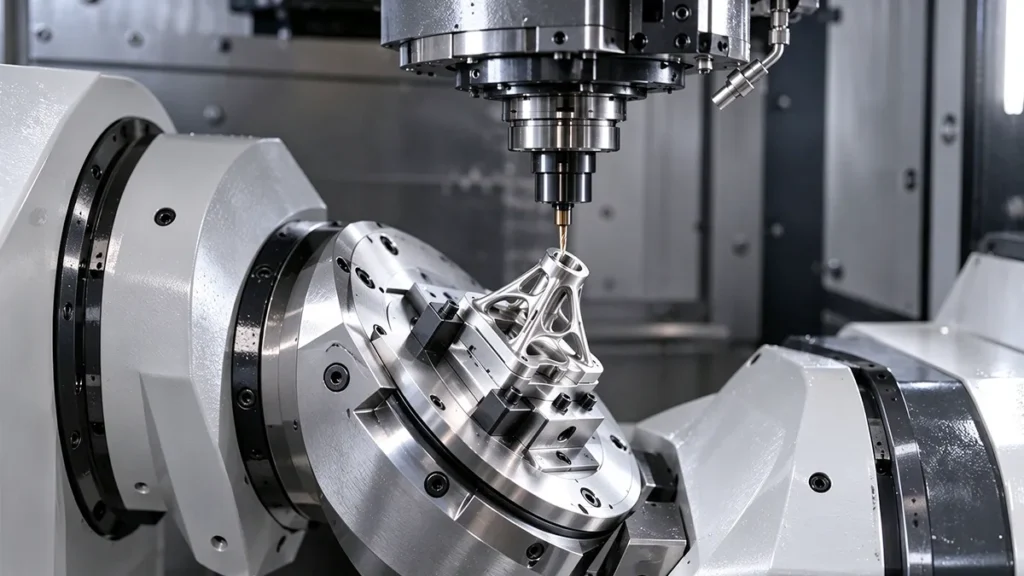
Titanium is known for its impressive strength-to-weight ratio. CNC machining considers strength and durability properties are part of the traits. Manufacturers focus on durability, hence longevity. Its unique properties make it highly sought after in various industries. Parts made from titanium are common in aerospace, the military, and medicine. CNC Machining’s success relies on selecting the necessary materials for its use.


Common Titanium Alloy for CNC Machining
Titanium is vital at varying levels in CNC. Titanium alloys are divided into beta, alpha, and alpha-beta groups. Each group provides unique traits that suit specific applications.
1. Grade 5 Titanium (Ti -6AI-AV)
Characteristics
Grade 5, known as Ti-6AI-4V, is a common titanium alloy. It comprises 4 percent vanadium, 6 percent aluminum, and 90 percent titanium. It is essential in parts that require strength, low weight, and a high level of corrosion. The Ti-6Al-4V alloy is highly suitable because it responds excellently to metal heat treatment. Through proper thermal processing, manufacturers can significantly enhance its mechanical properties for the most demanding aerospace operations.
Applications
Grade 5 titanium plays a pivotal role in various high-performance applications.
- Aerospace: It is crucial in manufacturing aircraft fuselage parts, turbine blades and wings. The material needs to reduce weight while upholding strength and durability.
- Medical implants: Ti-6Al-4V is widely used in manufacturing dental implants, hip replacements, and prosthetics.
- Marine: The Ti-6AI-4AV is vital in manufacturing products with high resistance to salt water. For marines, it is applicable in the material-to-manufacturing environments. Common products are fasteners and propellers.
- Automotive: The Ti-6AI-4V is important in the manufacture of automotive parts. Essential parts include the engine components and other systems that appear exhausted.
Machining Considerations For Grade 5 Titanium
Titanium alloys, especially Grade 5, can offer challenges to machining. Titanium’s high tensile strength poses machining challenges and heat generation during machining. Precision is needed to prevent tool wear and overheating. High-quality cutting tools, low cutting needs, and adequate cooling are important to avoid compromising the existing integrity of the material.
When to Choose Grade 5 Titanium
Grade 5 is the most effective material choice for manufacturers who need precision, lightweight, and strength. It is also ideal for parts that exhibit high corrosive resistance. It is suitable for performance in medical, marine, and medical environments. A key property is the need for strength and durability.
2. Grade 2 Titanium
Characteristics
Grade 2 titanium is widely used like pure Titanium (CP titanium). It is typical of unalloyed titanium. It provides effective corrosion resistance and offers effective formability. Therefore, it is important to manufacture parts that undergo exposure to harsh chemicals and salt water. Nevertheless, Grade 2 possesses a lower mechanical strength profile. It typically exhibits a minimum yield strength of 275 MPa, which is substantially lower than the 828 MPa minimum yield strength of Grade 5 [1]. Consequently, Grade 2 is prioritized for extreme corrosion resistance rather than high-stress load-bearing applications.
Applications
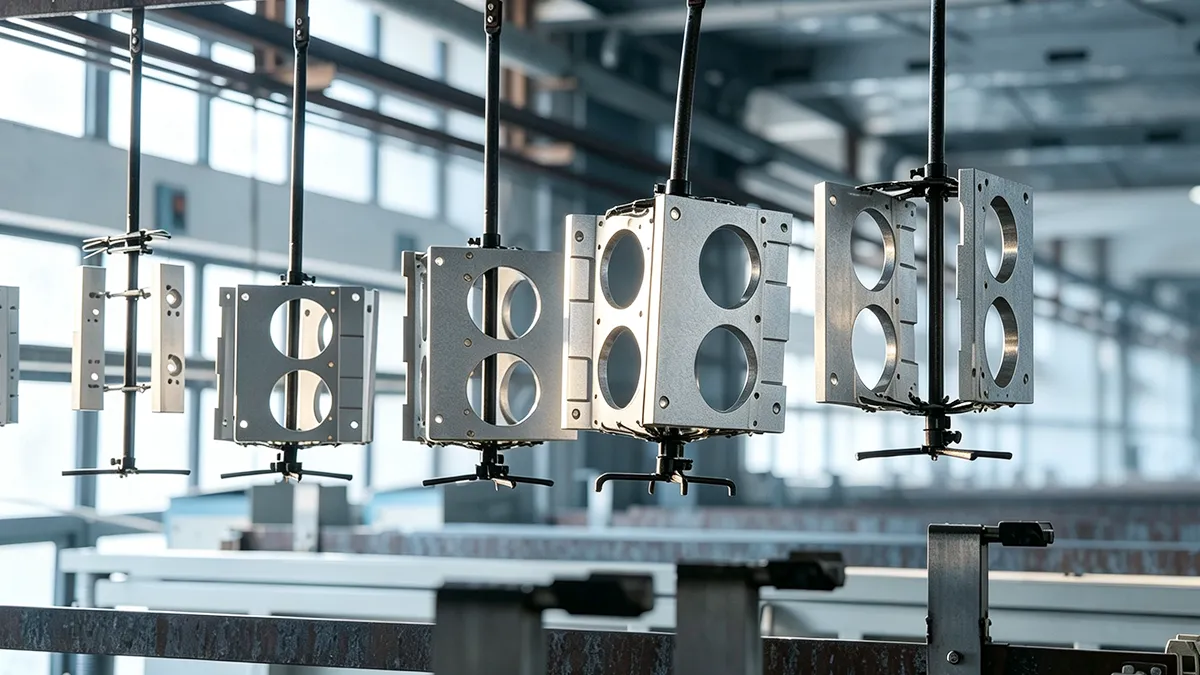
- Chemical Processing Equipment: The industry relies heavily on this grade to construct reactors, tanks, and heat exchangers. It is also an excellent material choice for precision industrial components, perfectly demonstrated in the production of custom titanium shims used to ensure precise spacing in corrosive heavy machinery.
- Marine hardware: Key parts and products in marine hardware manufacturing include fasteners, boat bulls, and propellers.
Machining Consideration For Grade 2 Titanium
Grade 2 titanium is lightweight and, hence, easy to work with compared to grade 5. However, its toughness presents challenges. Effective cutting speed is needed. It is not prone to work hardening like other alloys. Additionally, lubrication is key to preventing wear and tear.
When to Choose Grade 2 Titanium
Manufacturers and users apply different approaches to choosing the best materials for production. Grade 2 titanium is highly valued for its exceptional corrosion resistance. This resistance includes chemical processing and marine environments. However, its high strength is less of a concern.
3. Grade 23 Titanium (Ti-6Al-4V ELI)
Characteristics
Grade 23 titanium is commonly is Ti-6AI-4V ELI, representing Extra low interstitial. As an Extra Low Interstitial (ELI) alloy, it is specifically refined to contain a maximum oxygen content of strictly 0.13%, compared to the 0.20% allowable in standard Grade 5 [2]. This precise reduction in interstitial elements is highly effective in enhancing the material’s overall ductility and fracture toughness. It also indicates fracture toughness and decreased risk of brittleness. Its uses are when an extremely high strength–to–weight ratio exists.
Applications
- Aerospace: Grade 23 plays a significant role in the production of aircraft components, including wings.
- Medical: In the medical sector, Grade 23 is the gold standard for biocompatibility. It is extensively utilized by engineers navigating strict medical metal selection criteria to produce complex orthopedic implants and dental devices.
- Marine and Defense: Grade 2 is also an important manufacturer of parts that offer strength and biocompatibility.
Machining Considerations For Grade 23 Titanium
Compared to standard Grade 5, machining Grade 23 (ELI) demands even stricter control over cutting speeds, cooling, and tool material selection to preserve its specialized microstructure.
When to choose Grade 23 Titanium
The choice of titanium grade 23 depends on the high performance level. This is also due to the high number of fatigued applications in the medical and aerospace industries. It provides a tough, fatigue-resistant, and low-weight material.
4. Grade 9 Titanium (Ti-3Al-2.5V)
Characteristics
Grade 9 is an alpha-beta titanium alloy comprising 2.5 percent vanadium and 3 percent aluminum. It provides a balance in formability, strength, and resistance to corrosion. Its lighter weight compared to Grade 5 makes it more suitable for certain applications. Despite its weight, it can uphold a high level of strength.
Applications
- Aerospace parts: Grade 9 titanium is frequently selected for aerospace components such as wings and landing gears.
- Sporting Equipment: Grade 9 material is better for lightweight performing parts like racing.
- Automotive: The lightweight performance is indispensable for bicycle frames and other products in the sporting field.
Machining Considerations For Grade 9 Titanium
Grade 9 is more straightforward to machine than Grade 23 and 5. Nevertheless, attaining a better part is through precise control over cutting speeds. It also entails lubrication and tool materials. The goal is to achieve a high-quality finish while minimizing tool wear.
When to Choose Grade 9 Titanium
Grade 9 is good for formable, lightweight, and substantial parts. It suits the automotive and aerospace industries and applications.
| Alloy | Strength | Corrosion Resistance | Machinability | Applications |
|---|---|---|---|---|
| Grade 5 (Ti-6Al-4V) | High | Moderate | Difficult | Aerospace, medical implants, marine components |
| Grade 2 | Moderate | Excellent | Relatively Easy | Chemical processing, marine hardware, medical |
| Grade 23 (Ti-6Al-4V ELI) | High | High | Difficult | Aerospace, medical implants, defense applications |
| Grade 9 (Ti-3Al-2.5V) | Moderate | High | Easy | Aerospace, automotive, sporting equipment |
CNC Machining Process Flow for Titanium
The CNC machining of titanium alloys demands adherence to set specifications. The specific process flows are important for the distinctive properties of the alloy. The process comprises the different stages that adhere to all requirements for optimal outcomes;
- Material Selection: The best titanium alloy’s choice should depend on the resistance to corrosion abilities and strength. It should also focus on the resistance to fatigue levels.
- Designing and Programming: Develop and transform a CAD model of the part in the CNC Program. The program ensures that the machining follows the set operation and cut specifications.
- Tool Selection and Setup: The titanium alloy requires highly specialized cutting tools, which should be made of ceramic or carbide. The objective is to undertake high-level cutting forces. They also need to withstand the material’s hardness, hence the effectiveness of the designing process. Tool selection is always in line with the role of the part.
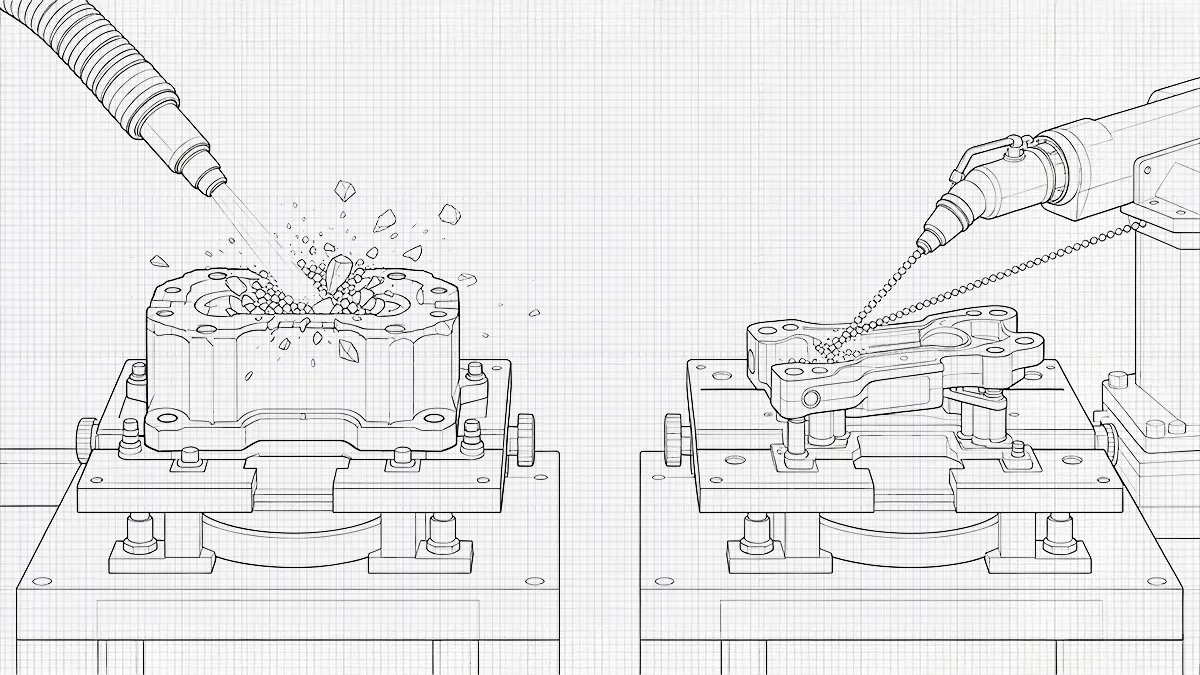
- Machining Operations: Machining operations require rough cutting, drilling, and finishing. Titanium’s heat sensitivity makes managing cutting speeds mandatory. The process also requires adequate cooling fluid to overcome the high level of overheating.
- Inspections: At the end of machining, parts need to be inspected. The objective is to achieve high dimensional accuracy. Another objective is to attain a surface finish. As titanium exhibits a low rate of thermal conductivity, preventing material warping is absolutely critical. The aim is to achieve constant-level monitoring.
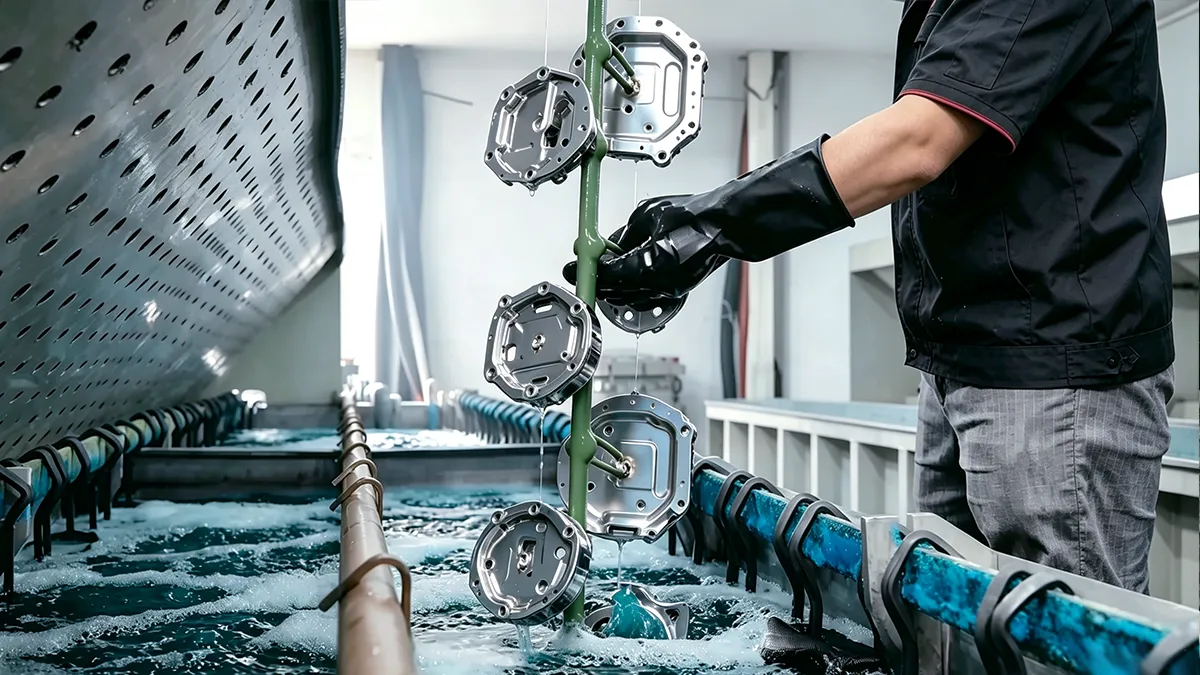
- Post Processing: Post-process treatments like coating and anodizing are essential for increasing material properties. The treatment’s application depends on the parts’ applications. The application of these treatments is highly dependent on the part’s final environment. Ultimately, the correct surface finishing for CNC machined parts aims to improve overall corrosion resistance and enhance aesthetic properties.
Titanium vs. Other Metals in CNC Machining
Strength-to-Weight Ratio
Titanium is highly valued in CNC machining due to its strength-to-weight ratio. It is, therefore, necessary for operations that depend on materials’ lightweight and durability properties. Titanium also upholds traits comparable to and superior to those of steel. It is, therefore, effective in applications including implants, aerospace and automotive. While it is denser than aluminum, titanium possesses significantly higher tensile strength and fatigue resistance, making it the superior choice for high-stress components where aluminum would fail. Consequently, it provides a distinctive, unique balance that enhances the integrity of structures and prevents unnecessary weight. The property makes titanium important in manufacturing aircraft frames and high-performing gadgets in sporting activities.
Additionally, it is important for the spacecraft components. A key property of focus by manufacturers is reducing weight, which is crucial for performance and efficiency. The advantages are thus in the long term. The long-run outcomes are cost-effectiveness. It is a better choice for automotive operations, enabling greater efficiency and effectiveness. Combining low weight and high strength levels is important for titanium and its manufacturers. The objective is to design high-end and advanced structures for withstanding extreme conditions. The part would be effective in all weather conditions.
Corrosion Resistance
A valuable property of titanium is its corrosion resistance. Titanium’s resistance to corrosion is better than that of aluminum. Under oxygen exposure, titanium instantly develops a passive oxide layer on its surface. This chemical reaction acts as an impenetrable barrier against environmental damage, effectively stopping further corrosion, oxidation, and rust even in harsh acidic or saltwater conditions. The natural resistance makes titanium a better choice for parts applicable to areas with acid, saltwater, and industrial chemicals.
Additionally, it is suitable for marine environments where products uphold their original strength without undergoing corrosion. The protective coatings are important, especially for shipping parts, offshore drilling equipment and desalination of plants. Aluminum is also resistant to corrosion. However, it suffers from pitting and oxidation under extreme conditions for long periods. The ability of titanium to withstand extreme conditions is also important in medical practices. The biocompatibility and resistance to moisture and body fluids make it the best choice for joint replacements—other areas are surgical instruments and dental implants. The objective is to attain long-term performance in key applications.
Machinability
Titanium presents unique challenges in the machining process. The unique physical properties of titanium present distinct challenges during the cutting process. Specifically, titanium possesses an extremely low thermal conductivity of approximately 6.7 W/m·K, which is only a small fraction compared to steel and aluminum [3]. Consequently, up to 80% of the heat generated during machining does not dissipate through the chip, but instead concentrates directly at the cutting tool edge. The outcomes of such a process are high rates of wear and tear. It also leads to high workplace damage when there is poor management. The specialized cutting tools, coolants, and slower machining prevent overheating and aid in precision maintenance. Titanium needs effective care to prevent excessive tool wear. Aluminum, on the other hand, is highly machinable and enables fast cutting speeds.
On the other hand, steel is more rigid than aluminum but more effective for machining than titanium. Steel dissipates heat more effectively. However, despite the challenges, it is a tool applicable in high-performance industries due to its distinctive qualities. Modern machining techniques, including laser machining and jet cutting, are important for improving the working efficiency of titanium alloys.
Machining Tolerances of Titanium Profiles
Titanium alloys are important due to their corrosion resistance, high strength, and lightweight properties. The material is ideal, hence common in manufacturing aerospace, military, and medical parts. Nevertheless, existing traits have disadvantages that prevent them from effectively fitting to be a better tool for the machining process. Titanium alloys demand tight machine tolerances for adherence to the specifications of finished parts.
The tolerance varies depending on the type of titanium alloy in the machining process. It also depends on the specific requirements of the application. For standard machining, titanium profiles range from ±0.002 inches to ±0.010 inches. This implies that it is already more precise than other materials. For parts that demand high stresses and temperature management, a tight tolerance of ±0.001 inches is important. These applications are more common in aerospace and military parts manufacturers. Attaining such tight tolerance in titanium demands more improved CNC machinery. It also needs effective control machining and specialized tools to help prevent errors and adhere to specifications.
Conclusion
The strength of titanium and its corrosion resistance makes it an important material in CNC machining. It is also a lightweight material effective for military and medical operations. The titanium machining alloys have technicalities due to the lower hardness and tendency to heat up. The outcomes are evident in the high rate of wear and tear. The traits of titanium, therefore, imply that the alloy is important in specific areas of use. It can also undergo massive improvement to meet specific requirements by using the necessary techniques for particular industries.
Tips: Learn more about the other metal machining processes
Reference
[1] ASTM International. (2020). ASTM B265-20a Standard Specification for Titanium and Titanium Alloy Strip, Sheet, and Plate. https://doi.org/10.1520/B0265-20A
[2] ASTM International. (2013). ASTM F136-13 Standard Specification for Wrought Titanium-6Aluminum-4Vanadium ELI (Extra Low Interstitial) Alloy for Surgical Implant Applications. https://doi.org/10.1520/F0136-13
[3] Ezugwu, E. O., & Wang, Z. M. (1997). Titanium alloys and their machinability—a review. Journal of Materials Processing Technology, 68(3), 262-274. https://doi.org/10.1016/S0924-0136(96)00030-1





 EN
EN  ES
ES  FR
FR  DE
DE  IT
IT  PT
PT  NL
NL  PL
PL  AR
AR  JA
JA  KO
KO  ZH
ZH