

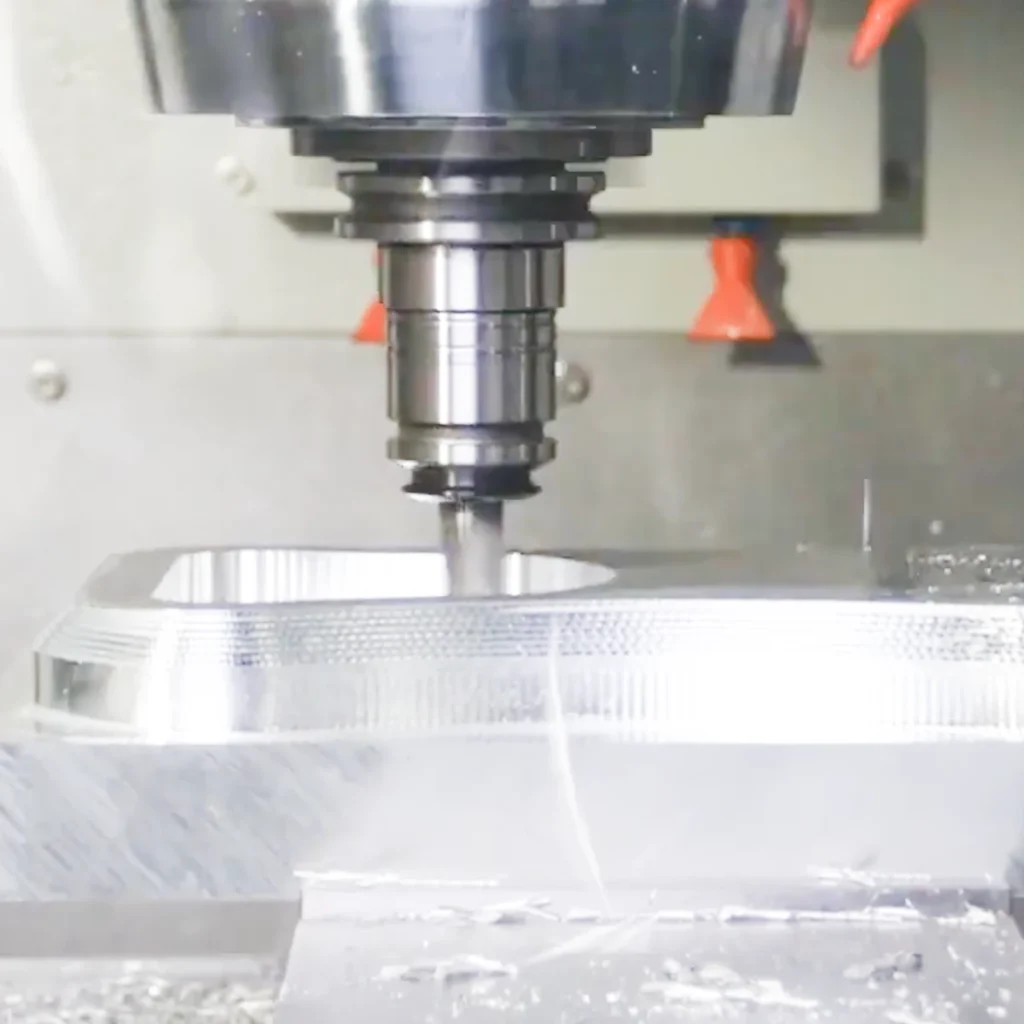
CNC (Computer Numerical Control) machining is a vital process in modern manufacturing approaches. It enhances precision and cost-effective manufacturing processes. Aluminum is a key common material utilized in CNC machining. An essential characteristic of aluminum is its light-weight and suitability for specific products. It is also famous for its durability, strength, and excellent machinability. These traits make it a material that applies to various industries. They form part of the factors that determine the materials selection.


Top 9 Aluminum Alloys for CNC Machining (Applications Compared)
Aluminum alloys are applicable in different areas. Their role is its combination high strength-to-weight ratio and corrosion resistance. These traits make aluminum a unique and vital material, especially in CNC. The CNC process uses alloys like aluminum to achieve specific outcomes.
1. 6061 Aluminum
Characteristics
6061 aluminum is a common and versatile alloy. Its role in CNC Machining offers ripple benefits. It provides an optimal balance of structural strength and high machinability. In its widely used T6 temper, 6061 aluminum typically delivers a reliable yield strength of approximately 276 MPa (40,000 psi) [1]. Furthermore, this composition naturally forms a protective oxide layer, significantly enhancing its resistance to atmospheric corrosion.
Applications
6061 aluminum is used to produce structural components. Its roles extend to the marine, automotive, and aerospace industries. It is commonly used to make truck wheels, bicycle frames, marine hardware, and bicycle frames.
Machining Considerations
The 6061 is easy to machine. However, this trait sometimes makes it difficult to attain surface finishes. It demands adequate lubrication and cooling. Lubrication is essential to prevent overheating and extend the tool’s life. The process can add surface finishing in additional specifications to the process.
When to Choose 6061 Aluminum
The alloy represents a compelling choice of parts that need proper balance, ease of machining, and corrosion resistance. Due to its excellent machinability and predictable performance, 6061 aluminum is highly effective for rapid prototyping. Furthermore, it remains a vital material choice for lightweight fixtures and robust structural parts.
2. 7075 aluminum
Characteristics
7075 aluminum is one of the strongest commercial alloys available in the manufacturing industry. When heat-treated to a T6 temper, it achieves a massive ultimate tensile strength exceeding 572 MPa (83,000 psi), effectively matching or surpassing many grades of structural steel [2]. Nevertheless, the high zinc and copper content results in lower natural corrosion resistance compared to the 6061 series. The material also has a lower machinability rate, which is advocated by its high strength.
Applications
7075 aluminum is essential in the aerospace industry, incorporating military and tooling. It is used for products such as aircraft wings, sports equipment such as mountain bike frames and golf clubs, and fuselage structures. Strength and weight are among the determinants of its application.
Machining Considerations
Machining 7075 aluminum requires more focus. The high strength can cause wear and tear. Machining 7075 aluminum requires strict parameter control. The material’s extreme strength accelerates tool wear and heat generation. To achieve precise results and extend tool life, machinists must utilize high-quality, coated carbide cutting tools alongside optimized feed rates and rigid workholding.
When to Choose 7075 Aluminium
Choosing 7075 Aluminium depends on many factors. Wear and tear is a major focus in the CNC. Nevertheless, this factor is vital for applications that require its inclusion in the process.
3. 2024 Aluminum
Characteristics
The 2024 aluminum is famous for its high strength-to-weight ratio. , which makes it superior to other types of alloy. It is famously applicable in aerospace applications.
Applications
2024 aluminum is mainly used in the manufacture of aircraft. The common parts in its construction are the fuselage, the wings, and the essential load-bearing parts. It is also used in the manufacture of military vehicles. The precision of military vehicles lies in the quality and ability to create protective coatings. The products require materials with strength and less fatigue resistance.
Machining Considerations
2024 aluminum machining can present numerous challenges due to various factors. The materials occasionally undergo work hardening in the machining process. Proper lubrication and cooling are also crucial for overcoming overheating. Using sharp tools and managing cutting speed is vital to overcome tool wear.
When to Choose 2024 Aluminium
The 2023 aluminum choice suits parts that demand high strength and fatigue resistance. Aerospace parts is a major consumer of 2024 aluminum products. It is also effective for products that undergo significant stress.
4. 5052 Aluminum
Characteristics
The 5052 aluminum alloy is used to manufacture tools that experience less resistance. It is most applicable in the marine environment. It provides moderate strength. It is also formable but not as strong as the 6061 and 7075.
Applications
It applies to the manufacture of fuel tanks in the aerospace and automotive industries. It is a key material in manufacturing marine components such as deck plates and boat hulls. It is also key in the construction of pressure vessels. The product’s standard pressure levels are in tanks and containers. The resistance characteristic of the product is essential in an environment with moisture and salt. It is also vital in the construction of architectural products. The roofing panels and the exterior panel product in coastal areas have 5052 aluminum.
Machine Considerations
The 5052 aluminum is relatively straightforward and easy to machine. However, it can portray rough surface finishes when there is inadequate lubrication. The 5052 effectively exhibits corrosion resistance, making it suitable for use in areas where products exist in harsh environments.
When to choose 5052 aluminum
5052 aluminum is suitable for corrosion-resistant products. Are the coating products that need it applicable in chemical and marine environments? It offers moderate strength, and corrosion resistance is of great need.
5. 6082 Aluminum
Characteristics
The 6082 is a high-strength alloy vital for structural applications. It provides excellent machining, resistance to corrosion, and high strength. It is stronger than the 6061 aluminum but less than the 7075.
Applications
TThe 6082 alloy is heavily utilized in constructing solid structural components. It is essential for manufacturing robust load-bearing parts such as beams and heavy-duty frames. It supports the strength of construction and machinery. In the transport industry, it is vital to manufacture bridges, rails, and heavy-duty parts. The automotive components parts are key, with moderate strength and effective resistance to corrosion.
Considerations
The maching process focuses on the strength and ease of machining. The 6082 aluminum has moderately easy machining characteristics and offers effective surface finishing.
When to Choose 6082 Aluminum:
6082 Aluminum is suitable for products that are key to machinability. Like other metals, it is also the best choice for parts that undergo high-volume manufacturing and tight tolerances. It’s ideal for intricate and small parts that demand fabrication in the shortest time.
6. 2011 Aluminum
Characteristics
2011 aluminum was an alloy commonly used for effective machinability. It is among the most straightforward aluminum alloys for machining and the best choice for intricate designs. Nevertheless, it is less corrosion-resistant. However, it is weak in comparison to other alloys. It is a primary material for machinability in most parts.
Applications
The 2011 aluminum is vital in the manufacture of precision components. Some products are bearings, intricate parts, and gears. Due to its high precision and details, it applies to manufacturing machine parts. The final element is high-precision tools that require high-level machinability and tight tolerances.
Machining considerations
The solid 2011 aluminum alloy is highly machinable. It is exceptionally suitable for products that demand high-speed, precision cutting operations. It is suitable for products that demand high-precision machining. Nevertheless, it offers lower corrosion resistance. It is not ideal for products applicable in harsh environments.
When to Choose 2011 Aluminum
2011 aluminum is suitable for products that are key to machinability. It is also the best choice for parts that undergo high-volume manufacturing and tight tolerances. It’s the best choice for intricate and small parts that require fabrication in the shortest time.
7. MIC6
Characteristics
The MIC 6 is a cast aluminum alloy used in products with high stability and machinability. It is common for parts to require tight tolerances, and manufacturers desire stability over time.
Applications
The MIC6 is commonly used to produce precision molds, such as casting and molding injection. It is also suitable for tooling components, including jigs and fixtures. Finally, in aerospace parts, the MIC6 is applicable for products that require high dimensional stability.
Machining considerations
The MIC6 is ideal for parts that demand the highest level of accuracy. It is common and instrumental in areas where parts have to uphold high tolerances. The tooling, molds, and components of aerospace products are key to precision accuracy. This demands that CNC machining focus on specification and any emerging new requirements of the parts.
8. A380 Aluminium
Characteristics
The A380 aluminum is suitable for the production of automotive parts. Typical products from the alloy are transmission cases, engine blocks, and other strong automotive elements. It is also ideal for the production of computer parts. Common computer parts with the A380 are phones, computers, and consumer electronics. The A380 aluminum is also suitable for aerospace products. Noncritical components, including brackets and housing, rely on the A380.
Machining Considerations
A380 is primarily formulated as a standard die-casting alloy rather than an extruded billet. Consequently, CNC machining operations on A380 are typically reserved for the precise post-machining of already cast components. Operators must utilize sharp tooling to prevent surface tearing during these secondary cutting passes. The A380 aluminum can exhibit limitations in producing the parts due to the casting process and composition. Sharp tools are crucial to prevent tearing, and cutting speeds need to be controlled to attain optimal results.
When to Choose A380 Aluminum
A380 aluminum is an essential tool in high-strength cast parts. The objective is to attain good machinability and less focus on corrosion resistance.
9. 1100 Aluminum
Characteristics
1100 aluminum is commercial-based. It is applicable in the manufacture of products that require corrosion resistance. It is also crucial for good formability. Although 1100 aluminum has lower strength than other alloys, it is effective for products that require strength.
Applications
1100 aluminum is vital in manufacturing architectural components, including facades, roofing, and siding. It is also critical in the manufacture of heat exchangers. Standard products are HVAC and different refrigeration systems. The final component with the 1100 aluminum is food processing equipment. The alloys are common on kitchen utensils and other essential products for corrosion resistance.
Machining considerations
1100 aluminum is suitable for machining. It provides crucial excellent surfaces. Nevertheless, it provides low-level strength and is less effective in high-stress applications.
When to Choose 1100 Aluminium
The choice of 1100 aluminum is for products that require effective corrosion resistance. It is also common for formability. However, it is less critical in applications where strength is less important.
Comparison of Aluminum Alloys in CNC Machining
Common properties include corrosion resistance, machinability, and strength. Aluminum alloys are common for CNC machining due to their desirable properties. However, this process requires more advanced equipment, such as precision measurement and tool cutting.
Comparison of the Strength of Aluminum Alloys
- The 7075 and 2024 aluminum: The alloy is suitable and preferred for its unique strength. It has zinc as the main component and is effective in military and aerospace products. The 7075 aluminum matches the characteristics of the 2024 aluminum, which also has excellent and high strength. The 2024 aluminum has copper as the primary alloying element, enabling it to achieve a high tensile strength. The 2024 and 7075 aluminum manufacturers of aircraft and other structural components. However, the 2024 aluminum possesses lower corrosion resistance than the 7075 aluminum. It requires the addition of other materials to improve the resistance level.
- 6061 aluminum: Unlike the 7075 and 2024 aluminum, the 6061 offers moderate strength. In the CNC manufacturing process, it is one of the versatile alloys. However, it has an impressive strength-to-weight ratio. Aluminum is instrumental in manufacturing structural components, marine environments, and automotive parts. It effectively balances other properties and strengths; hence, a key allows for parts applicable for general purposes.
- 1100 aluminum: The 1100 aluminum is the weakest aluminum alloy in CNC machining. It is weak but effective in environments with low corrosion resistance and workability. 1100 aluminum is the weakest aluminum alloy in CNC machining regarding mechanical strength. However, unlike the high-strength 7075 and 2024 alloys, 1100 aluminum is specifically selected when extreme workability and superior corrosion resistance are the absolute highest priorities. However, it is also vital in areas with high formability.
- 5052 Aluminum: The 5052 Aluminum is instrumental in providing adequate resistance to corrosion in CNC machining. However, its strength is low compared to the 7075 and the 6061. It still effectively provides strength for different applications, such as marine and chemical tanks.
Machinability Comparison
It refers to the ease of cutting, processing, and shaping the material in CNC machines. It is crucial in material selection due to the ease of machining. It directly affects time, cost, wear, and production.
- 2011 aluminum: The 2011 is one of the suitable alloys for machinability. It has a high level of copper and offers excellent cutting properties. It is ideal for products with intricate designs and high tolerances. It has low tool wear and can produce effective cuts, hence high-speed machining. It is also suitable for precision and efficiency.
- 6061 aluminum: 6061 Aluminum is effective for ease of machining. It takes a short process time, hence good dimensional accuracy and smooth finishing. It balances machinability and strength, hence effective for various parts in different industries. Nevertheless, it requires other parts in different applications.
- 6082 aluminum: The alloy has the same machinability qualities as 6061. However, provides a high level of strength. It undergoes ease of machinability. Increasing the 6082 can require more potent tools and precision to help prevent damaging tools. It is easy in comparison to 7075.
- MIC 6 Aluminum: The MIC 6 is a cast aluminum alloy applicable due to its superior machinability and dimensional abilities. Smooth finishing and precision are typically key. Common products are molds and plates for the automotive industries. The MIC 6 provides effective surface finishing and is effective for easier machining.
- 7075 and 2024 Aluminum: The 7075 and 2024 Aluminum offer high strength and toughness in the machine compared to the toughness of the 2011 and 6061 aluminum. The high strength is sometimes responsible for increased wear and tear. Manufacturers need to control the cutting parameters effectively. Nevertheless, they can be effective in machining but less forgiving than lower-strength alloys.
Corrosion Resistance Comparison
Corrosion resistance is an essential trait for parts that encounter harsh environments. More parts must be applicable in marine, outdoor, and chemical settings. The composition impacts the level of corrosion and resistance. It is in comparison to the various types of resistance than others.
- 1100 aluminum: The 1100 aluminum offers high levels of corrosion resistance among most alloys. It has lower strength levels and limited use in areas where strength is a lesser primary concern. It is common for products to be processed, handled, and stored in the food process. It is also common in decorative purposes.
- 6061 Aluminum: 6061 Aluminum offers effective resistance to corrosion. However, it is less effective than the 1100 and 5052 aluminum alloys. It is effective in products applicable in outdoor applications such as marine environments, bridges, and buildings. While suitable for general outdoor use, unprotected 6061 remains highly susceptible to galvanic corrosion in severe seawater environments. Utilizing this alloy in aggressive marine conditions demands proper sealing methods, including hard-coat anodizing, to successfully boost its long-term resistance.
- 7075 and 2024 Aluminium: These two high-strength alloys possess relatively poor natural corrosion resistance compared to the 6061 and 5052 series. This vulnerability occurs because their high copper and zinc alloying elements create internal galvanic cells that accelerate oxidation. Consequently, components deployed in harsh environments absolutely require protective surface treatments, such as hard anodizing or specialized painting, to prevent rapid degradation. The harsh environment may not be effective until there is coating and treatment. Key coating approaches are painting and anodizing, which are key for overcoming degradation.
CNC Machining Process Flow for Aluminum
The CNC machining process follows a series of steps. The objective is to ensure adherence to all design specifications.
- Material Selection: The initial step is to choose an appropriate aluminum alloy. The choice has to match the expected properties, including resistance, machinability, and corrosion.
- Design and Programming: The second step involves engineering a precise digital CAD model and exporting it into universal engineering formats like STEP files. This phase also entails utilizing advanced CAM software to calculate optimal tool paths before actual cutting begins.
- Tool setup: The third step is tool setup. It entails using the necessary drilling, tapping, cutting, and finishing tools. The material undergoes operations precisely. The objective is to adhere to the dimensional expectations.
- Machine Operations: The CNC equipment executes various subtractive operations, such as precision drilling, contour milling, and creating precision tapped holes based on the exact parameters defined during the programming phase. The process includes the speed, tool selection, and feed rates.
- Inspection: After the cutting cycle concludes, quality assurance engineers must conduct rigorous structural inspections. The primary objective is to verify that all dimensions strictly meet the predefined acceptance standards for CNC machined products alongside the specified surface finish.
- Post-Processing: The final phase is post-processing, which entails coating, anodizing, and polishing.
Aluminum vs. Other Metals in CNC Machining
Aluminium has more advantages than machining than brass, steel, and titanium in CNC match.
- Weight: One of aluminum’s advantages is light. It is lighter than titanium and steel. Therefore, it is crucial to use in scenarios where weight is a significant consideration.
- Machinability: Aluminium alloys are more straightforward to machine than metals such as steel and titanium. This property allows them to minimize wear on cutting and shorten production times, making them essential for mass production.
- Corrosion Resistance: Aluminium is more effective at resisting corrosion than other metals. When it undergoes anodizing, it becomes ideal for areas with chemicals, saltwater, and moisture.
It is also clear that the strength of titanium and steel alloys sometimes outperforms aluminum. This trait is common in areas with high-stress levels. For products and parts that require durability or unique tensile strength, titanium and steel become more suitable.
CNC Machining Tolerances of Aluminum Profiles
Aluminum profiles undergo machining to exhibit tight tolerances. Therefore, the parts must fit the assemblies with precision. The capability to shape the aluminum properties is vital in upholding the performance and integrity of complex systems. Any interference with the integrity and complexity implies compromising the quality of the product in the long term. CNC machining tolerances for aluminum alloys: ±0.001in (aerospace) to ±0.010in (general)
Nevertheless, industries that require precision include aerospace, electronics, and automotive products. The objective is to ensure safety, optimal performance, and reliability. Tolerance for such parts is as tight as ±0.001 inches. Success in acceptable tolerances requires improved machining approaches like CNC machining. Attaining such tight tolerances frequently requires advanced multi-axis setups. Additionally, high-precision secondary operations like EDM wire cutting are strategically deployed when manufacturers need to achieve ultra-fine internal corners or extremely complex profiles.
Additionally, practical inspection and testing approaches are crucial to the manufacturing process. The objective is to enhance profiles that adhere to the set specifications. The long-term objective is to attain corrosion resistance, machinability, or strengths.
Conclusion
The advanced CNC machine offers superior quality and precision in manufacturing. It also requires more advanced equipment, such as precision measurement and tool cutting. The alloys have unique traits that make them practical for various environments. A key focus in alloy manufacturing is corrosion resistance, strength, and durability of the final product. The decisions must ensure the final product meets economic and functional requirements. The selection of the appropriate alloy leads to optimizing the machining process. The manufacturers need to focus on the production of high-quality aluminum components. The products have excellent performance and precision. Therefore, the 6061 is excellent for versatility, and the 5052 is the most effective for effective corrosion resistance.
Tips: Learn more about the other metal machining processes
Reference
[1] ASTM International. (2021). ASTM B209/B209M-21a Standard Specification for Aluminum and Aluminum-Alloy Sheet and Plate. https://doi.org/10.1520/B0209_B0209M-21A
[2] ASTM International. (2019). ASTM B211/B211M-19 Standard Specification for Aluminum and Aluminum-Alloy Rolled or Cold Finished Bar, Rod, and Wire. https://doi.org/10.1520/B0211_B0211M-19





 EN
EN  ES
ES  FR
FR  DE
DE  IT
IT  PT
PT  NL
NL  PL
PL  AR
AR  JA
JA  KO
KO  ZH
ZH