

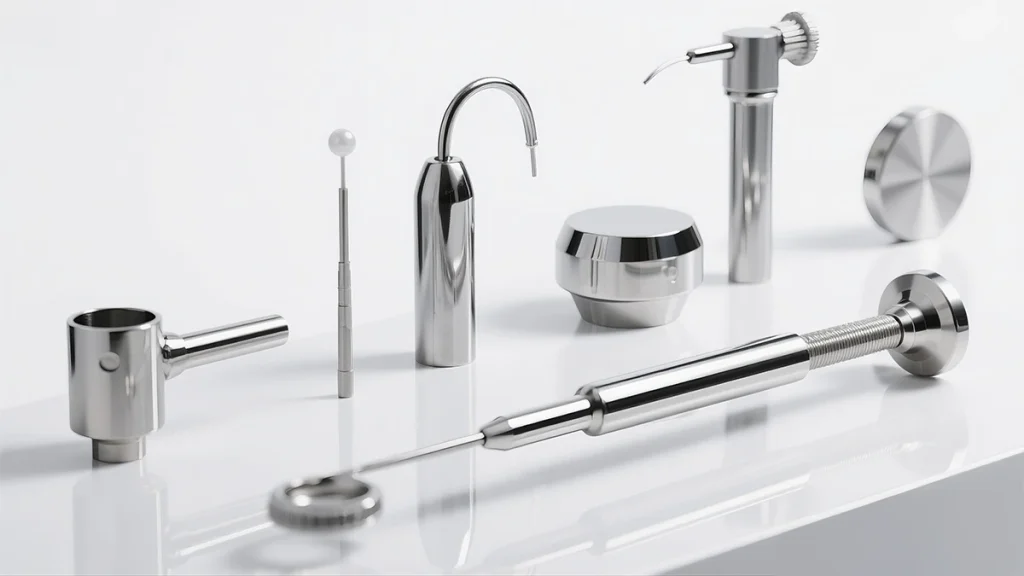
Imagine a scenario where an implant corrodes within the body and releases harmful ions, triggering a reaction. Or a piece of surgical equipment suddenly breaking in the middle of an operation because it wasn’t strong enough. These events show the importance of choosing the right materials when making medical devices.
Materials are critical elements in the design and performance of medical devices. Several considerations are essential when developing these devices to ensure safety factors are applied. These devices interact directly with the human body, impacting patient safety and overall functionality.
Medical equipment manufacturers have recently had a broad range of metal materials. Metals have become the go-to, especially when you need something super strong that will hold up over time. Considering the difficulty of current medical procedures and concerns about the patient’s safety and comfort, manufacturers want to ensure the devices used are perfect for the job. Grasping the unique characteristics of different metallic materials gives designers broad knowledge of the grade or alloy that best aligns with their application.
Key Considerations for Metal Material Selection
Biocompatibility
Biocompatibility means the material can perform its intended purpose without causing adverse reactions to the body. For a material to be biocompatible, it needs to be non-immunogenic (doesn’t trigger an immune response), non-toxic (does not release toxins into the body), non-thrombogenic (doesn’t cause blood clot formation), or non-carcinogenic. This property is paramount, especially for devices intended for long-term implantation. Rigorous tests, such as sensitization, cytotoxicity, irritation, and systemic toxicity, are carried out through ISO 10993 and FDA guidance to ascertain biocompatibility.
Mechanical Properties
Medical devices are subject to mechanical stresses during use, removal, and implantation. Mechanical properties such as strength, elasticity, fatigue resistance, hardness, and wear resistance are crucial in ensuring that the medical device endures operational demands.
For instance, materials used for orthopedic implants must be powerful and tough, so they don’t break, even with all the stress they must endure. High tensile strength is essential for load-bearing implants to resist breaking under tension, and hardness is vital for allowing surgical tools and joint replacements to bear wear and scratching.
Corrosion Resistance
The human body consists of body fluids that contain salts, enzymes, acids, and proteins, creating a harsh and corrosive environment. This condition can degrade certain metals, potentially releasing harmful metal ions into the body or causing device failure. Different types of corrosion can occur within the device. They include crevice corrosion (which arises in tight spaces), pitting (localized corrosion), and galvanic corrosion (two dissimilar metals coming into contact). Metals with corrosion resistance properties, hydrolytic stability, and bio-inertness ensure stable performance.
Serializability
At some point, medical devices must undergo intense cleaning to kill germs. Procedures like autoclaving (high-pressure steam), ethylene oxide (EtO), and gamma radiation are common. It is crucial to pick a material that can undergo sterilization over and over again without getting weaker or changing its chemical makeup. The device might not work correctly if these sterilization methods weaken or alter the material.
Manufacturing Cost and Feasibility
If inefficiently managed, metal manufacturing can lead to significant costs. Metals must be formed, machined, welded, and quickly processed into desired components without compromising manufacturing efficiency and cost-effectiveness.
Commonly Used Metals in Medical Devices
1. Stainless Steels
Alloys of stainless steel are the most commonly used metal for producing medical components.
Types:
- SAE 316L is a lower carbon content steel with additional molybdenum, displaying excellent corrosion resistance compared to 304—an ideal choice for producing implants, guide wires, and surgical instruments.
- SAE 304 is a common austenitic stainless steel. It has exceptional weldability and good general corrosion resistance. It is applicable in a wide array of medical device applications, such as hypodermic needles and surgical equipment.
- SAE 440 and SAE 420 stainless steels are ideal for the production of many surgical instruments. Although their corrosion resistance is not as good as the 300 series, the 400 series provides higher strength and hardness. This is due to their higher amount of carbon, which permits heat treatment for easy machining. They are suitable for scalpels, surgical scissors, forceps and clamps, needle holders, and retractors.
- 17-4 (17-4 PH) is a martensitic precipitation hardening material, Grade 630. This material has excellent strength and hardness and is ideal for various applications in medical devices, such as chemical processing devices and surgical steels.
2. Cobalt-Chrome Alloys (CoCrMo, CoCrWNi)
These are common metals used in the manufacture of medical equipment. They are known for outstanding strength, high wear resistance, biocompatibility, and the ability to endure high temperatures.
- CoCrMo offers excellent wear resistance, high strength, and biocompatibility. It is ideal for load-bearing joint replacements like knees and hips. Molybdenum improves these properties.
- CoCrWNi contains tungsten and nickel additions, emphasizing resistance to wear and high hardness. It is commonly employed in parts facing high temperatures and wear, such as some types of stents, dental instruments, and components of joint replacement systems.
3. Titanium and Its Alloys (Ti-6Al-4V, Commercially Pure Titanium)
Titanium is the best alternative for stainless steel, especially in bone replacements and support. It is a light material with exceptional biocompatibility, often integrating directly with bone tissue (osseointegration). The biocompatibility trait of titanium is due to its inert nature. It is a premium-priced material compared to stainless steel, valued for ultra-high-reliability parts left inside the patient’s body after a surgical procedure.
Commercially pure titanium (CP-Ti) is unalloyed titanium present in four grades (1-4). CP-Ti exhibits excellent biocompatibility and is non-magnetic.
- Grades 1 and 2 have lower strength, making them more formable and ductile. They are used in surgical instruments and dental implants.
- Grades 3 and 4 are more substantial and less ductile. They are ideal for orthopedic implants (hip, joint, shoulders), spinal fusion cages, and trauma fixation plates.
Ti-6Al-4V, or Grade 5 titanium, is an alloy of aluminum and vanadium. It offers an excellent strength-to-weight ratio while being lighter than metals like steel. It is remarkably resilient to corrosion from bodily fluids. It is highly utilized in the medical field to produce cardiovascular devices and maxillofacial implants.
4. Nitinol (Nickel-Titanium Alloy)
This alloy has the fascinating shape memory effect (returning to its original shape when heated) and superelasticity (ability to return to its original shape upon deformation). These inherent traits have revolutionized specific medical devices. Despite these advantages, the potential for nickel release and subsequent worry about biocompatibility demands careful assessment. Due to its unique property, this alloy applies to stents, guidewires, orthodontic archwires, catheters, etc.
5. Copper
Designers do not highly prefer copper metal for medical implants since it is a soft metal. It has antimicrobial properties, which make it very useful. Some other relevant qualities of copper include good electrical conductivity and biocompatibility (in a controlled context). Medical uses of copper include; high-touch (antimicrobial) surfaces (bed rails, door knobs, switches), wound dressing, copper IUDs, and certain implants (prostheses, dental implants). Its electrical conductivity is significant in MRI machines, pacemakers, defibrillators, and surgical lasers.
6. Aluminum
It’s a lightweight, non-magnetic metal with excellent thermal conductivity and corrosion resistance. While not typically used in products that are directly in contact with the patient’s body, it’s usable in medical equipment that should be light and strong. Raw aluminum quickly oxidizes and tarnishes, so a surface finish is crucial for durability.
Examples of applications include orthopedic supports, wheelchairs, and medical instruments.
Design Considerations for Metal Medical Devices
Manufacturing Process
The choice of metal significantly imposes critical constraints on the manufacturing approaches.
Machining is ideal for creating complex geometries and tight tolerances. It is suitable for any metal, but designers must consider machinability ratings and the possibility of work hardening.
Casting: Suitable for producing intricate shapes and can be cost-effective for various production volumes, depending on the alloy and complexity. A proper understanding of metallurgical properties like shrinkage and fluidity is essential.
Forging: This controlled deformation process maximizes strength and durability for specific alloys.
Additive manufacturing (3D printing): This process facilitates rapid prototyping and the creation of complex geometries through careful material selection. Post-processing ensures the desired mechanical properties and the proper surface finish.
Surface Treatments and Coatings
Product designers are required to specify surface treatments that are appropriate to the product’s intended purpose.
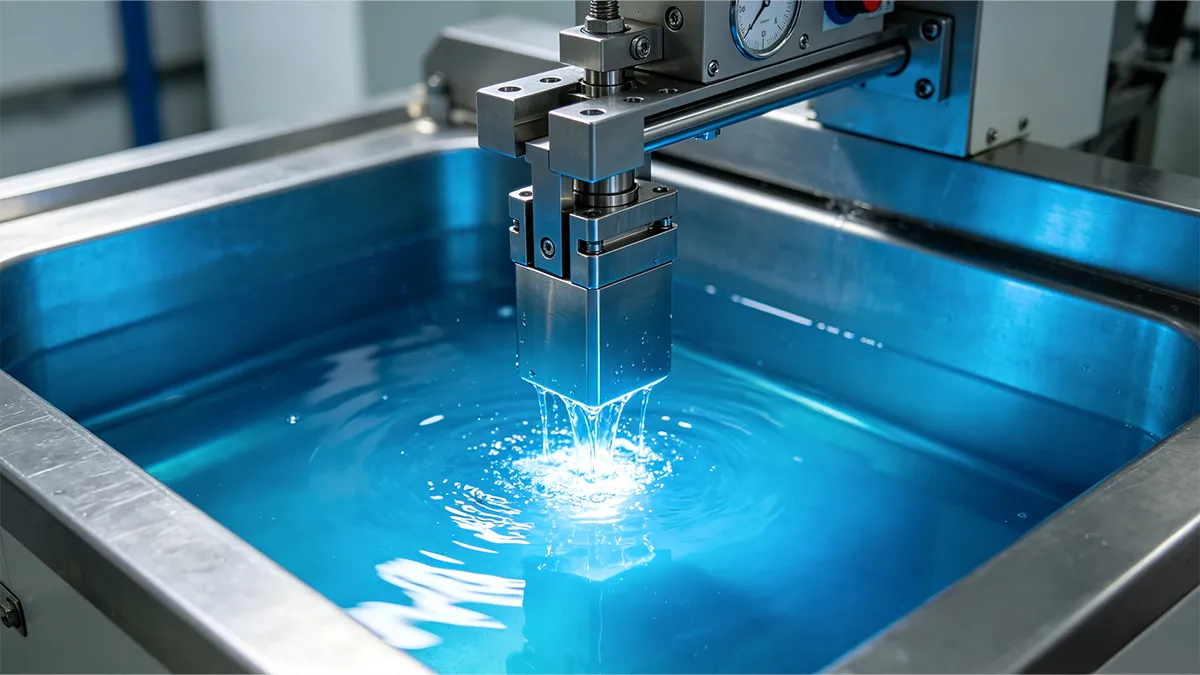
Passivation: This is a standard treatment for stainless steel. It encourages the formation of a protective oxide layer that forms a barrier against corrosive environments.
Plasma spraying: a thermal spraying technique that uses a high-temperature plasma jet to apply biocompatible layers (e.g., hydroxyapatite for implants), forming a coat. Formation of high-quality coating to resist wear, thermal stress, and corrosion. Diamond-like carbon (DLC) coatings provide benefits by substantially improving the hardness and minimizing friction on surgical equipment.
Cost and Supply Chain
Cost: The cost of materials is significant when developing a medical product. Designers must consider the price of the basic raw materials, specialized treatment, and manufacturing costs. They should constantly try to find materials that will do what they need them to do without making the end product unaffordable.
Supply chain: Procuring high-quality metal alloys can affect the production schedule because they are hard to come by. Long delivery times and scarce supplies can disrupt the production timeline. Designers must be innovative about where they get their materials by assessing material availability during prototyping and looking for alternatives to safeguard manufacturing continuity.
Tip: For researching plastic material selection in the medical industry, visit the Plastic Selection in Medical Industry page.
Conclusion
The selection of metal materials is a massive decision with really long-term effects. The medical world has some super-specific and strict demands. For product designers, navigating the world of medical devices faces the crucial task of making a choice that carries considerable weight. Remember, even the slightest choice from material to design detail can directly impact people. Balancing all the needs and fulfilling the requirements is not just practical but a matter of safety and reliability.












 EN
EN  ES
ES  FR
FR  DE
DE  IT
IT  PT
PT  NL
NL  PL
PL  AR
AR  JA
JA  KO
KO  ZH
ZH