

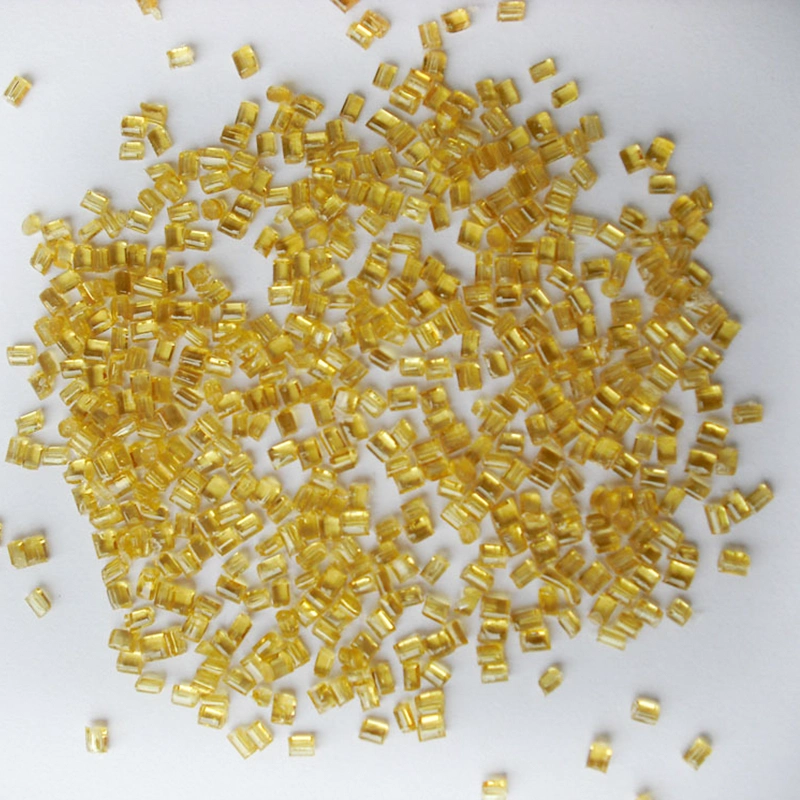
Polysulfone (PSU) is a high-performance thermoplastic known for its exceptional properties, making it a preferred choice across various industries. From aerospace to medical devices, PSU’s versatility is evident in its widespread applications. This guide aims to provide an in-depth understanding of PSU plastic, including its properties, applications, processing methods, design considerations, and popular modifications.
Understanding Polysulfone (PSU)
Polysulfone (PSU) encompasses a family of transparent thermoplastics that exhibit remarkable toughness and stability at high temperatures. PSU resin is a rigid, semicrystalline polymer highly resistant to mineral acids, alkalis, and electrolytes. It is commonly referred to by trade names such as TECASON® S, Quadrant® PSU 1000, and Udel®.

Properties of Polysulfone (PSU)
Exceptional Chemical Resistance
PSU’s chemical resistance is noteworthy. It can withstand exposure to various chemicals, including mineral acids, alkalis, and salt solutions, ensuring longevity and reliability in harsh environments. However, PSU plastic is not resistant to esters, chlorine, and aromatic hydrocarbons.
High-Temperature Resistance and Stability
PSU resin can maintain its structural integrity even at elevated temperatures, making it ideal for applications requiring thermal stability. This property is crucial for components exposed to high temperatures, ensuring they remain functional and reliable.
Mechanical Properties
- Shear Strength: It has a high shear strength, enabling it to resist forces that might cause the material to slide apart.
- Flexural Strength: It exhibits a flexural strength of 15,400 psi, ensuring it can resist bending forces effectively.
- Impact Resistance: PSU plastic can withstand sudden forces or shocks without failing, making it suitable for dynamic applications.
- Tensile Strength: It has a tensile strength of 10,200 psi, allowing it to bear significant loads without breaking.
- Compressive Strength: At 13,900 psi, PSU can withstand high compressive loads.
Thermal Stability
The thermal stability of the PSU plastic ensures it remains stable across a wide range of temperatures, enhancing its applicability in various industries. Its low coefficient of linear thermal expansion (3.1 in/in/°F x 10^-5) minimizes dimensional changes due to temperature variations.
Electrical Properties
PSU resin exhibits excellent electrical properties, making it suitable for electronic applications. Its dielectric strength of 425 V/mil ensures good insulating and dielectric properties, which are crucial for safety and performance in electrical components.
Additional Properties
- Flame Retardant: It is inherently flame retardant, making it suitable for fire resistance applications.
- Food Grade Variations: Food-grade versions of PSU plastic are available, making it suitable for food processing and handling applications.
- Good Machinability: You can machine it to close tolerances without significant difficulty.
Table 1: Key Properties of Polysulfone (PSU)
| Property | Units | ASTM Test | PSU |
| Tensile Strength | psi | D638 | 10,200 |
| Flexural Modulus of Elasticity | psi | D790 | 390,000 |
| Izod Impact (notched) | ft-lbs/in | D256 | 1.3 |
| Heat Deflection Temperature | °F | D648 | 358 / 345 |
| Water Absorption (24 hours) | % | D570 | 0.30 |
| Coefficient of Linear Thermal Expansion | in/in/°F x 10^-5 | D696 | 3.1 |
| Dielectric Strength | V/mil | D194 | 425 |
Applications of Polysulfone (PSU)
Aerospace and Automotive Applications
Given its strength and lightweight nature, PSU is widely used in aerospace and automotive sectors, especially in components requiring durability and resistance to environmental factors. Applications include aircraft interiors, airline catering trolleys, automotive bearings, and precision gears.
Additionally, PSUs’ resistance to high temperatures and harsh chemicals makes them particularly suited for these demanding environments. In aerospace applications, PSUs’ flame retardancy and high strength-to-weight ratio are particularly valuable, contributing to both safety and performance.
Medical and Healthcare Applications
PSU’s biocompatibility and resistance to sterilization processes make it a top choice for medical devices and equipment. Its ability to endure repeated sterilization by steam, ethylene oxide, and gamma radiation makes it suitable for use in sterilization cases, dental and surgical instruments, and various medical devices.
PSU’s resistance to hydrolysis and steam further enhances its suitability for medical applications, ensuring that medical devices remain safe and functional even after multiple sterilization cycles.
Electrical and Electronic Applications
PSU’s electrical properties make it ideal for electronic components. It is used in connectors, coil bodies, and various insulating components. Its flame retardant and insulating properties enhance safety and performance in electronic applications.
The material’s ability to maintain its insulating properties across various temperatures and environmental conditions ensures reliable electronic device performance.
Food Industry
PSU’s food-grade variations make it suitable for applications in the food industry. Its chemical resistance and durability are ideal for hot water fittings, plumbing manifolds, and food service trays.
Furthermore, PSU’s compliance with food safety standards ensures that it can be used safely in food processing and handling equipment, providing reliable performance in demanding food industry applications.
Water Filtration and Purification Systems
Due to its chemical resistance, PSU is commonly used in water filtration systems, ensuring clean and safe water. People utilize it in tubes, flanges, and pump components that come into contact with water and other fluids.
PSU’s resistance to chemical degradation ensures long-term performance and reliability in water treatment applications, making it an ideal choice for filtration and purification systems.
Table 2: Applications of Polysulfone (PSU) by Industry
| Industry | Typical Applications |
| Medical | Sterilization cases, dental instruments, medical devices |
| Aerospace | Aircraft interiors, catering trolleys |
| Automotive | Bearings, precision gears |
| Electronics | Connectors, coil bodies |
| Water Filtration | Tubes, flanges, pump components |
| Food Industry | Hot water fittings, plumbing manifolds, food trays |
Modifications of Polysulfone (PSU)
Blending for Enhanced Properties
Blending PSU plastic with other engineering thermoplastics can enhance its processability and reduce costs. For example:
- PSU/PA Blends: Blending PSU plastic with polyamides (PA) improves flow, toughness, and chemical resistance. The semi-crystalline nature of polyamides enhances the chemical resistance of the blend. These blends leverage the strengths of both materials, resulting in a composite with improved properties tailored to specific applications.
- PSU/PC Blends: Combining PSU resin with polycarbonate (PC) can improve flow properties while maintaining mechanical performance. However, due to the amorphous nature of PC, there is no significant improvement in chemical resistance.
Optimizing for Specific Applications
Certain modifications can be made to optimize PSU plastic for specific applications. For instance, adding fillers or reinforcements can improve mechanical properties such as tensile and impact strength.
Modifying the polymer matrix can also enhance thermal stability and resistance to specific chemicals. Tailoring the formulation of PSU resin to meet the demands of particular applications can extend its usability and effectiveness in a broader range of environments.
Processing Techniques
PSU can be processed using conventional thermoplastic methods such as injection molding, extrusion, blow molding, and thermoforming. It exhibits low shrinkage, which is advantageous for precise and complex parts. The following are detailed processing guidelines:
Processing Guidelines:
- Injection Molding: Barrel temperatures of 340-380°C with melt temperatures around 360°C are recommended. Mold temperatures should be in the range of 140-180°C.
- Drying: To achieve less than 0.04% water content, it is recommended that the product be dried for 4 hours at 150°C or 2 hours at 180°C.
- Extrusion: Extrusion temperatures should be between 340-390°C. An L/D ratio of around 20 is recommended for optimal processing.
Ultimately, the choice of processing method and parameters will depend on the specific application and the desired properties of the final product.
Design Guide and Considerations for Designers
Selecting PSU for Specific Applications
Due to its higher cost, PSU plastic should be selected for applications where its specific properties, such as high temperature and chemical resistance, are crucial.
For applications not requiring these properties, polycarbonate may be a more cost-effective alternative. Designers must carefully evaluate their application’s requirements and weigh the benefits of PSU against its cost to make an informed decision.
Machining
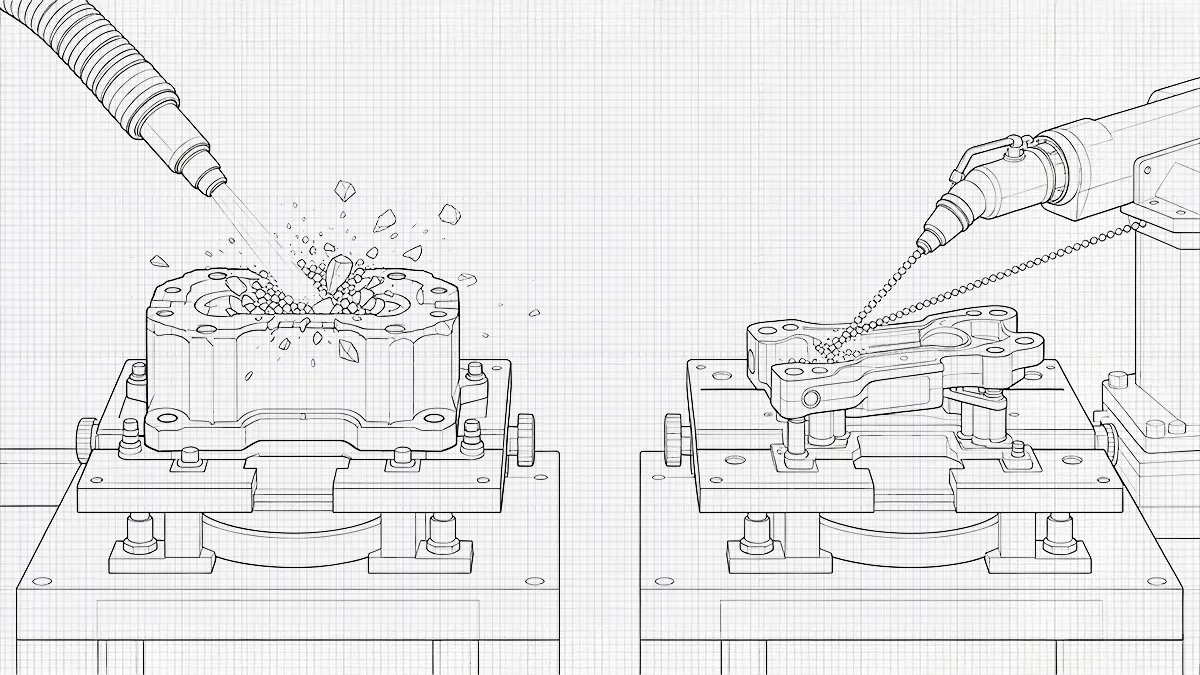
It has good machinability, allowing close tolerances without significant difficulty. However, machining can cause a loss of transparency. A secondary polishing process is required to restore clarity. Non-aromatic, water-soluble coolants, such as pressurized air and spray mists, are recommended to achieve ideal surface finishes and close tolerances. Coolants also extend tool life and prevent surface cracking.
Injection Molding
- Temperature: Recommended barrel temperatures are 340-380°C with melt temperatures around 360°C.
- Mold Temperature: It should be between 140 °C and 140-180°C. Thin-walled molding may require higher temperatures.
Extrusion
- L/D Ratio: An L/D ratio of around 20 is recommended for optimal processing.
- Temperature: Extrusion temperature should be between 340-390°C.
Finishing and Treatments
When PSU surfaces are machined, their transparency is lost. If required, a polishing process, such as vapor or solvent polishing, is necessary to restore clarity. This finishing step is crucial for applications where optical clarity is important, such as medical devices and certain electronic components.
Considerations for Sterilization
PSUs can endure repeated sterilization, making them suitable for medical applications. Their resistance to steam and hydrolysis further enhances their utility in environments that require regular sterilization.
Designers must consider the sterilization methods used in their applications and ensure that PSU components are compatible with these processes to maintain functionality and safety.
Environmental Considerations
While Polysulfone resin offers excellent properties, it is not UV resistant and has poor weatherability, making it unsuitable for outdoor applications. Designers should consider this limitation when selecting PSU for applications exposed to sunlight or outdoor conditions.
For applications requiring UV resistance, alternative materials or additional protective coatings may be necessary.
Cost Considerations
It costs more than many engineering plastics, so choose it for applications that require its unique properties. Consider alternative materials such as polycarbonate to reduce costs for less demanding applications. Designers must balance the material cost with the performance requirements of their application to achieve an optimal solution.
Dimensional Stability
PSU’s excellent dimensional stability across various temperatures is advantageous for precision parts. Its low coefficient of linear thermal expansion ensures minimal dimensional changes due to temperature fluctuations. This property is particularly important for components that require high dimensional accuracy and stability in varying thermal environments.
Designing for Manufacturability
When designing with PSU, it is important to consider manufacturability. The material’s low shrinkage and good flow properties make it suitable for complex and precise components.
However, designers should know the need for secondary polishing processes if post-machining requires transparency. Ensuring the design accommodates the material’s processing characteristics will help achieve high-quality, cost-effective production.
Processing and Machining PSU
Annealing
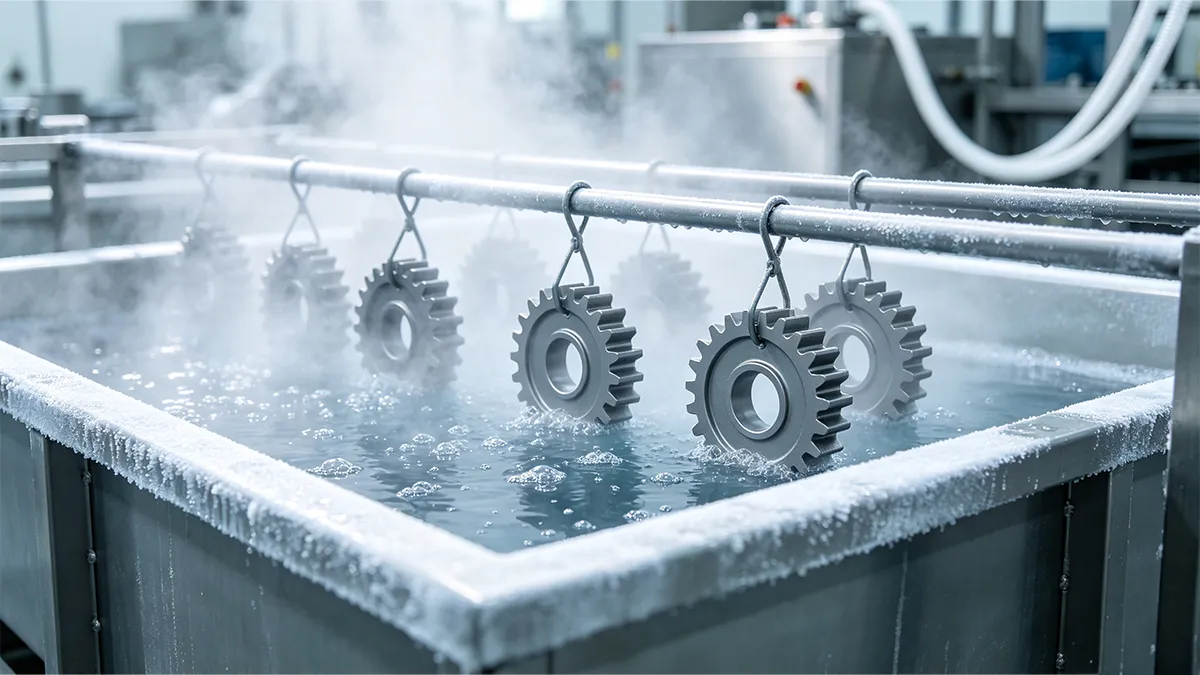
Like many amorphous thermoplastics, PSU plastic is especially sensitive to stress cracking. Stress relief through an annealing process is highly recommended before machining. Annealing PSU greatly reduces the likelihood that surface cracks and internal stresses will occur from the heat generated.
Post-machining annealing also helps reduce stresses that could contribute to premature failure. This process ensures the highest-quality precision machining of PSUs and other thermoplastics.
Machining
When machining PSU, non-aromatic, water-soluble coolants are most suitable for ideal surface finishes and close tolerances. These include pressurized air and spray mists. Coolants also extend tool life.
Petroleum-based coolants should be avoided, as they attack amorphous thermoplastics like PSU. Contamination is a serious concern when machining polymer components for technically demanding industries such as aerospace. Ensuring a high level of sanitation and avoiding metallic cross-contamination is crucial.
Preventing Contamination
Contamination is a significant issue in industries such as aerospace and medical devices, where the highest levels of cleanliness and precision are required.
To ensure the highest level of sanitation down to the sub-molecular level, it is essential to design, heat-treat, and machine-only plastics, with any sub-manufactured metalwork processed outside the facility. This approach helps de-risk the process from metallic cross-contamination, ensuring the highest quality and reliability of the final product.
Conclusion
Polysulfone (PSU) is a versatile, high-performance thermoplastic with exceptional properties that make it suitable for various applications. Its high-temperature resistance, chemical resistance, and excellent mechanical properties set it apart from other materials.
However, its high cost necessitates selective use for applications that require specific attributes. Understanding the nuances of PSUs, including their modifications and processing methods, is crucial for designers and manufacturers to optimize their use in various industries.
Whether for medical devices, aerospace components, or water filtration systems, PSUs offer reliable performance and durability, ensuring their place as a preferred material in high-demand applications.
Tips: Learn more about the other plastics





 EN
EN  ES
ES  FR
FR  DE
DE  IT
IT  PT
PT  NL
NL  PL
PL  AR
AR  JA
JA  KO
KO  ZH
ZH