


Zinc is a cheap and multipurpose metal that plays a significant role in product design and manufacturing. It provides many benefits, from complex die-cast parts to strong and corrosion-resistant ones. This guide will explore what makes Zinc a common choice, the alloys to consider, its manufacturing processes, surface finishes, limits, and how product designers can better collaborate with manufacturers.


Why Choose Zinc?
Zinc offers a perfect compromise for mechanical strength, feasibility, and economic viability, so it is attractive for engineers to use it in precision component designs. This low melting point of ~419.5°C can result in very high levels of castability. Hence, thin-walled complex geometries with tight dimensional tolerances can be reproduced via high-pressure die casting in Zinc. The fluidity of molten Zinc allows the enhanced flow of metal into the mold, thus reducing porosity and the need for secondary machining of the cast part.
For instance, the most common zinc alloy is Zamak 3, which has a yield strength of ~280 MPa and superior impact resistance and is, therefore, appropriate for instances that require mechanical stability under cyclic loading. Although Zinc has a higher density (6.6–6.8 g/cm³) than aluminum, it offers a good combination of strength for many applications and excellent formability, contributing to reduced material wastage. While aluminum generally has a superior strength-to-weight ratio, zinc’s net-shape casting capabilities and ability to form complex, thin-walled parts can lead to efficient material use and part consolidation, sometimes offsetting the inherent density difference in overall component design.
From an economic point of view, Zinc is easily used in mass production. Its tool wear is minimal, its energy consumption is low with the help of a low melting point, and the cycle rates are fast.
Its resistance to corrosion entails the creation of a stable zinc hydroxide carbonate layer in atmospheric conditions, saving components from costly coatings. In addition, the ease of compatibility with various surface finishes (such as electroplating and chromating) and powder coating allows product designers to achieve functional and aesthetic needs.
Table: Comparison of Zinc Alloys and Standard Alternatives
| Property | Zamak 3 (Zinc) | 6061 Aluminum | 304 Stainless Steel |
|---|---|---|---|
| Yield Strength (MPa) | ~280 | ~276 | ~215 |
| Melting Point (°C) | 387–426 | ~660 | ~1400 |
| Density (g/cm³) | ~6.7 | 2.7 | 8 |
| Castability (Relative) | Excellent | Fair | Poor |
| Corrosion Resistance | High | Moderate | High |
| Machinability (Rating) | Good | Excellent | Fair |
Key Zinc Alloys for Designers
When choosing Zinc, one must determine which alloy meets your product needs. Common zinc alloys include:
1. Zamak Series (Zamak 3, 5, 7)
The engineers prefer to use the Zamak series for precise zinc die casting. Zamak 3 has approximately 4 % aluminum and provides excellent dimensional stability. It packs tight tolerances, is warp-resistant, and serves most general-purpose applications. Zamak 3 provides tensile strength of about 330MPa and yield strength of about 280MPa. It also provides 10% elongation that can be deformed slightly without cracking.
Table: Physical Properties of Zamak 3
| Zamak 3 | Value |
|---|---|
| Melting Temperature – Liquidus (Celsius) | 390 °C |
| Melting Temperature – Solidus (Celsius) | 380 °C |
| Viscosity(Pa s) | ≈3.5 mPa s 400 °C |
| Solidification shrinkage (%) | 1.20% |
| Ultimate Tensile Strength (Mpa) | 280 MPa |
| Yield strength (0.2% offset) | 210 MPa |
| Young’s modulus | 86 GPa |
| Elongation at Break | 11% |
Zamak 5 contains an additional 1% copper, enhancing its strength and hardness. This alloy’s tensile strength and Brinell hardness are approximately 350 MPa and 91, respectively. Use Zamak 5 for components that work under higher pressure and experience wear.
Table: Physical Properties of Zamak 5
| Physical Properties | Metric | Imperial |
|---|---|---|
| Density | 6.7 kg/dm³ | 0.24 lb/in³ |
| Solidification (melting) range | 380 – 386 °C | 716 – 727 °F |
| Coefficient of thermal expansion | 27.4 μm/m – °C | 15.2 μin/in – °F |
| Thermal conductivity | 109 W/mK | 756 BTU – in/hr – ft² – °F |
| Electrical resistivity | 6.54 μΩ – cm at 20 °C | 2.57 μΩ – in at 68 °F |
| Latent heat (heat of fusion) | 110 J/g | 4.7×10⁵ BTU/lb |
| Specific heat capacity | 419 J/kg – °C | 0.100 BTU/lb – °F |
| Coefficient of friction | 0.08 | – |
Table: Mechanical Properties of Zamak 5
| Mechanical Properties | Metric | Imperial |
|---|---|---|
| Ultimate tensile strength | 331 MPa (270 MPa aged) | 48,000 psi (39,000 psi aged) |
| Yield strength (0.2% offset) | 295 MPa | 43,000 psi |
| Impact strength | 52 J (56 J aged) | 38 ft – lbf (41 ft – lbf aged) |
| Shear strength | 262 MPa | 38,000 psi |
| Modulus of elasticity | 96 GPa | 14,000,000 psi |
| Compressive yield strength | 600 MPa | 87,000 psi |
| Fatigue strength | 57 MPa | 8,300 psi |
| Elongation at \(F_{max}\) | 2% | – |
| Elongation at fracture | 3.6% (13% aged) | – |
| Hardness | 91 Brinell | – |
Zamak 7 is purer and has increased fluidity. This alloy runs smoothly in thin-walled molds and replicates delicate surfaces with precision. It fits decorative elements or complex geometries that need proper finishes.

2. ZA Alloys (ZA-8, ZA-12, ZA-27)
ZA alloys, which can be abbreviated as Zinc-Aluminum, provide superior mechanical properties as compared to the traditional Zamak alloys. When engineers need a higher tensile strength, increased hardness, and better wear resistance, engineers use ZA-8 (8% Al). ZA-8 attains a tensile of ~380 MPa and Brinell hardness of ~100, perfect for gears, bushings, and structural brackets.
The two alloys, ZA-12 (12% Al) and ZA-27 (27% Al), offer even greater strength and stiffness. ZA-27, the best of the series, has tensile strength greater than 410 MPa and Brinell hardness more than 120. Yet, a high aluminum content decreases fluidity and promotes shrinkage during solidification. During mold design and thermal management, the designers need to factor this in. When weight-bearing capacity and dimensional stability under load are of prime importance compared to the complexity of casting, use ZA-12 and ZA-27.
Table: Mechanical Properties of ZA Alloys
| Property | ZA – 8 | ZA – 12 | ZA – 27 |
|---|---|---|---|
| Aluminum Content (%) | 8 | 12 | 27 |
| Tensile Strength (MPa) | ~380 | ~400 | ~410 |
| Yield Strength (MPa) | ~290 | ~330 | ~360 |
| Hardness (Brinell) | ~100 | ~110 | ~120+ |
| Density (g/cm³) | 6 | 5.6 | 5 |
| Castability (Relative) | Good | Moderate | Poor |

When to Consider Other Materials
Zinc is an excellent material in various applications, but certain engineering conditions demand other materials.
High-Temperature Applications
Zinc alloys, especially die-cast grades such as Zamak and ZA, fail in structural integrity at around 200°C. The Solidus temperature of the Zamak 3 is about 380 °C, while it suffers severe degradation in its mechanical properties beyond 150–180 °C. Creep deformation can be a threat in long, high-temperature conditions. In thermal-sensitive applications such as engine blocks, exhaust manifolds, or electronic housing that withstand heat cycles, engineers should consider using aluminum alloys (e.g., A356-T6) or high-temperature thermoplastics (like PEEK). These alternatives demonstrate mechanical properties and dimensional stability far above 200 degrees centigrade.
Weight-Sensitive Designs
Weight-sensitive applications also question the fitness of Zinc. While Zinc has a density of ~6.6 g/cm³, it is much heavier than a much lighter aluminum (~2.7 g/cm³) and magnesium (~1.8 g/cm³). This restricts its application in aerospace, automotive EVs, and handheld consumer electronics, where mass reduction affects energy efficiency and user ergonomics. Lightweight design is one of those areas that interests engineers, and they tend to use aluminum or magnesium for structural housings and frames. The trade-off generally involves the trade-off between weight, cost, and rigidity. Use the formula 𝜌=𝑚/𝑉 to calculate the weight of material per part volume. A zinc part will be more significant than 2.4 times the mass of an equivalent aluminum part for equal volume.
Extreme Loads and Casting Size Limitations
Extreme load-bearing applications also test Zinc’s capabilities to their limits. Although the tensile strengths of ZA-27 go up to 410 MPa, it cannot compete with hardened steel (>1000 MPa) or titanium alloys (e.g., Ti-6Al-4V, ~900 MPa). Zinc alloys also show earlier fatigue failure than high-performance metals. Engineers should use high-strength steel or titanium to avoid catastrophic failure in parts such as suspension arms, structural beams, or pressurized valve bodies that may get brittle.
Size restriction is also the case with zinc die casting. Most zinc machines can mass-produce parts weighing 5–10 kg without difficulty. For bigger castings, aluminum may be preferred due to factors like overall melt handling for very large volumes and potentially lower porosity in very thick sections, though zinc alloys generally exhibit excellent fluidity and comparable or sometimes lower net casting shrinkage than many aluminum casting alloys. Knowledge of these performance boundaries guarantees that engineers select materials that respond to function in mechanics, heat exposure, and structural dependability.
Table: Comparison of Mechanical Properties of Different Metals
| Property | Zinc Alloys (Zamak/ZA) | Aluminum Alloys | Steel (Mild/HSLA) | Titanium (Ti – 6Al – 4V) |
|---|---|---|---|---|
| Density (g/cm³) | ~6.6 | ~2.7 | ~7.8 | ~4.5 |
| Max Operating Temp (°C) | <150 | ~250 | >500 | >400 |
| Tensile Strength (MPa) | 280 – 410 | 250 – 350 | 400 – 1200 | ~900 |
| Fatigue Resistance | Moderate | Moderate | High | Very High |
| Max Part Size (Die Cast) | <10 kg | Up to ~30 kg | N/A (Forged/Welded) | N/A (Forged/Machined) |
Zinc & Manufacturing Processes
Zinc is amenable to many modern manufacturing techniques. The following are the most common options used currently:
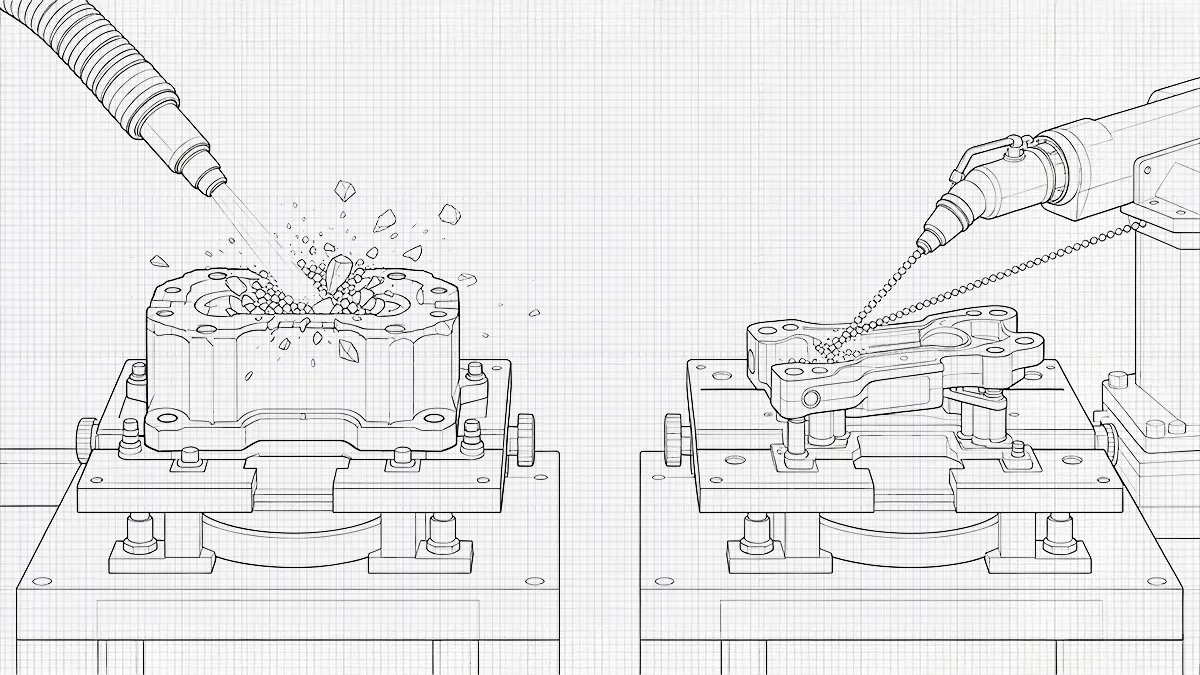
Zinc Die Casting
Zinc die casting is capable of high precision in manufacturing complex geometries, where tight tolerances are required; Zinc often delivers dimensional accuracy of ±0.05 mm. The lower melting point of Zinc (-~419.5°C) gives engineers a lesser strain on steel tooling, thus extending mold life to over 1,000,000 shots. The process allows thin walls (~0.3 mm), integrated mounting structures, and high surface smoothness (as-cast Ra ≤ 1.6 µm) with a small post-treatment needed. Compared to aluminum, Zinc has a better flow when under pressure, enabling minute details and narrow draft angles (< 1 °). The efficiency for die casting is:
Rapid solidification (~0.5–1.5 s for small parts) and high thermal conductivity (~116 W/m·K) of zinc speed cycle times and increased throughput. These characteristics make Zinc die casting suitable for the mass production of housing, connectors, levers, and decorative parts.
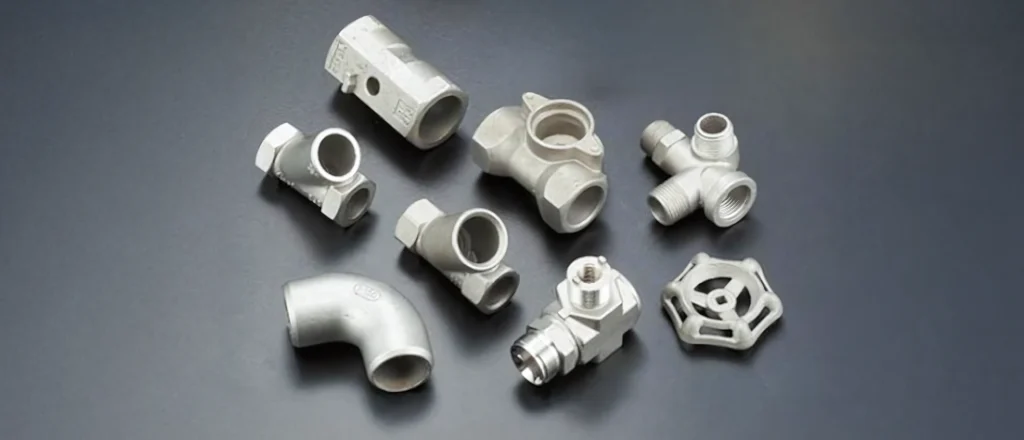
Zinc CNC Machining
Zinc CNC machining provides better dimensional accuracy and closer tolerances, those being ±0.01 mm. Engineers implement it for functional prototypes in small volumes and further details after die casting. The zinc machinability index goes beyond 90%, hence minimizing tool wear and enabling high-speed milling or turning. Those commonly used operations are contour milling, drilling, and threading, especially when working on alloys such as Zamak 3 and ZA-27.
Zinc has a Brinell hardness of 82–120 HB and a low work-hardening rate, thus ensuring stable chip formation and a smooth surface (Ra ≤ 0.8 µm). Zinc’s good thermal conductivity (~116 W/m·K) relative to materials like steel, combined with its inherent softness and good chip formation characteristics, facilitates heat dissipation from the cutting zone, often allowing for dry or minimal lubrication approaches during CNC machining. CNC-machined zinc components are frequently used in aerospace brackets, optical housings, and electronics, and precision and visual quality play a crucial role.
| CNC Property | Zinc Alloys | Aluminum Alloys |
|---|---|---|
| Tolerance (mm) | ±0.01 | ±0.02 |
| Surface Finish (Ra, μm) | ≤ 0.8 | ≤ 1.6 |
| Machinability Index (%) | >90 | ~65 – 80 |
| Typical Applications | Prototypes, Precision Fixtures | Enclosures, Frames |

Zinc Molds
Zinc molds provide excellent tool life because of the low casting temperature of Zinc (~ 419.5°C), which reduces thermal fatigue and mold steel erosion. H13 or P20 tool steel toolings can produce over 1,000,000 shots when using an optimized die temperature and injection pressure. Fluidity allows small draft angles (0.5°–1°), essential for more compact and intricate cavity designs.
Engineers widely apply zinc molds in making enclosures of consumer electronics, decorative trim in cars, housings of gears, and accurate brackets. Some of the key process parameters, including injection speed (~ 30–100 m/s) and mold temperature (90–150°C), also directly influence the life of the mold and dimensional accuracy.

Surface Finishing Options for Zinc
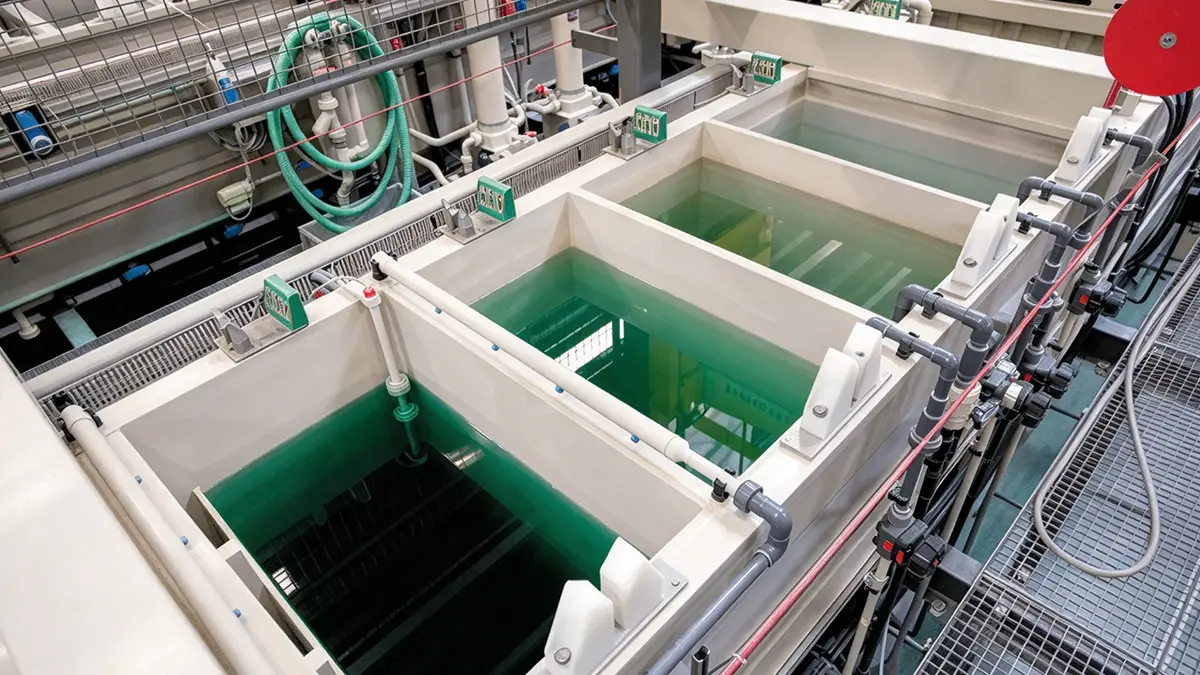
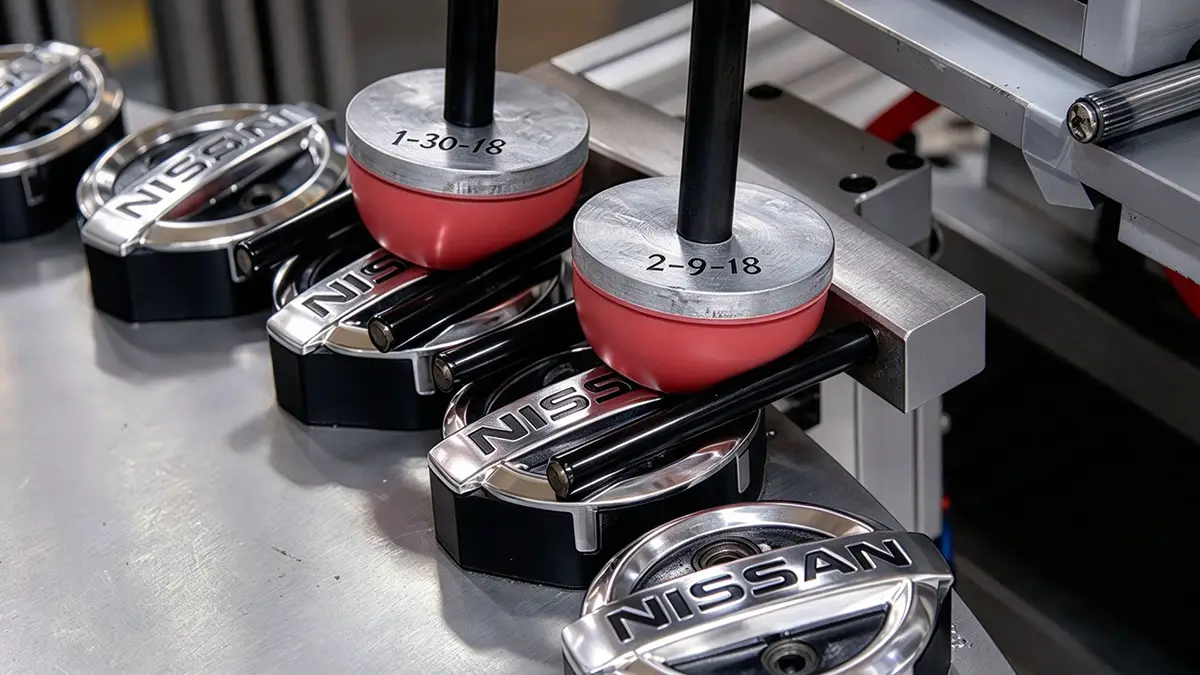
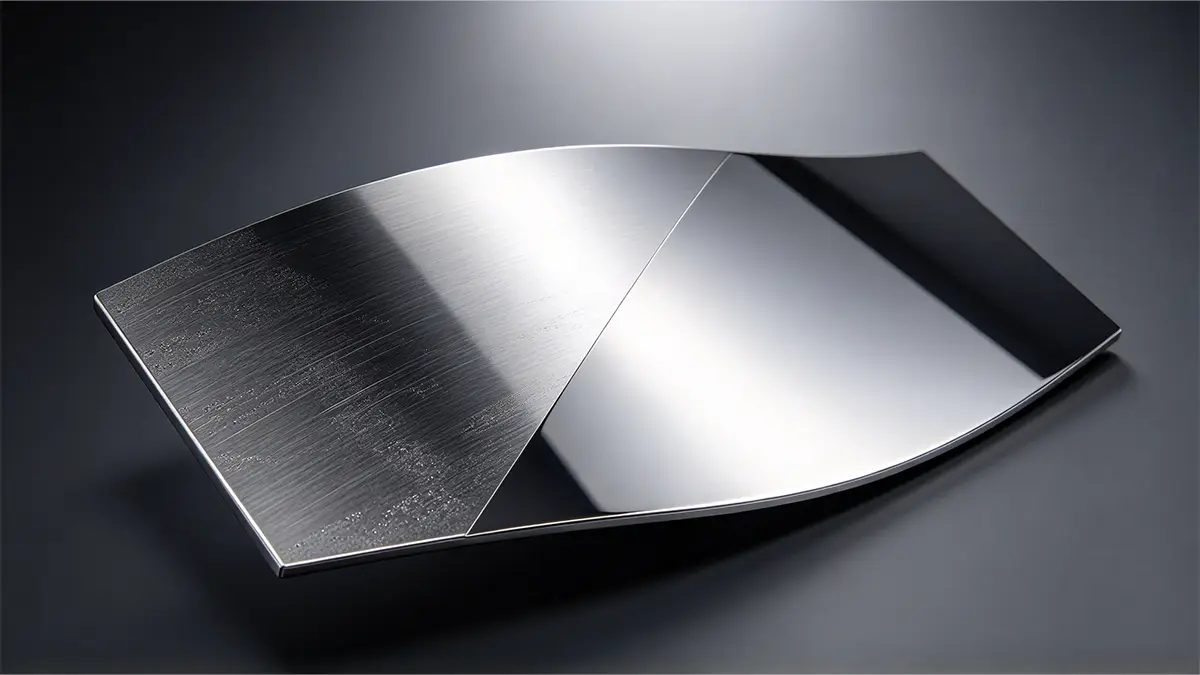
Zinc components can promote surface finishing processes that improve corrosion protection, mechanical performance, and aesthetics. Electroplating is still the most popular method, particularly for nickel, chrome, and gold. Nickel is used for wear resistance (hardness ~500–700 HV), while chrome is selected due to its high level of reflection and corrosion protection. Gold plating increases electrical conductivity in connectors and contacts. Electroplating usually consists of 1-5 A/dm², conducted in a pH-controlled bath. A clean zinc surface gives good adhesion and is generally performed before acid cleaning or micro-etching.
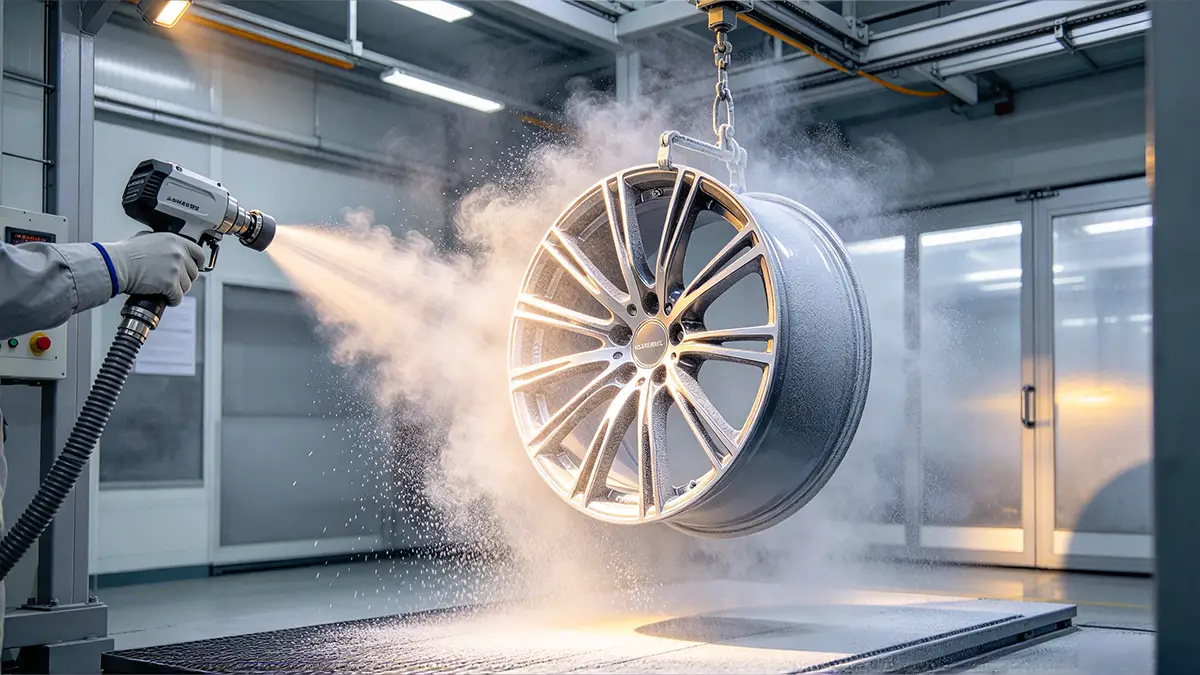
Powder coating gives tough thermoset or thermoplastic coatings, which are best suited for products destined for outdoor or abrasive environments. This process electrostatically puts powder particles, which melt and cure at 160-200°C. The low melting point of Zinc requires meticulous regulation of heat during the curing process to prevent warping of the substrate. Finishes can be completed with more than 1000 hours of salt spray resistance. Thus, powder-coated zinc parts are suitable for outdoor housing, tools, and fixtures. Painting is less durable than powder coating but provides high flexibility in color and texture, which is commonly applied to consumer products’ housings.
Having dimensionally stable corrosion protection, passivation, and chemical conversion coatings (e.g., trivalent chromate) offers it. These treatments create a thin, adherent oxide or chromate coat on the zinc surface. Engineers call for this finish on electronic housings and mechanical parts where tolerance levels are critical. Details regarding a range of typical finishes, their protective functionality, and typical application areas are listed in the table below.
Table: Different Surface Treatment Technologies for Zinc Alloys
| Finish Type | Typical Thickness (μm) | Key Properties | Applications |
|---|---|---|---|
| Nickel Electroplating | 5–25 | Wear resistance, decorative | Consumer goods, automotive trim |
| Chrome Electroplating | 0.5–5 | Corrosion resistance, luster | Handles, faucets, electronics |
| Powder Coating | 60–120 | Weatherproofing, impact resistance | Outdoor products, machinery covers |
| Painting | 20–50 | Branding, aesthetic flexibility | Appliances, electronics housings |
| Chromate Conversion Coating | <1 | Corrosion resistance, conductive | Electrical housings, fasteners |
Case Example: Consumer Electronics Housing
A product designer creating a smart home device can choose the Zamak 3 zinc alloy for the external housing. The choice is aimed at fulfilling strict requirements for mechanical integrity, dimensional stability, and aesthetic value. Zamak 3 has a balanced tensile strength (260–440 MPa), good fluidity for casting thin walls (down to 1.0 mm), and low shrinkage (~0.7%). These characteristics enable the designer to develop apparent, precise geometric features such as sharp corners and snap-fit tabs finished with the product material. Zinc die casting also allows for high cycle repeatability, crucial in maintaining quality in volume ends. The designer incorporated logo embossing into the mold using 0.3 mm relief at draft angles of 1°, thus eliminating secondary branding operations.
The team coats the items with a brushed nickel electroplated finish during surface treatment to increase corrosion resistance and deliver a premium look. The finish includes a copper underlayer for adherence and a layer of nickel finish to achieve a non-plated surface hardness over 500 HV and approximately 10 µm in layer thickness. This finish covers the housing from humid indoor environments with a modern metallic look. The Zinc’s resistance to precision plating and decorative finishes gave the product a refined, consumer-grade look at a low cost. Zinc can achieve close-fit integration, functional longevity, and premium aesthetics within strict manufacturing budgets; this case illustrates that.

How Product Designers Can Communicate Effectively with Manufacturers
Explicit and unambiguous communications between the product designer and the manufacturers guarantee optimized output, cost efficiency, and low time-to-market. Designers should start by stating core parameters such as zinc alloy (Zamak 3 or ZA-8), manufacturing method (die casting, CNC machining), and optional surface finishes (nickel plating, powder coating, etc.). Incorporating this information at the onset of the design process clears doubts and reduces the level of risky non-compliant prototypes. It is advisable that the entire CAD file be shared, preferably in STEP (.stp) or IGES (.igs) format, with entire dimensional tolerances and geometric dimensioning and tolerancing (GD&T) symbols to enable the manufacturer to analyze the design with precision. Focused highlighting of critical-to-function (CTF) features instead of cosmetic aspects allows the manufacturing tolerances to be brought to bear where they would make the most difference.
Engineers (or Designers) should also request a Design for Manufacturing (DFM) review beforehand. This process can determine potential problems with mold flow, draft angle corrections, undercuts, or the mold section where wall thickness may influence shrinkage or porosity in zinc die casting. For zinc parts machined on CNC, DFM feedback usually recommends how the tool can access them, how the parts should be clamped, or how the material can be removed.
Integration of a production schedule that includes tooling lead time (which can range from approximately 6-12 weeks or more for a typical zinc die casting mold, depending on complexity and manufacturer workload), first article inspection (FAI), and finishing cycles leads to more practical delivery anticipation. Such constant collaboration, reviews of milestones, and design changes through version control tools will make sure that both teams are on the same page, eliminating costly last-minute iterations and speeding up the journey from prototype to production.

Conclusion
Zinc is a dependable, flexible, and cost-effective material for product designers. It applies to various production techniques and surface finishes, from die casting to CNC machining. By knowing zinc alloys, their boundaries, and ways of involving manufacturers, designers can efficiently design quality and long-lasting products.
If you are thinking about using Zinc for your next project, be sure to speak to us right now at FirstMold to learn more about what we can do to assist you in turning your design into a reality.
Tips: Learn more about the other metals for product designers







 EN
EN  ES
ES  FR
FR  DE
DE  IT
IT  PT
PT  NL
NL  PL
PL  AR
AR  JA
JA  KO
KO  ZH
ZH