

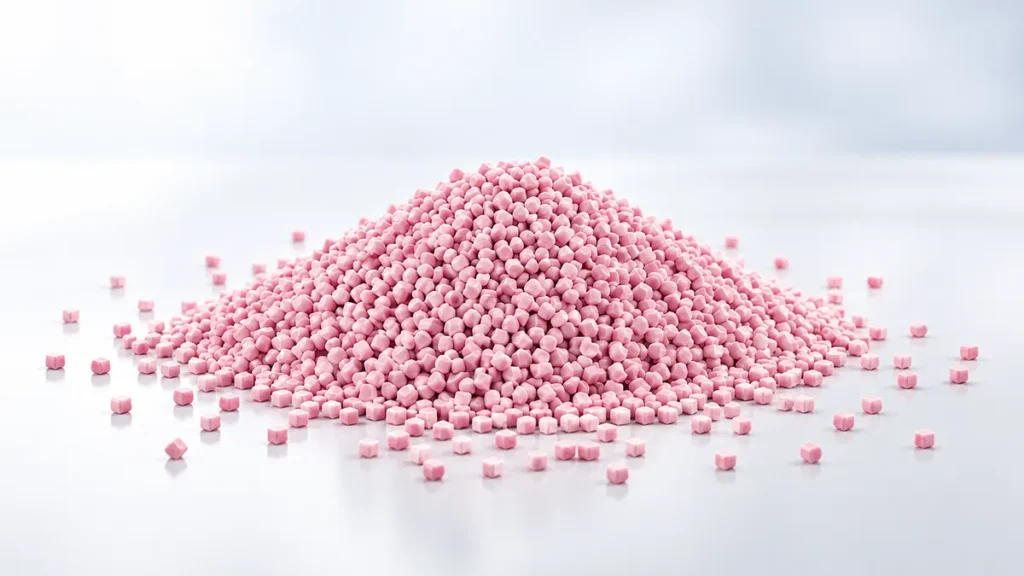
Polyethylene Terephthalate (PET) is a versatile and widely used thermoplastic polymer in various design applications, ranging from packaging to textiles and beyond. In this detailed guide, we delve into the properties, uses, manufacturing processes, and comparisons of PET plastic with other polymers.
What is PET Plastic Material?
Polyethylene Terephthalate, commonly known as PET, belongs to the polyester family of polymers. It is a clear, strong, and lightweight plastic that can be easily shaped and molded into various forms.
PET plastic is widely recognized for its durability, transparency, and excellent barrier properties against moisture and gases. These characteristics make it suitable for a wide range of applications.
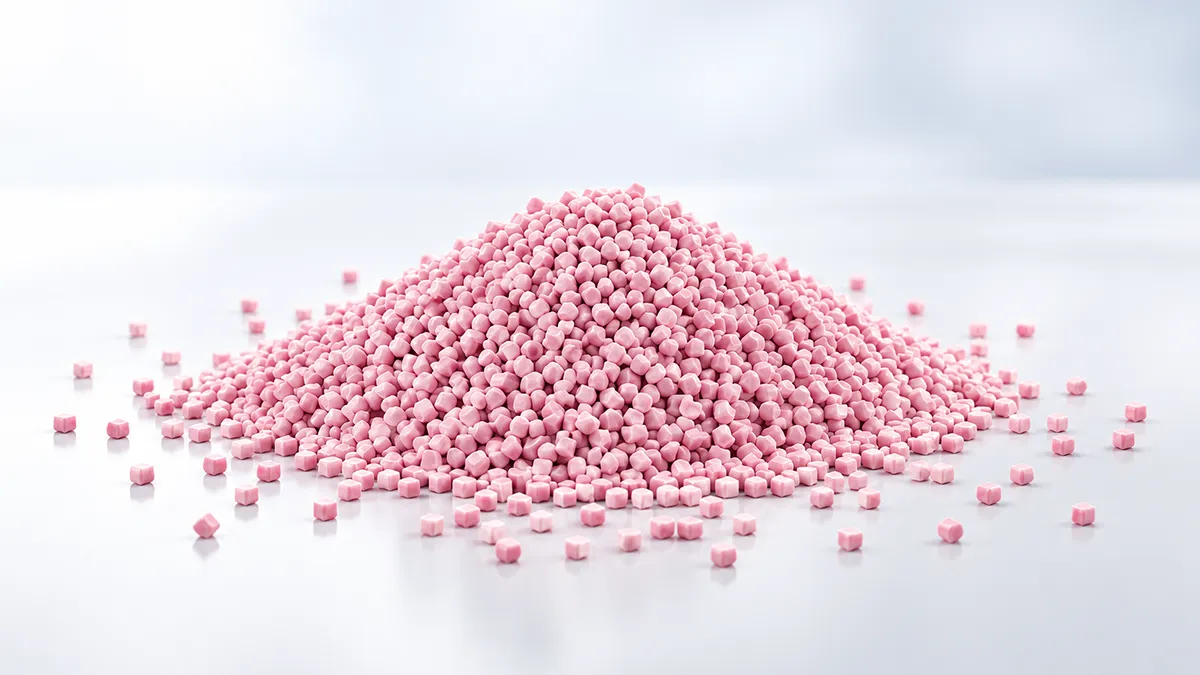
Properties of PET Material
| Property | Description |
|---|---|
| Chemical Formula | (C10H8O4)n |
| Molecular Weight | Approximately 192.17 g/mol |
| Density | 1.3 g/cm³ |
| Melting Point | 250–260 °C (482–500 °F) |
| Glass Transition Temperature | 70–80 °C (158–176 °F) |
| Tensile Strength | 55–75 MPa (8,000–10,900 psi) |
| Young’s Modulus | 2.0–2.7 GPa (290,000–391,000 psi) |
| Water Absorption | Very low, typically less than 0.8% by weight |
| Transparency | Excellent clarity and transparency |
| Chemical Resistance | Resistant to many chemicals, sensitive to alkalis |
| Recyclability | Highly recyclable, commonly processed to near-virgin properties |
| UV Resistance | Good UV resistance, suitable for outdoor applications when stabilized or UV-coated |
| Electrical Insulation | Excellent electrical insulator |
| Flammability | Generally considered self-extinguishing |
| Barrier Properties | Good oxygen and carbon dioxide barrier |
| Biocompatibility | Generally considered biocompatible |
Types of Polyethylene Terephthalate (PET)
Polyethylene Terephthalate (PET) encompasses several types that vary in their chemical composition, physical properties, and intended applications. Understanding these variations is crucial for utilizing PET plastic effectively across different industries.
Here’s a detailed overview of the types of PET plastic:
1. PETG (PET-glycol Modified)
PETG is a modified form of PET plastic material that incorporates glycol during the polymerization process. This modification enhances the material’s impact resistance and toughness while retaining its clarity and ease of processing.
Manufacturers widely use PETG in applications that require robust packaging, such as bottles, containers, and technical parts. Its enhanced properties make it suitable for demanding environments where standard PET might not suffice.
2. Recycled PET (rPET)
Recycled PET, or rPET, is derived from post-consumer PET products such as bottles, which are collected, cleaned, and processed for reuse. rPET plays a significant role in sustainability efforts by reducing the consumption of virgin PET materials and minimizing waste.
It exhibits similar properties to virgin PET but may have a slightly different molecular structure due to the recycling process, often leaning towards amorphous characteristics. People use rPET is to manufacture new PET containers, fibers for textiles, and various other products, contributing to a circular economy.
3. Amorphous PET (APET)
Amorphous PET lacks a crystalline structure due to rapid cooling during its manufacturing process. This rapid cooling prevents the polymer chains from forming ordered crystalline regions, resulting in a transparent material with excellent clarity.
Manufacturers commonly use APET in producing films and sheets for packaging applications that require critical transparency and visibility of contents. Compared to crystalline PET variants, APET has a lower melting point, higher elasticity, and improved transparency, making it ideal for thermoforming processes.
4. PET Fibers
Manufacturers specifically tailor PET fibers for textile applications by extruding the polymer into fine fibers used in fabrics, upholstery, carpets, and other textile products. These fibers are famous for their durability, wrinkle resistance, and ease of care, making them popular in both clothing and household textiles.
PET fibers can be further classified based on their denier (thickness) and processing techniques, allowing for a wide range of textile applications from everyday clothing to industrial fabrics.
Uses of Polyethylene Terephthalate (PET)
Polyethylene Terephthalate (PET) is widely in use across various industries due to its versatility, durability, and recyclability. Here are its key applications:
- Packaging: PET plastic is extensively used for manufacturing bottles and jars for beverages, food, cosmetics, and pharmaceuticals due to its clarity, lightweight nature, and excellent barrier properties that preserve freshness.
- Engineering Plastics: PET’s high strength and durability make it ideal for automotive parts, electrical connectors, and other industrial applications requiring toughness and resistance to heat and chemicals.
- Textiles: You can transform them into polyester fibers used in clothing and home textiles such as upholstery, carpets, curtains, and bedding due to their durability, wrinkle resistance, and aesthetic appeal.
- Medical Devices: PET is used in medical device packaging for sterility and durability. It is also employed in surgical sutures, medical tubing, and disposable medical devices due to its biocompatibility and chemical resistance.
- Films and Sheets: It films provide barrier properties against moisture and gases, making them suitable for packaging films and labels on bottles. They also serve graphic arts applications due to their printability and clarity.
- 3D Printing: Additive manufacturing uses PET filaments to produce prototypes, functional parts, and consumer products because of their printability and durability.
Design Guide: Modifications and Blending of PET with Other Polymers
Polyethylene terephthalate (PET) exhibits versatile properties that can be enhanced through blending with other polymers, both thermoplastics and thermosets.
These blends are specifically designed to achieve targeted performance characteristics. This customization makes them suitable for a broad spectrum of applications across different industries.
Blending PET with Other Polymers
Blending PET plastic with different polymers allows for the creation of new materials with enhanced properties and cost-effectiveness. Here’s how PET interacts with various types of polymers:
Thermoplastics
- Polyethylene (PE): Blends improve toughness and flexibility, used in packaging and industrial applications.
- Polycarbonate (PC): Provides excellent heat resistance and impact strength, ideal for electronic and automotive applications.
- Polypropylene (PP): Enhances impact resistance and stiffness, commonly used in automotive components.
- Acrylonitrile Butadiene Styrene (ABS): Combines high impact resistance with heat resistance, used in consumer goods and automotive parts.
- Ethyl Vinyl Acetate (EVA): Improves flexibility and durability, used in footwear, packaging, and medical devices.
- Polystyrene (PS): Enhances stiffness and ease of processing, suitable for packaging and electrical components.
Thermosets
- Polyester (PBT): Blends improve impact strength and dimensional stability, used in electrical and automotive industries.
- Phenolic Resins: Improves flame retardancy and chemical resistance, used in aerospace and automotive sectors.
- Epoxy Resins: Enhances thermal and mechanical properties, suitable for coatings and electronic applications.
Rubbers
- Nitrile Butadiene Rubber (NBR): Improves oil resistance and durability, used in automotive seals and gaskets.
- Styrene Butadiene Rubber (SBR): Enhances flexibility and impact resistance, used in tire manufacturing and seals.
Design Considerations
When designing with PET blends, consider the following factors:
- Performance Requirements: Determine the specific properties needed such as mechanical strength, heat resistance, chemical resistance, or flexibility.
- Processing Compatibility: Ensure compatibility between PET and the blending polymer to optimize processing conditions and achieve desired material properties.
- Application Specificity: Tailor the blend to meet the exact requirements of the application, considering environmental conditions and end-use performance.
- Cost Efficiency: Evaluate the cost-effectiveness of the blend compared to using pure PET or alternative materials.
Processing Methods of Polyethylene Terephthalate (PET)
Manufacturers process Polyethylene Terephthalate (PET) into various products using several distinct methods tailored for different applications:
Melt Spinning
In melt spinning, PET resin is melted and extruded through spinnerets to form continuous filaments. These filaments are then stretched to align the polymer chains, enhancing their strength and crystallinity.
Textile manufacturing relies heavily on this process, using PET fibers to create polyester fabrics for clothing, upholstery, carpets, and industrial textiles.
Injection Molding
In PET injection molding, molten PET resin is injected under high pressure into a mold cavity, where it solidifies and takes the shape of the mold.
This process allows for the production of precise and complex parts used in automotive components, packaging containers, electronic housings, and medical devices. Manufacturers value injection molding for achieving high-quality finishes and dimensional accuracy.
Blow Molding
PET plastic preforms, initially injection molded, are heated and inflated inside a mold using compressed air to produce bottles and containers.
This method stands out for its efficiency in mass-producing PET bottles. It’s capable of creating bottles with uniform wall thickness and maintaining excellent clarity. It finds extensive use in packaging beverages, household products, personal care items, and pharmaceuticals.
3D Printing
People utilized PET and PETG filaments increasingly in additive manufacturing or 3D printing. These filaments are heated and extruded layer by layer through a nozzle onto a build platform to create three-dimensional objects.
PETG is famous for its enhanced flexibility and toughness compared to traditional PET. Industries favor it for producing prototypes, custom parts, and intricate designs, including aerospace and automotive applications.
Extrusion
PET extrusion involves melting the polymer and forcing it through a die to create continuous profiles, sheets, or films of varying thicknesses. These extruded products can then undergo thermoforming to produce packaging trays, containers, and protective coatings for electronic devices.
Extrusion is favored for its efficiency in producing uniform materials with controlled dimensions and is widely used in industrial applications requiring strength, transparency, and barrier properties.
Comparison: PET vs Other Polymers
PET’s transparency, recyclability, and mechanical strength make it a preferred choice for clear packaging and durable products, balancing environmental considerations with performance requirements.
But is it better than other polymers? Let’s compare below.
PET vs Polypropylene (PP)
| Aspect | PET | Polypropylene (PP) |
|---|---|---|
| Chemical Composition | Copolymer of ethylene glycol and terephthalic acid monomers | Polymerized propylene monomers |
| Transparency | Highly transparent, suitable for clear packaging | Moderately transparent when copolymerized with ethylene |
| Mechanical Properties | High tensile strength and toughness | Moderate strength and flexibility |
| Applications | Clear bottles, food packaging | Flexible applications, textiles, automotive parts |
| Recyclability | Highly recyclable | Highly recyclable, multiple elements of packaging can be recycled together |
| Environmental Impact | Lower energy demand in production | Concerns with chlorine release during production and recycling |
| Suitability | High-grade packaging and applications requiring clarity | Versatile, cost-effective, and flexible applications |
PET vs Polyvinyl Chloride (PVC)
| Aspect | PET | Polyvinyl Chloride (PVC) |
|---|---|---|
| Transparency | Highly transparent, suitable for clear packaging | Transparent or opaque, used in varied applications |
| Flexibility | Semi-rigid, tough | Flexible when plasticized, rigid in non-plasticized form |
| Applications | Food and beverage containers, clear packaging | Pipes, toys, car parts, cable insulation |
| Recycling Challenges | Easier recycling process compared to PVC | Challenges due to additives and chlorine content |
| Durability | Good chemical resistance, resistant to microbial attacks | Durable, resistant to chemicals, but degrades under sunlight |
PET vs High-Density Polyethylene (HDPE)
| Aspect | PET | High-Density Polyethylene (HDPE) |
|---|---|---|
| Appearance | Clear plastic | Opaque plastic |
| Stress Cracking | Resistant to stress cracking | Highly prone to stress cracking, especially in environmental conditions |
| Temperature Resistance | Lower operating temperature (145°F) | Higher operating temperature (160°F) |
| Clarity | Excellent clarity, natural barrier properties | Less clarity, better durability in harsh conditions |
| Recyclability | Highly suitable for recycling | Highly recyclable, with various applications |
| Sustainability | Low diffusion coefficient, sustainable choice | Sustainable, reduces overall packaging waste |
PET vs Polycarbonate (PC)
| Aspect | PET | Polycarbonate (PC) |
|---|---|---|
| Impact Resistance | Good mechanical strength | Higher impact resistance, but poor stress-cracking performance |
| Chemical Resistance | Resistant to household cleaners, acids | Limited chemical resistance, not ideal for harsh environments |
| UV Resistance | Susceptible to UV degradation | Resistant to UV rays |
| Applications | Food-grade packaging, clear containers | Impact-resistant applications, where UV protection is not needed |
| Environmental Considerations | Lower environmental impact during production | Concerns with chemical composition and recycling challenges |
PET vs Biaxially Oriented Polypropylene (BOPP)
| Aspect | PET | Biaxially Oriented Polypropylene (BOPP) |
|---|---|---|
| Barrier Properties | Good barrier properties, suitable for strong films | Less robust barrier, prone to absorption of oils and acids |
| Tensile Strength | High tensile properties, scuff resistance | Lower tensile strength, less durable in harsh conditions |
| Applications | Strong film applications, scuff-resistant | Packaging where oil and acid absorption is not a concern |
Summing Up!
Polyethylene Terephthalate (PET) stands out as a versatile and indispensable material in modern product design across industries. Its key properties, including durability, clarity, and recyclability, make it highly suitable for diverse applications spanning from packaging and textiles to engineering plastics, films, medical devices, and even 3D printing.
PET’s compatibility with blending seamlessly with other polymers significantly boosts its versatility. This allows PET to fulfill particular demands, such as enhancing toughness or achieving greater chemical resistance.
Now, as technological advancements continue to unfold, PET plastic remains at the forefront of innovation, driving forward practical and environmentally conscious design solutions.
This guarantee ensures PET’s lasting relevance and utility across a variety of industries, extending well into the future. It solidifies PET’s position as a fundamental material in modern manufacturing and product development.
Tips: Learn more about the other plastics



 EN
EN  ES
ES  FR
FR  DE
DE  IT
IT  PT
PT  NL
NL  PL
PL  AR
AR  JA
JA  KO
KO  ZH
ZH