

L'anodisation de l'aluminium se décline en trois types en fonction de l'épaisseur du revêtement. Alors que les types I et II sont utilisés dans des applications à faible frottement, l'anodisation de type III (anodisation à revêtement dur) est employée lorsque l'application nécessite une résistance suffisante à l'usure, à la corrosion et une dureté de surface adéquate. Le type I correspond à une anodisation à l'acide chromique et présente une épaisseur de 0,0001”. Ce que l'on appelle souvent « anodisation à l'acide sulfurique » correspond au type II en Amérique du Nord, tel que défini par la norme MIL-A-8625 ; son épaisseur est modérée, comprise entre 1,8 μm et 25 μm (0,00007″ à 0,001″).
L'épaisseur de la couche anodique de type III peut être comprise entre 13 et 150 μm (0,0005″ à 0,006″). Plus la couche anodique est épaisse, meilleure est la résistance à la corrosion, à l'abrasion et à l'usure. Ces propriétés ne sont pas nécessairement présentes sur l'aluminium brut. L'anodisation dure ajoute une couche suffisante d'oxyde d'aluminium à la surface de l'aluminium. Cependant, le processus d'amélioration du revêtement implique une série de méthodes, notamment un traitement post-anodisation. Ce guide aborde le processus, les propriétés et les considérations de conception relatives à l'anodisation dure.
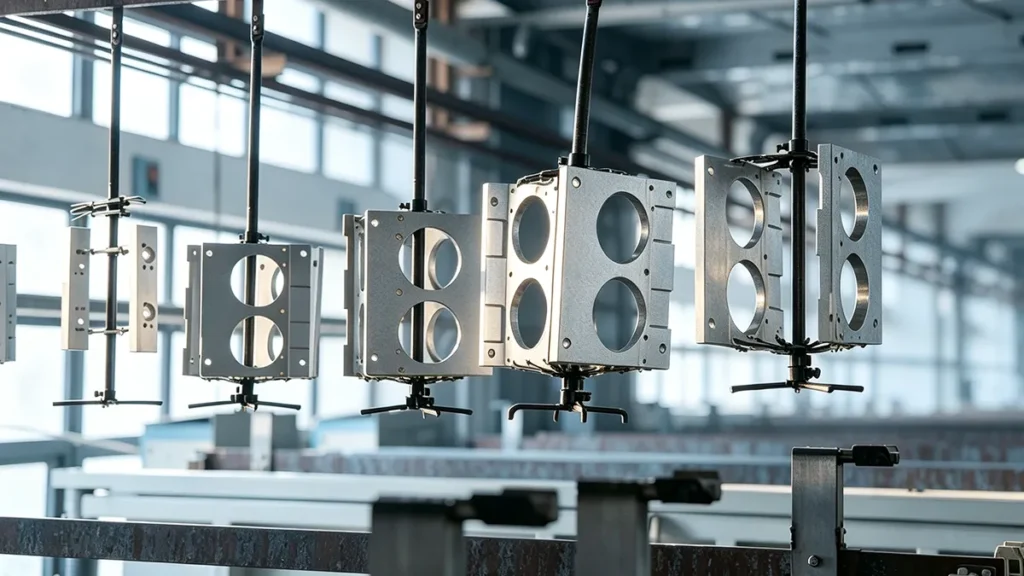
Qu'est-ce que l'anodisation à revêtement dur ?
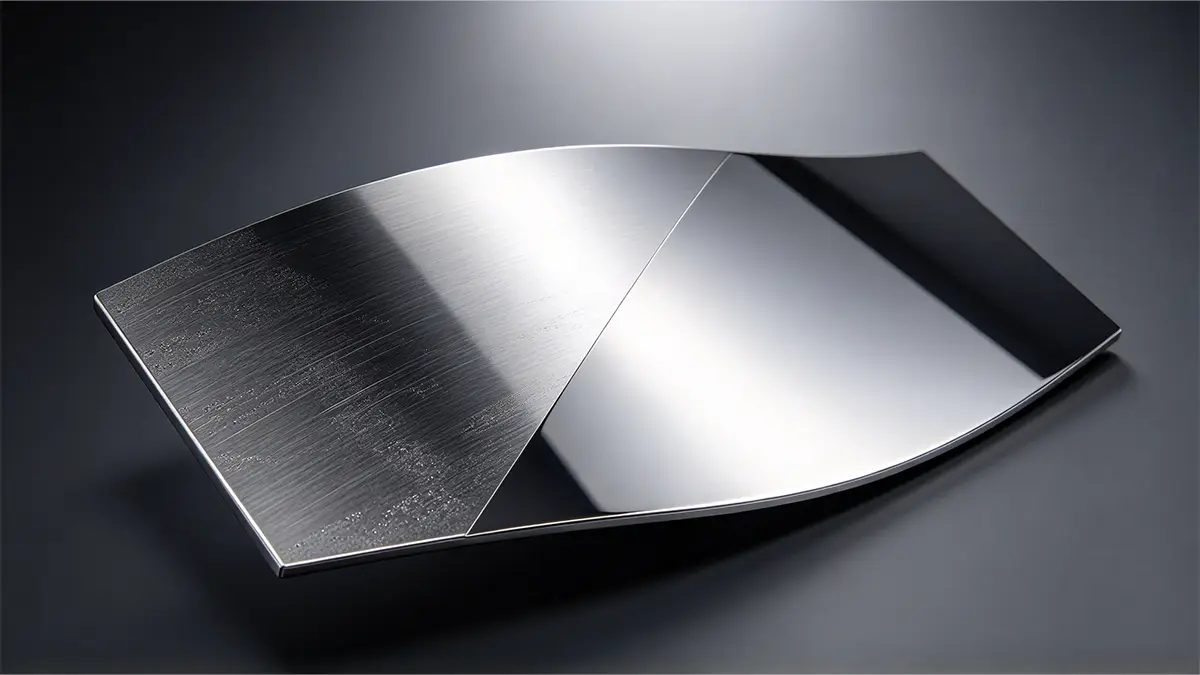
L'anodisation dure est parfois appelée « anodisation de type III » ou simplement « anodisation dure ». Il s'agit d'un procédé de conversion électrochimique, généralement appliqué à l'aluminium, qui permet de former une couche d'oxyde d'aluminium dure et épaisse à la surface des composants en aluminium.
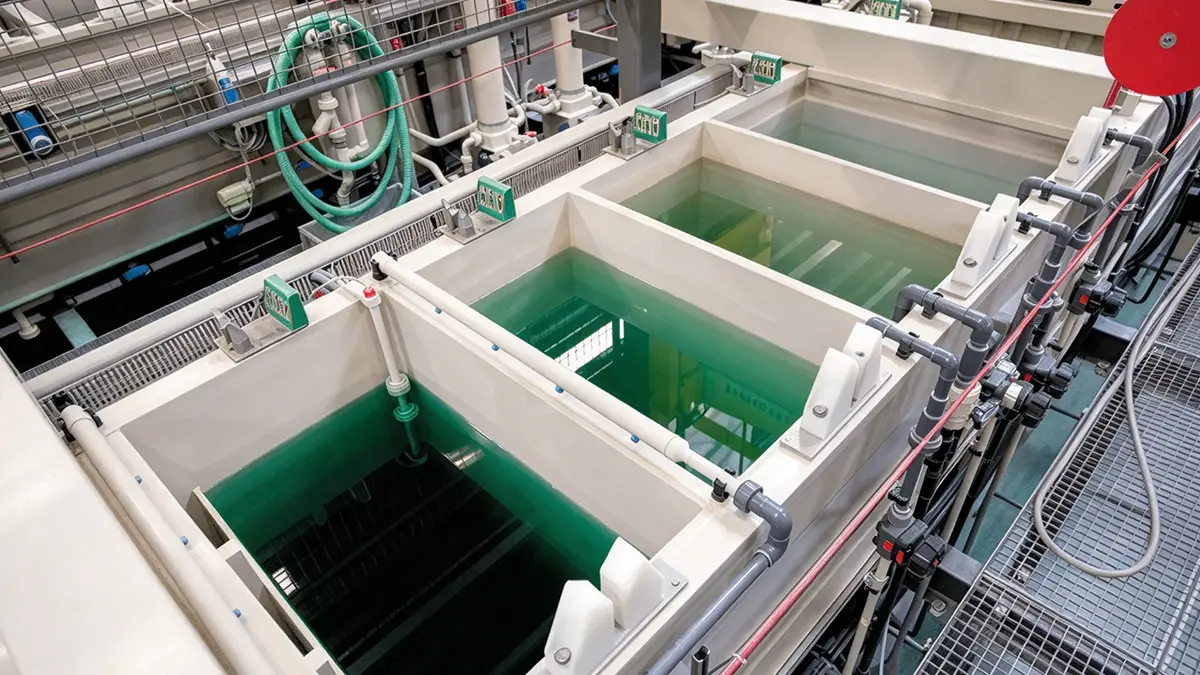
Au cours du processus d’anodisation dure, la pièce en aluminium est raccordée à la source d’alimentation en courant continu en tant qu’anode et plongée dans une cellule électrolytique. La pièce à anodiser est raccordée à la borne négative de la source d’alimentation en courant continu, faisant office de cathode. Une fois le courant continu mis sous tension, une dissociation ionique se produit autour de la pièce en aluminium, libérant des ions oxygène. Ces ions réagissent avec l’aluminium de l’électrolyte pour former une couche d’oxyde d’aluminium. La réaction est continue, l’électrolyte dissolvant simultanément une partie de l’oxyde. La réaction finale aboutit à un équilibre entre la formation d’oxyde et la dissolution chimique.
Cette réaction est caractéristique du procédé d’anodisation standard. Pour obtenir une anodisation dure, la température est réglée à des niveaux plus bas, tandis que la densité de courant est contrôlée afin d’éviter une dissolution chimique excessive. Concrètement, ce procédé favorise la formation d'une couche d'oxyde plus épaisse. L'anodisation dure se distingue essentiellement des autres types d'anodisation par une concentration chimique relativement plus élevée. De plus, la durée de l'anodisation dure est plus longue que celle des types I et II. L'anodisation de type III peut se résumer comme suit :;
- Composant en aluminium
- Préparation de la surface
- Électrolyte acide
- Courant continu régulé
- Croissance d'oxyde
- Rinçage
- Coloration/scellage en option
- L'inspection
En quoi l'anodisation de type III diffère-t-elle de l'anodisation de type II ?
Il est important de bien comprendre les différences entre ces trois types d'anodisation afin d'éviter toute erreur de fabrication. Alors que l'anodisation de type I utilise de l'acide chromique comme électrolyte, l'anodisation de type II et l'anodisation dure utilisent toutes deux de l'acide sulfurique. La classification et la distinction entre l'anodisation de type II et l'anodisation dure permettent de déterminer la concentration de l'électrolyte acide au cours du processus électrochimique. Le tableau suivant résume les différences entre ces deux procédés d'anodisation.
| Caractéristique | Anodisation de type II | Revêtement dur de type III |
|---|---|---|
| Objectif principal | Aspect, protection contre la corrosion, protection générale des surfaces | Usure, abrasion, durabilité, performances techniques |
| Épaisseur typique du revêtement | Entre environ 1,8 et 25,4 µm selon les données de référence de l'AAC | Entre environ 12,7 et 115 µm selon les données de référence de l'AAC |
| Dureté de surface | Plus élevé que celui de l'aluminium nu | Beaucoup plus élevé que celui de l'aluminium nu |
| Résistance à l'usure | Modéré | Haut |
| Aspect caractéristique | Couleurs transparentes, teintées et métallisées | Gris, gris foncé, bronze, marron ou presque noir selon l'alliage ou le procédé |
| Impact dimensionnel | Généralement relativement petits | Doit être intégré à la conception |
| Teinture | Courant | C'est possible, mais la gamme de couleurs est plus restreinte |
| Scellement | Caractéristique commune en matière de résistance à la corrosion et de stabilité des couleurs | Cela dépend de l'application ; dans les applications soumises à une usure extrême, il peut être préférable de ne pas utiliser de joint d'étanchéité |
| Applications typiques | Produits de grande consommation, éléments architecturaux, boîtiers | Pièces coulissantes, vérins, pistons, engrenages, outillage, matériel aérospatial |
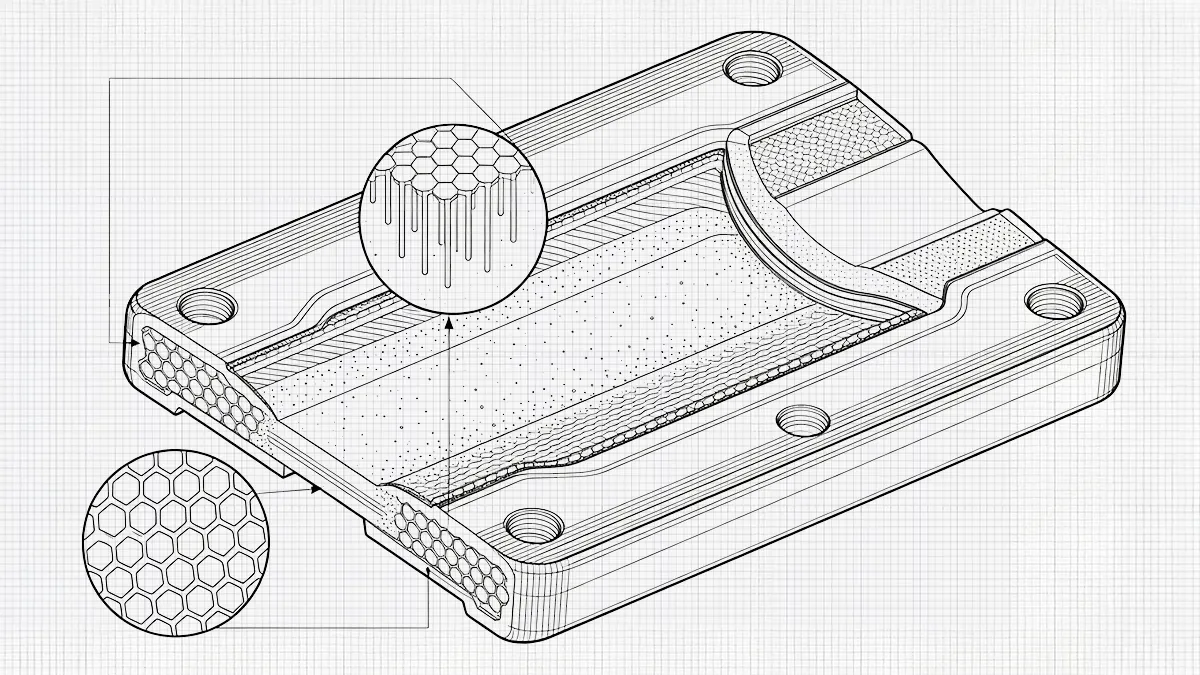
La différence de performances entre l’anodisation de type II et l’anodisation dure tient à la nature et à la structure de l’oxyde anodique. L’oxyde d’aluminium est une céramique composée d’aluminium et d’oxygène. La couche d’oxyde est épaisse et poreuse, ce qui la rend relativement plus dure que l’aluminium non traité. Cependant, les ingénieurs ne s’intéressent pas uniquement à la dureté. D'autres paramètres, tels que la résistance à l'usure, la résistance à la corrosion chimique ainsi que la résistance aux contraintes et à la fatigue, sont pris en compte lors de l'anodisation à revêtement standard. Ces paramètres sont obtenus grâce à une sélection rigoureuse des alliages d'aluminium, à des calculs appropriés de répartition des charges, à des applications de lubrification et au contrôle de la rugosité de surface.
Comment se déroule le processus d'anodisation à revêtement dur ?
L'anodisation dure est un procédé en plusieurs étapes qui comprend de nombreuses opérations, allant de la préparation du matériau à l'étanchéification, le cas échéant. Passons en revue ces étapes une par une.
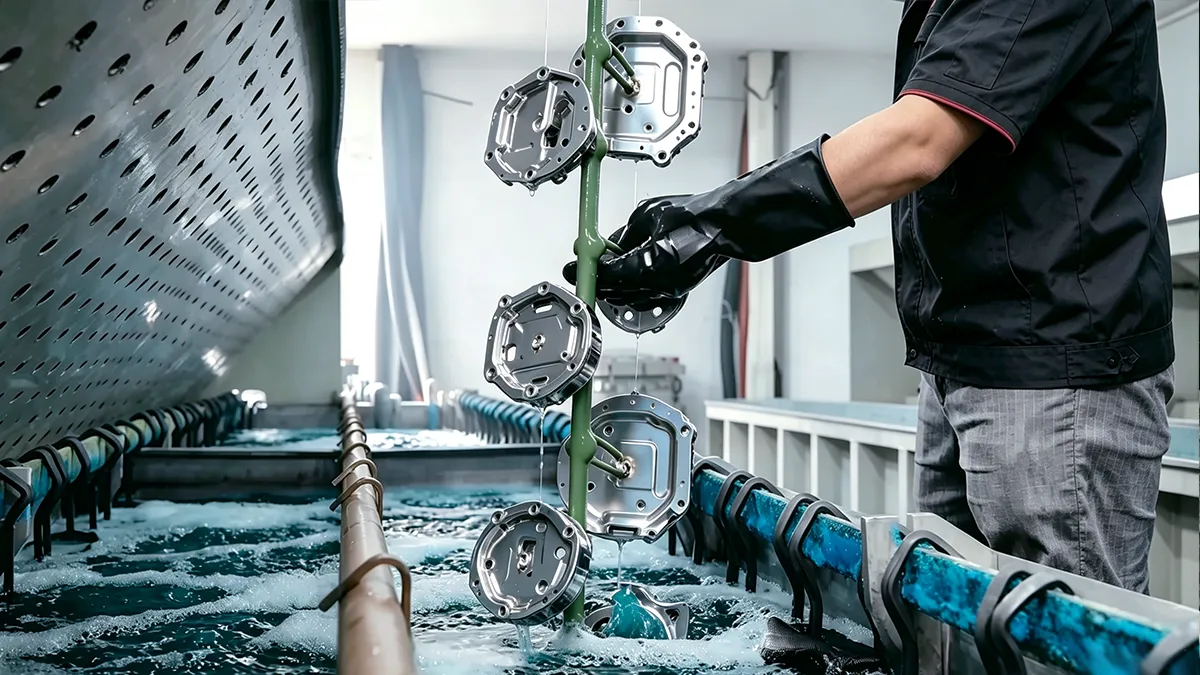
Processus complet d'anodisation dure couvrant la préparation avant traitement, le nettoyage et le dégraissage, la gravure, l'élimination des résidus de gravure, l'anodisation dure et le rinçage. Il permet d'obtenir une couche d'oxyde dure, uniforme, dense et résistante à l'usure, dont l'épaisseur est contrôlée.
- Préparation avant la finition
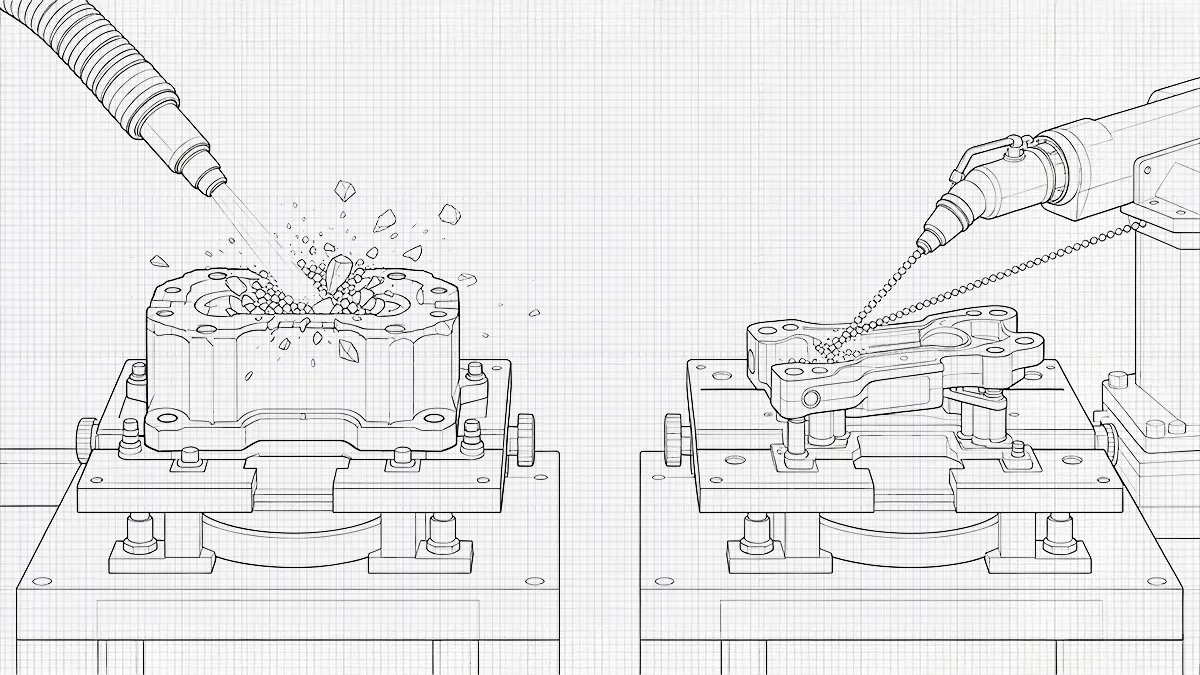
Avant le processus d'anodisation, la pièce en aluminium doit avoir été fabriquée. Quel que soit le procédé de fabrication (y compris l'usinage CNC) utilisé pour fabriquer la pièce, celle-ci peut présenter des défauts nécessitant un nettoyage et un traitement technique avant l'anodisation dure. Des défauts tels que les marques d’outils, les traces d’usinage, les bavures et les impuretés peuvent persister même après l’anodisation. L’anodisation n’a pas pour but d’éliminer ces défauts. Parmi les étapes de préparation avant la finition, on peut citer la mise en état des arêtes et des angles, la détermination de l’épaisseur d’anodisation requise, la définition des tolérances dimensionnelles finales et la définition des exigences relatives au filetage.
- Nettoyage et dégraissage
La pièce en aluminium est susceptible de contenir des salissures, des traces de graisse et des empreintes digitales à l'issue des processus de fabrication. Elle est nettoyée avant l'anodisation afin d'éliminer ces contaminants. En l'absence d'un nettoyage adéquat, ces contaminants peuvent entraîner des problèmes d'adhérence, une croissance non uniforme de la couche d'oxyde et une décoloration.
- Gravure
La pièce en aluminium est soumise à un traitement alcalin ou à un autre traitement chimique similaire afin d’obtenir une finition de surface spécifique avant l’anodisation. La gravure modifie la texture de la surface tout en éliminant d’éventuels résidus de matière.
- Dépoussiérage
Lors de la gravure, les réactions chimiques avec les alliages d'aluminium, tels que le zinc, le magnésium, le cuivre et le silicium, peuvent générer des résidus insolubles à la surface. Le décapage permet d'éliminer ces résidus, créant ainsi une surface propre pour l'anodisation.
- Anodisation dure
Une fois préparé, le composant est plongé dans un bain d'électrolyte et raccordé à une alimentation en courant continu en tant qu'anode. Le processus électrochimique est contrôlé par un régulateur de processus qui gère la concentration chimique, la température, la densité de courant, l'agitation et la durée d'anodisation. Contrairement à l'anodisation classique, qui implique une élévation de la température, l'anodisation dure s'effectue à une température plus basse tout en augmentant la durée d'anodisation.
- Rinçage
Après l'anodisation, on procède à un rinçage afin d'éliminer les résidus de réaction et l'électrolyte. Le rinçage permet d'éviter les taches et les défauts liés à la corrosion.
Si nécessaire, les fabricants peuvent procéder à la teinture et au scellage des composants.
Quelles sont les propriétés offertes par l'anodisation dure ?
L'anodisation à revêtement dur offre une résistance à l'usure, une résistance à la corrosion, une isolation électrique et une grande durabilité de surface.
Résistance à l'usure
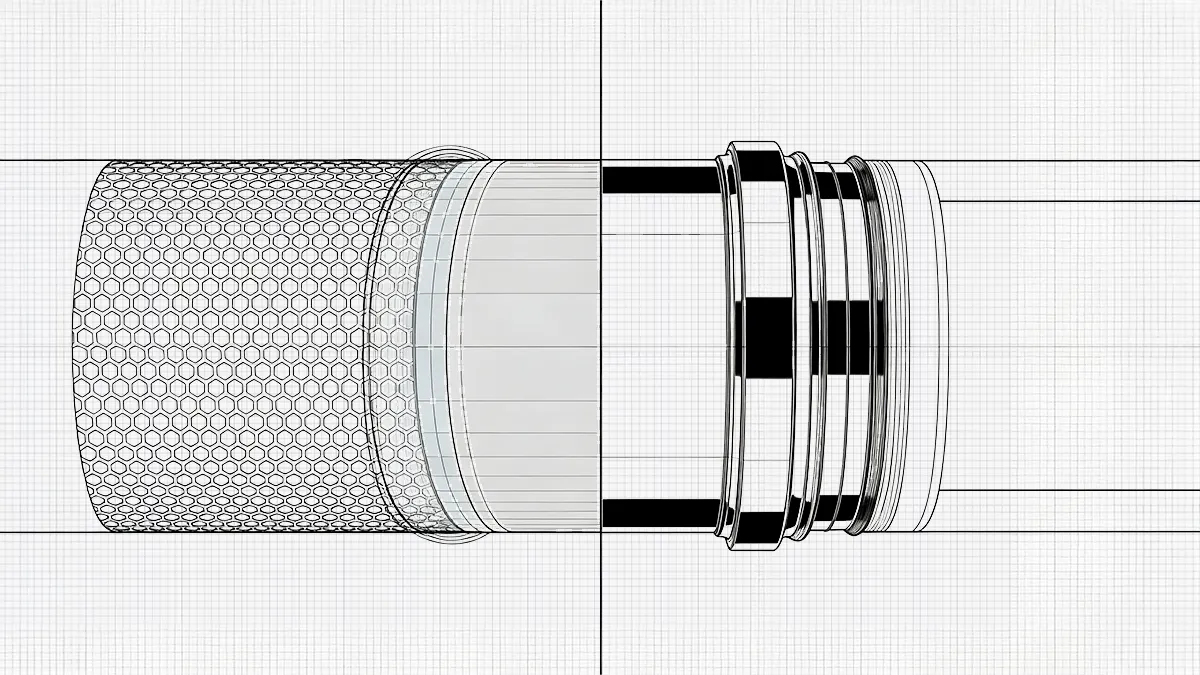
La plupart des applications techniques impliquant des machines et des pièces mobiles se caractérisent par une usure résultant du frottement entre les pièces en contact. Une bonne conception technique doit tenir compte de la résistance à l'usure. L'aluminium, un métal largement utilisé pour son faible poids, nécessite une anodisation dure afin d'améliorer sa résistance à l'usure. Cela rend les composants en aluminium plus résistants à l'abrasion, assure un meilleur contact glissant et leur permet de frotter contre d'autres composants. Cette propriété de résistance à l'usure rend l'aluminium anodisé utilisable dans divers domaines, notamment les composants de vannes, les cylindres et les guides.
Résistance à la corrosion
Il est possible de prévenir la corrosion de l'aluminium en évitant tout contact direct entre la surface de l'aluminium et l'environnement de fonctionnement. Les couches d'oxyde d'aluminium remplissent efficacement cette fonction, en formant une barrière protectrice qui répond aux exigences rigoureuses des essais définies dans la norme ASTM B580. [1]. Toutefois, l'efficacité de la résistance à la corrosion de l'aluminium dépend de l'épaisseur du revêtement, des conditions d'étanchéité, du type d'alliage d'aluminium utilisé et des éventuels défauts présents à la surface de l'aluminium.
Isolation électrique
Au-delà de sa résistance à l'usure et à la corrosion, l'oxyde d'aluminium améliore l'isolation électrique. L'oxyde d'aluminium est un isolant. Cette couche d'oxyde empêche le transfert électrique qui se produirait avec de l'aluminium nu. Cependant, l'oxyde d'aluminium doit être suffisamment épais pour empêcher la tension de claquage de contourner la couche de revêtement. Ainsi, la couche d'oxyde épaisse formée par l'anodisation dure constitue un isolant électrique efficace.
Durabilité de la surface
L'anodisation à revêtement dur permet d'obtenir un revêtement de surface épais qui réduit les rayures et autres dommages superficiels lors du fonctionnement et de la manipulation des composants. Cependant, ce revêtement épais ne protège pas pour autant le composant contre les dommages mécaniques. Une contrainte de contact très élevée ou un choc violent peut fissurer la couche d'oxyde du composant, entraînant sa destruction.
Quels sont les défauts les plus courants liés à l'anodisation dure ?
Les défauts couramment observés lors de l'anodisation dure comprennent les brûlures, les épaisseurs inégales, les variations de couleur, les défauts de surface, ainsi que les fissures ou les dommages dus à la fragilité.
Une surchauffe locale excessive ou une croissance anormale d'oxyde peuvent se produire, notamment lors d'un anodisage dur à haute température ou à forte densité de courant. Ce phénomène est appelé « brûlure ». La brûlure peut également résulter d'une circulation insuffisante de l'électrolyte et d'une concentration de courant liée à la géométrie.
Les irrégularités d'épaisseur sont généralement dues à la géométrie de la pièce, à la circulation de l'électrolyte, à la répartition du courant et à la production locale de chaleur. Ces effets peuvent parfois entraîner l'apparition de défauts de surface tels que des marques d'usinage, des inclusions et des rayures.
Bien que l'anodisation épaisse soit recommandée pour sa résistance à l'usure et à la corrosion, la couche d'oxyde d'aluminium épaisse qui en résulte est fragile, en particulier lorsqu'elle est soumise à des contraintes mécaniques importantes. Cela nécessite des applications de conception et de fabrication contrôlées.
Dans quels cas les ingénieurs devraient-ils opter pour l'anodisation à revêtement dur plutôt que pour l'anodisation de type II ?
En règle générale, les ingénieurs optent pour l'anodisation à revêtement dur lorsque la durabilité de la surface constitue la principale exigence technique. Parmi les autres exigences figurent une meilleure résistance à l'abrasion, une dureté de surface accrue, l'isolation électrique et la résistance à l'usure par glissement. Par ailleurs, le type III est privilégié lorsque les ingénieurs cherchent à obtenir une couche d'oxyde protectrice relativement épaisse afin d'améliorer la résistance à la corrosion. Concrètement, ils recherchent un composant présentant une longue durée de vie dans un environnement d'exploitation soumis à des contacts répétés.
En revanche, les ingénieurs opteraient pour l’anodisation de type II lorsque les principales considérations portent sur la couleur, l’aspect, un impact dimensionnel moindre et une protection générale contre la corrosion. Prenons, par exemple, un boîtier en aluminium exposé à l’humidité et aux traces de doigts. Ce composant ne nécessite pas de considérations de conception pour une utilisation intensive. Concrètement, les ingénieurs opteraient pour une anodisation de type II. Si ce même composant est exposé à un environnement de fonctionnement dans lequel un mécanisme coulissant en acier frotte contre lui, il nécessite une protection renforcée. Dans ce cas, les ingénieurs opteraient pour une anodisation à revêtement dur.
Référence
[1] ASTM International. (2019). ASTM B580-79(2019) Spécification standard relative aux revêtements d'oxyde anodique sur l'aluminium. Base de données des normes ASTM. https://www.astm.org/b0580-79r19.html




 FR
FR  EN
EN  ES
ES  DE
DE  IT
IT  PT
PT  NL
NL  PL
PL  AR
AR  JA
JA  KO
KO  ZH
ZH