


Rapid prototyping is generating a physical model or a prototype of a part or an assembly within a very short time using free-form prototyping or other techniques such as 3D printing. Essential to the modern automotive design process, rapid prototyping is an area that has little relation to the time or costs involved with traditional prototyping methods. Rapid prototyping can produce models within days or even hours compared to manufacturing processes that may take many months to prepare a tool and make a model.
Rapid prototyping in the automotive industry uses additive manufacturing techniques like 3D printing, as well as traditional methods like CNC machining, to produce prototype automobile parts for testing and iteration.This technique leads to shorter development cycles. Engineers create actual physical models from the digital designs in record time.
It also decreases costs because of the effective detection and correction of inaccurate features during the subsequent stages of manufacture. Rapid prototyping in the automotive industry enables differentiation for specific kinds of vehicles. It provides improved fit and performance for the road environment. Thus, engineers can explore various methods of using multiple materials and choose the most effective one that reflects the samples’ strength, durability, and cost. Automotive industries can better introduce their creations to the market.
Importance of Rapid Prototyping in Automotive Manufacturing
Design changes in the automotive context are constant occurrences. They rise from the market’s dynamic based on customers’ efficiency, safety, and expectations. Rapid prototyping reduces the development cycle by ensuring manufacturers can produce a particular model quickly. This fast cycle means that teams can see any weaknesses at the concept stage before they become a disaster at the implementation stage or during the actual product building. Therefore, when manufacturers reduce the time between the concretization of a concept and validation, they can now take new vehicles and components to the market much earlier than competitors. Consequently, the manufacturers can satisfy customers’ needs faster.
Rapid prototyping also enhances on-the-working relationships between designers and engineers. Physical prototypes are end products composed of bodily parts, thus easing communication between the departments involved. It allows teams to present prototypes, collect feedback from the audience, and apply the modifications as soon as possible to guarantee all the members involved are on the same page. It also encourages quick decision-making and limits potential confusion or errors within the development design and production phase.
Besides, it can also create other opportunities in product development. It enables the developers to feel the challenge they could not place within their designs because of cost or feasible problems via traditional approaches. The design must be cost-sensitive to ensure that the production is economical. It yields originality and innovative solutions to vehicle issues, leading to top-notch performance, economy, and design. The lack of rigid constraints of the traditional business models also implies that automotive manufacturers can maintain their position at the cutting edge of a particular technology through rapid prototyping.
Applications of Rapid Prototyping in Automotive Design
Rapid prototyping is vital in several parts of the automobile production process. This technology produces specimens that demonstrate product usability, samples employed to assess materials and components, and samples that allow one to verify product design concepts. It will be helpful now to consider some of the specifics of the concept’s use in certain fields.
1. Design and Functional Prototypes
Design and functional prototypes are critical in automobile development. They provide a feasible method to transform concepts into realities. Rapid prototyping enables design teams to create tangible models of parts, which can help visualize the parts in the broader vehicle architecture.
This model is a type of active learning as it allows an immediate check on engineering and aesthetic objectives and whether a component’s design is flawed. Solving such problems at the prototype phase means the manufacturer will avoid making changes and incurring more expenses or time later.
While technical prototypes build on this to allow engineers to test the behavioral characteristics of components in functional environments, functional prototypes are systems that allow for the testing of components in practical conditions.
These prototypes mimic how parts react to effects like temperature variation, vibration, and applying load. These tests help engineers understand how to improve their designs while fulfilling performance and safety parameters needed in particular applications. The described iterative process is advantageous in the way it fine-tunes product development and the quality of products. It provides invaluable advantage to the companies operating in the automobile industry, which continues to expand around the globe.
2. Testing and Simulation
Performance and safety standards are essential; testing and simulation are necessary for automotive prototyping. After developing a prototype, the automobile industry put it through its paces by running practical tests. Some tests are strength tests, including crash tests, or efficiency tests, such as wind tunnel tests.
These tests offer essential information on the state of the components given some use conditions such as stress, temperature variation, and environmental conditions.
Rapid prototyping allows quick testing and modification of the design to improve any flaws or suboptimality before large-scale production. This process lowers development costs and time since it eradicates costly errors throughout the developmental process.
3. Tooling an d Production Aids
Tooling and production aids made from the rapid prototyping technology are critical in increasing the manufacturing efficiency and accuracy in the automobile industry. Manufacturers can develop prototypes of special tools, fixtures, and jigs using Rhode Island techniques within short time spans adapted to assembly processes.
These aids are essential because accurate positioning, alignment, and handling of the components are critical in manufacturing to avoid or minimize errors and or inconsistencies. Moreover, the possibility of prototyping and testing before mass application significantly enhances the actual manufacturing workflow of these tools.
Production aids can strengthen and be ergonomic while ensuring they fit the production process to the latter. This way, the time and costs for implementing conventional tooling solutions can be significantly lower while providing more efficient and effective production.
Types of Rapid Prototyping Technologies Used in the Automotive Industry
The automobile industry uses different technologies of rapid prototyping depending on the requirements in design and manufacture. The choice of the technology generally relies on the intricacy of the part, the raw material, and the degree of accuracy.
Stereolithography (SLA)
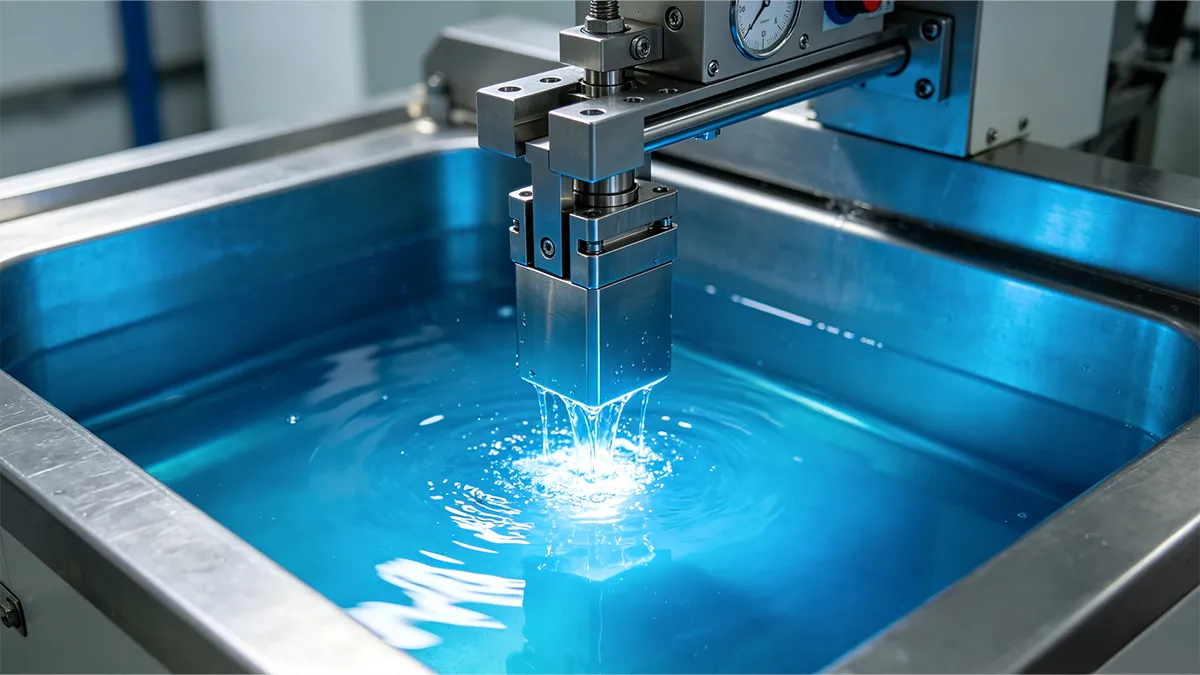
Stereolithography (SLA) is a rapid prototyping technology. This technology is necessary for achieving high accuracy in the prototypes. Rather than employing a laser, it hardens the liquid resin using UV light in a layer-by-layer process to produce near-microscale, highly accurate models. This technology is especially relevant in the context of complex stencils. It enables engineers and designers to see the beauty and practicality of design before engaging in production.
Fused Deposition Modeling (FDM)
Fused Deposition Modeling (FDM) is one of the most common techniques for functional prototypes, especially for parts that don’t require extremely high precision. However, other techniques, like Stereolithography (SLA) or Selective Laser Sintering (SLS), may be preferred depending on the specific requirements of the part. FDM uses pressures to deposit melted material, such as thermoplastics, to develop parts from the top to the bottom. FDM material is durable and can enhance the creation of functional test prototypes, where the automotive engineer can determine the in-use part performance.
Selective Laser Sintering (SLS)
Likewise, Selective Laser Sintering (SLS) is essential in making sophisticated structures and metal parts. makes use of a laser to melt powdered materials together. Thanks to this, it’s possible to create complicated shapes and get strong materials for making prototypes that are good enough for mechanical tests.
Direct Metal Laser Sintering (DMLS)
We use Direct Metal Laser Sintering (DMLS) for metal parts fabrication. This innovative technology produces shaped metallic parts. It uses powder metals and is allowed in automotive applications such as engines or structural members. DMLS provides the benefits of acceptable resolution and high strength as a benefit of DMLS. It will enable manufacturers to replicate parts close to end-use from one iteration. In combination, these technologies offer tools for automotive designers and engineers to solve the issues that arise in the current car development processes.
| Technology | Description | Best For |
|---|---|---|
| Stereolithography (SLA) | It uses UV light to harden liquid resin layer by layer. | High-detail prototypes |
| Fused Deposition Modeling (FDM) | Extrudes melted material to build up layers. | Functional prototypes |
| Selective Laser Sintering (SLS) | It uses a laser to sinter powdered material into solid parts. | Complex shapes and metal parts |
| Direct Metal Laser Sintering (DMLS) | Creates metal parts directly from powder. | Metal prototypes for automotive parts |
Material Selection in Automotive Rapid Prototyping
In rapid automotive prototyping, one thing that we really care about is which materials to choose. You see, the materials we choose will decide how stiff the prototype is, how durable it will be, and what its weight is going to be. Rapid prototyping allows the producer or inventor to test various types of material, such as plastics, metals, and composites, depending on a specific design and performance standard.
For instance, ABS is a strong and valuable plastic material for the interior and small parts making. Being versatile and lightweight, Nylon suits functional test and assembly applications. Materials such as aluminum and titanium are essential because of their impressive strength and heat-resistant nature for usage in engine and structural frames.
By picking the correct material, automotive engineers can be confident of getting a near-perfect match of the car’s prototyping from its purpose in the final design.
| Material | Characteristics | Applications |
|---|---|---|
| ABS | Strong, durable, and versatile | Interior parts, small components |
| Nylon | Lightweight and flexible | Functional testing, assemblies |
| Aluminum | Lightweight, strong, and heat resistant | Engine components, structural parts |
| Titanium | High strength-to-weight ratio, corrosion-resistant | Engine components, suspension parts |
Challenges of Rapid Prototyping in Automotive Manufacturing
Even though rapid prototyping has its advantages in both ICE and EV parts manufacturing, it also has drawbacks that manufacturers of cars encounter. One of the major drawbacks is that it is almost impossible to obtain materials for the technology in some cases. Some conventional manufacturing materials, like high-performance alloys or particular composites, help manufacture specific structures more suitable for rapid prototyping.
While some rapid prototyping techniques may face material or size limitations, many advanced methods, such as Direct Metal Laser Sintering (DMLS), can produce prototypes that closely replicate the final product’s properties.
Besides, restrictions in size are another barrier to the development of sustainable buildings and structures. Some types of rapid prototyping technologies are unsuitable for manufacturing significant automotive components. This challenge involves turning some parts into sections and then joining them – making the work tricky and time-consuming.
The fourth issue is the uncommonness of the last desired surface profile. Unfortunately, This is the case with some of the most frequent types of rapid prototyping, such as FDM or SLS, which shape the part surfaces to have such a rough finish. These surfaces require specified equipment like sandpaper for finishing. These extra movements add time to the production cycle and impact precision and the finished prototype.
The Future of Rapid Prototyping in Automotive Manufacturing
In rapid prototyping development for automotive, the future of these advances consists of faster processes, low costs, and increased yields within manufacturing. New technologies, including multicomponent 3D printing and deployable hybrid manufacturing systems, are helping the sector create more elaborate prototypes. These advancements will enable automotive companies to design sophisticated components for prototyping with enhanced performance and increased reliability in an automobile.
One of the trends dictating the future is the progressive automation of creating prototypes. It will also reduce costs and development time. Many products from manual production contain errors that slow development, hence delaying the market response of manufacturers.
Sustainability is another critical area of concern, with an increasing trend towards the green process and using sustainable media for prototyping. It corresponds to the general trends in the industry to reduce the environmental impact while striving for high performance and reasonable costs.
Customization will also be a critical factor in advancing rapid prototyping technology. The technologically enhanced capacity for directly manufacturing unique or one-of-a-kind parts for single vehicles or low-volume orders will satisfy the growing market for personalized automobiles. This trend will enable manufacturers to meet customer demands without compromising efficiency and economies of scale. These developments will continue to build up rapid prototyping as the cornerstone for innovativeness in automotive engineering and design.
Conclusion
The automotive industry uses rapid prototyping extensively. It also helps reduce costs and time and may improve product quality. They have now reached a point where they cannot do without it in manufacturing automobiles, such as functional test tooling and design verification. All such advances only indicate that as the application of the technology moves up, it is necessary to spur innovation in the field.





 EN
EN  ES
ES  FR
FR  DE
DE  IT
IT  PT
PT  NL
NL  PL
PL  AR
AR  JA
JA  KO
KO  ZH
ZH