


材料挙動に関する知識 射出成形 そして CNC加工 は、高品質な製品を開発するために非常に重要です。ガラス転移温度(Tg)は、射出成形やCNCマシンに不可欠な材料特性である。この特性の用途は、加工条件を測定することです。また、複合材料やプラスチックの性能、構造的な完全性も決定します。ガラス転移温度は、材料の挙動に影響を与える極めて重要な要素です。射出成形やCNCマシニングの加工やその全生涯に使用される。.
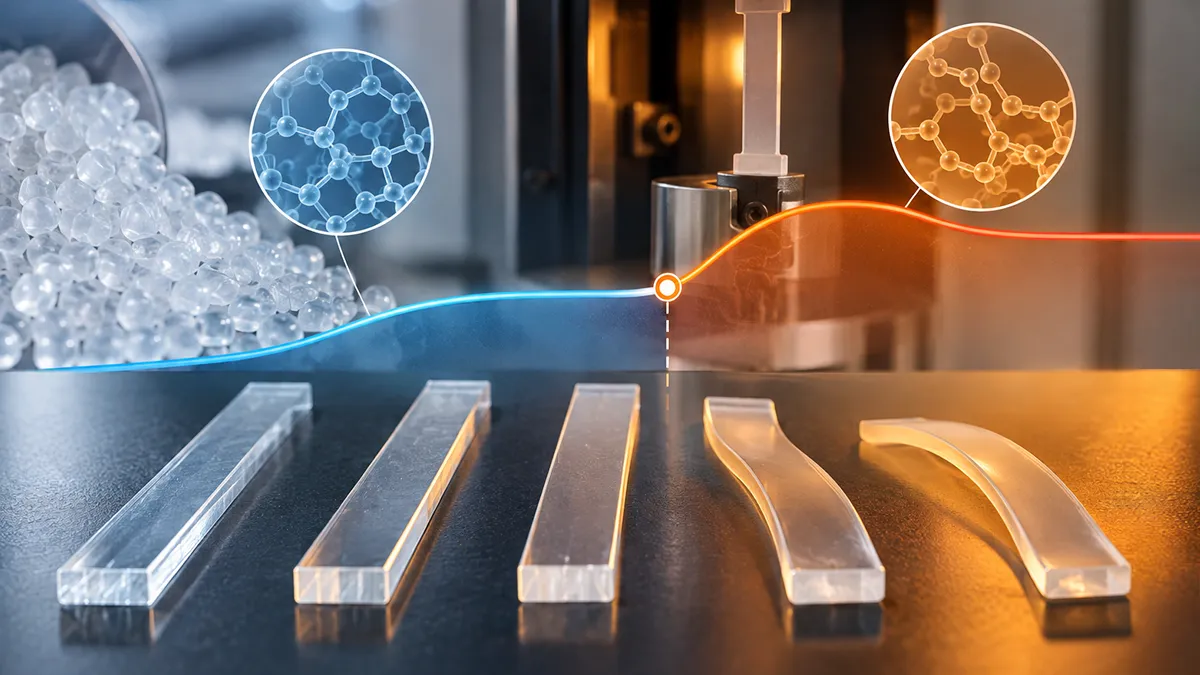
ガラス転移温度(Tg)とは?
ガラス転移温度(Tg)とは、半結晶性・非晶性ポリマーがガラス状から柔らかく革のような状態に変化する温度を指す。非晶性ポリマーが硬い状態から滑らかな状態に変化する温度である。
ガラス転移温度(Tg)は本当に重要な温度だ。この温度は、ポリマーがガラス状態(一種の硬さ)から柔軟な状態に変化するタイミングを決定する。この変化は、ポリマーの加工方法や機械的挙動に影響を与える。このプロセスはポリマーだけでなく、ガラスや非晶質材料でも起こる。Tgは、これらの材料の分子がより動き回るようになる瞬間を示す。
Tgとは、ポリマーの状態が剛性からガラス状、ゴム状、そして最終的に柔軟な状態へと変化する温度のことです。Tgの測定は、ASTM D3418などの国際規格に基づき、示差走査熱量計(DSC)を用いて厳格に標準化されています。 [1]. この高感度な分析装置は、ポリマーが硬質でガラス状の状態から柔軟でゴム状の状態へと移行する際に生じる比熱容量の変化を測定し、おおよその数値ではなく、正確な熱的境界を明らかにします。.
Tgは一定の温度範囲にわたって発生します。グラフ上では、自動的に正確な数値として読み取れるわけではありません。その温度より低い範囲ではポリマーは硬く脆くなり、その温度より高い範囲では成形可能で柔軟になります。.
温度に関する知識は、最適な射出成形プロセスとCNC加工にとって重要である。その役割は、加工に適した温度を測定することでメーカーを支援することです。
結晶性ポリマーをある温度まで加熱すると、長鎖構造を記述する整然とした配列が生じる。その結果、無秩序でランダムな配列になる。固体ポリマーは一般に転移し、融解して液体になる。融解が起こる温度を融点(Tm)という。結晶部分と非晶部分を持つポリマーには融点とガラス転移温度がある。
射出成形におけるTgの役割
製造業界では、包括的で多用途な製造技術の利用が進んでいる。その目的は、消費者の変化するニーズや要求に応えることである。プラスチック製造に重点を置く工程が増えている。このプロセスでは、まず材料を特定の温度で加熱する。その後、金型に注入され、冷却されて形状が作られる。Tgは、以下のような機能のためにプロセスで重要である:
金型設計とマテリアルフロー: Tgが低いと、熱を加えた際に材料が容易に流動します。この優れた流動性により、理想的で非常に複雑な薄肉部品の製造が可能となり、多くの場合、以下の方法によって検証されます。 金型流動解析. 逆に、必要なTg閾値を下回る温度で動作している金型に材料を射出すると、材料は適切に流動しなくなります。このような早期の冷却は、通常、キャビティの充填が不十分となり、欠陥の多い部品が生じる原因となります。.
冷却と凝固: 射出成形後は、冷却と凝固を行う必要があります。Tgへの影響を考慮せずに冷却速度を不適切に管理すると、さまざまな問題が生じる可能性があります。 射出成形の欠陥 反り、収縮、歪みなどです。金型の冷却時間を適切に制御する必要があります。その目的は、材料の柔らかさを解消することにあります。.
機械的特性: 射出成形用ポリマーは機械的性質が変化する。その変化は、部品がTg以上か以下かによって異なる。例えば、Tgが低いと脆くなくなる。Tgを超えると、材料は柔軟になり、壊れることなく応力を吸収するようになる。
生産効率の最適化: 成形業者は、 成形サイクル, 、これにより生産時間が長くなり、効率が低下する。Tgの高い材料は、冷却に時間がかかる。Tgの低い材料は、加工にかかる時間が短い。.
ガラス転移温度とCNC加工
CNC(Computer Numerical Control)とは、材料の切断や成形に機械の動きを取り入れた製造精度のことである。さまざまな種類のポリマー、プラスチック、複合材料が機械加工を受ける。これらの種類は、CNC機械加工と合金や金属の製造に焦点を当てています。機械加工は、自動製造や医療機器などの産業で行われている。CNC機械加工におけるTgの役割は、機械加工における材料の性質や種類によって異なる:
加工温度制御: CNC加工において、加工工程中の材料は極端な加熱にさらされます。 Tgを超える温度になると、剛性が低下します。この熱的影響は、表面仕上げの悪化や深刻な形状歪みを直接引き起こします。したがって、オペレーターは環境を常に監視しなければなりません。この厳格な監視は、高切削サイクル中に温度に敏感なポリマーがTgを超えるのを防ぐために必要です。.
材料の選択: ガラス転移温度は、適切な材料を決定する上で重要な要素です。CNC加工の際、強い切削力が作用すると、当然ながら工具と被削材の接触面で大きな摩擦熱が発生します。この局所的な切削温度が、そのポリマーのガラス転移温度(Tg)を超えると、材料は直ちに構造的剛性を失い、ゴム状の状態へと変化します。 [2]. 。この熱的変化により、著しい寸法変形、表面仕上げの悪化、および工具の急速な摩耗が生じます。この歪みは過剰な圧力に起因するものであり、望ましくない結果をもたらします。Tg値の高い材料は、高温で安定している間、高精度なCNC加工に有用です。.
工具と切削パラメータ: CNC加工の変更が必要である。送り速度、回転数、工具の種類などの要素は、材料のTgを考慮した調整が必要である。Tgが低いポリマーでは、送り速度を遅くする必要がある。また、熱の蓄積を克服するためにカスタマイズされた工具が必要です。Tgが高いポリマーは、より高速で、より効果的なコリングアプローチを必要とする。
さまざまな材料におけるガラス転移温度
Tg値の違いは、CNC機械加工や射出成形の挙動や加工に影響を与える。この2つの産業に共通する材料には、以下のようなものがある;
熱可塑性プラスチック
加熱すると軟化し、流動性を示すポリマーは、熱可塑性樹脂として知られています。この流動は、通常、材料のガラス転移温度(Tg)を超えた際に生じます。この物理的プロセスは完全に可逆的です。その結果、この材料は効果的に再加工やリサイクルが可能です。これらの材料は、成形や機械加工時の挙動を特徴づけるガラス転移温度(Tg)を有しています。.
ポリプロピレン(PP):Tg = -10°C~-20°C
の使用 ポリプロピレン 熱可塑性樹脂の射出成形において広く用いられています。この材料の大きな特徴は、本来Tgが低いことです。この低い熱的閾値により、成形が極めて容易であり、室温でも高い柔軟性を発揮します。また、Tgが低いことで成形が容易になるだけでなく、高温下でも柔軟性が高まります。この成形プロセスでは、歪みを防ぐために、効果的な温度管理と加工処理が求められます。.
ポリカーボネート(PC):Tg=145度
Tgは ポリカーボネート が高いため、高い性能が求められる用途に有効です。このポリカーボネートは、Tgが高いため、射出成形時の加工においてリスクがあります。Tgが高いため、射出成形には高温が必要となり、冷却時間も長くなります。.
ポリスチレン(PS); Tg= 100度
ポリスチレン これは、包装および使い捨てカトラリーの製造において重要です。Tgは中程度であり、射出成形時の加工が容易です。過度な反りや冷却を防ぐための注意が必要です。.
ポリアミド(ナイロン):Tg=50度~70度
既存のTgは ナイロン が低い。この材料は優れた強度を持ち、摩耗しにくい。これらの材料は、高いTg値に起因する独特な特性を有している。変形や軟化を防ぐためには、温度管理においてTgに十分な注意を払う必要がある。.
熱硬化性樹脂
熱硬化性プラスチックは、逆反応を起こさない硬化過程を経ます。熱硬化性プラスチックの化合物については、特定の温度条件下で試験が行われます。熱硬化性プラスチックを製造するための原料は、硬化前は液体の状態です。また、この液体は接着剤である場合もあります。これらの材料は、Tg値が高いという特性により、独特な挙動を示します。.
エポキシTg=配合により100度~250度
エポキシ樹脂は、自動車や航空宇宙要素からなる高強度用途に適用される。Tgは添加剤や硬化剤によって変化する。高いTgは完璧な熱安定性を提供する。エポキシ官能性樹脂は、カチオン性触媒とアニオン性触媒、またはヒアリン酸によってホモ重合反応を起こすことができる。反応を続けると、より大きな分子が出現し、構造体に分割される。
フェノールTg=140度および200度
フェノール樹脂は、高熱環境で最高の性能を発揮します。高いTgは機械化プロセスのカスタマイズされた工具細工そして熱管理を要求する。
複合材料
複合材料は、異なる組成に依存する広範囲のTg値を有する。複合材料は、既存の構造に基づいて異なるTg値を持つ繊維を含む。
炭素繊維強化ポリマー(CFRP):Tg= 150度~300度
既存のCFRPSはTg値が高く、極端な温度下でも変形しにくい。この材料は、CNC加工用の高性能切削工具を必要とする。目的は、熱による劣化を防ぐことである。
一般的な材料のガラス転移温度チャート
| 素材 | ガラス転移温度(Tg) |
|---|---|
| ポリプロピレン(PP) | -10°C~0°C |
| ポリカーボネート(PC) | 145°C |
| ポリスチレン(PS) | 100°C |
| ポリアミド(ナイロン) | 50°C~70°C |
| エポキシ樹脂 | 100°C~250°C |
| フェノール | 140°C~200°C |
| 炭素繊維強化ポリマー(CFRP) | 150°C~300°C |
ガラス転移温度管理のベストプラクティス
専門家はCNC加工と射出成形に従う必要がある。その目的は、Tg.Tgの最適な加工と品質を達成することです。
材料のTgを知る 使用中の材料のTgを理解する必要がある。この情報は、工具の選択、温度、冷却速度のパラメータ処理を増やすために不可欠である。
加工中の温度管理: CNC加工と射出成形における温度管理は、効果的な温度管理が必要である。温度レベルはTg前後である必要がある。これにより、すべての材料が加工や成形に最適な状態を保つことができます。
金型設計と冷却速度の最適化: 反りなどの要素を防ぐ必要がある 成形デザイン と冷却速度は材料に特化している。その結果、不適切な凝固や反りを防ぐことができる。.
CNC加工に適した工具の選択: 適切な切削パラメータと工具を使用し、破れや摩耗を減らす。Tgの高い材料を選択すること。
養生と冷却の監視: リアルタイムの温度監視と制御は、Tgの目安になる。欠陥や変形の原因となる工程での超過率は発生しない。
Tg管理の今後の動向と発展
ロボティクスとオートメーション: 製造業では大規模な自動化が進んでいる。冷却や温度など、Tgに影響を与えるプロセスの制御が容易になった。ロボット工学もまた、制御プロセスの道を提供する。その結果、持続的で正確なマテリアルハンドリングが可能になる。この方法は、機械加工や成形工程にも及んでいる。
リアルタイムモニタリングのための高度なセンサー: モノのインターネットとスマート・センサー・デバイスは、CNC加工と射出成形でより一般的になっている。センサーは、圧力、温度、材料の特性に関するリアルタイムのデータを提供する。その影響は、Tgをよりよく制御することにある。さらに、利害関係者は製品品質の向上から恩恵を受ける。
持続可能な素材: CNC機械加工や射出成形におけるリサイクル材料やバイオベースの部品の用途は、増加の一途をたどっている。製造業における持続可能性の要求は、このような材料の使用を示唆している。その影響は、利益を生むだけでなく、社会的にもインパクトがある。材料は一般的に様々なTg特性を持ち、最適な結果を得るためのパラメータ変更が要求される。
結論
ガラス転移温度は、材料の挙動を決定づける極めて重要な特性です。その影響は、加工工程、CNC加工の各工程における性能、そして高品質な生産にまで及びます。専門家は、高品質で耐久性に優れた製品を効果的に製造するために、最適化された工程を取り入れる必要があります。Tgは、以下の分野に適用されます。 熱可塑性樹脂と熱硬化性樹脂. また、CNC加工や射出成形においても、製品の製造プロセスにプラスの影響を与えることが極めて重要です。.
センサーの変換における新たなトレンドは、リアルタイムのモニタリングをもたらす。さらに、ロボット工学と自動化に影響を与える変化により、プロセスが容易になる。
最後に、持続可能性への焦点は、リサイクル材料とバイオベースの射出成形を適切に増加させ、効果的に材料を増加させる。最後の要素は、パラメーターの変更と最適な結果の達成を要求するTg特性である。
参考
[1] ASTM International. (2021). ASTM D3418-21 差分走査熱量測定法によるポリマーの転移温度および融解・結晶化エンタルピー測定に関する標準試験方法. https://doi.org/10.1520/D3418-21
[2] Kalpakjian, S., & Schmid, S. R. (2014). 製造工学・技術 (第7版)。ピアソン。. https://books.google.com/books?id=frF9MgEACAAJ




 JA
JA  EN
EN  ES
ES  FR
FR  DE
DE  IT
IT  PT
PT  NL
NL  PL
PL  AR
AR  KO
KO  ZH
ZH