

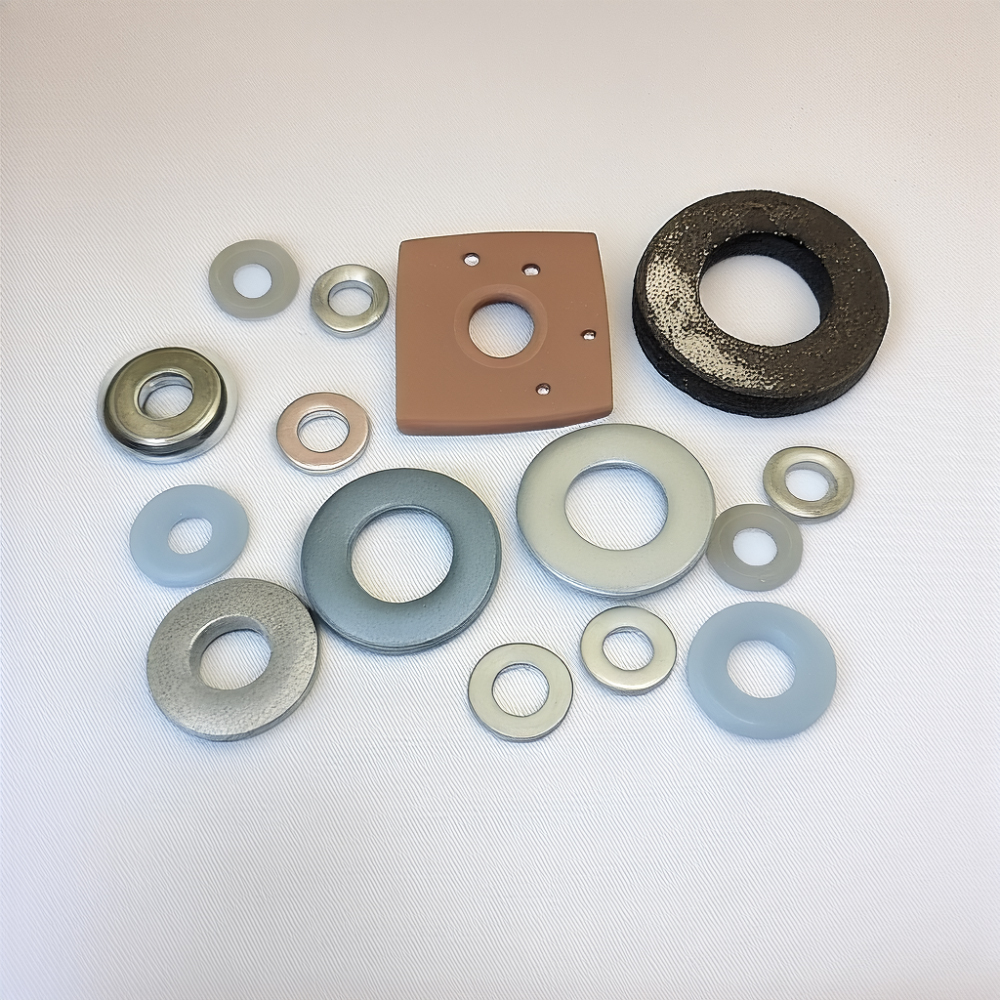
Are you finding it difficult to choose the ideal mechanical washer for your project? The objective of this article is to ensure that our readers comprehend the unique features and advantages of various types of washers by examining the various materials, sizes, and designs utilized in engineering applications. As a result, one must choose the ideal one to serve its purpose and ensure optimal performance.
Whether you’re an engineer or technician, this guide will provide you with the knowledge and understanding you need to select the ideal washer for your project. To guarantee maximum performance and dependability in mechanical assemblies. Through investigating various materials, dimensions, and styles, we will assist engineers in comprehending the unique features and advantages of different types of washers.
Understanding The Fundamentals of Different Types Of Washers
For engineers to make wise decisions in their applications, they must comprehend the language related to washers. Here are a few essential terms:
Static Load
This is the load or weight or load that a washer must support when it is at rest. Just like its name, these loads are steady and do not vary over time. As a result, they may result in stress concentrations on the washer and the connected materials.
Dynamic Load
In contrast to static loads, these are loads that vary and fluctuate over time. These loads may be the result of vibrations, movement, or other forces influencing the components. Washers are supposed to handle dynamic loads, to avoid failure under changing conditions.
Fatigue
It occurs because of the breakdown of a material due to cyclic (or fluctuating) stress. Washers must have good fatigue resistance capability to ensure that they can withstand the anticipated cycles without failing.
Torque
This is the rotational force that compresses a washer when applied to a fastener, such as a bolt. This torque influences the load distribution and the tension across the assembly when applied. Proper torque application guarantees that the washer operates efficiently and keeps its designated load-bearing capability.
Shear
Describes the force applied parallel to the washer’s surface and the components that link them. It is important to take into account applications where lateral forces are present since it may cause the washer to distort or move. The selection of washers needs to ensure that their integrity is maintained even under shear stresses.
Clamping Force
The mechanical force that holds the components together between the washer and fastener. A washer should have a strong clamping force to guarantee that parts remain in place throughout machining and assembly activities by giving a secure hold on parts and materials.
Bearing Area
The washer’s surface area makes contact with the substrate and fastener. More bearing area can aid in improved load distribution, lowering the possibility of failure or damage from concentrated stress.
Tensile Strength
This represents the maximum tensile stress (pulling force) a washer can handle without breaking, divided by the material’s original cross-sectional area. Washers can support any weight if they have sufficient tensile strength.
Material Consideration When Selecting Different Types of Washers.
In mechanical production and engineering, washers are vital connecting elements, thus picking the right material is essential.
The most popular materials for metal washers are carbon steel and stainless steel. They are favored for their excellent mechanical properties and corrosion resistance. In addition, various materials like bronze, brass, and aluminum are also frequently utilized. Each material has unique qualities, so knowing which one is ideal for a particular application can be quite helpful.
Metal washers
Metal washers are the most commonly used kind of washer, made from brass, aluminum, steel, stainless steel, and other metals. Their particular application and the environment in which they perform depend on their material selection.
Steel
1. 304 Stainless Steel
304 Stainless steel contains 8%nickel in addition to 18% chromium also known as 18/8 steel.
However, at extremely high temperatures between -196°C and 538°C, it becomes susceptible to corrosion. Therefore, washers made of 304 stainless steel should not be used above 760°C. They are usually used to spread the load of a screw or nut.
2. 316 Stainless Steel
Exhibit more strength and corrosion resistance than stainless steel 304 and 304L. This type of steel has outstanding creep resistance and works incredibly well in hot conditions. L The maximum operating temperature of 316 stainless steel is 760°C, much like other types of steel.
3. 304L Stainless Steel
304 stainless steel is the name of the steel type that has less carbon in it. A decarbonization process as shown by the letter “L” is when the carbon content is less than 0.03%. This treatment strengthens the steel and increases its resistance to intergranular corrosion. Comparable to 304 stainless steel, 304L has a limited temperature range (760°C) that must not exceed.
4. 316L Stainless Steel
It exhibits better intergranular corrosion resistance and increased stress resistance following decarbonization treatment. A 316L stainless steel washer should never operate at a temperature higher than 815°C.
5. Carbon Steel
Carbon steel is a perfect material choice for washers. Its hardness and strength increase with increasing carbon content, but plasticity, toughness, and weldability decrease proportionally. Carbon steel washers operating at temperatures must not go higher than 538°C, particularly when exposed to any oxidizing conditions. Carbon steel washers manufacture equipment for alkali solutions and high-concentration acid. However, they are not a great recommendation for use when producing equipment for neutral, inorganic acids or acidic salt solutions.
Brass
Brass is less expensive than bronze while maintaining its high heat conductivity, strong corrosion resistance, and non-magnetic qualities, it is the best alternative for bronze. It also offers a more decorative finish compared to Bronze ideal if the washers need to be visible once installed.
Copper
Red copper is composed almost entirely of copper (Cu). It includes small amounts of silver (Ag) to increase its constant operating temperature. The copper gasket’s maximum continuous operating temperature is supposed to not surpass 260°C.
Rubber
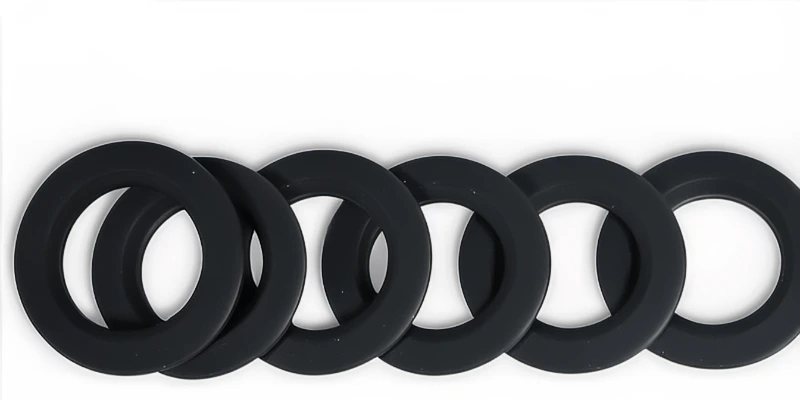
Rubber washers are made from rubber-based compounds like silicone, nitrile, and neoprene. When selecting a rubber washer, consider load capacity, material, size, thickness, and operating temperature. The material’s size must support the required load and be compatible with the fastener and secured material. Rubber washers prevent vibration from spreading between parts, reducing noise levels.
Aluminum
Aluminum (Al) is lightweight and corrosion-resistant with a good strength-to-weight ratio type of material. It’s very easy to produce. As temperatures fall, aluminum increases in strength, a quality few other metals share. An aluminum washer must contain at least 99% aluminum.
Plastic
Non-metallic washers comprise materials like polyethylene, polypropylene, nylon, and other plastic polymers. They are used as spacers or to distribute the load between fasteners and the surface they are tightened against. They are useful for a wide range of purposes, especially weight reduction, electrical insulation, and chemical and UV radiation protection.
Types Of Washers
1. Flat Washers
Standard Flat Washers: These washers are normally unhardened and are suitable for general purposes. They are used to disperse the load of a bolt or nut by providing a smooth surface to rest on.

Fender Washers: They are flat, similar to standard ones but with an outer diameter that is proportionally greater than the inner diameter. They distribute the load over a larger area, often when the hole size is larger than the bolt or for thin materials.

2. Lock Washers
Tooth Lock Washers: They have teeth-like serrations similar to serrated washers which are either internally or externally. These teeth penetrate the surface to prevent loosening using friction.
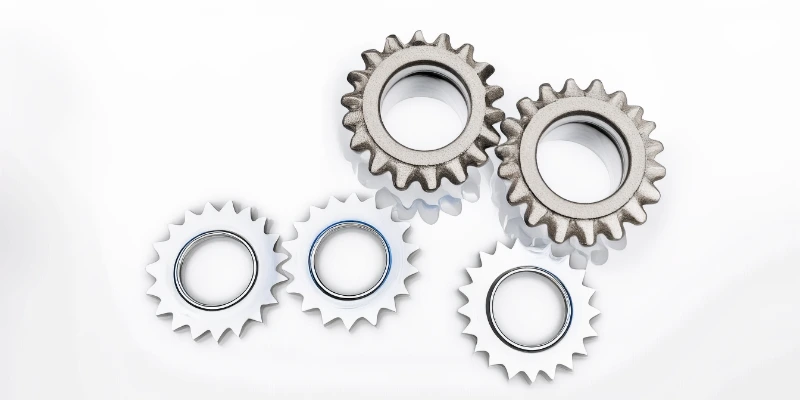
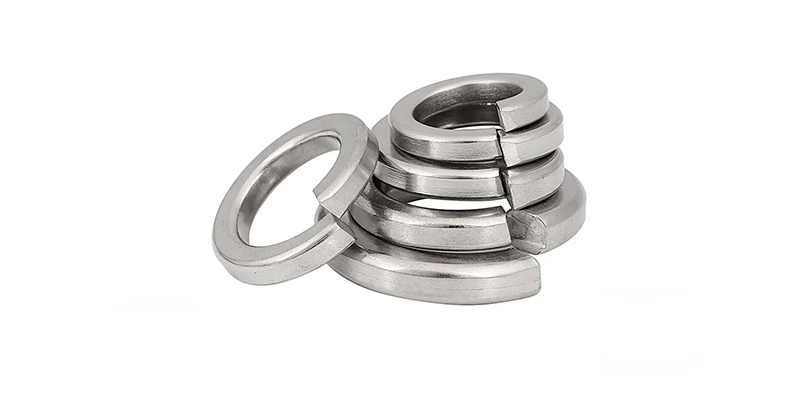
Split Lock Washers: Their split or spiral design aids in keeping the bolt or nut from loosening.

3. Spring Washers
Compression Spring Washers: People designed them to maintain tension while absorbing shock and vibration.
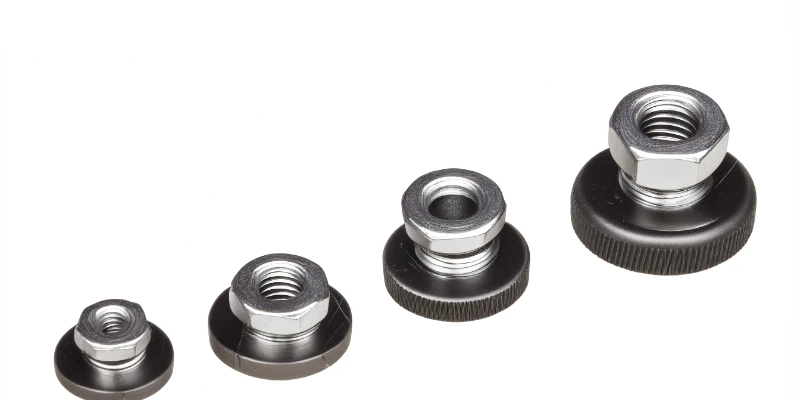
Belleville Washers: They are also known as conical washers shaped as a cone frustum, which gives the washer its characteristic spring providing a spring-like effect. Besides, they are used to secure high-load applications.
Tips: Check different types of springs.

Stainless Steel Spring Washers: They feature both the corrosion resistance capabilities and the strength of steel, mainly used in outdoor or marine environments.
4. Sealing Washers
Gasket Washers: When a gasket washer and a flat washer material combine, it creates a seal between the mating surfaces.
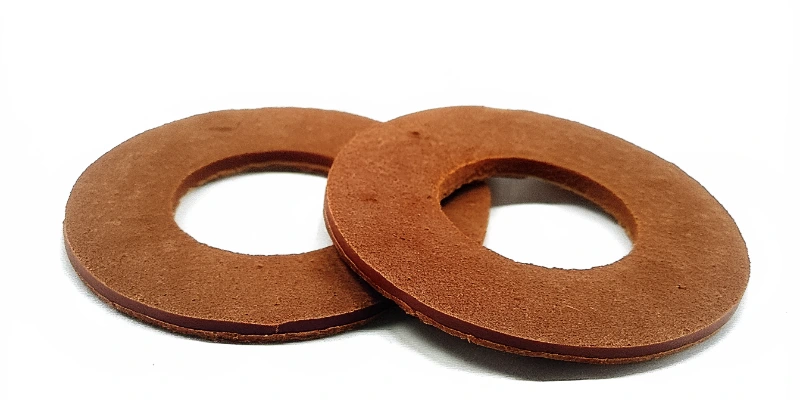
Rubber Washers: Rubber washers are made from elastomeric or rubber materials. The purpose is to provide a seal to prevent leaks and offer cushioning between objects.
5. Specialty Washers
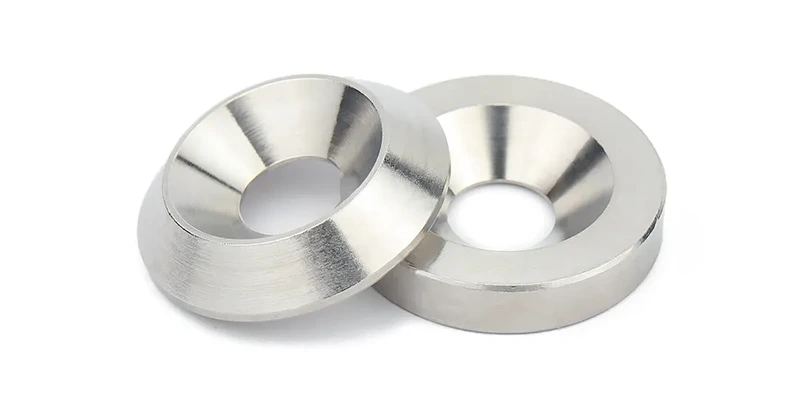
Countersunk Washers: They have a conical shape to provide a bearing surface for flat-head screws to fit flush with a countersunk hole.
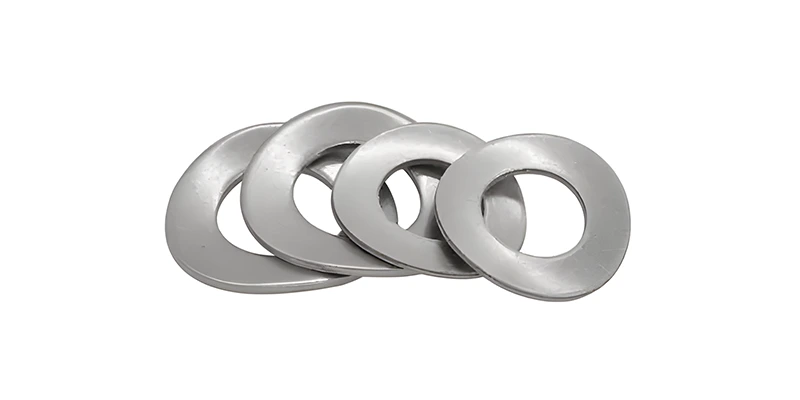
Wave Washers: Wave washers have a wavy shape that provides a compensating spring effect to accommodate small adjustments or absorb shock when under load.
6. Insulated Washers
Electrical Insulating Washers: They are made from rubber or plastic materials, and used to insulate against electrical conductivity between parts.
7. Shoulder Washers
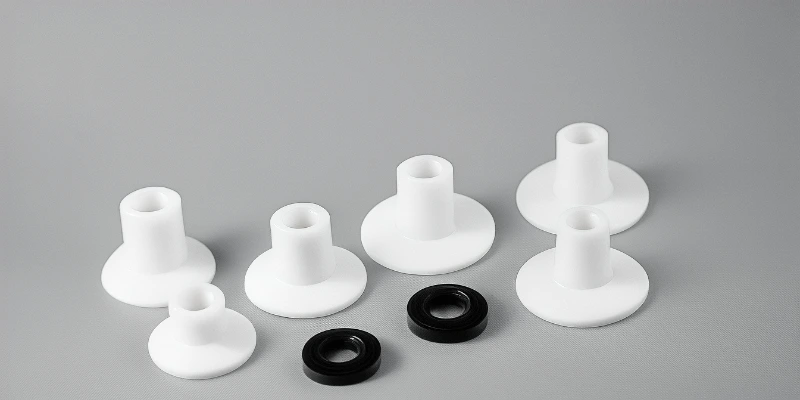
Plain Shoulder Washers: They offer a small shoulder that prevents parts from sliding or rotating. A flange created by their design inserts into a housing to give a bearing surface for rotary applications.

8. Keyed Washers
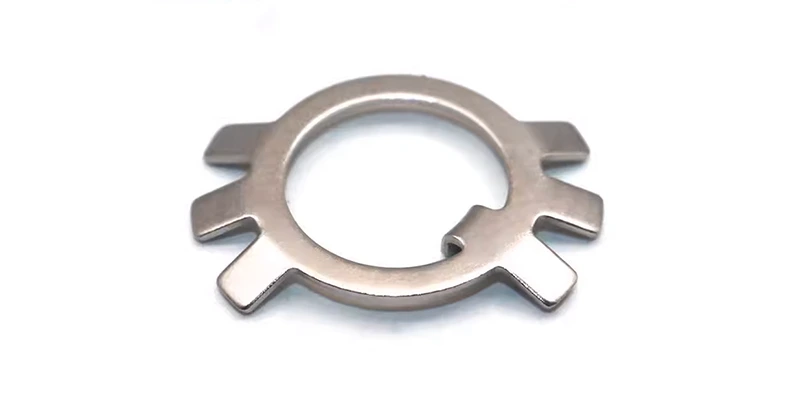
Key Washers: Key washers provide a key-shaped slot designed to align and secure parts, typically used in assemblies to prevent washer rotation and ensure proper torque transmission.
9. Plastic Washers
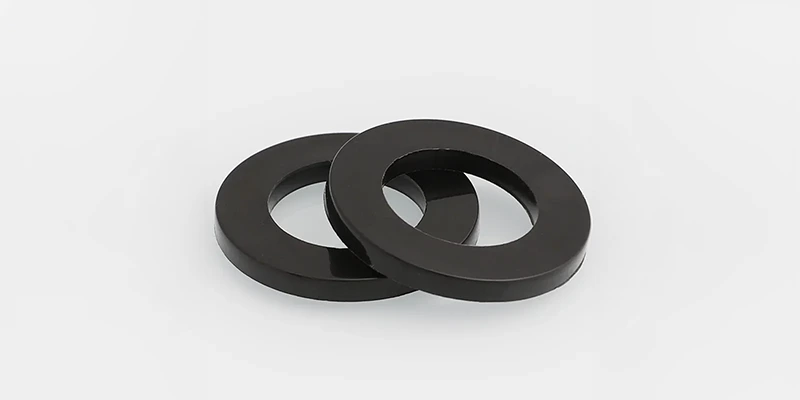
Nylon Washers: Nylon washers offer better protection against corrosion and offer better applications where metal washers might cause interference by separating hardware.
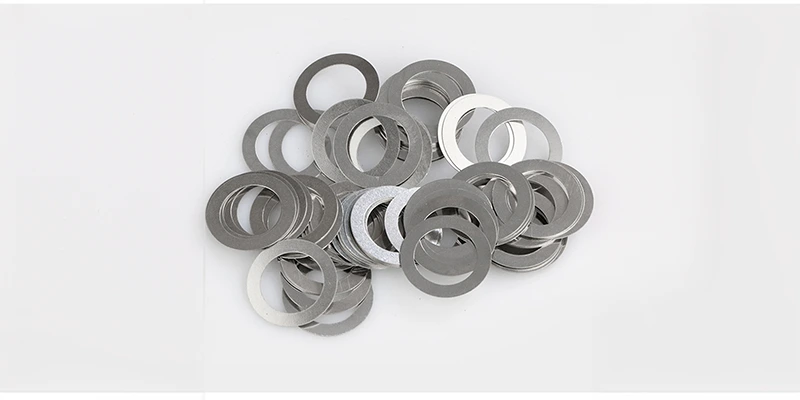
10. Shims
Adjustable Shims: These thin washers are used to achieve precise spacing and alignment between components. This is pivotal for ensuring accurate tolerances and maintaining the optimal functioning of mechanical systems.
Check First Mold’s manufactured pinion shim.
11. Flanged Washers
Flanged Flat Washers: They have a flange around the perimeter which offers a larger bearing surface and sufficient load distribution.

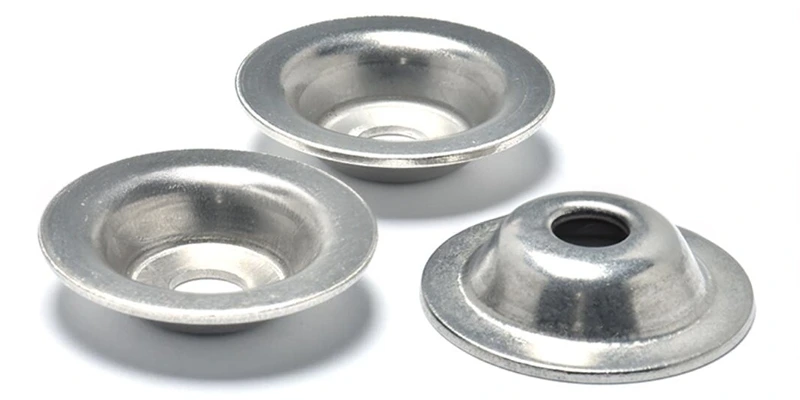
12. Cup Washers
Cup Shaped Washers: They have a cup-like shape and function as covers or protectors for components, frequently offering load distribution and contamination prevention
13. Non-Metallic Washers
PTFE (Teflon) Washers: These are flat, circular-shaped, and have a hole in the center washers. They exhibit excellent properties like chemical resistance ability, low friction, and non-sticky. Mainly usable in corrosive situations and prevents damage to sensitive surfaces.

14. Anti-Vibration Washers
Vibration Absorbing Washers: Vibration absorbing washers offer a wedge lock technology to absorb and reduce vibrations in assemblies and machinery, enhancing longevity and performance.
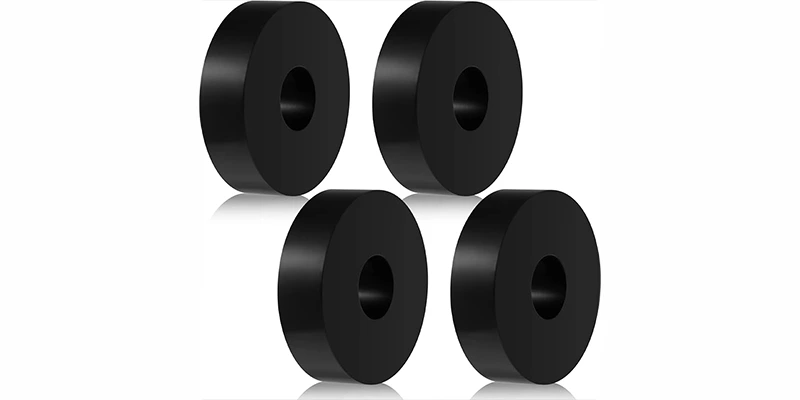
15. Bushing Washers
Bushing Washers: These are a type of bearing that insulates both moving and stationary parts, providing spacing and alignment for rotating parts.

Washers Manufacturing Techniques
Various parameters, like the washer’s size, shape, material, quantity, and desired precision, influence the production technique selection. The washer manufacturing process occurs when there is availability of different kinds of approaches, including stamping, cutting, machining, and more. Given the wide range of washer applications, it’s no surprise that various manufacturing processes have evolved over time
| Methods | Description | Key Features/Uses |
| Punch and Die Method(Stamping) | The most conventional method. | It involves passing a flat metal sheet in a stamping press, which can cut and shape the washers per their design requirements. |
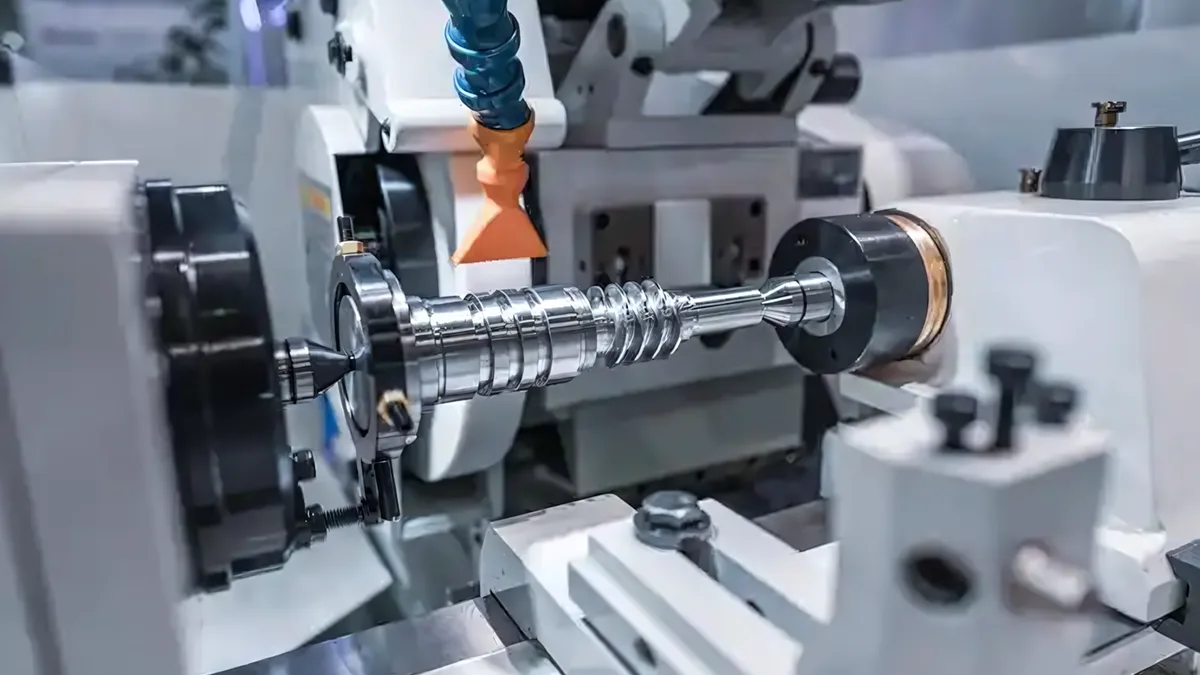
| Machining | The method applies to specialty washers. | Utilizes a lathe machine(CNC Turning) or milling machine(CNC Milling) for material removal. |
| Laser Cutting | Suitable for specialty washers. and intricate designs. | Utilizes high-power laser beams to cut material ensuring accuracy. |
| Water Jet Cutting | Uses an abrasive water jet. | Cuts the washer without generating heat, ideal for material sensitive to temperature. |
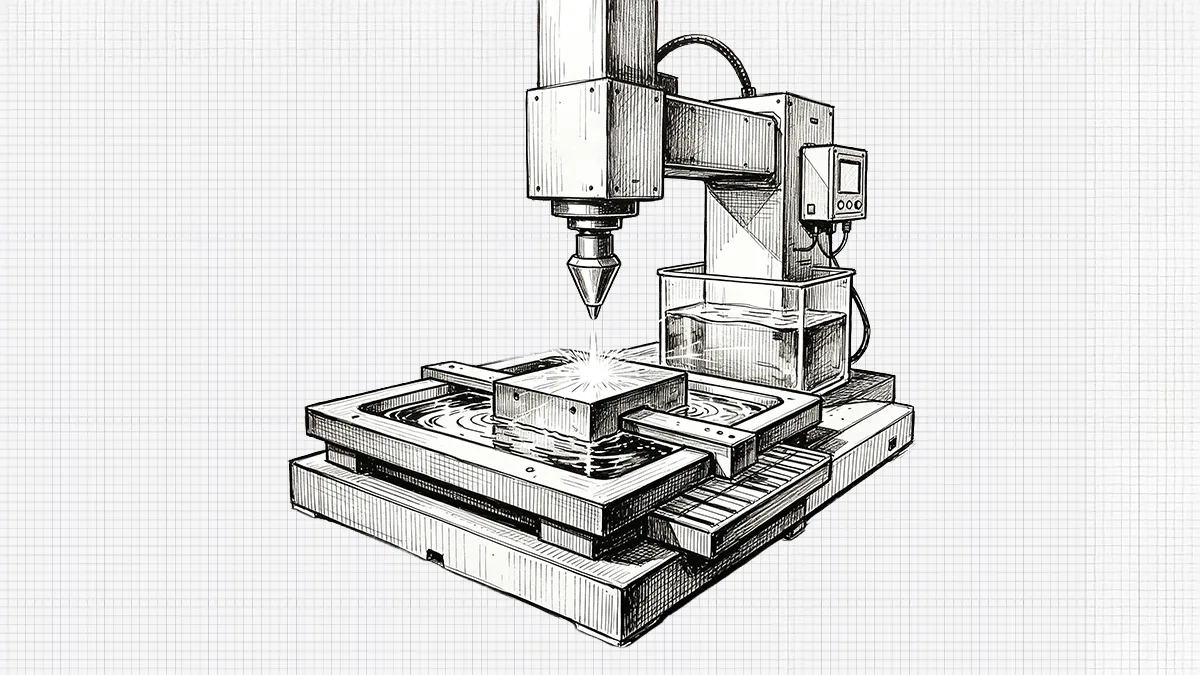
| Electrical Discharge Machining (EDM) | Involves an electrified wire. | Makes washers out of metal sheets, ideal for intricate designs and close tolerances. |
What’s The Purpose Of Using A Washer?
Unlike nails and screws, most washers aren’t driven into the surfaces. This may make someone wonder about their functions. Understanding of the washers lies in the role they play as intermediaries between the material and the fastener.
Protect surfaces– Washers act as spacers by preventing the material from coming into direct touch with the fastener. They serve as a barrier that can protect the integrity of the material.
Load distribution– Washers reduce the chance of damage like cracking or indentation by extending the contact area between the fastener and the material. This inhibits excessive pressure on a single location.
Alignment– Washers can offer a level surface for the fastener to rest on, guaranteeing even pressure distribution and accurate alignment.
Prevent loosening– to prevent fasteners from vibrating loose, some washer types such as lock washers offer additional friction or a locking mechanism.
Vibration Absorption– these kinds are commonly known for vibration damping washers. By absorbing vibrations, they protect objects from damage.




 EN
EN  ES
ES  FR
FR  DE
DE  IT
IT  PT
PT  NL
NL  PL
PL  AR
AR  JA
JA  KO
KO  ZH
ZH