

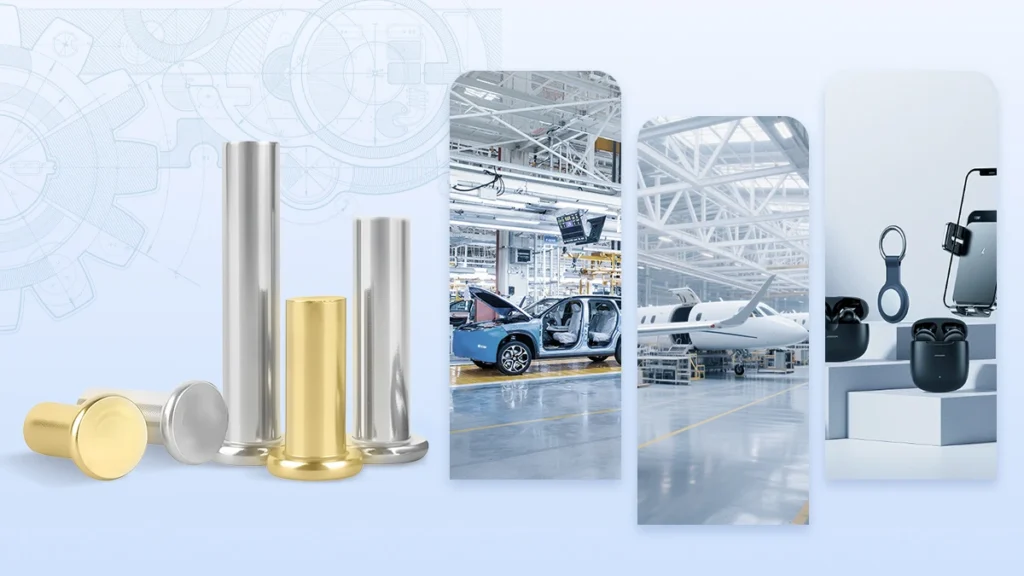
Looking for fasteners to easily handle tough jobs? Consider rivets. Capable of joining the workpieces in a strong yet permanently secure way, rivets are a highly useful component in all products, from planes to jewelry and more. This guide will help you explore the major types of rivets available, their location of use, and the material to make them. It will further guide you on how you can go about rivet selection concerning a specific need for a particular production process.
Tips: Learn more about “types of fasteners“.
Understanding Rivets: What They Are and How Do They Work?
A rivet is a permanent mechanical fastener designed to attach two or more parts by passing through a pre-drilled hole or holes and then deforming at least one end. In terms of design, a rivet has a smooth cylindrical shaft with a head at one end.
To fasten materials, the tail of the rivet is deformed and then fixed against the materials.
Rivets have wide applications since they provide a secure and long-lasting connection. This is simply because these rivets – unlike bolts and screws – are permanent fasteners. Once they are installed, they cannot be removed without destroying the fastener itself.
Popular Types of Rivets and Their Applications
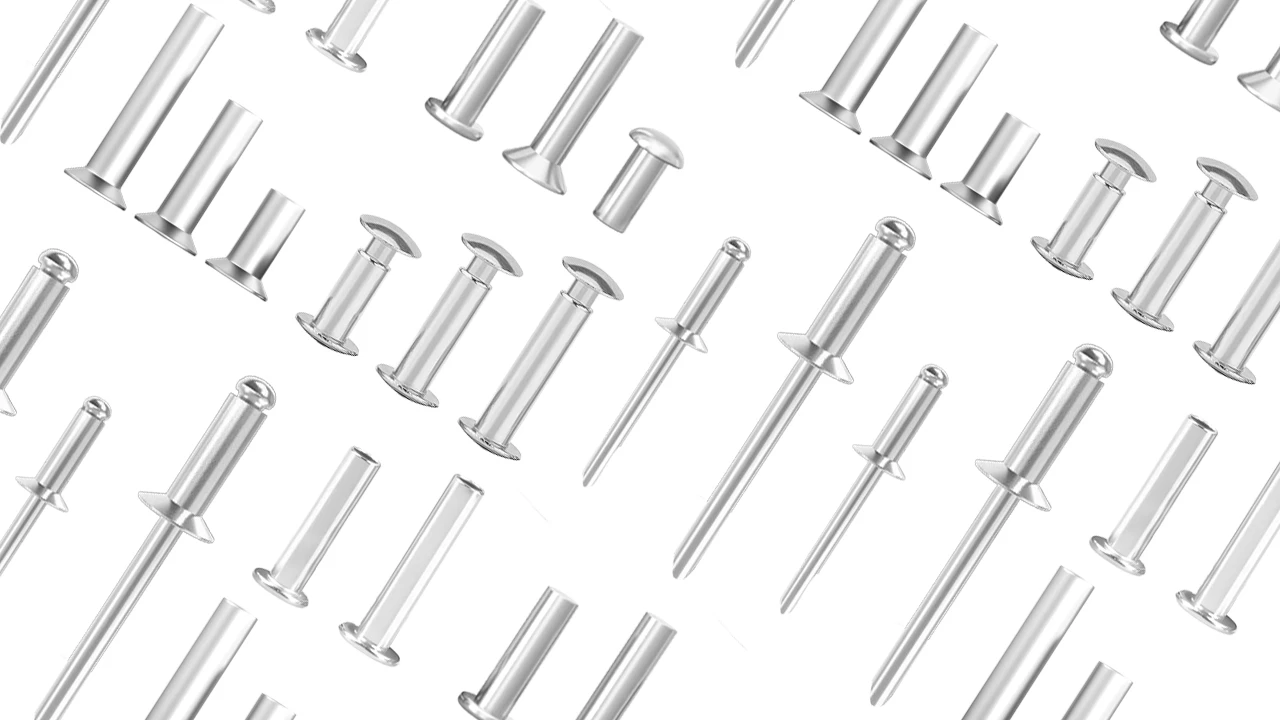
Different types of rivets in the market help serve different purposes.
Below are some of the most popular rivet types along with their indicative uses.
1. Solid Rivets
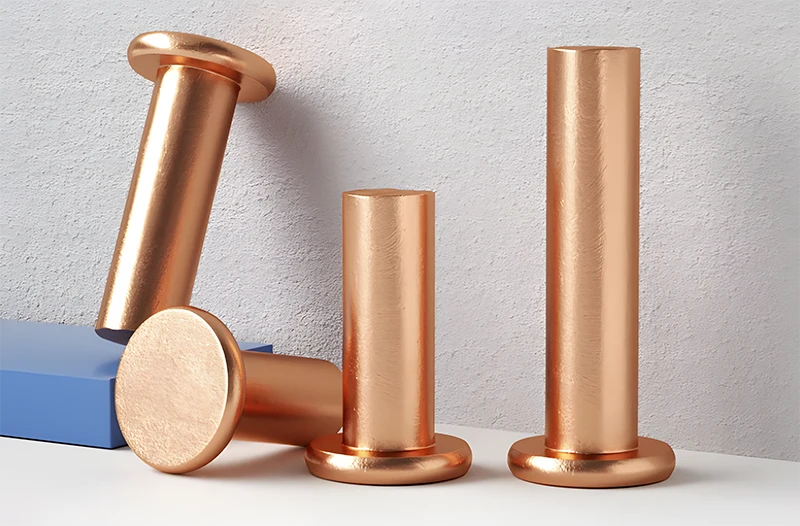
Solid rivets, or round rivets, are the oldest and most reliable type. This kind of rivet is, in most cases, composed of one single piece of material with a head at one end and a tail at the other.
The tail of a solid rivet is deformed with a hammer or a rivet gun during its installation. This creates a second head, which binds the materials together.
- Applications: Solid rivets are used in very heavy applications meant to add to the element of safety and durability, like in airplanes, bridges, or ships. They are also used in structural steel frameworks and the restoration of historical armor.
- Materials: Solid rivets are much more commonly manufactured using steel or aluminum. They could also be produced from materials like titanium for very heavy applications based on the strength requirements.
2. Blind Rivets

Blind rivets or pop rivets are designed to be installed in applications where only one side of the workpiece is accessible. They are composed of a tubular body and a central mandrel.
After installation, the mandrel is drawn into the body of the rivet, expanding the tubular portion and creating a strong joint.
- Applications: Blind rivets are recommended for applications in which the back side of the materials is hard to reach or totally inaccessible. They are suitable for applications in the automotive industry, the electronic industry, shipbuilding, etc. Such rivets are typically used to join metal sheets, especially used in tight or enclosed spaces.
- Materials: Aluminum, stainless steel, or copper blind rivets have a good relative relation of strengths, resistance to corrosion, and ease of installation.
3. Tubular Rivets

The difference between tubular rivets and other solid rivets lies in their partially hollow shank. Since less force is required in setting it, it makes them easier to use in many different applications.
- Applications: Tubular rivets find applications where comparatively lighter fastening or joining is needed. Some of the common examples include HVAC, lighting fixtures, binders, and electronics. Additionally, such rivets are used in the manufacturing of a wide range of products, from leather goods to clothes and even parts for building and repairing aircraft.
- Materials: The tubular rivets can be built with aluminum, brass, copper, etc., depending upon the required application, strength, and corrosion resistance.
4. Drive Rivets

Drive rivets are a specific type of blind rivet featuring a short mandrel with a protruding face. These rivets are installed by driving the mandrel into the body of the rivet, where the latter expands and forms a shank around the material.
- Applications: Drive rivets are used in situations where a simple, strong, and reliable fastener is needed. This includes the assembly of automotive components, architectural panels, and masonry work.
- Materials: The materials normally used in the fabrication of such rivets include aluminum or steel to make them a strong fastening solution for a considerable range of construction applications.
5. Split Rivets

These rivets, designed with a shaft split into two legs, are also known as bifurcated rivets. Interestingly, when they are driven into a material, the legs separate and bend to secure the fastened components.
- Applications: Split rivets work best with soft materials, including leather, plastics, and textiles-finding their usage in leathers, shoes, and some automotive parts industries.
- Materials: Typically, split rivets are made of softer metals, such as brass, aluminum, or copper, ensuring that the legs can spread easily to hold the material.
6. Self-Piercing Rivets

Such rivets are designed to ensure that they pierce through materials without having to make a hole first in the material. This means that they are driven into the material, creating their own hole and forming a strong bond without passing completely through the second material.
- Applications: Self-piercing rivets find applications in high-speed manufacturing processes such as automotive industries, where strong joints with watertight properties are required without additional sealing.
- Materials: Rivets of this kind are usually made from high-strength steel or aluminum for piercing multiple metal layers, keeping the integrity of the joint.
7. Flush Rivets
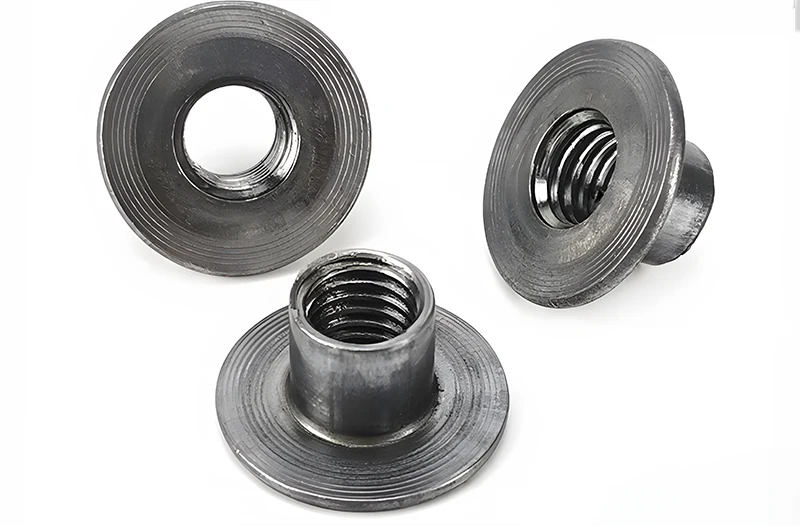
These rivets are designed with a head that lies flush with the surface of the material to be joined. This design helps them offer minimum drag in aerodynamics and a smooth finish. This is a very important feature where appearance and aerodynamics are concerns.
- Applications: Flush rivets are widely used in the aerospace industry, particularly on the external surfaces of aircraft, to ensure smooth airflow and reduce drag. Their smooth and clean finish also makes them valuable in the automotive and marine industries.
- Materials: This type of rivet is made of aluminum, steel, or titanium, depending on the properties required in an application—like tensile strength, resistance, or corrosion.
8. Cherry Rivets
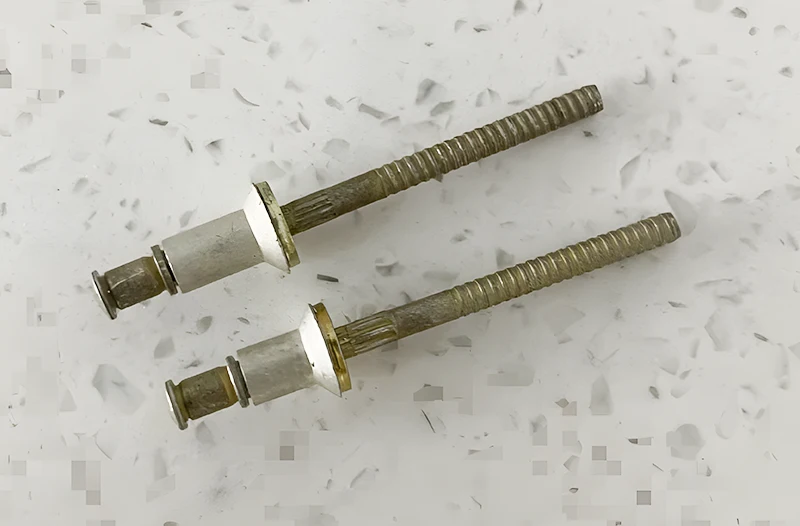
Cherry rivets, or pull-through rivets, are a specific type of high-strength blind rivets that are used in the aerospace and automotive industries. These rivets feature a metal sleeve with a flared end. A special tool pulls the rivet through a pre-drilled hole, securing it in place.
- Applications: Cherry rivets find applications in very important field applications where high strength and permanent fastening are required, such as in aircraft structures and components of automobiles. They are also highly useful in applications where access is available on one side of the assembly only.
- Materials: The cherry rivet is made from a high-strength material, usually being Aluminum, Steel, or Titanium alloys. This material choice helps match up to the rigorous demands of aerospace and automotive applications.
Tips: Curious about how these types of rivets are used in plastic parts? Click our guide on plastic riveting.
Materials Used in Rivet Construction
The material used in the manufacture of a rivet largely dictates its performance with respect to corrosion handling, strength, and installation.
Some common materials used in the manufacturing of rivets include:
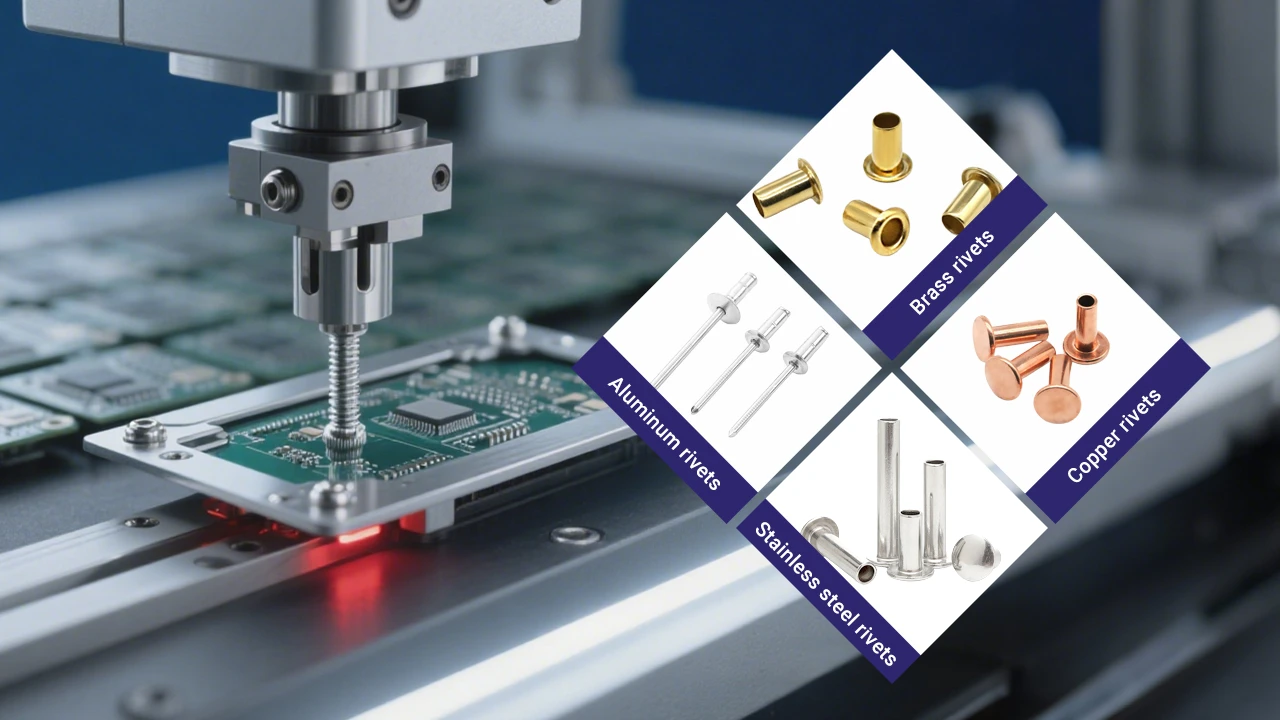
Aluminum Rivets
Aluminum rivets, the most common type, are widely used for being lightweight, easy to install, and corrosion-resistant. This makes them ideal for usage in industries like aircraft and the automobile, where saving weight is integral.
- Pros: Aluminum rivets are ideal for usage in outdoor applications and environments that are prone to moisture because they will never rust nor corrode in any other form.
- Cons: While strong in their own way, aluminum rivets are not as hard-wearing as steel rivets. Hence, they can only be used in light-duty applications.
Stainless Steel Rivets
These exhibit great strength and corrosion resistance, thereby making them usable in almost any harsh environment.
- Pros: Such rivets are rust-resistant and will resist corrosive environments as well as extreme temperatures. They can be used in marine applications, food processing, and chemical processing.
- Cons: These are much more difficult to set up as they’re harder than regular rivets and may require an air or hydraulic rivet gun for installation.
Copper Rivets
Copper rivets look attractive, particularly due to their visual appeal and high conductivity. Moreover, they are easy to work with and assure good strength in fastening and reliability.
- Pros: Some of the advantages associated with copper rivets include no corrosion, and not to add, they are very good conductors of electricity. This makes them suitable both for electrical and decorative purposes.
- Cons: Not suitable for high-stressed application as it’s a soft metal compared to other metals.
Brass Rivets
Brass rivets are those rivets that are strong and durable in nature and also come in golden color, giving them a unique look. Thus, these rivets are used for decorative purposes.
- Pros: Rivets made from brass are resistant to corrosion and wear. Hence, being effective in applications where both strength and aesthetics are required.
- Cons: Brass rivets are less strong as compared to steel and hence more preferable in lighter, less demanding applications.
How to Choose the Right Rivet for Your Application?
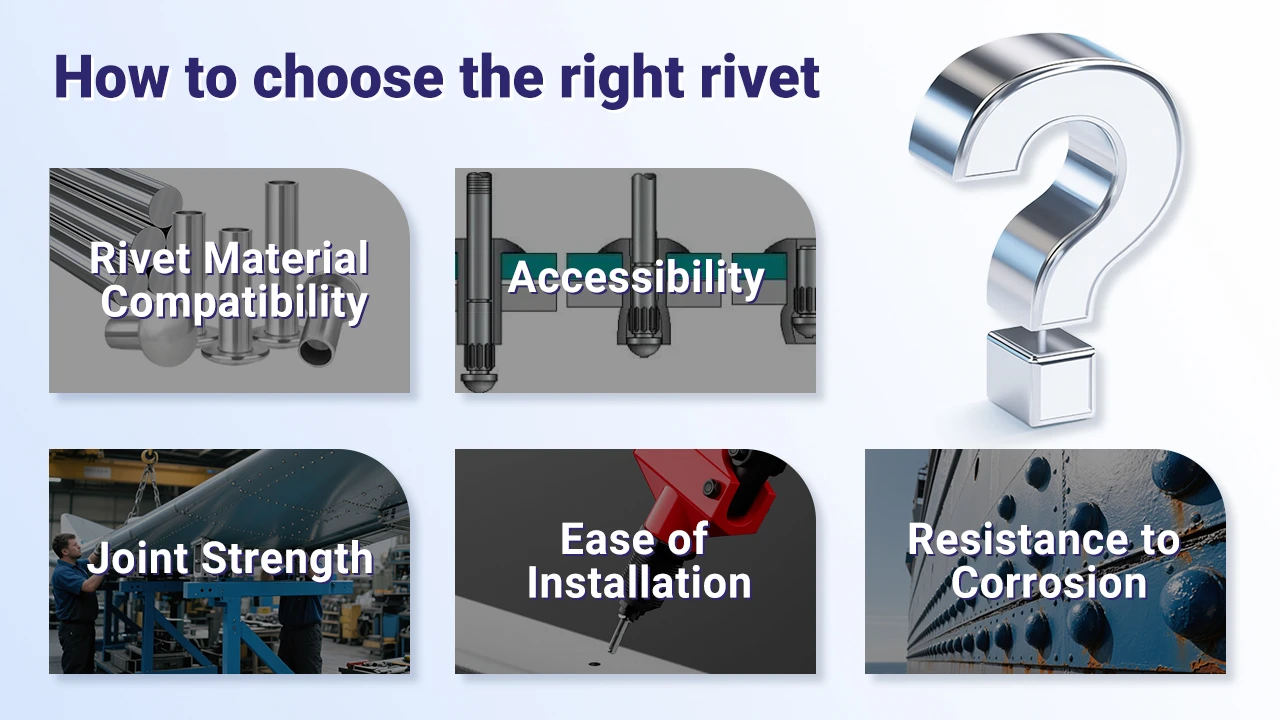
The choice of rivet type depends on a number of factors. This includes what kind of material you want to join, where you need to install it, and the tensile strength you require for that joint.
Let’s further break down each of these factors and why they are important when picking a rivet.
- Rivet Material Compatibility: The materials you have to join will dictate the materials of rivets you will use. For example, aluminum rivets are ideal for joining aluminum. Whereas, stainless steel rivets offer good performance in a corrosive environment.
- Accessibility: In cases where only one side of a joint is accessible, blind rivets or drive rivets are favored. Yet, if both sides can be accessed, then the job can be completed with solid or tubular rivets.
- Joint Strength: Here, you need to consider the needed strength of the joint. All-solid rivets have the maximum total strength and, so, are specified for large structural applications. Specifically, tubular and blind rivets are utilized in lighter-duty applications where a high strength is not needed.
- Ease of Installation: One should also consider the installation tools. Now, different rivets take various installation loads. For instance, solid rivets take more load, whereas blind rivets take relatively smaller loads. As a result, the latter can be fixed even using simple tools.
- Resistance to Corrosion: Stainless steel or aluminum rivets are employed in the construction of both marine and outdoor products due to their unreceptive nature to rusting and corrosion.
Advantages and Disadvantages of Rivets in Production
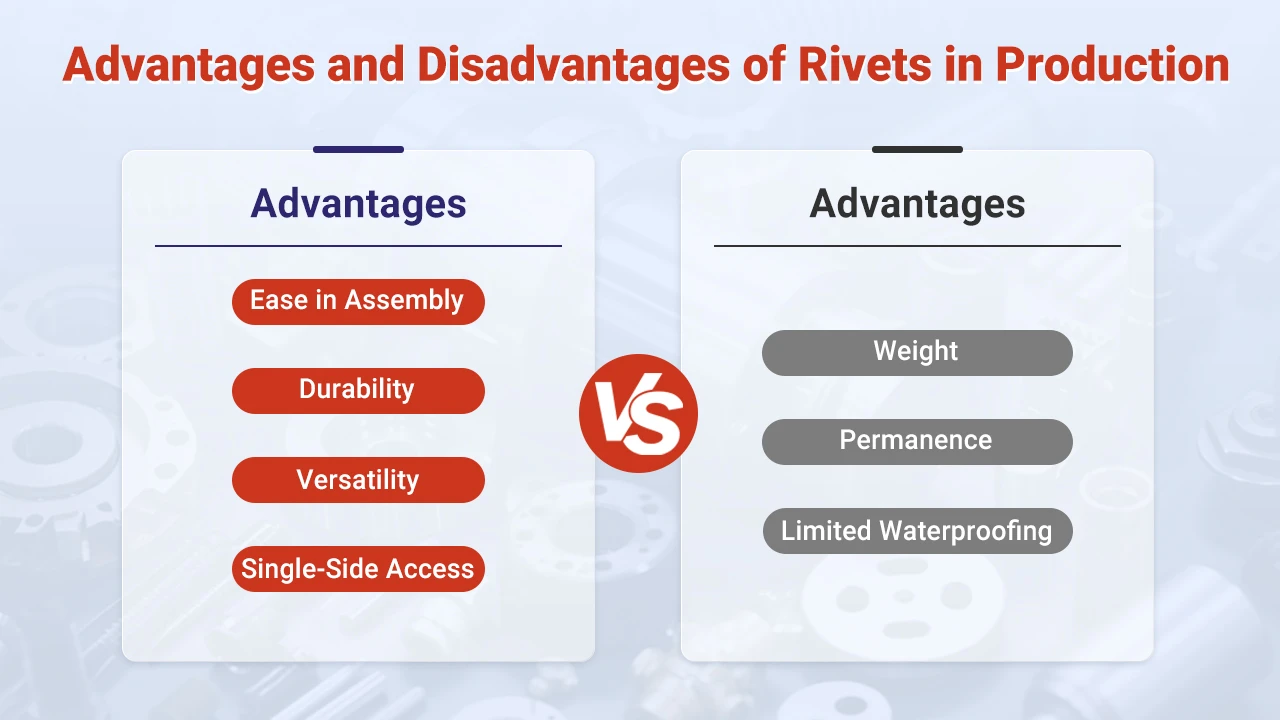
Advantages
- Ease in Assembly: The majority of rivets can be assembled at an easier and faster rate. They prove to be very effective for large-scale production.
- Durability: The joints formed by rivets are very strong and tough. These joints have a high resistance to heavy stresses and wear for periods of long usage.
- Versatility: Rivets come in various sizes, materials, and types. This variety makes them versatile and suitable for many different applications.
- Access: Access to the joint might be available from only one side, in some types of riveting such as blind riveting.
Disadvantages
- Weight: Rivets are additional weight to an assembly in cases where weight savings are important, such as aerospace.
- Permanence: Rivets create permanent joints. Hence, it can be bad if an assembly needs to be taken apart in the future.
- Limited Waterproofing: Most rivets do not form a watertight seal, which can cause leaks unless other sealing methods are used.
Conclusion
Rivets are of great use in most manufacturing industries that require fast, strong, and permanent fastening.
That said, there is a rivet type designed to suit every particular need when working with metals, plastics, and any other materials.
Hence, only the right type and application knowledge of rivets will facilitate the selection of the appropriate rivets for intended joints, guaranteeing long-lasting and effective joints.
First Mold is here to help you manufacture whatever type of parts you need to connect with the use of rivets whether it be through CNC machining, injection molding, or 3D printing.




 EN
EN  ES
ES  FR
FR  DE
DE  IT
IT  PT
PT  NL
NL  PL
PL  AR
AR  JA
JA  KO
KO  ZH
ZH