

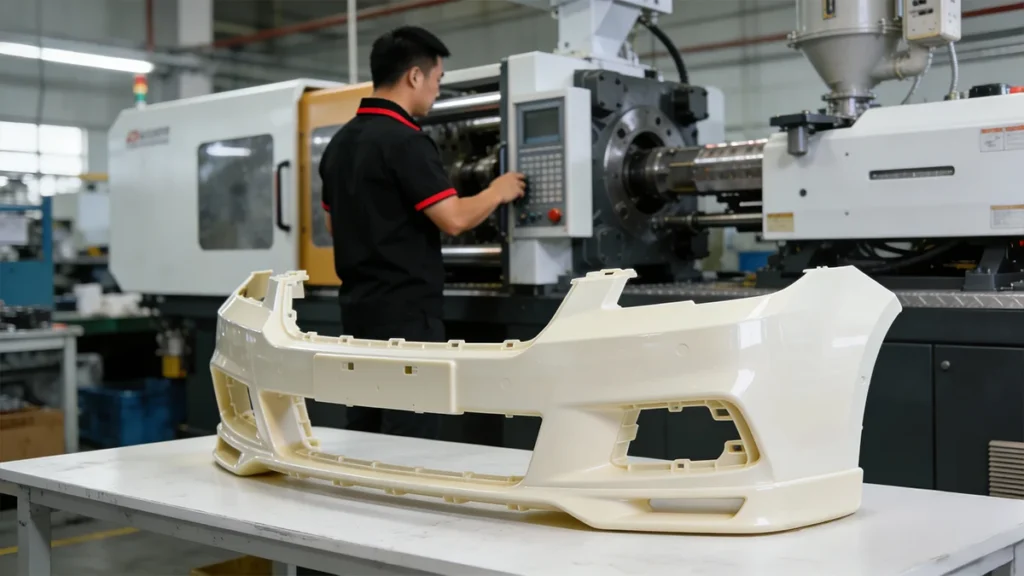
The first vehicle patented by Carl Benz in 1885 didn’t have bumpers [1]. It was basically a tri-wheeler with a combustion engine and large wheels. A bumper made of a metal bar was added to automobiles in 1897 by George Albert Lyon. The focus of bumper manufacturing at that time was mainly decorative.
In 1905, Frederick Richard Simms patented the first bumper made with impact-absorption in mind. This time, the bumpers were made using impact-absorbing rubber. Cast iron eventually replaced rubber. By 1920, steel became the standard material for making bumpers because of its lower cost and better strength.
Between 1930 and 1960, automakers started innovating around bumper production. This includes plating the steel used for bumper manufacturing with chrome. Automakers also started adding complex shapes and lights to bumpers.
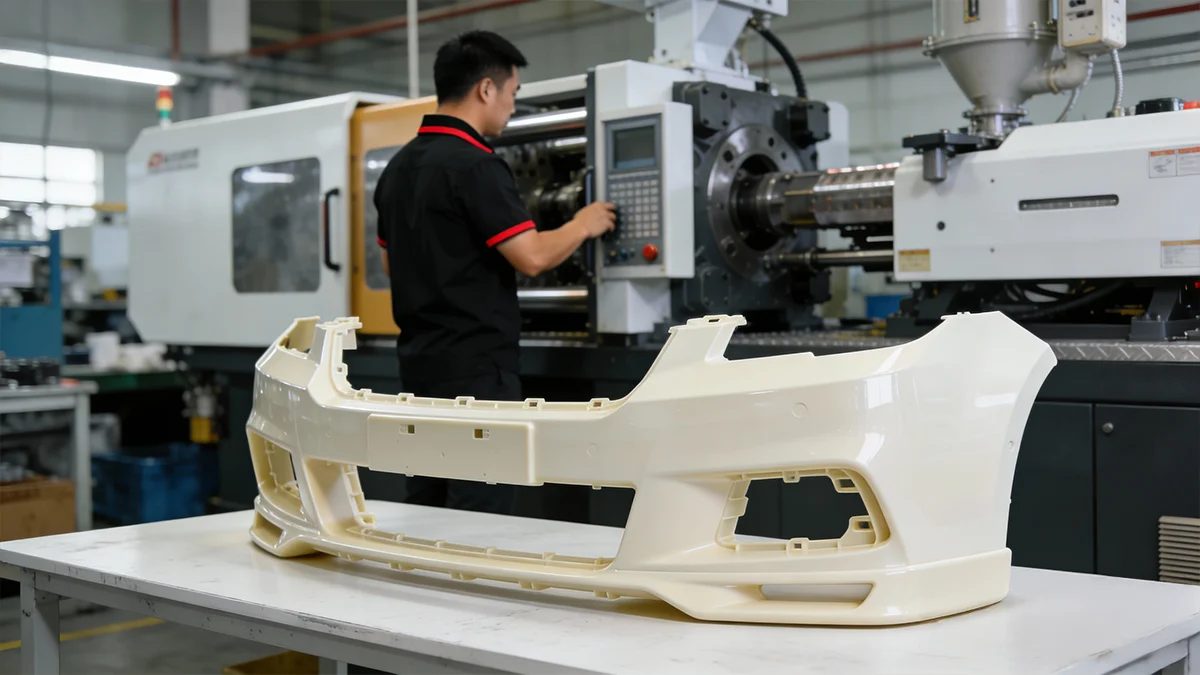
The Rise of Bumper Injection Molding
From the 1970s, safety concerns started growing around automobiles. The United States National Highway Traffic Safety Administration (NHTSA) announced new safety standards (Federal Motor Vehicle Safety Standard 215) in 1971 that required bumpers to withstand low-speed impacts (2.5 mph).
The NHTSA guideline ushered in a new era of rubber bumpers with shock-absorbing properties. One of the first automakers to meet this new bumper guideline was General Motors, specifically their Endura bumper fitted on the 1968 Pontiac GTO. Modern automotive bumper production is primarily made using injection molding as follows:
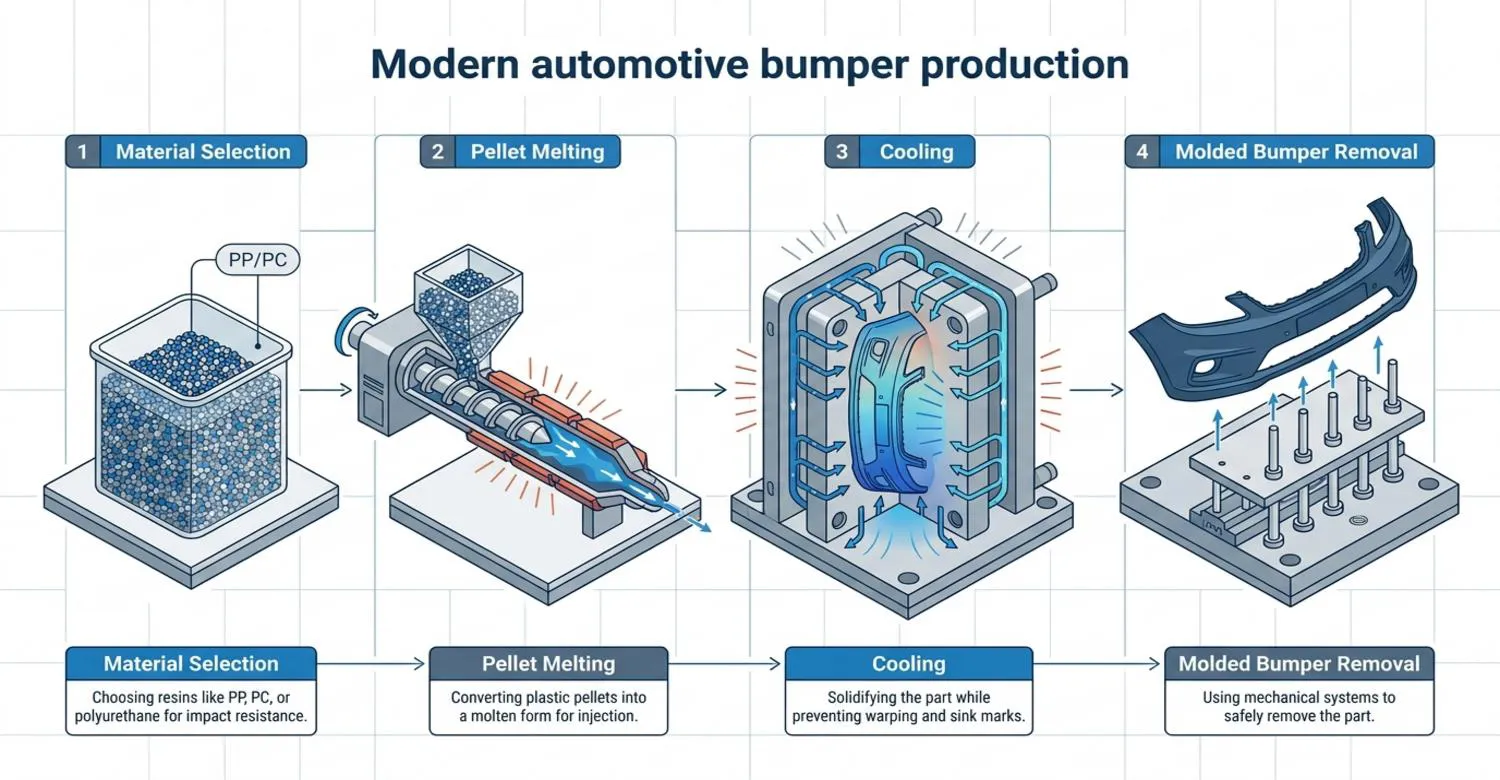
1. Material Selection and Preparation
The most common form of plastic pallet used in car bumper molds is polypropylene. However, polycarbonate, polyurethane, and butadiene styrene are often used because of their design flexibility and perfect balance of high impact resistance and low weight. The pellet is fed into a hopper.
2. Pellet Melting and Injection
The hopper feeds the pellet to the barrel, where it is melted and mixed (if other materials were added) into a molten form. The molten plastic is injected into a steel bumper mold. During the injection, the right pressure is applied so that the molten plastic can properly fill the mold cavity.
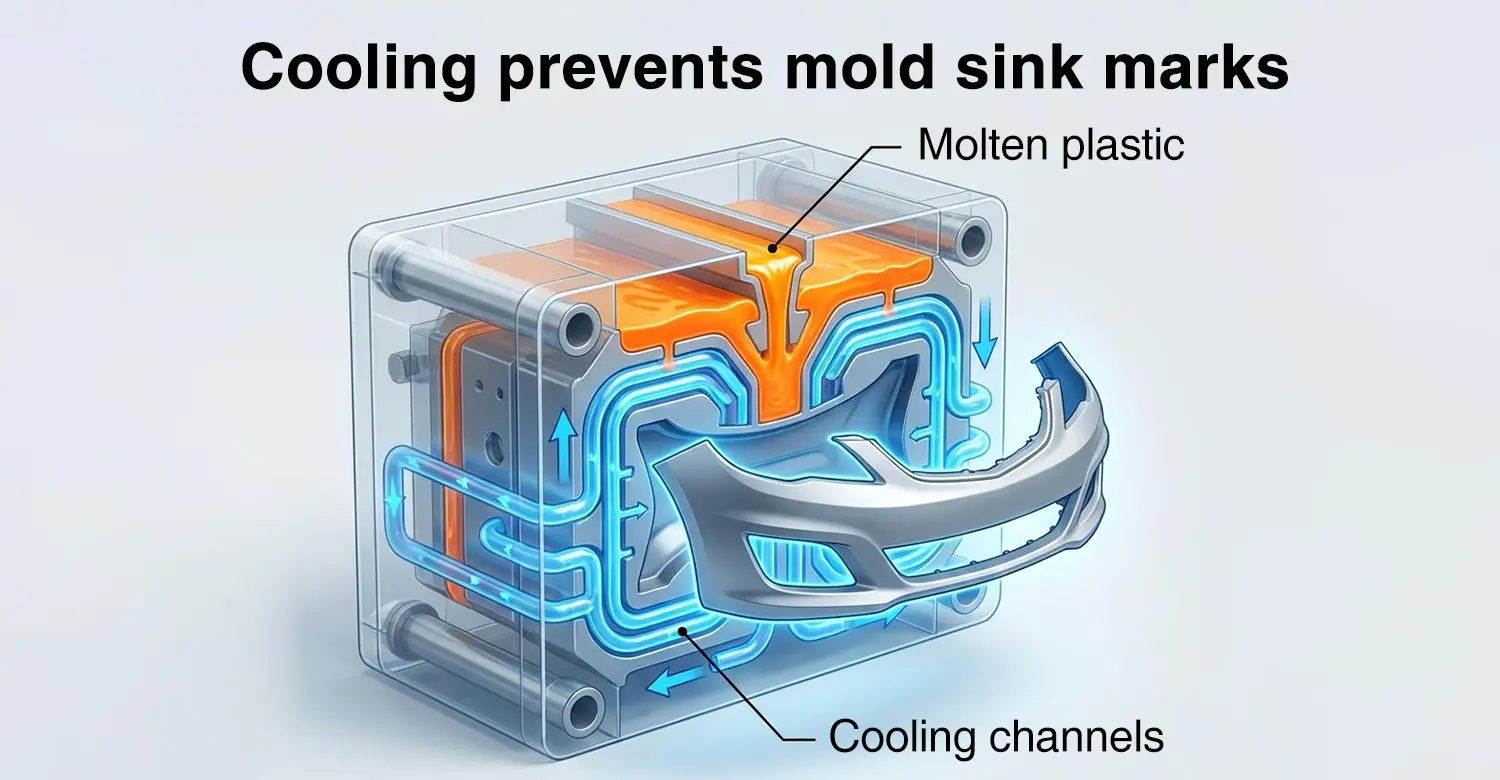
3. Cooling of the molded part
The molten plastic is allowed to cool and solidify in the mold. In doing so, it takes up the precision-machined shape of the mold. Critically controlling the cooling time ensures the material achieves the desired mechanical properties and dimensional accuracy. Sink marks, warping, and other common defects can be prevented with a proper cooling mechanism.
4. Molded Bumper Removal
After the part has cooled and solidified sufficiently, the molded part is ejected. Successful ejection is carried out using a system of plates and pins.
5. Finishing of the Rumper
The molded part will usually undergo several other steps before it is fitted in an automobile. Finishing can include trimming and painting to achieve the desired appearance.
Five Bumper Injection Molding Considerations
Automakers have continued to innovate around car bumper molding over the years. For example, some car brands feature bumpers made of aluminum or steel with a plastic cover. Others have special designs that incorporate sensors for collision warning, parking, and other advanced safety features.
Modern era bumpers are made with plastic for reasons other than safety. This includes lightweighting, safety, durability, and design flexibility. The design intent usually guides the considerations during bumper manufacturing. Below are important considerations to make.
1. Designing Bumpers for Safety
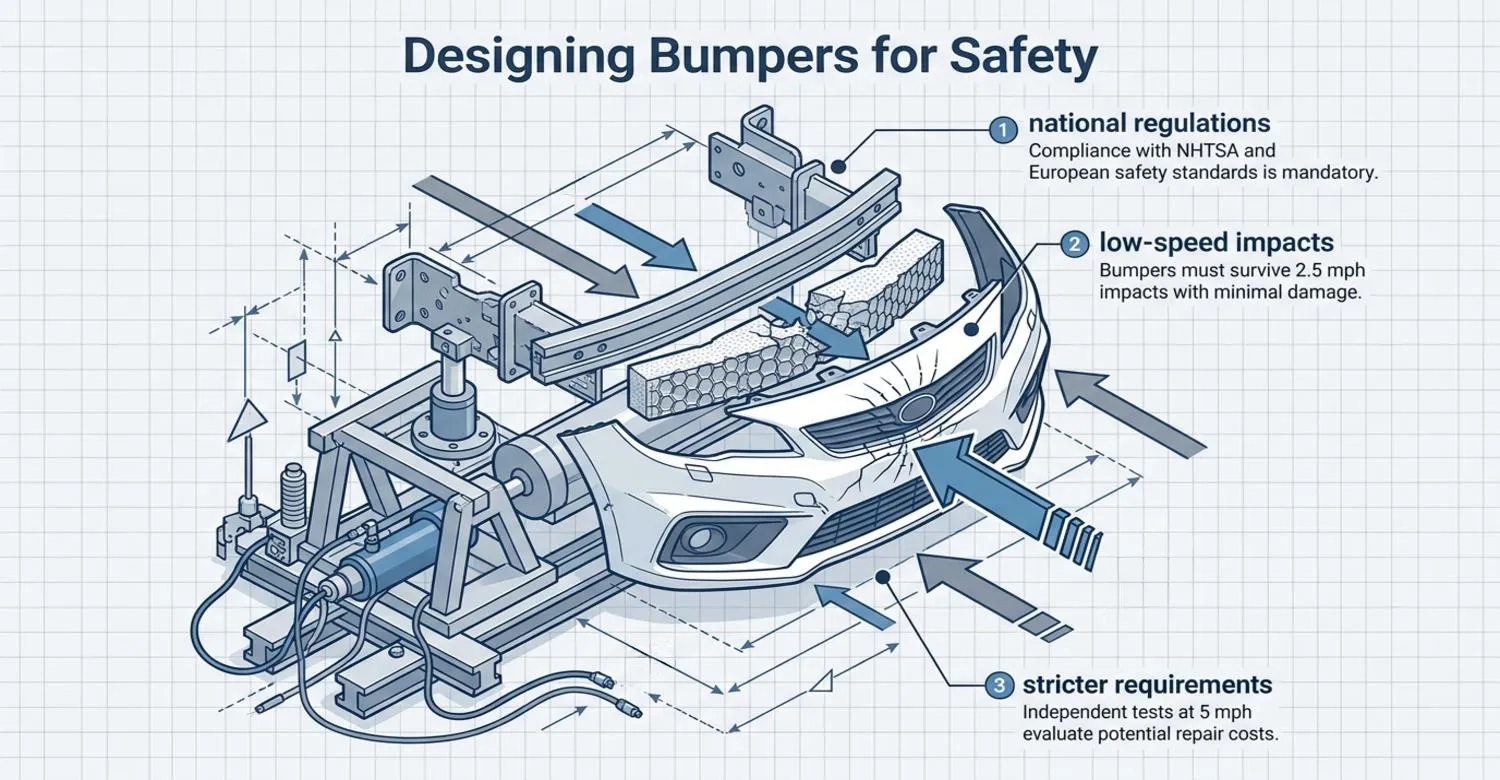
Although a lot of consideration goes into bumper production, safety remains a top priority. Every bumper design must meet national regulations, and international regulations if the manufacturer plans to ship their vehicles abroad.
Most international automobile safety regulators, including NHTSA and most European regulations, expect bumpers to withstand impacts of up to 2.5 mph from the front or rear with minimal damage. That means the material used for bumper manufacturing must meet specific strength and toughness.
The Insurance Institute for Highway Safety often has stricter requirements. The independent organization usually conducts tests at 5 mph to evaluate repair costs.
2. Material Selection for Lightweighting
Although the use of metal bars for bumpers was functional, it added to the weight of the vehicle, which increases fuel consumption. The switch to plastic bumpers helped to cut the weight of automobiles, which directly translates to a reduction in fuel consumption.
Automobiles are evolving towards the use of sustainable energy sources, like battery electric vehicles and hydrogen fuel vehicles [2]. Consequently, there is a growing pressure on manufacturers to use more sustainable, lighter materials for their production, in an attempt to boost range. Additionally, environmental activists are calling for a reduction in plastic pollution, forcing manufacturers to explore the use of recycled materials.
This has led to an increase in the use of injection-molded composite and post-consumer recycled resins (PCR) for bumper injection molding [3]. These materials are favored because of their high strength-to-weight ratio.
Processing Challenges with Composites and PCR Resins
When either of these materials is used, the car bumper molding system must be modified. For example, composites melt at a higher temperature and need higher injection pressure compared to virgin plastic to ensure even flow without damaging the material. The processing parameters of post-consumer recycled resins are also highly controlled to avoid degradation of the material.
Therefore, when working with either composites or post-consumer recycled resins, ensure you partner with a bumper mold maker that understands their peculiarities. Some of the modifications that manufacturers may make to a bumper injection molding system when using PCR include:
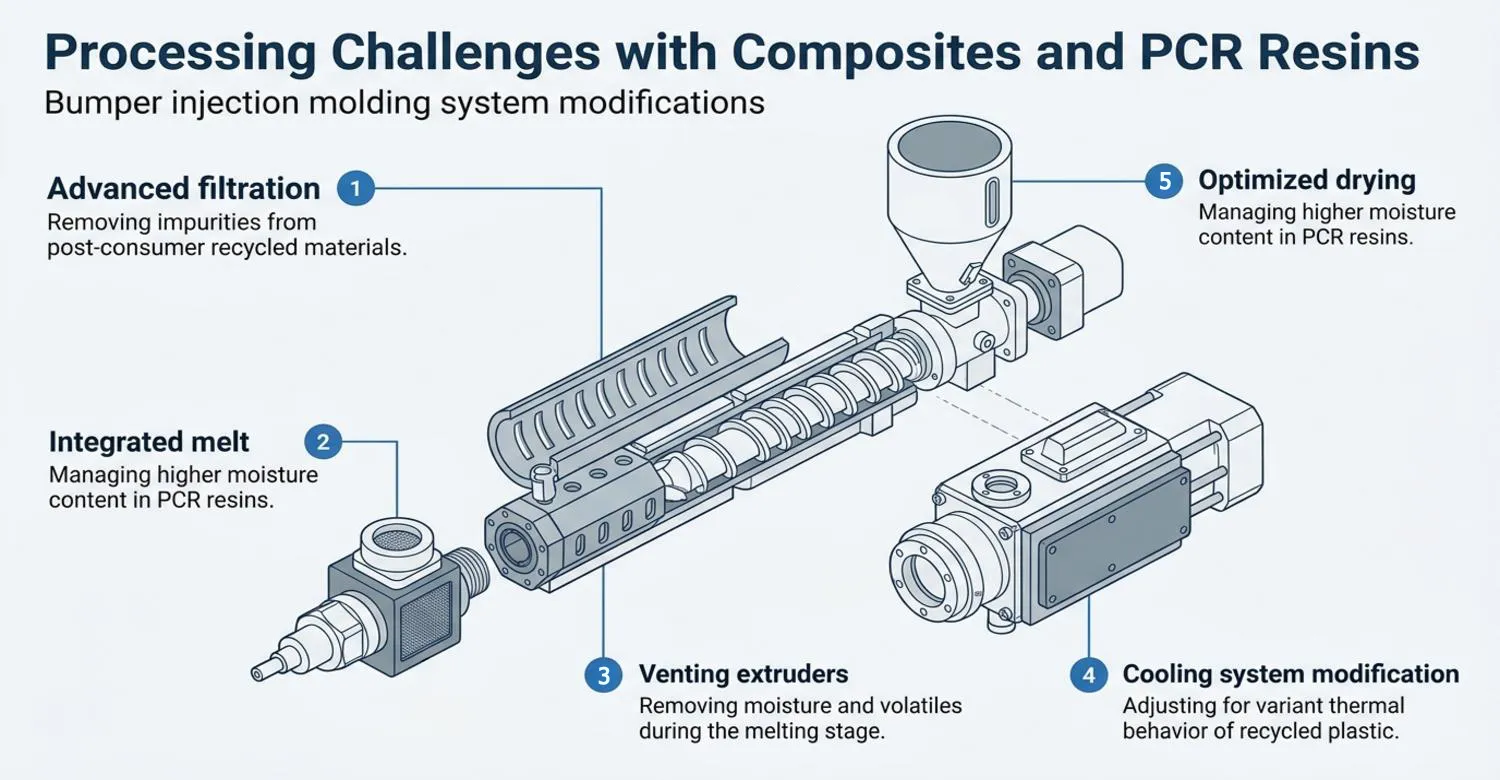
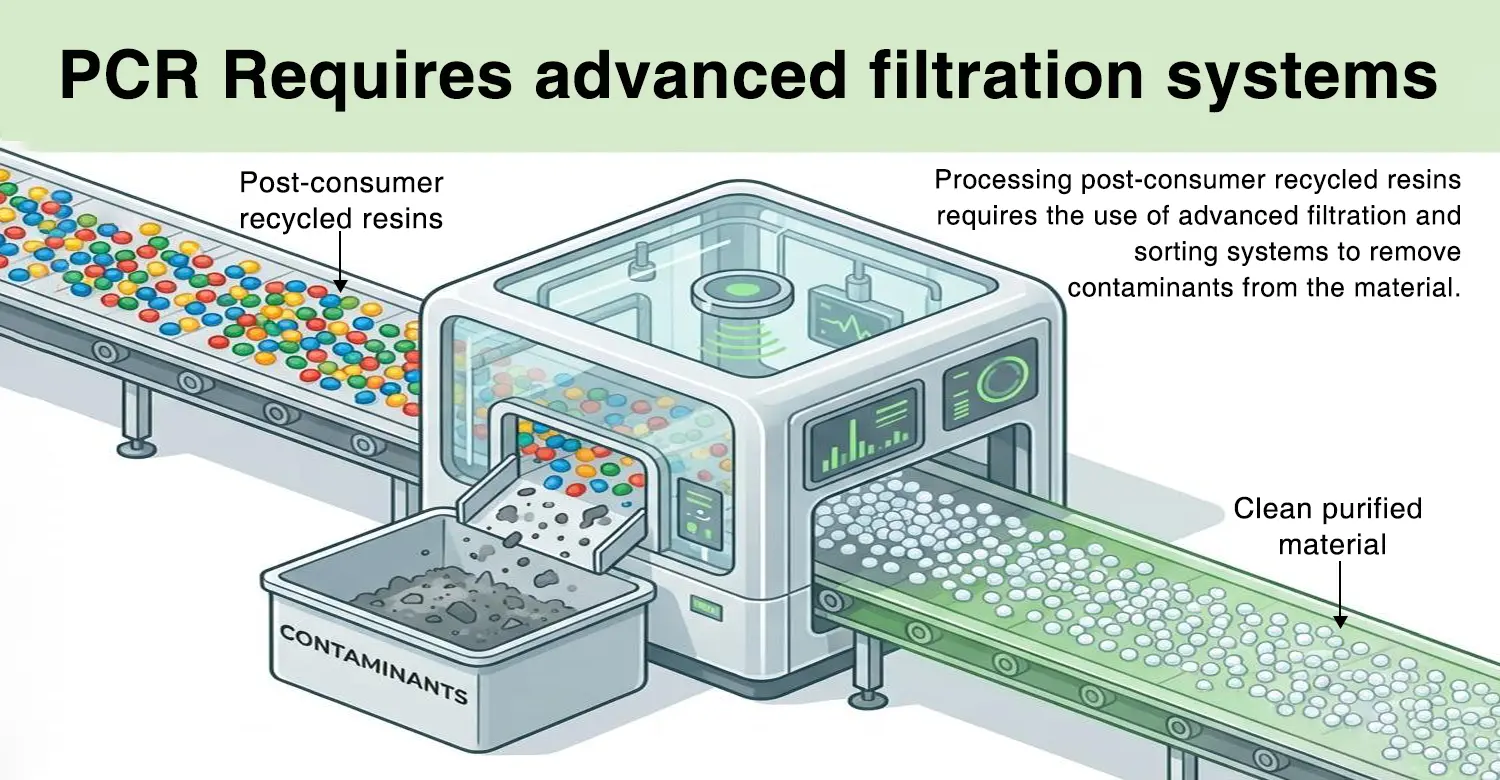
- The machine will benefit from the use of advanced filtration and sorting systems to remove contaminants.
- The moisture content of PCR may be higher than that of virgin plastic and would require an optimized drying system to prevent defects.
- Modification of the screw design to process materials with varying melt flow.
- Venting extruders may need to be introduced in the barrel to remove moisture and residual volatiles from the material during melting.
- Temperature, pressure, and speed may need to be adjusted.
- The cooling system needs to be modified to compensate for the different shrinkage rates.
3. Bumper Design for Lightweighting
There is a misconception that lightweighting in car bumper molding can simply be achieved by swapping materials. That is not true! Design optimization is central to lightweighting. Although moving from steel to plastic bumpers helped to lower overall weight on automobiles, below are design optimization techniques that help manufacturers to create lightweight bumpers.
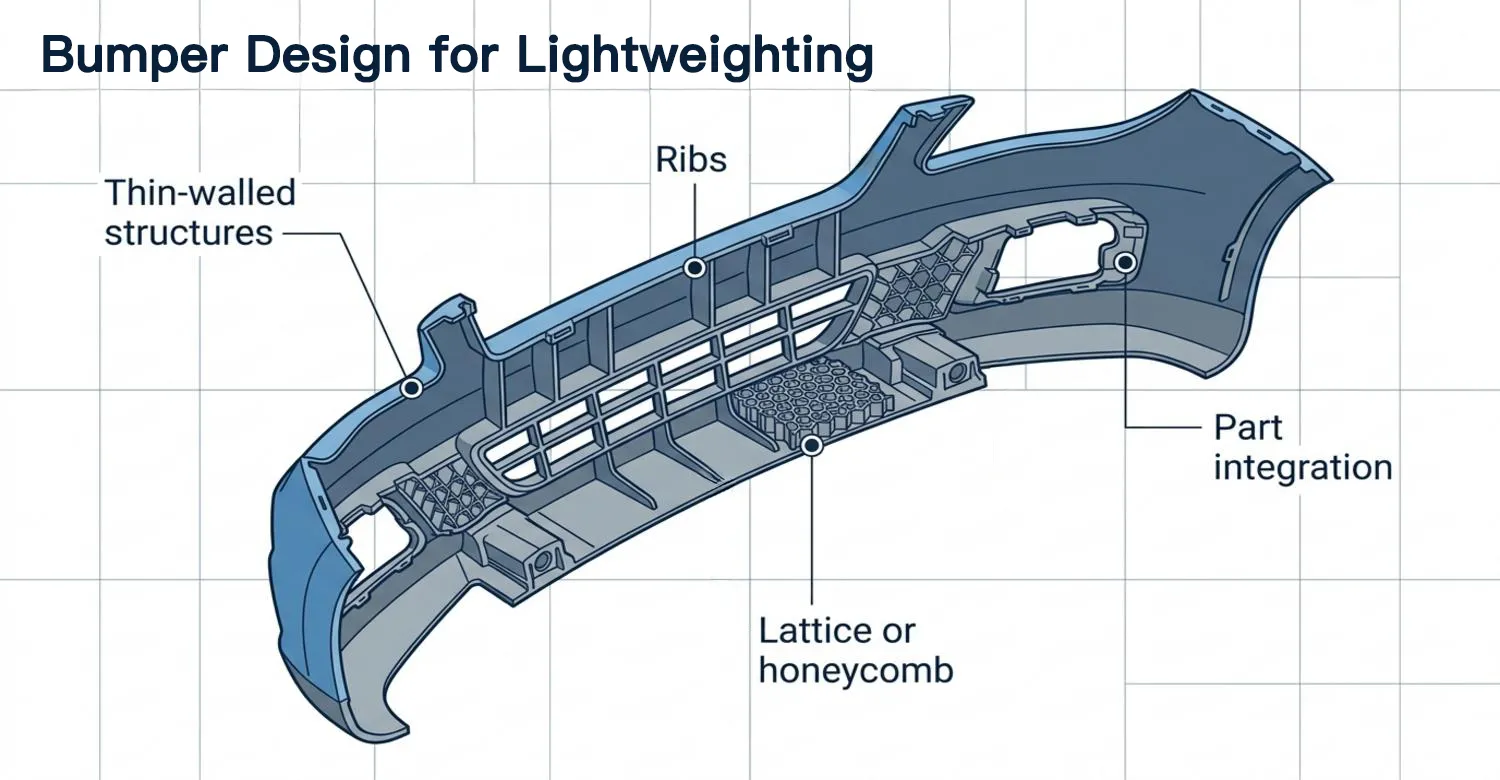
- Thin-walled structures: Producing bumpers with thin walls helps manufacturers to further cut down on material use, which can further lower the weight of the part—and costs. To make thin-walled parts without compromising functionality, ribs are often added to thin-walled bumpers to enhance stability and redistribute impact force.
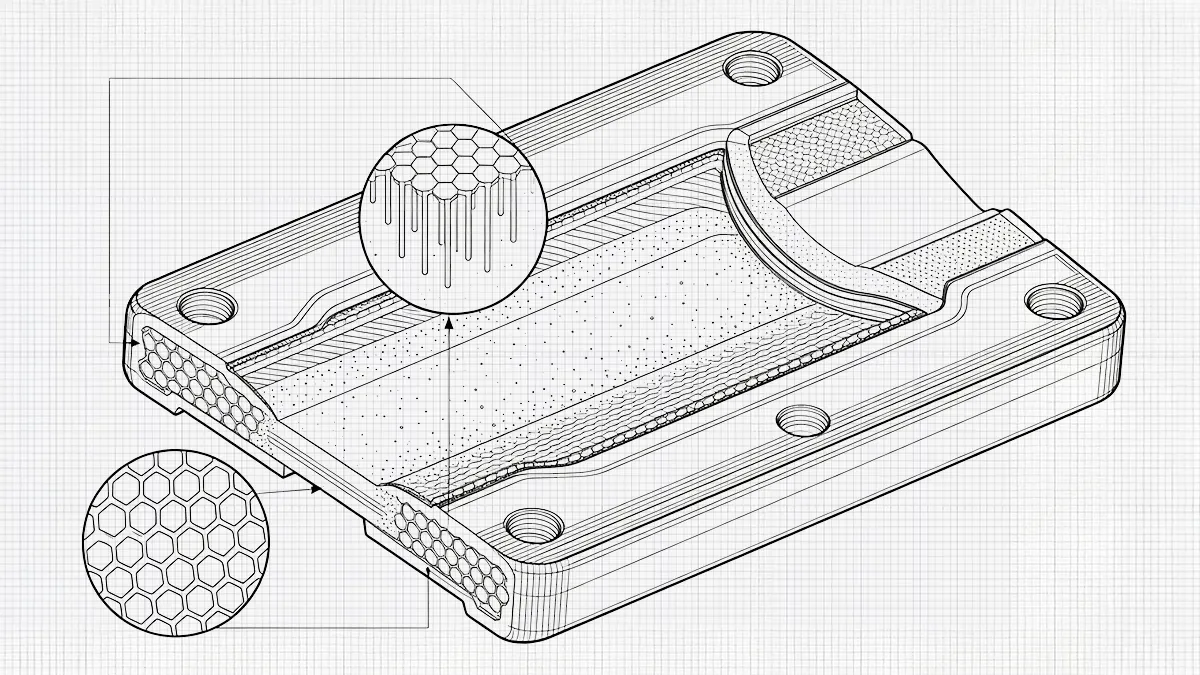
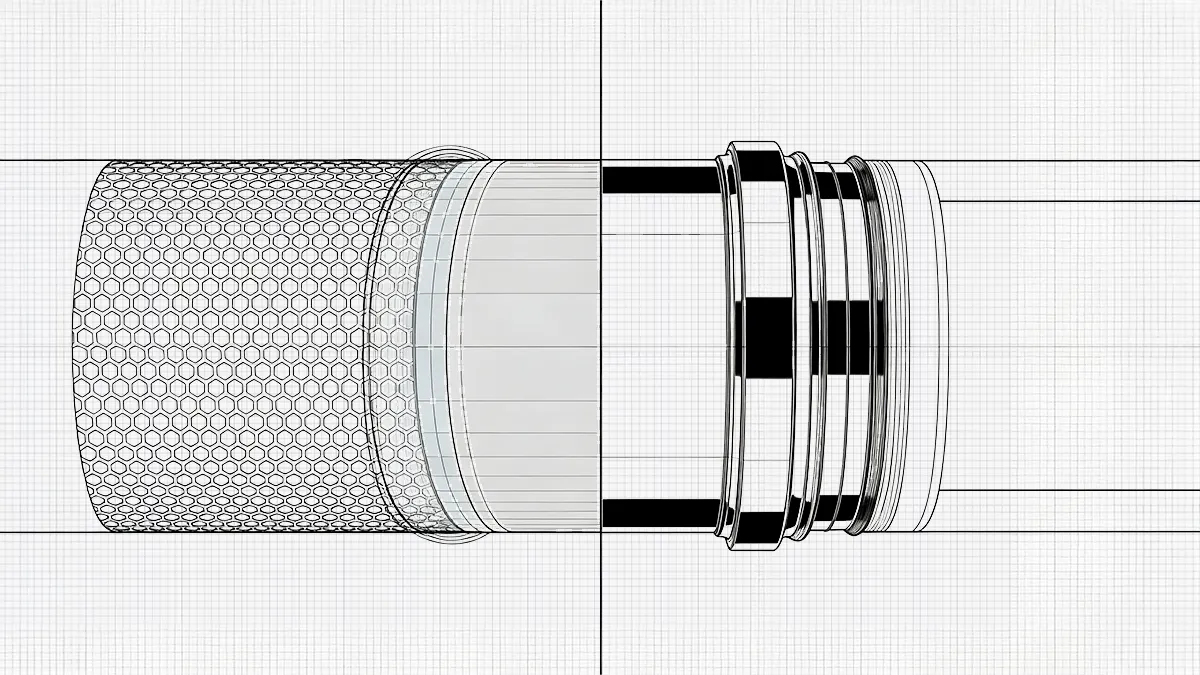
- Generative design and topology optimization: Advanced computational modeling is often used remove materials from non-critical areas or to optimize structural form, using lattice or honeycomb structures, for example [4]. These structures are more efficient at bearing load and impact. Computational modeling can also be used to find the best rib configuration and density for the best results.
- Hybrid manufacturing technique: Unlike traditional bumper manufacturing, which makes use of one production technique, modern bumpers can combine different techniques. For example, 3D printing is used to create the outer layer containing voxel chambers. The voids are then filled using an injection molding-like technique.
- Part integration: Combining multiple parts in a single bumper mold eliminates the need for fasteners and other joining techniques that will add to the weight of the automobile.
4. Bumper Mold Design for Functionality
Modern bumpers in most types of cars (especially sports cars) are designed to contribute to their aerodynamic properties and fuel efficiency. It is designed to manage airflow, especially for EVs that use fans to cool the batteries.
The front bumper is the first part of the vehicle that comes into contact with oncoming air. Therefore, it usually features a contoured shape that helps air to flow easily around the car. This prevents the creation of air resistance that can increase fuel or battery consumption.
Some bumper injection molding process incorporates special features like side vents or air curtains. The purpose of these features is to guide the air towards the wheel wells and brakes. The oncoming colder air cools the braking system and helps with managing air turbulence generated by the spinning wheels. This effect also helps in lowering drag and improving acceleration and fuel efficiency.
5. Bumper Mold Design According to Automotive Company Specification
Bumper design is not a one-size-fits-all. Every automaker has a unique aesthetic or performance requirements for their bumper—and this can vary widely among their different car models. The car bumper molding process must align with the automaker’s internal expectations.
For one automaker, that may be the ability of the bumper to prevent damage to the headlights or integrated sensors and cameras in a low-speed crash. Another automaker may prioritize aerodynamics and cooling. A third automaker may prioritize aesthetic appeal and demand a bumper that is scratch-resistant and easy to paint. Standard tests automakers use to verify the performance of bumpers include:
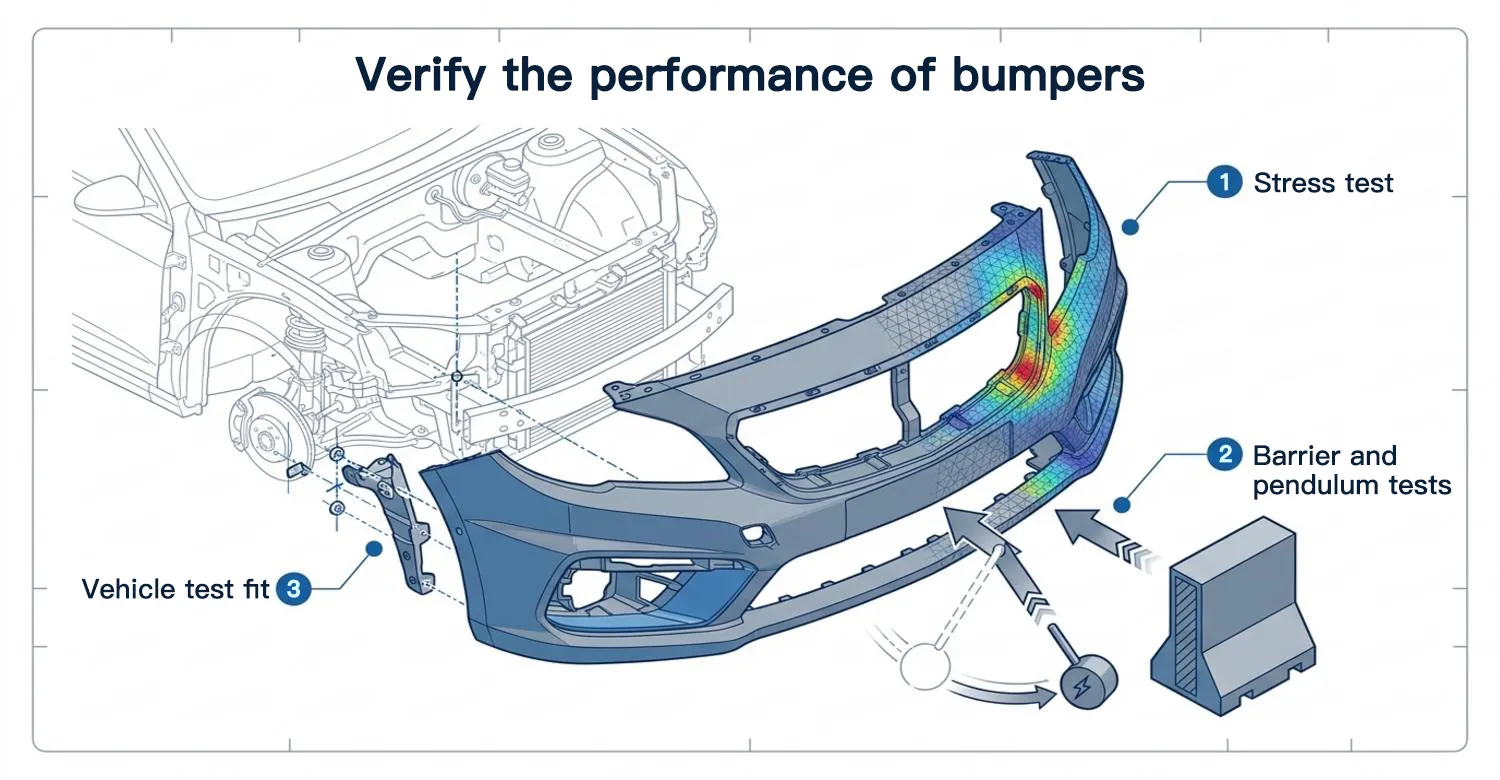
- Stress test: Simulation software like Finite Element Analysis is used to evaluate how the bumper will perform under different conditions.
- Barrier and pendulum tests: The bumper is crashed into moving obstacles (and stationary ones) at different heights and speeds to predict impact behavior.
- Vehicle test fit: Used to determine how well the bumper fits on the vehicle before final installation.
Modular and multi-cavity molds are often paired with innovative conformal cooling channels to improve bumper injection molding efficiency, shorten cycle times, and ensure the quality of the products is uniform and consistent. Automakers should ensure they communicate their intent and requirements clearly with their mold maker for the best outcome.
Reference
[1] Mercedes-Benz Group. (n.d.). Benz Patent Motor Car: The first automobile (1885–1886). Mercedes-Benz Group. https://group.mercedes-benz.com/company/tradition/company-history/1885-1886.html
[2] U.S. Department of Energy. (n.d.). How do fuel cell electric cars work? Alternative Fuels Data Center. https://afdc.energy.gov/vehicles/how-do-fuel-cell-electric-cars-work
[3] Mauser Packaging Solutions. (n.d.). Post-consumer resin (PCR): What is it and what are the benefits? Mauser Packaging Solutions. https://mauserpackaging.com/mauser_news/post-consumer-resin-pcr-what-is-it-and-what-are-the-benefits/
[4] 3Dnatives. (2025, April 11). All about lattice structures in 3D printing. 3Dnatives. https://www.3dnatives.com/en/all-about-lattice-structures-in-3d-printing-04112025/



 EN
EN  ES
ES  FR
FR  DE
DE  IT
IT  PT
PT  NL
NL  PL
PL  AR
AR  JA
JA  KO
KO  ZH
ZH