

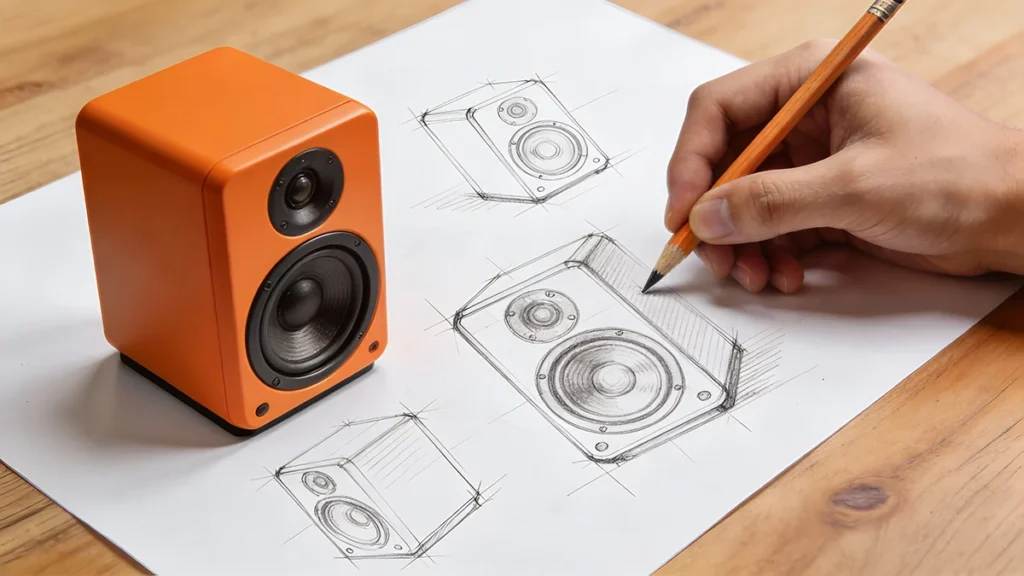
The design of audio equipment primarily encompasses the following aspects:
- Product Planning & Industrial Design — Determining the speaker’s purpose, positioning, usage scenarios, methods, physical dimensions, and appearance.
- Acoustic Design — Overall speaker scheme design, driver unit selection, and sound quality evaluation.
- Structural Design — Enclosure/cabinet design and driver mounting structure design — culminating in mold fabrication by a mold factory.
- Prototyping & Testing — Speaker performance testing/evaluation, optimization/improvement, and final system sound quality tuning.
Speaker enclosures are mainly categorized into Sealed/Closed Boxes (e.g., stationary, bookshelf types) and Bass-Reflex (Portedd) Boxes (e.g., ported, R-J, transmission line designs, etc.).
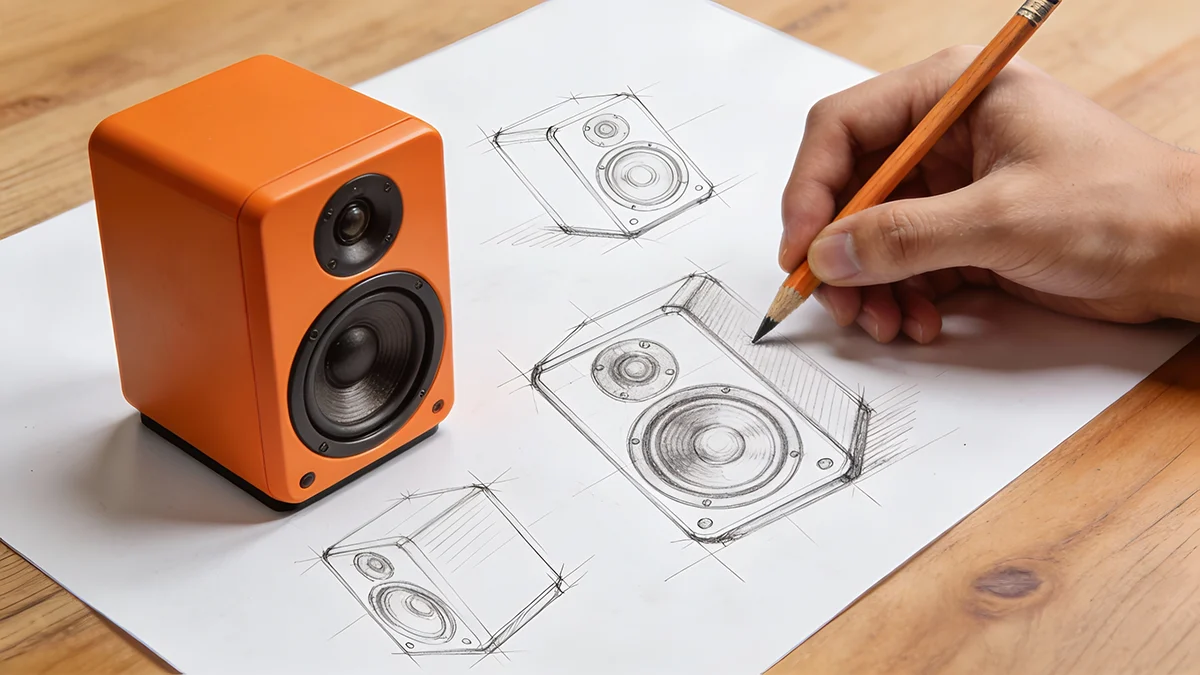
Overall Requirements for Bass-Reflex (Ported) Speaker Design
Directivity of Speaker Sound Emission
Sound waves exhibit phenomena such as reflection, diffraction, and interference during propagation, following specific acoustic principles. The wavelength of sound waves radiated by a speaker shortens as the frequency increases. When the wavelength becomes comparable to the physical dimensions of the speaker, the radiated sound wave develops pronounced directivity due to diffraction and interference.
Speaker directivity characterizes its ability to radiate sound in different directions and is frequency-dependent. High-frequency sound exhibits stronger directivity, while low-frequency sound is relatively less directional.
- Subwoofers and Woofers: The direction of sound emission is unrestricted. The enclosure can be placed anywhere within the listening area.
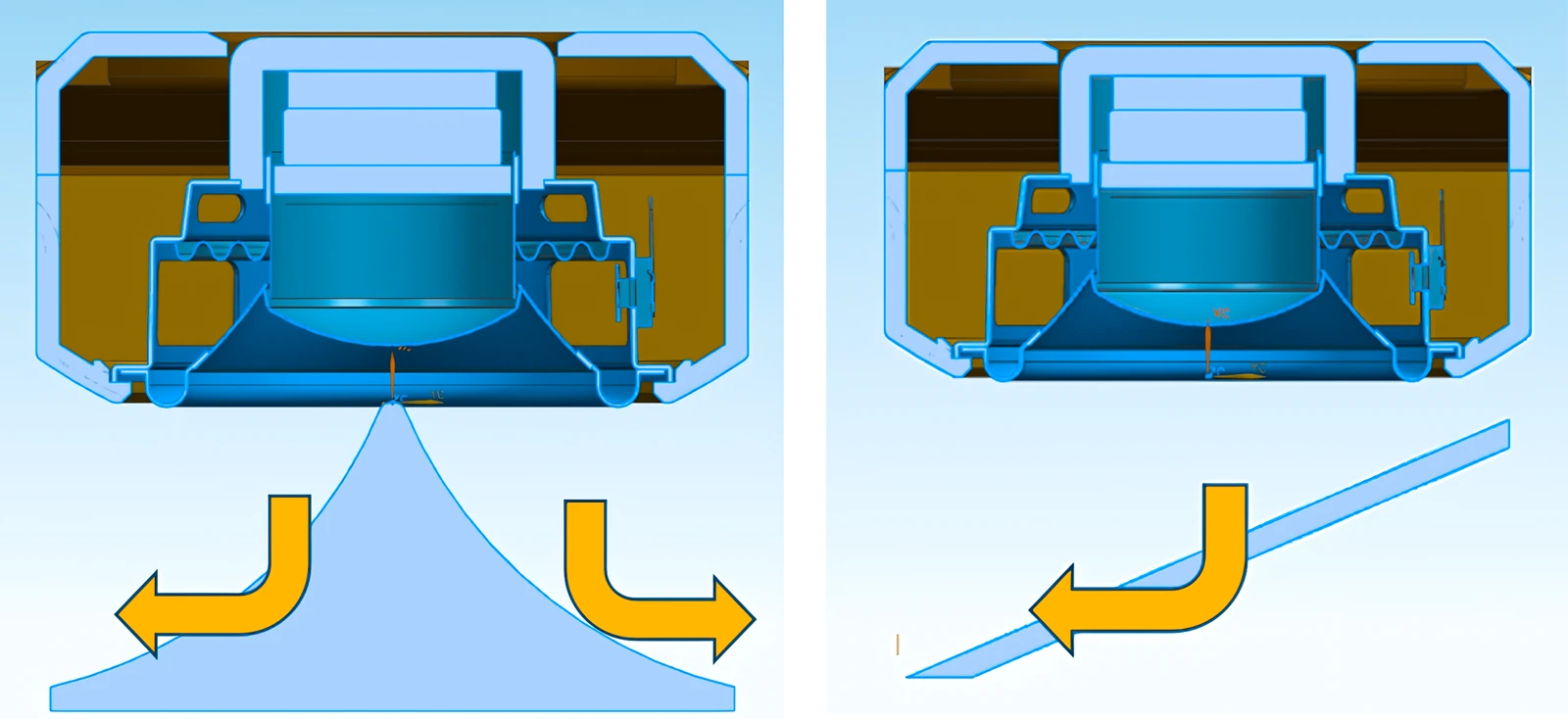
- Full-Range, Mid-Range, and High-Frequency Speakers: The driver should ideally face the listening position directly. If structural or aesthetic design constraints prevent direct facing, an acoustic reflector must be designed to mitigate sound attenuation caused by directivity.
The angle between the speaker’s emission direction and the listener should not exceed 90° as below:
Selection of Loudspeaker Drivers
The choice of drivers and their integration with the speaker enclosure directly determine the final sound quality of the system.
Selection Based on Driver Opening Shape
Speakers with a circular aperture offer the best performance, followed by those with racetrack-shaped and oval apertures. It’s advisable to avoid using long strip-shaped and ultra-narrow speakers as much as possible.
The size of the speaker should be selected based on the size of the cabinet and its net volume. In accordance with the design principles of the speaker system, it is necessary to choose appropriate T/S parameters and electroacoustic parameters for the speaker.
Selection of Driver Magnet
External magnets (ferrite magnets) are cost-effective, but they occupy a large volume, which reduces the effective volume inside the speaker cabinet. Internal magnets (rare earth magnets) have a higher cost, but they take up less space, provide a larger usable volume within the cabinet, and offer superior magnetic performance.
Selection of Cone
Cone shapes typically adopt straight-sided cones and exponential cones. Straight-sided cones cones feature a simple manufacturing process but relatively poor high-frequency performance, while exponential cones offer better high-frequency performance. Dual-cone designs can be adopted under special circumstances.
The main materials of cones include natural fibers (plant fibers, animal fibers), man-made fibers (chemical fibers, synthetic fibers), inorganic fibers, plastics (e.g., PP cones), and metals (e.g., aluminum). Selection can be made based on requirements for timbre and cost.
Enclosure Design
The design of the speaker enclosure size needs to combine the speaker’s parameters with the net volume inside the enclosure. Only when the two achieve optimal matching can the low-frequency sound performance be maximized.
The enclosure materials are generally mainly wood and plastic, and the thickness of the material is determined based on the vibration of the enclosure and the resonance generated inside. When conditions permit, try to use a thicker wall and appropriately add reinforcing ribs on the inner wall to reduce cabinet vibration and suppress acoustic resonance inside the enclosure.
The enclosure must have good sealing, and there shall be no air leakage or similar issues, so as to avoid generating wind noise and affecting low-frequency performance.
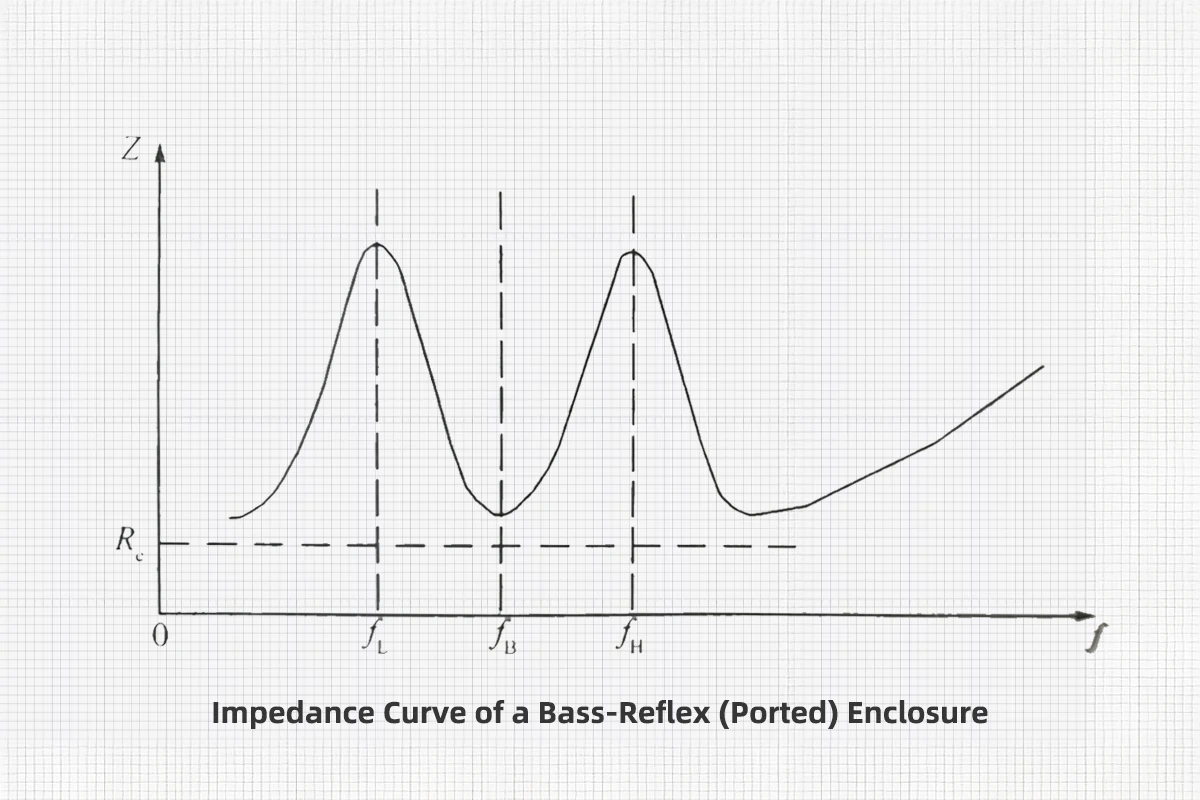
The design of the port in a bass-reflex enclosure plays a decisive role in the speaker’s low-frequency cutoff frequency. The design position and shape of the port need to ensure the smooth flow of air inside the cabinet to reduce low-frequency distortion and wind noise. The length and cross-sectional area of the port are designed and adjusted based on the enclosure volume and relevant speaker parameters. The goal is to ensure that the speaker’s impedance curve approximates the double-peak characteristic as closely as possible, as shown in the figure below.
A passive radiator enclosure is a variant of the bass-reflex design. It is constructed by using a passive radiator to replace the port. Proper control can make the radiated sound produced by the vibration of the passive radiator in phase with the forward radiated sound of the speaker, thereby improving the low-frequency characteristics of the speaker and enhancing the low-frequency response. The passive radiator bass-reflex box is more suitable for use in enclosures with relatively small volume.
The figure below shows two types of bass-reflex enclosures(standard ported vs. passive radiator).
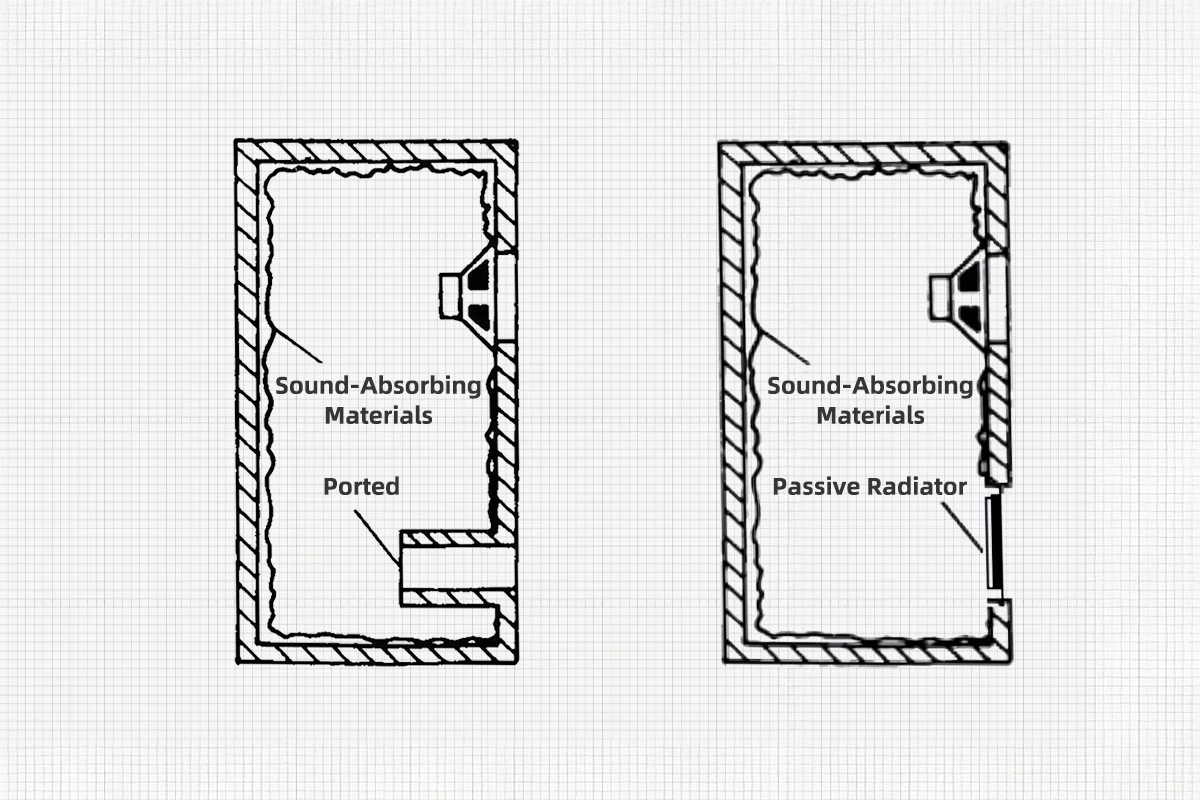
The internal structure design of the enclosure needs to ensure smooth airflow inside the enclosure. The internal structure design of the enclosure needs to ensure smooth airflow inside the enclosure. Design the cross-sections at both ends of the port with a gradual transition shape to avoid the generation of “popping” airflow wind noise at the openings.
To prevent sound waves from generating resonance inside the enclosure, the enclosure shell requires sufficient strength, appropriately adding reinforcing ribs internally, and strengthening the connection between the front and rear covers. Appropriately add sound-absorbing material inside the enclosure, and install it close to the inner wall of the enclosure.
Acoustic Radiation Design
Try to avoid having external structures block the sound output locations (including the output location of the port). The best method is to have the speaker driver directly exposed. The next best method is to use materials with higher acoustic transparency such as speaker grille cloth, steel mesh, etc.; then comes plastic panels with large perforations; try to avoid using output panels with small holes. The sound output area of the speaker driver must not form an enclosed cavity, as this can easily create a “front cavity effect” which degrades sound quality.

Vibration Damping Design for Speakers
When a speaker is operating, vibrations from the driver transmit to every part of the speaker enclosure. This can easily cause resonance at different locations, producing extraneous noise. Therefore, appropriate damping design is required.
For example: use rubber damping pads at the locations where the speaker is fixed and connected to other structural components.
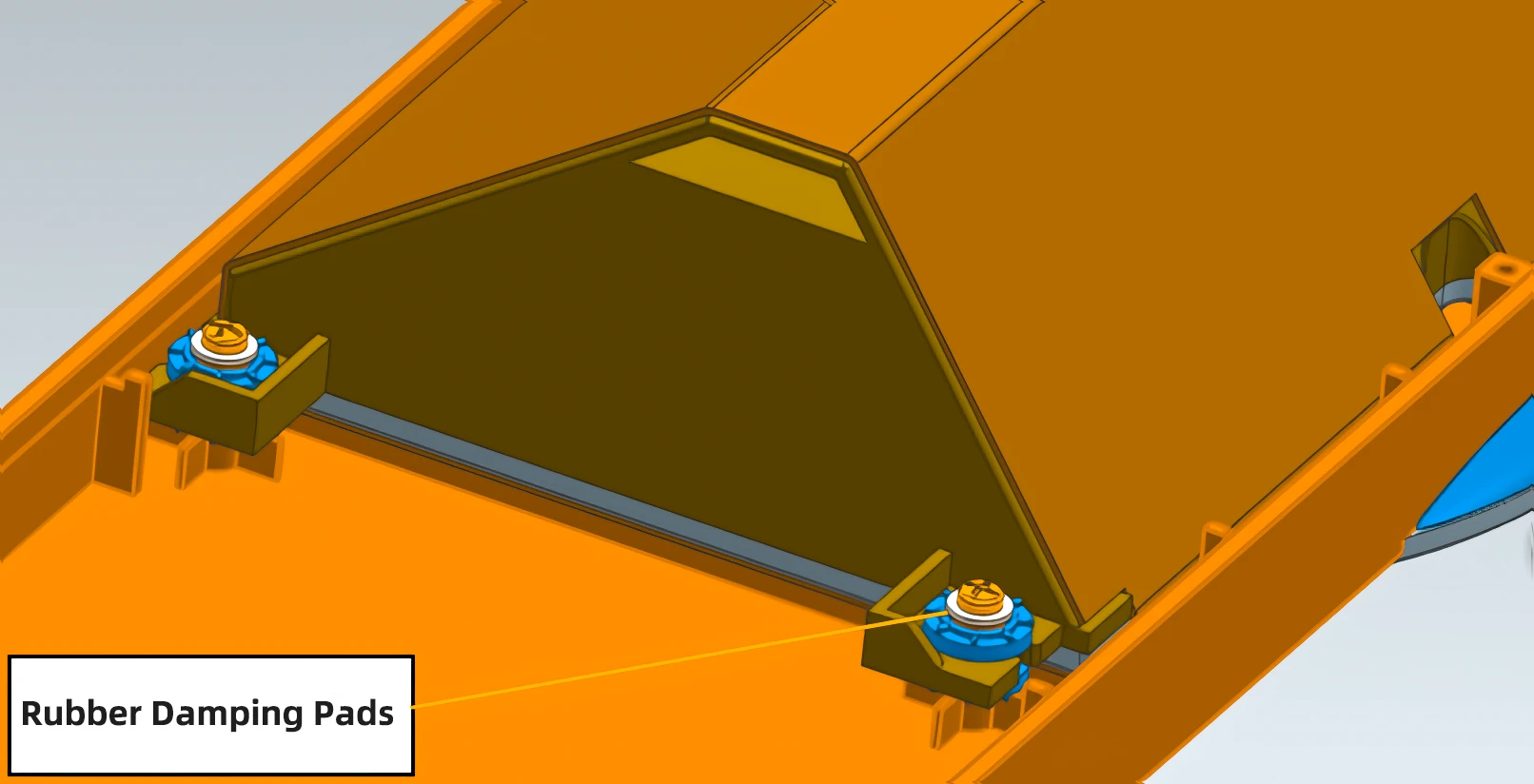
For a passive radiator speaker (drone cone speaker), employ a symmetrical dual passive radiator design to cancel out the vibrations they introduce.

Heat Dissipation Design for Speakers
The speaker driver in an enclosure is a transducer device. It is a device that converts electrical energy into mechanical energy (driver vibration), and then converts that into sound energy (sound wave radiation). The efficiency of a speaker driver in converting electrical energy to sound energy is low; the remaining energy is converted into heat. Therefore, heat dissipation for the speaker driver is very important. Especially inside small enclosures with limited space, it directly affects the reliability of the speaker.
The main heating component in a speaker driver is the voice coil. Its heat is transferred to the outer surfaces of the magnetic circuit and the basket via the pole plate and the T-yoke/U-yoke. Therefore, whenever conditions permit, try to design for its external exposure to aid heat dissipation.

Magnetic Leakage Prevention Design
The dynamic speakers used in speaker systems employ permanent magnets in their magnetic circuits, which results in magnetic leakage. In usage environments that are sensitive to magnetic leakage, it is necessary to implement a magnetic leakage prevention design for the speaker’s magnetic circuit.
Speaker Structural Design Proposal
Based on the product structural form and requirements, the speaker is designed in a mono configuration. According to the sound radiation direction, it is divided into three structural forms: upward-radiating structure, front-radiating structure, and downward-radiating structure. The structural design requirements and recommendations for these three forms are detailed in the following proposal. This product incorporates a microphone. The passive radiator design tends to have relatively greater vibration, therefore the use of a passive radiator bass-reflex enclosure is not recommended.
Upward-Radiating Speaker Design:
This structural approach uses a circular, relatively large-diameter full-range driver radiating upward, a circular dome tweeter radiating forward, and the port designed to radiate rearward.
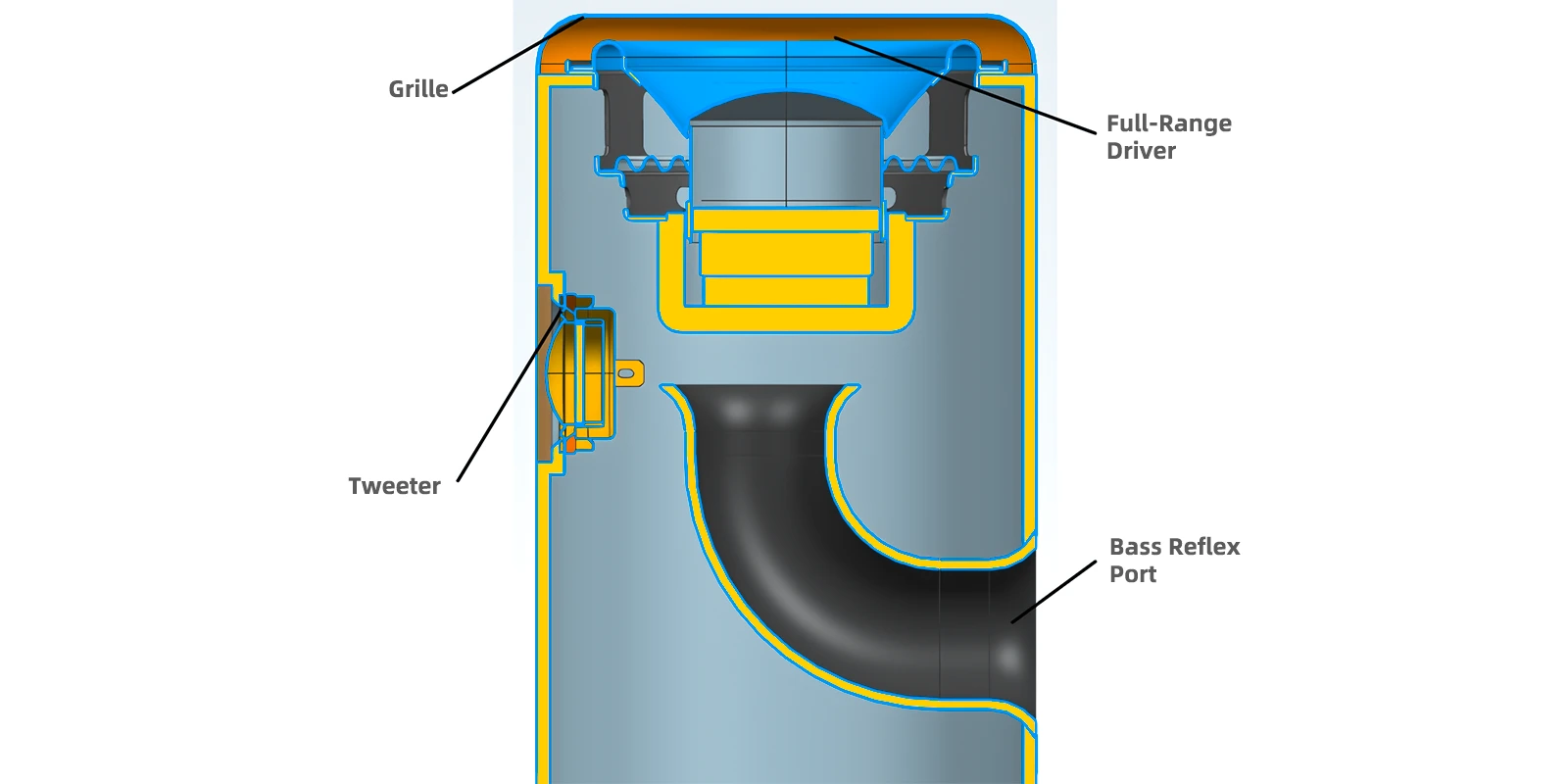
Design Description:
- The circular large-diameter driver is a full-range driver. Its radiation direction is upward. The mid and low frequencies have relatively weak directivity and can reach the listener’s ears in front quite well; the high frequencies have stronger directivity and suffer more significant attenuation toward the front.
- The dome tweeter has a dispersive radiation pattern, which can effectively expand the area reached by its high frequencies. Radiating forward, it can well compensate for the attenuated high-frequency portion from the full-range driver.
- The dome tweeter has a dispersive radiation pattern, which can effectively expand the area reached by its high frequencies. Radiating forward, it can well compensate for the attenuated high-frequency portion from the full-range driver.
- The upward radiation area uses grille cloth or steel mesh with high acoustic transparency to reduce sound attenuation. The entire top surface serves as the radiation area to avoid creating a “front cavity effect”.
- The tweeter radiation area uses grille cloth or steel mesh to reduce high-frequency attenuation.
- The entire enclosure must be airtight.
- Depending on the tuning requirements, appropriately add sound-absorbing material inside.
Front-Radiating Speaker Design:
This structural approach uses a full-range driver plus a dome tweeter. All radiation directions are directly facing the listener. The port is designed to radiate downward or rearward.
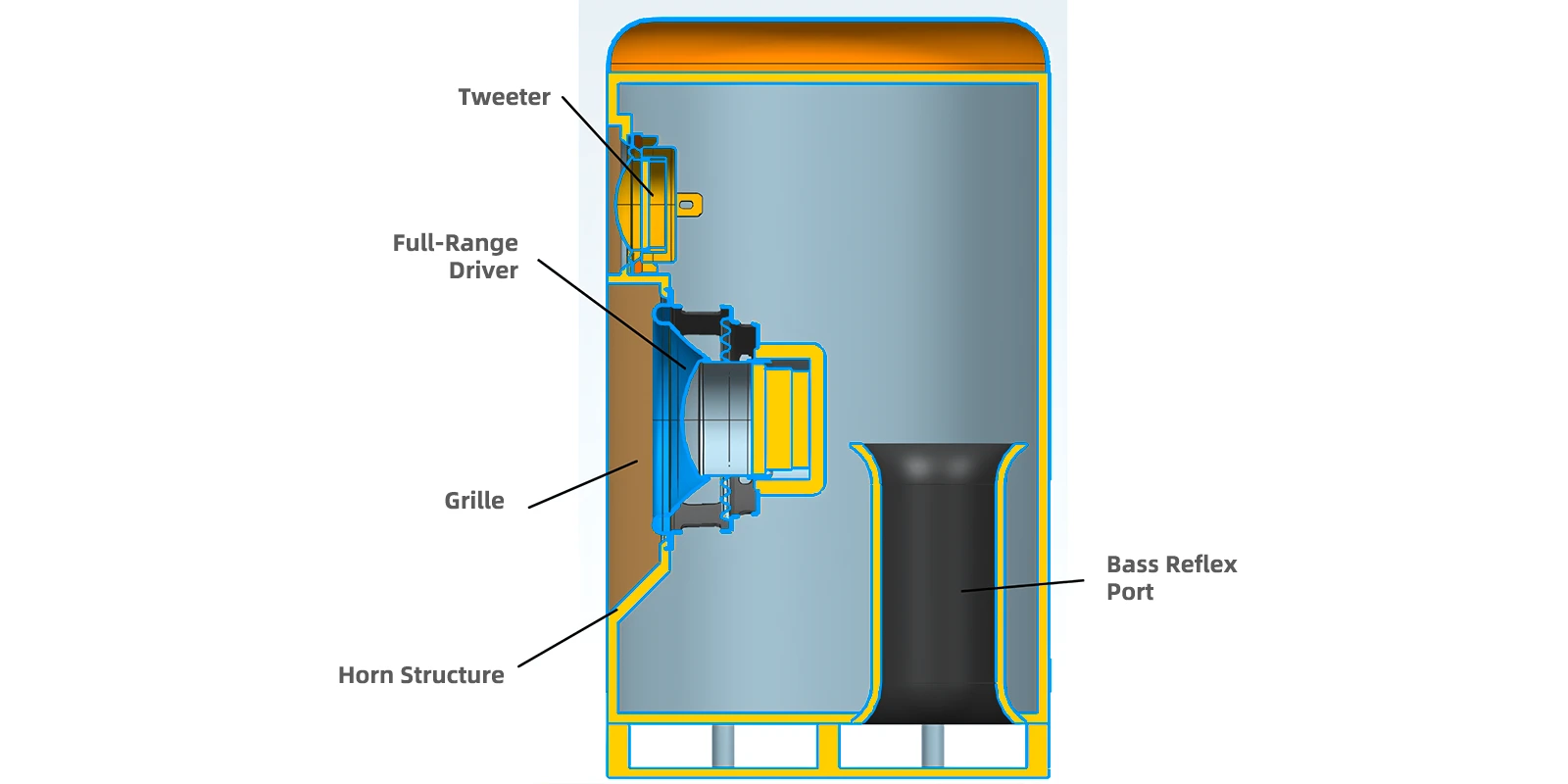
Design Description:
- The circular large-diameter driver is a full-range driver. Its radiation direction is forward. The front-radiating design results in relatively low attenuation for all frequency bands, allowing sound to reach the listener’s ears in front quite well.
- The dome tweeter has a dispersive radiation pattern, which can effectively expand the area reached by its high frequencies. Radiating forward, it can well compensate for the attenuated high-frequency portion from the full-range driver.
- The front radiation opening features a flared (horn-like) structure, which can effectively expand the directivity of each frequency band.
- The port radiates rearward. The low-frequency sound it emits is essentially non-directional and can reach the listener’s ears quite well.
- The front radiation area uses grille cloth or steel mesh to reduce sound attenuation. 6. The entire enclosure must be airtight.
- Depending on the tuning requirements, appropriately add sound-absorbing material inside.
Downward-Radiating Speaker Design:
This structural approach uses a circular, relatively large-diameter full-range driver radiating downward, a circular dome tweeter radiating forward, and the port designed to radiate rearward. The sound emitted by the downward-facing driver is reflected in all directions by a reflector structure, achieving the goal of omnidirectional sound radiation.
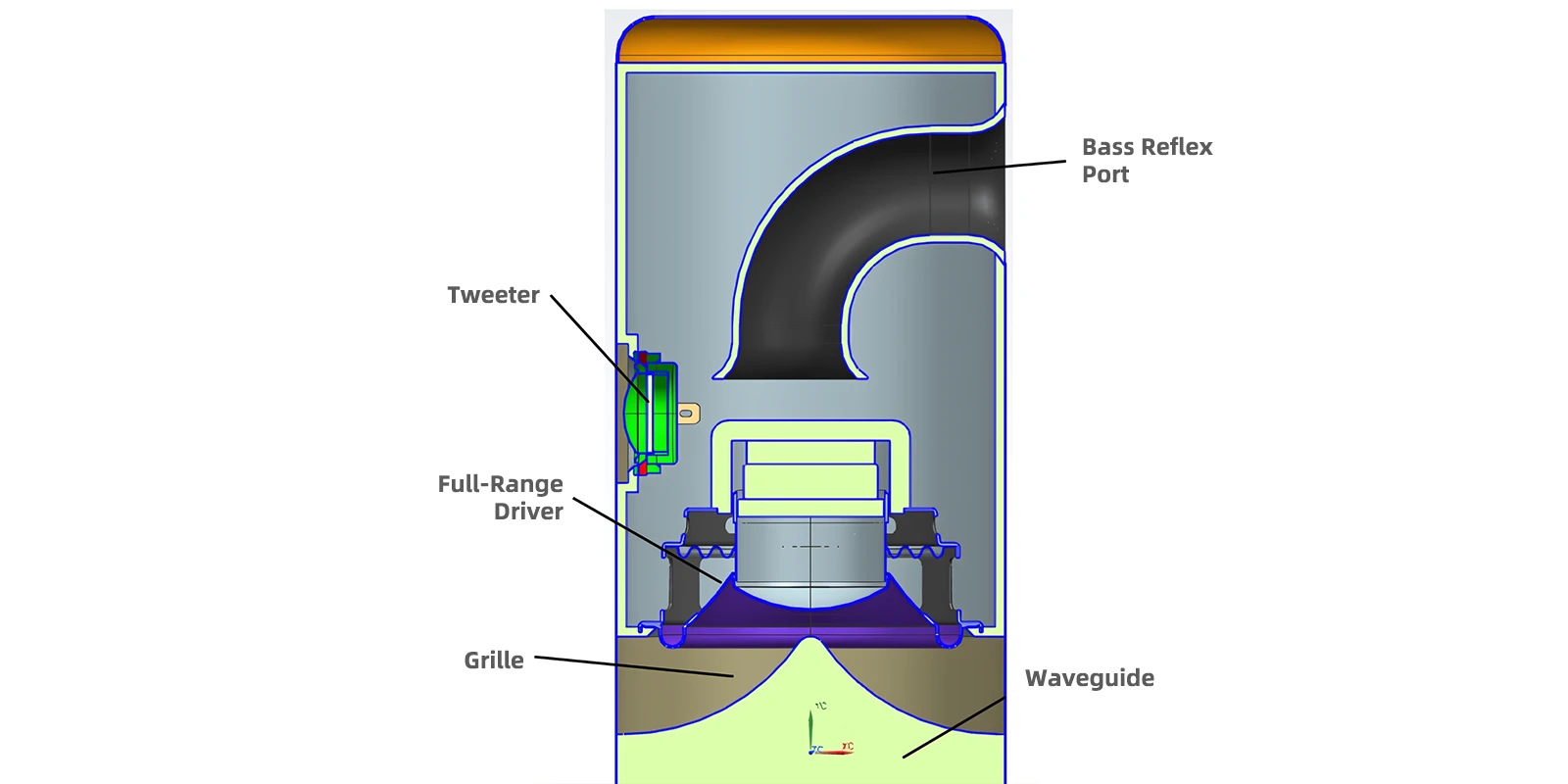
Design Description:
- The circular large-diameter driver is a full-range driver. Its radiation direction is downward. The sound is reflected in all directions via the reflector structure, achieving the purpose of an omnidirectional speaker.
- The upward radiation area uses grille cloth or steel mesh with high acoustic transparency to reduce sound attenuation. The entire top surface serves as the radiation area to avoid creating a “front cavity effect”.
- The port radiates rearward. The low-frequency sound it emits is essentially non-directional and can reach the listener’s ears quite well.
- The speaker’s radiation areas use grille cloth or steel mesh to reduce high-frequency attenuation.
- The entire enclosure must be airtight.
- Depending on the tuning requirements, appropriately add sound-absorbing material inside.
Heat Dissipation Design
The entire product features a cylindrical design. The product adopts a modular layout with distributed heat-generating units (see the product stacking diagram below). Main heat-generating units are augmented with ventilation holes to enhance thermal convection. If a local module generates excessive heat, solutions such as attaching a heatsink to the chip, or using a combination of thermal conductive silicone and a cooling plate can be employed for heat dissipation.
| No. | Module Description | Components | Component |
|---|---|---|---|
| 1 | Pickup Module, Key Circuits | Various Antennas & Connecting Wires | Breathing Light |
| 2 | Wi-Fi & Other Sub-board Modules | ||
| 3 | Speaker Acoustic Assembly | ||
| 4 | Main Control Board, Amplifier Circuit |
Simplified Illustration of Product Structural Stacking Note: Numbers 1 to 4 indicate the order from top to bottom. The antenna is stacked according to the design scheme and matching requirements. The breathing light is stacked according to its functional definition and the effect diagram.
Breathing Light Design
Based on the industrial design effect, determine the required number of lights. Then, the hardware design scheme is finalized according to the electrical parameters of each light and the layout diagram. Common applications currently include: For a relatively small number of lights, they are generally used for accent lighting or indicator effects. For 3 to 12 RGB lights, they are typically used to create lighting effects in specific areas, such as circles, around the periphery, or along edges, etc. These can be paired with product actions to create breathing or flashing light effects. For a larger number of lights, a matrix arrangement is generally used. More complex setups or LED matrices are employed to display animations, picture information, etc.
10 Creative Speaker Designs
Now, Let’s take a look at some of the most imaginative audio designs.
1. Mobius L50 Speaker
The Mobius L50 disperses music across the full frequency spectrum, filling the surroundings with deep, immersive sound.
Inspired by the mathematical elegance of the Möbius strip, its seamless, continuous form symbolizes the fluidity of sound moving through spac. This is a speaker designed not merely to play music, but to enhance our experience of sound.

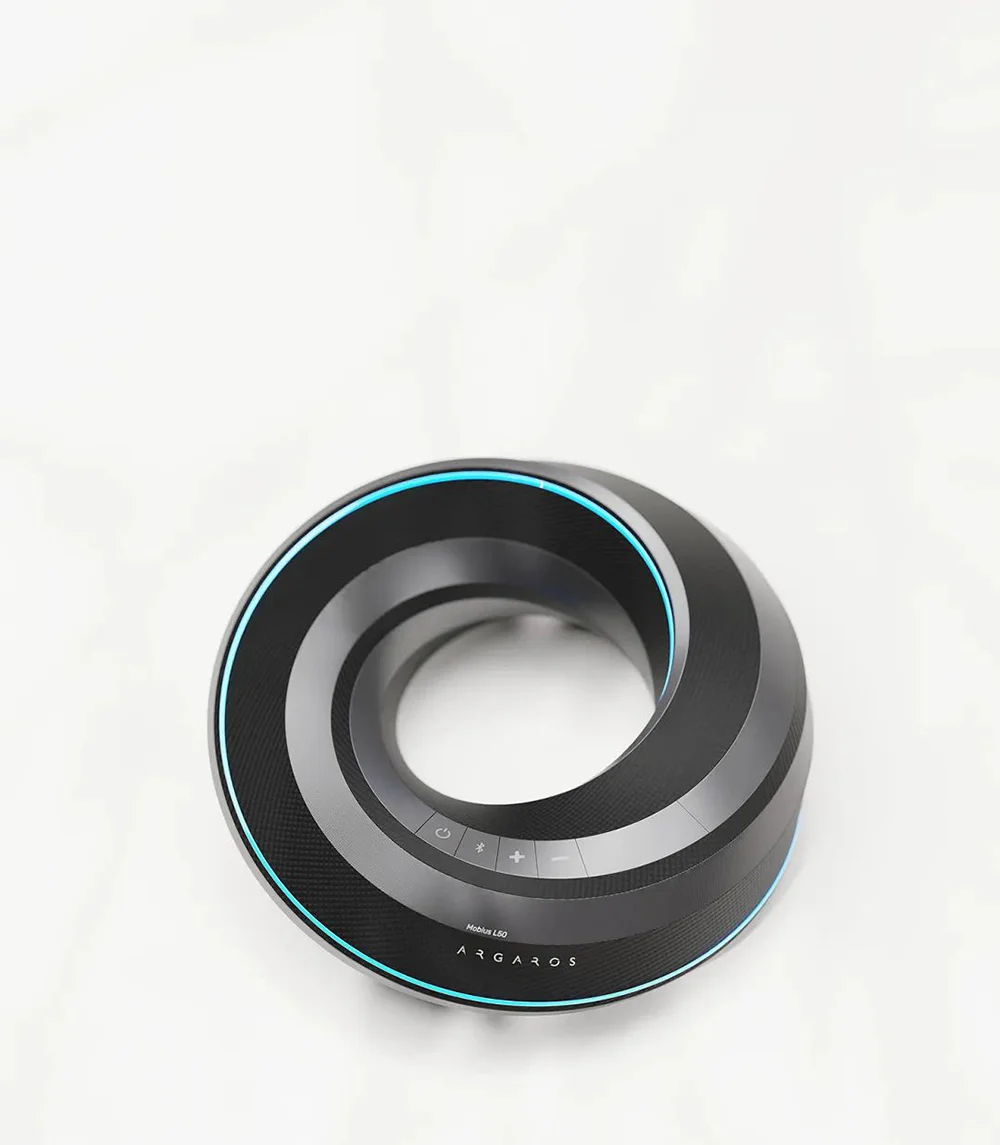


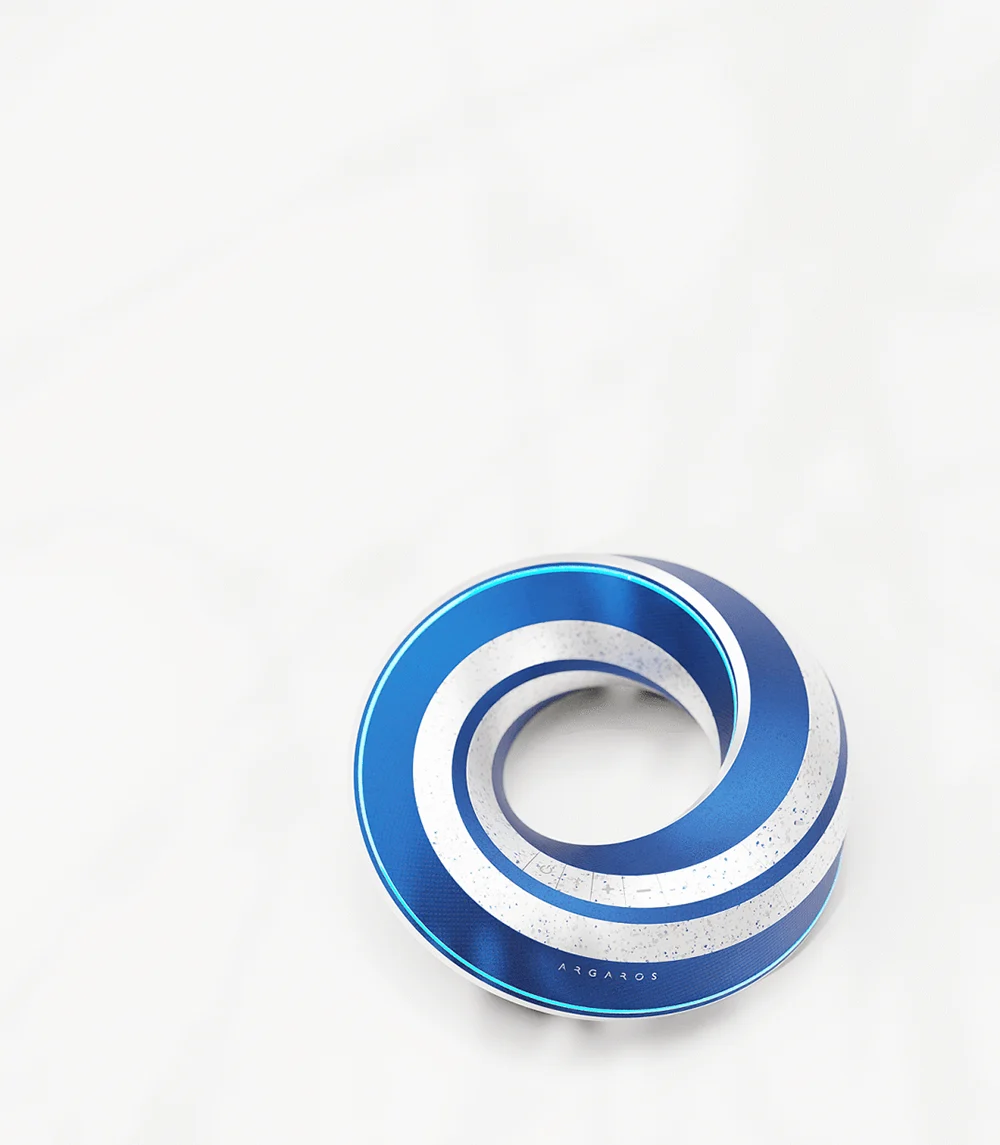


Design Source: Przemysław Wolnicki
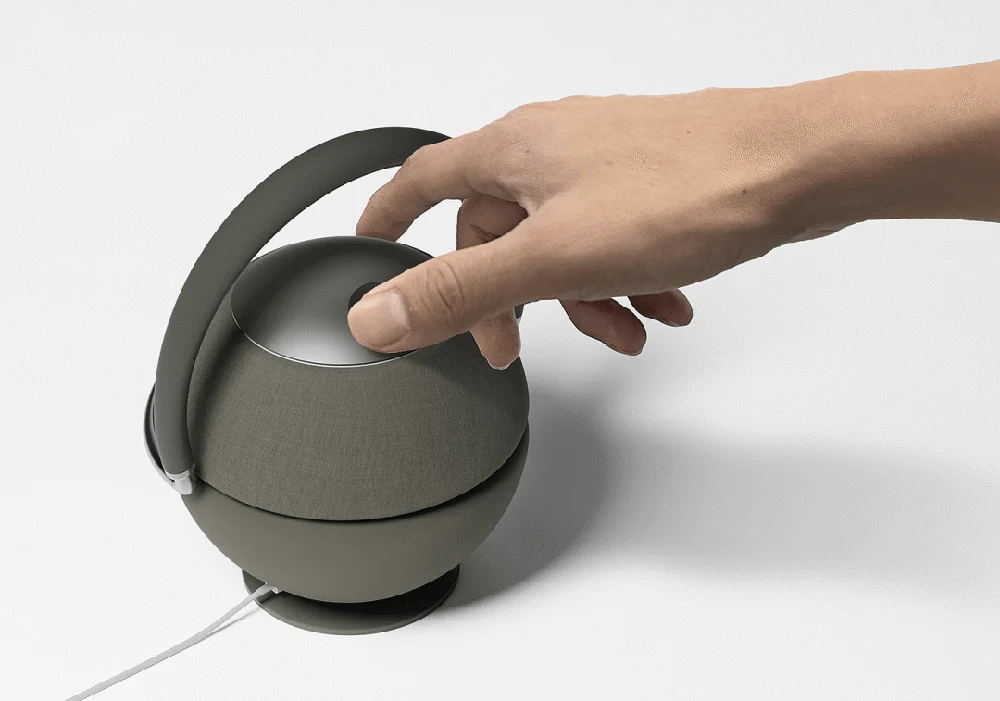
2. Multi-functional Satellite Music Player
Satellite is a sound object, functioning both as headphones and a speaker. It is designed to adapt to these different situations, enhancing your music experience. For example, when you are walking alone in a noisy city, it functions like headphones. In moments shared with others, it transforms into a speaker. It is like a satellite, constantly orbiting a planet, which in this case, is you.
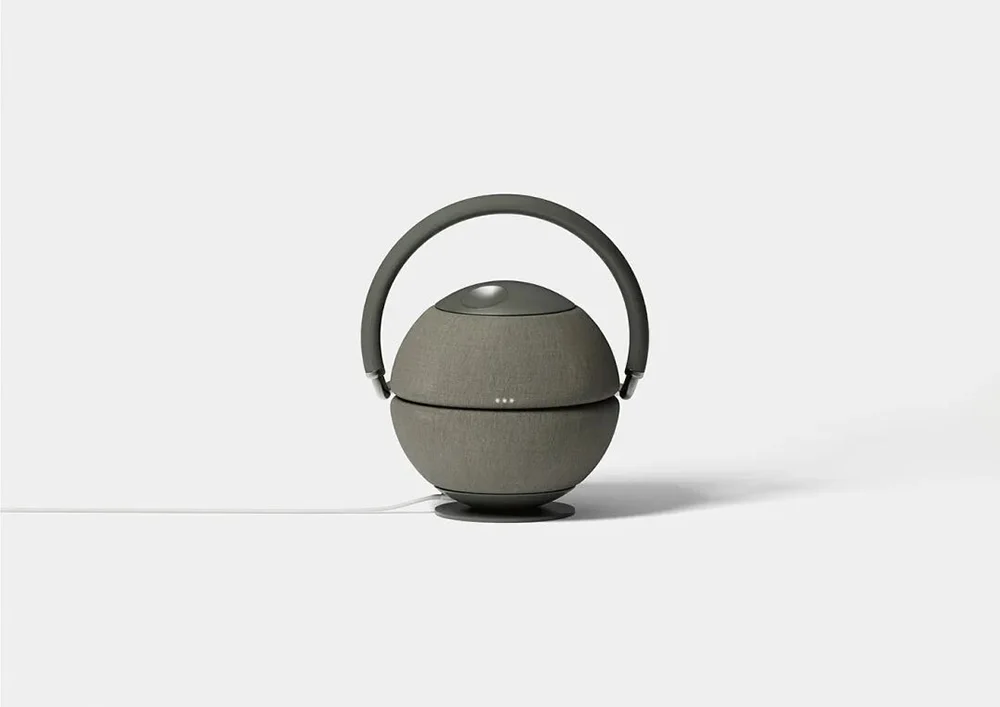


Design Source: Changhwi Kim
3. Beosound 2 Speaker
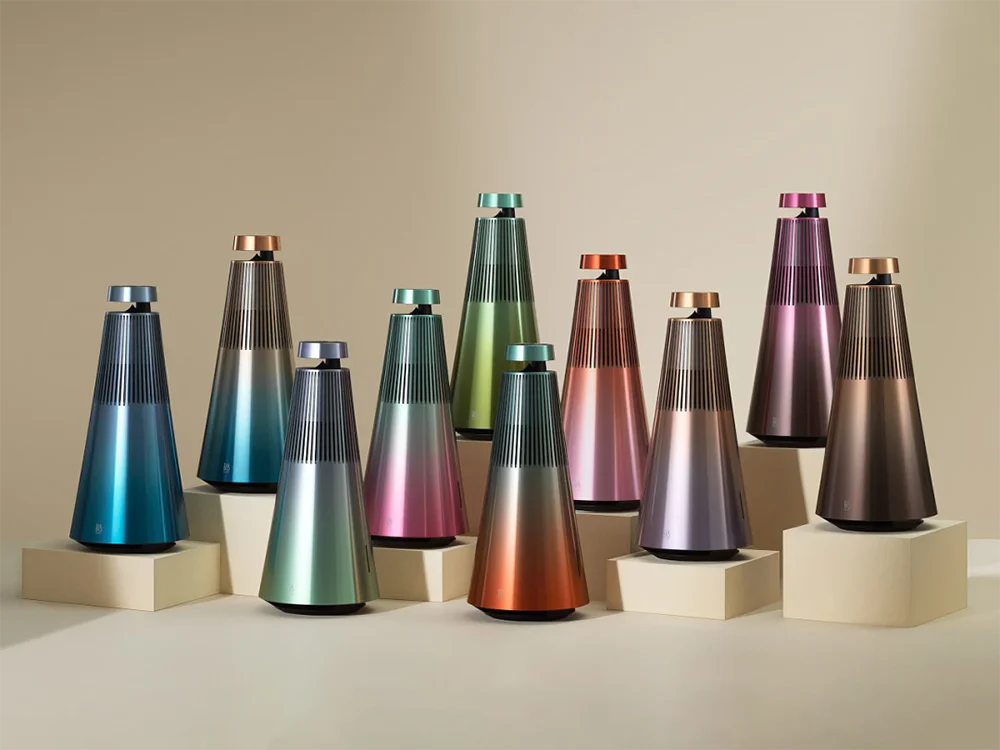
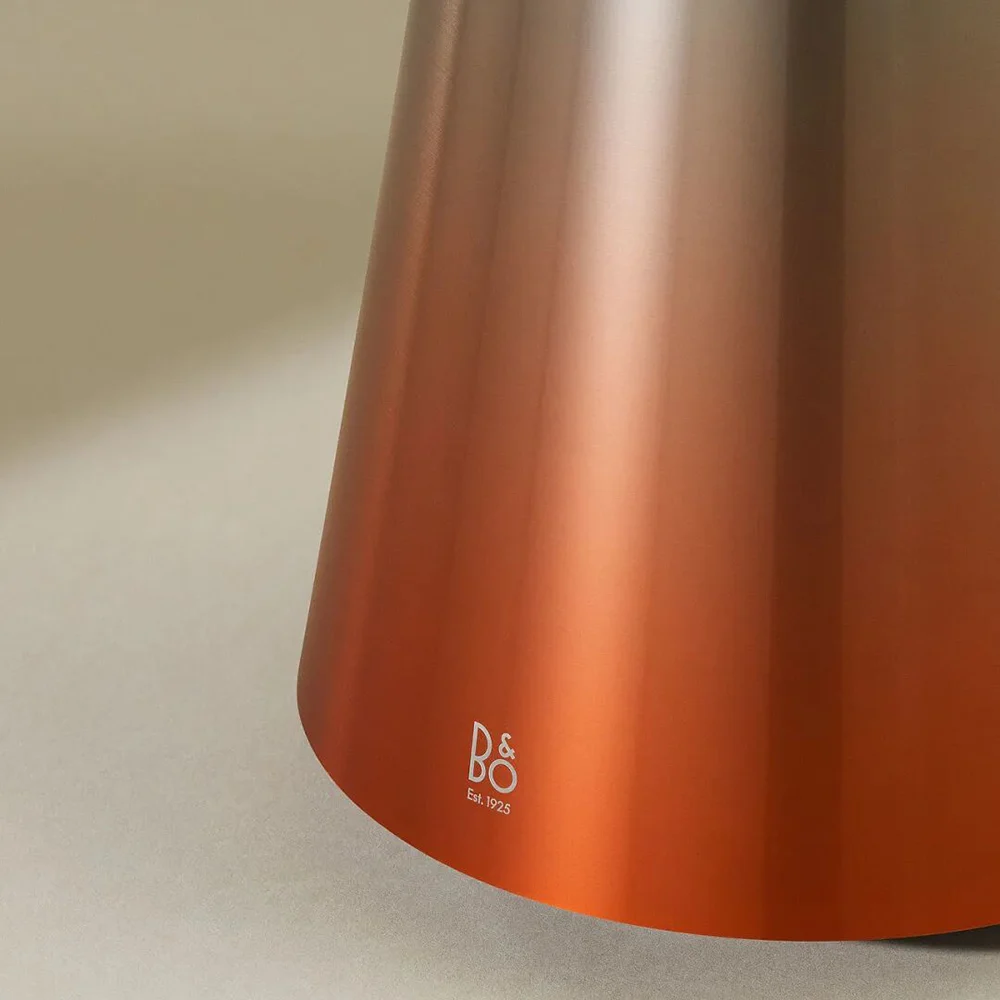
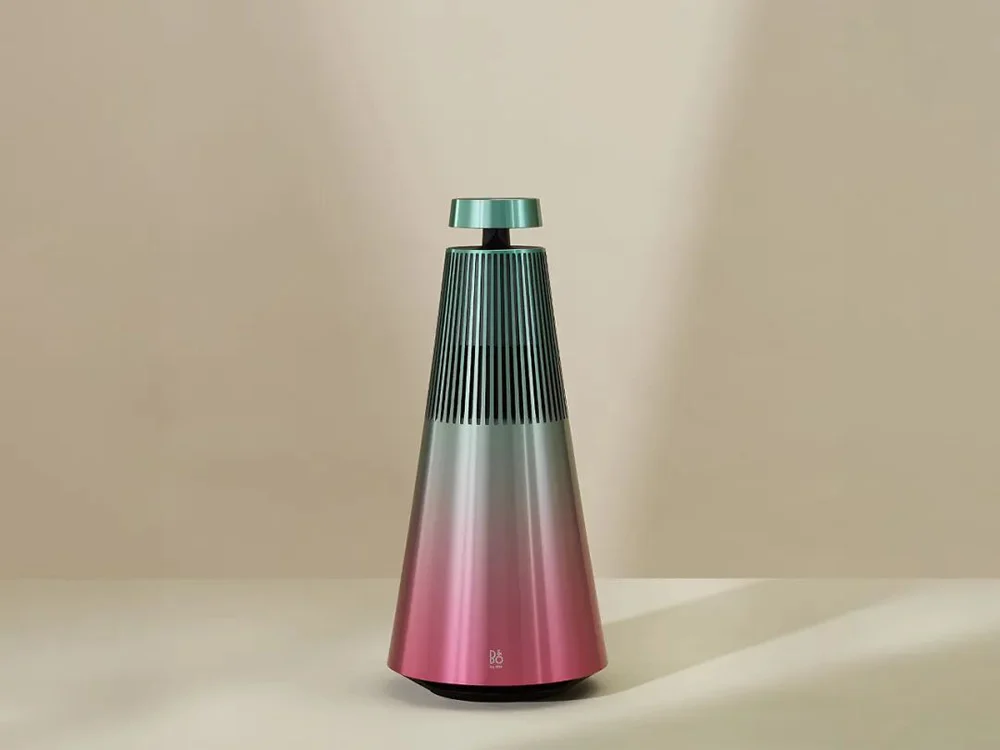
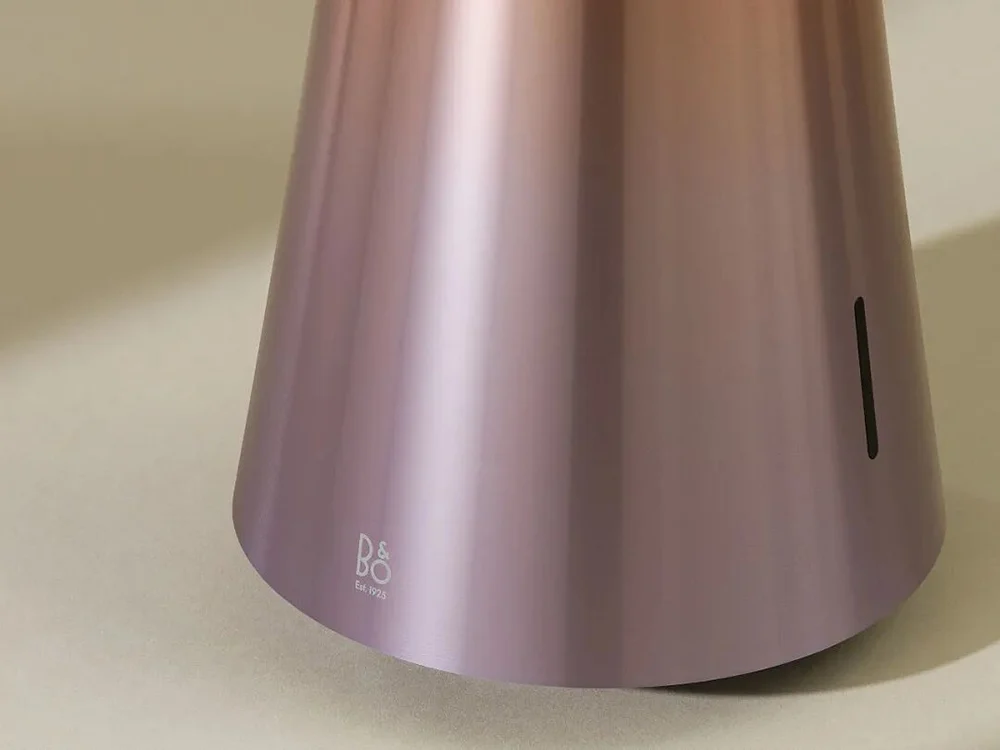
The Beosound 2 speaker has a great appearance, eschewing the traditional cylindrical shape. The conical 360-degree speaker is also fully made of aluminum, polished to a sparkling shine, giving it a lustrous finish. It already possesses amazing impact, but Bang & Olufsen believed it could certainly be done better.
It uses the link between sound, emotion, and color. The Beosound 2 Gradient series gives you a mix of colors that blend smoothly into each other, much like how emotions and music move from one moment to the next. The series has “colors” like Brown Baritone, Jelly Jam, Electric Riff, and other feelings that sound can express. You might wonder if these ideas really match what you think those feelings are like. But there’s no doubt that when you see their special look, they will make you feel something.


Design Source: Bang & Olufsen
04. Retro “Vinyl” Mini Speaker
This design brings function and shape together. It takes the look and gives it life. It brings back old-school feelings and lets you experience a slower pace of life.


Design Source: Jon Lee
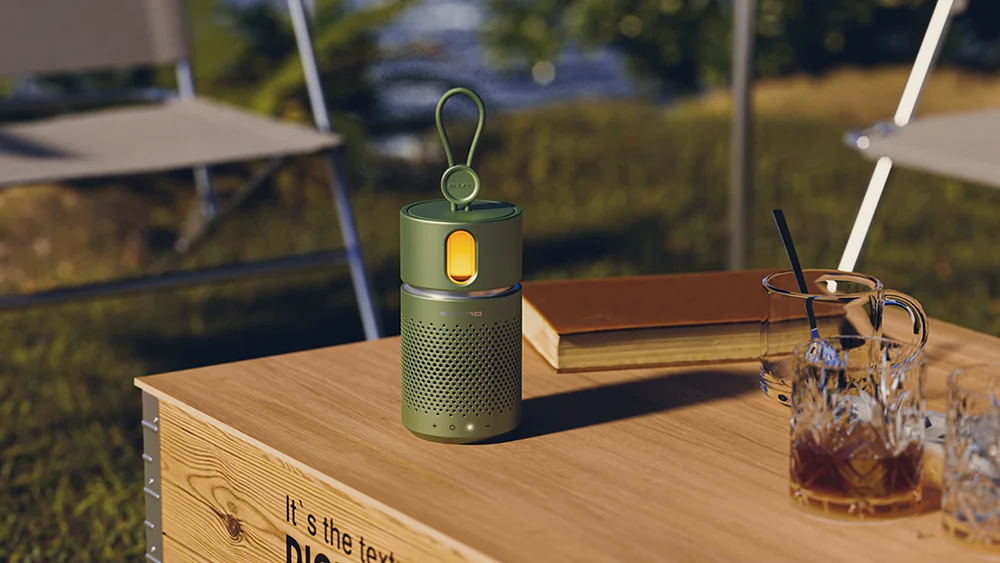
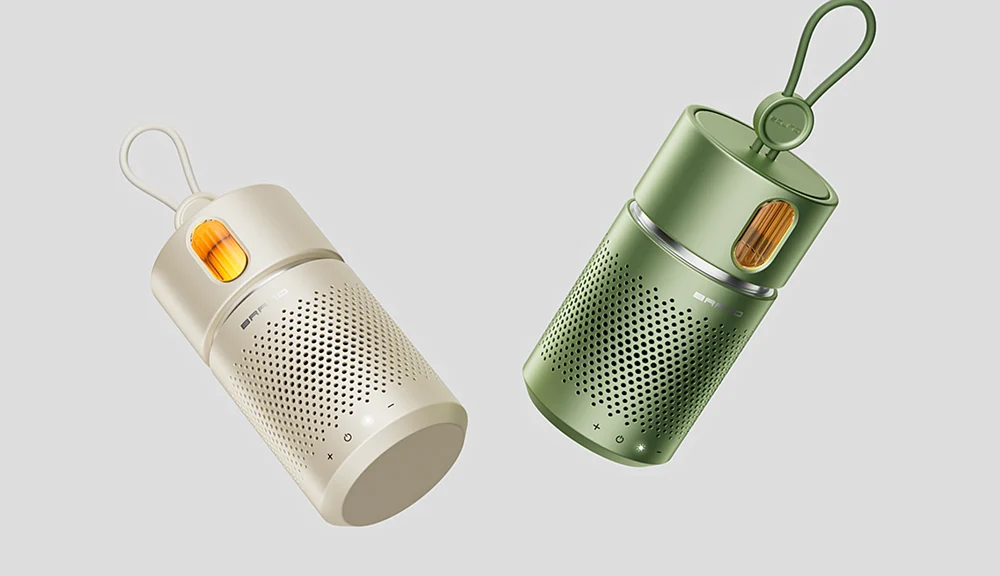
05. Retro Camping Lantern Speaker
It’s made for camping. The small size makes it easy to carry. It puts a speaker and a light into one design, making it the perfect tool for campsite vibes. The old-style light, like a classic bulb, really adds to that super-strong atmosphere. It’s pretty much a must-have for any camping trip.


Design Source: Saichuang Design
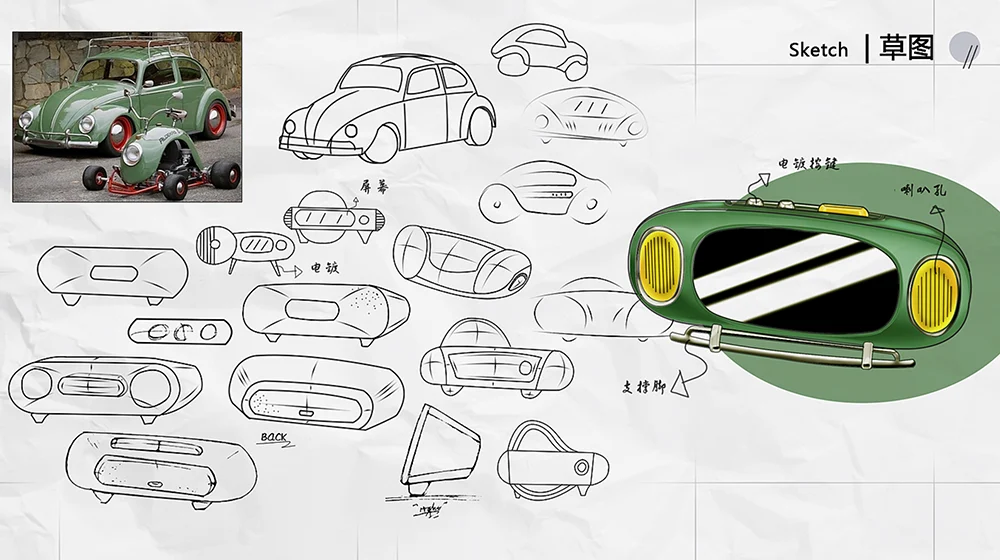
06. Beetle Speaker
The classic Beetle is that “little cutie” in most people’s memories. Its smooth and compact shape is famous all over the world. This speaker design takes the special curved lines of the Beetle car. It uses old-fashioned colors to show off its retro style.


Design Source: CiCi
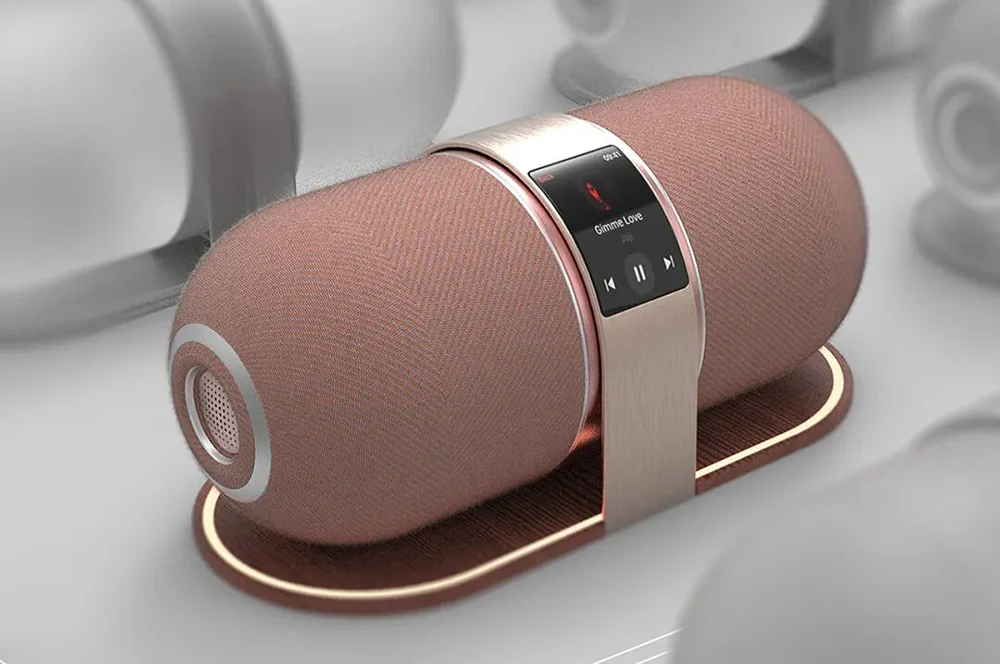
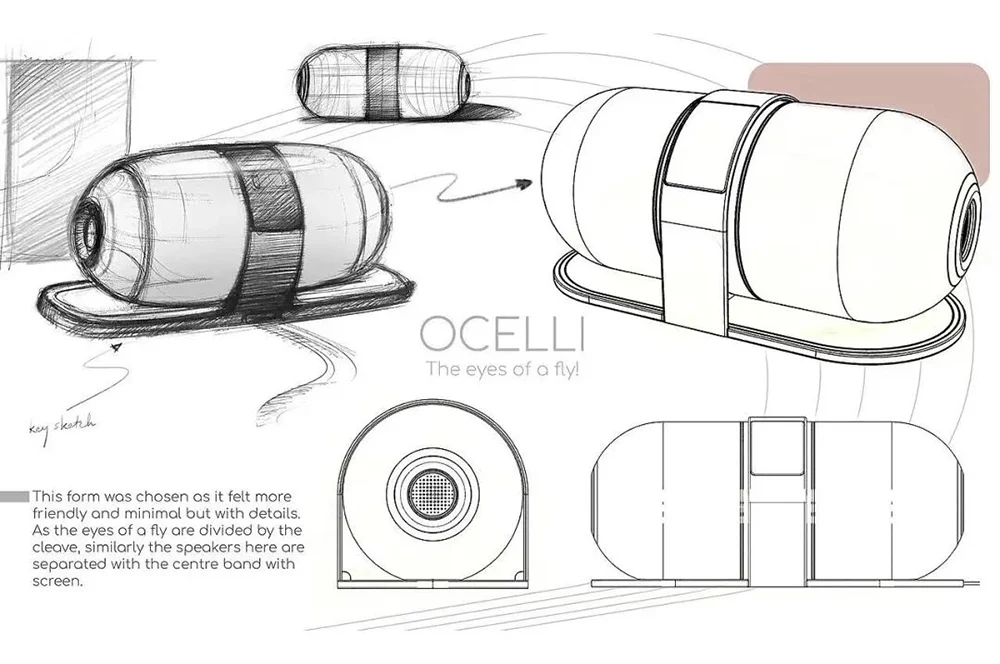
07. Portable Bluetooth Speaker
This product breaks the usual limits of size and what you expect. It gives people a choice: one speaker that works well in one place, but is also right for taking with you, and it even does more things.


Design Source: Shantanu Maheshwari
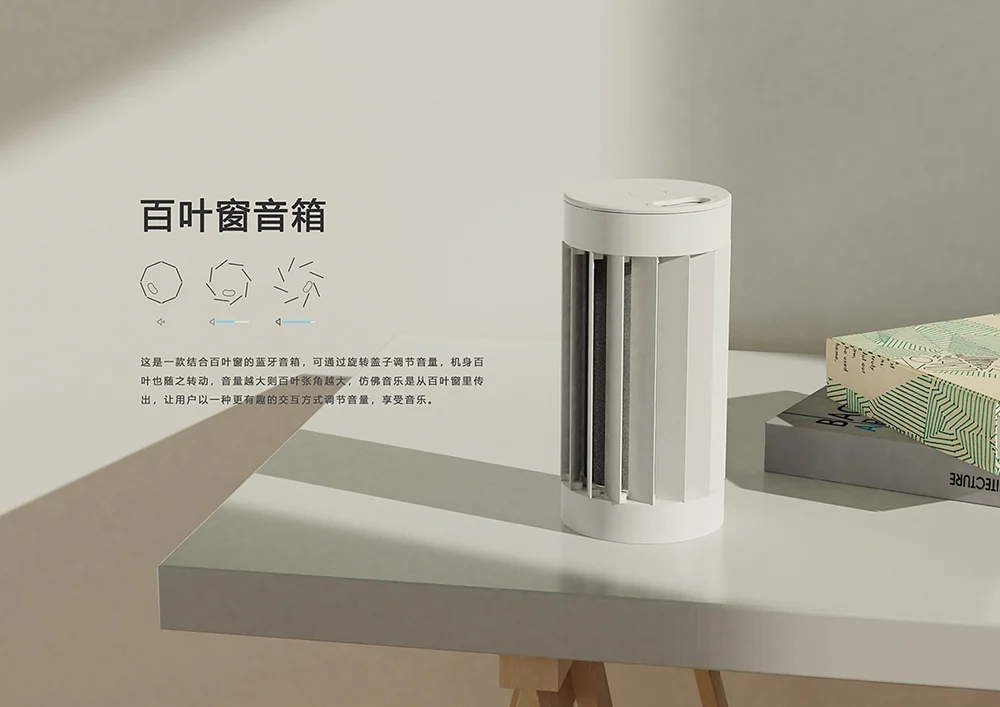
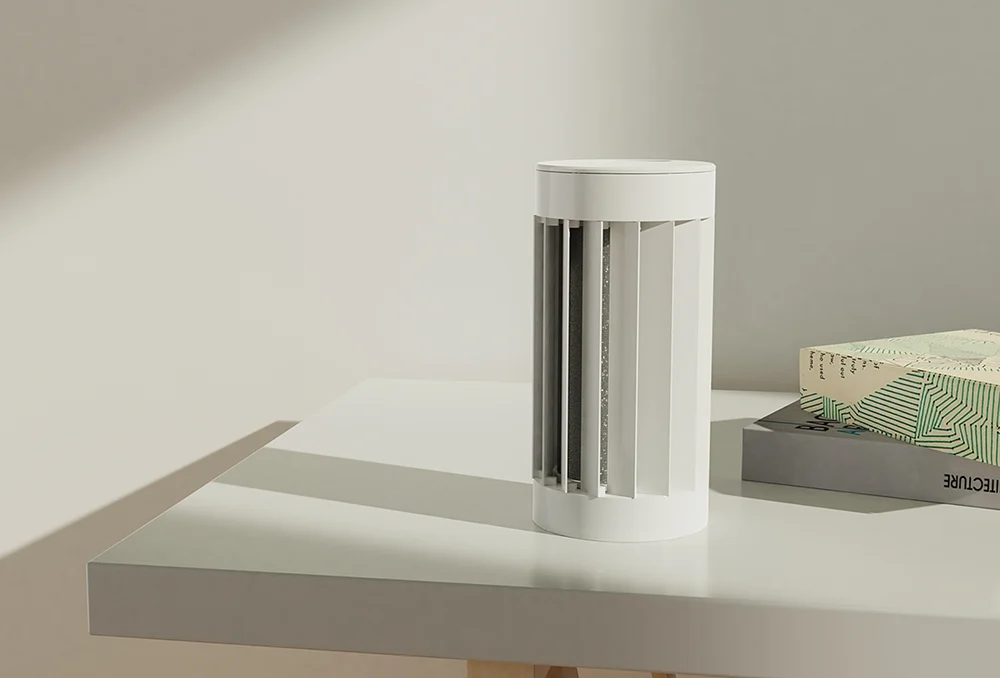
08. Blinds Speaker
This is a Bluetooth speaker built into a set of blinds. You turn the top cover to change the volume, and the blinds on the body turn too. Turn it up, and the blinds open wider, like the music is coming right through them. It lets people change the volume and enjoy their music in a much more fun way.

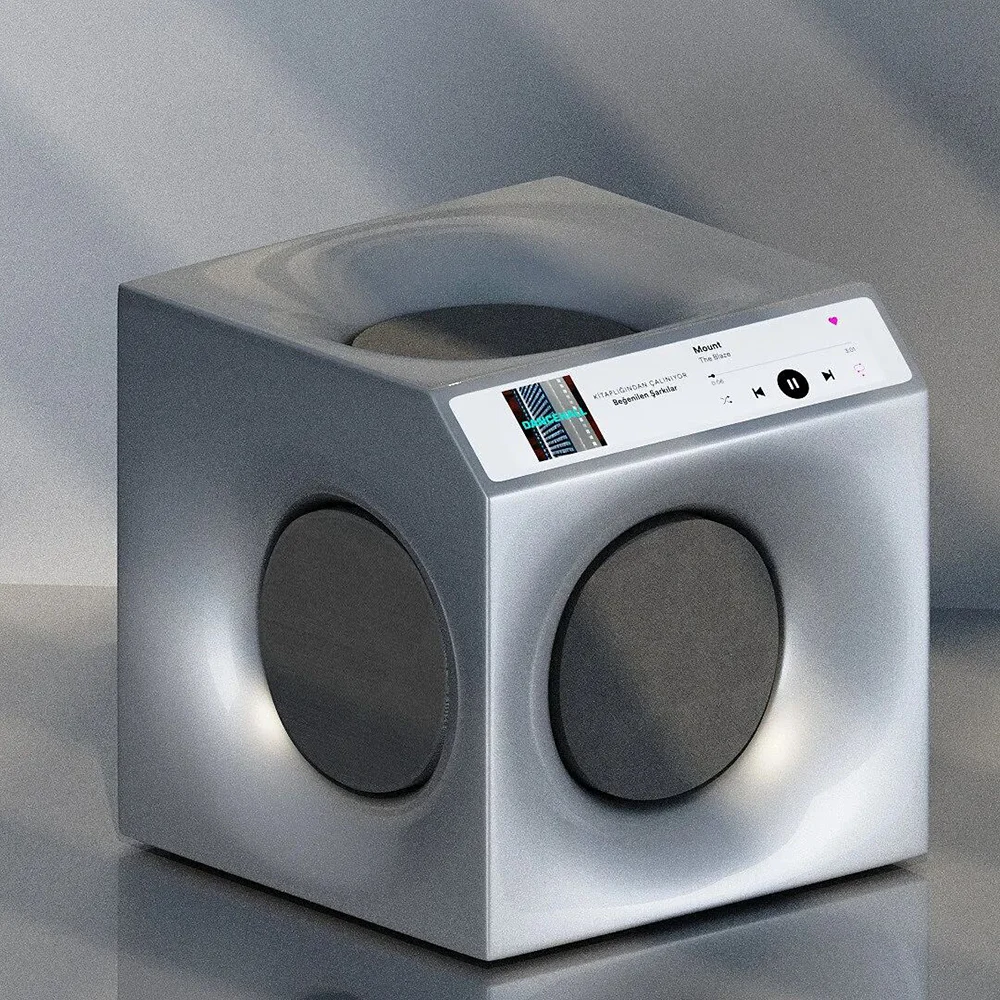
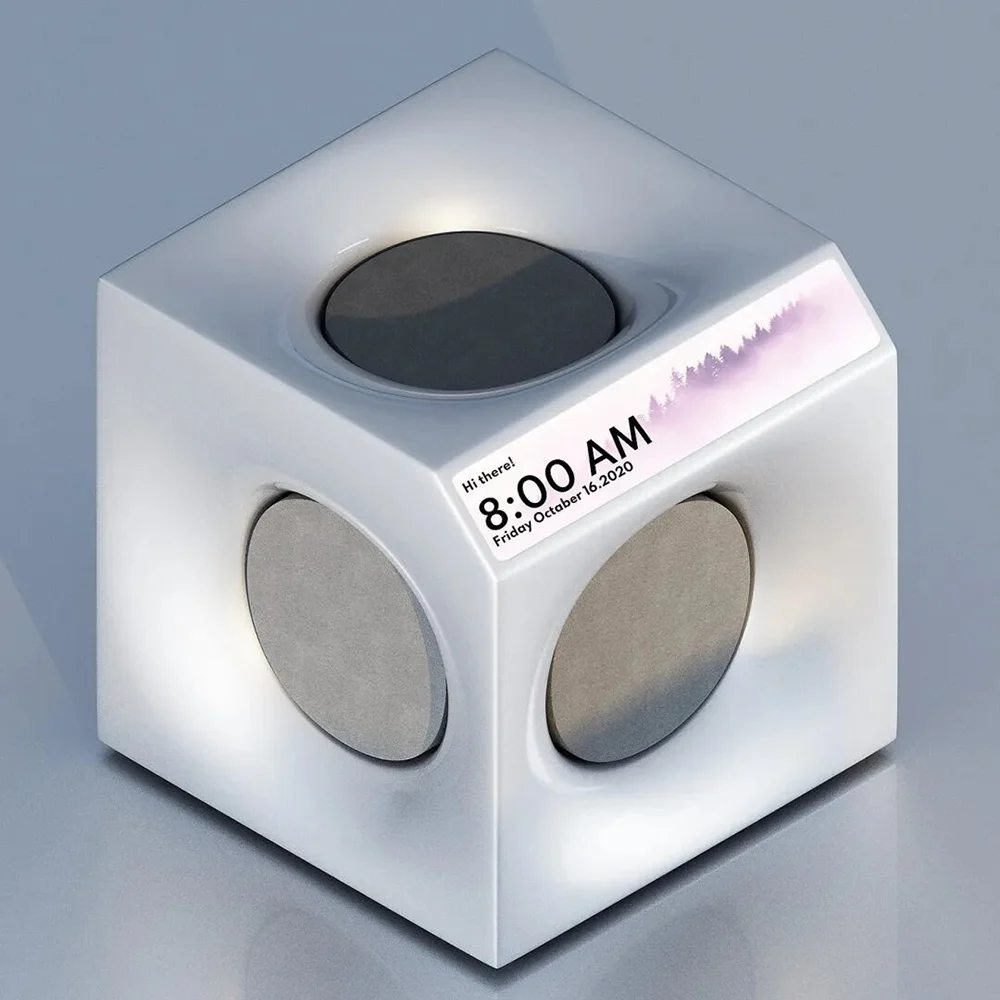
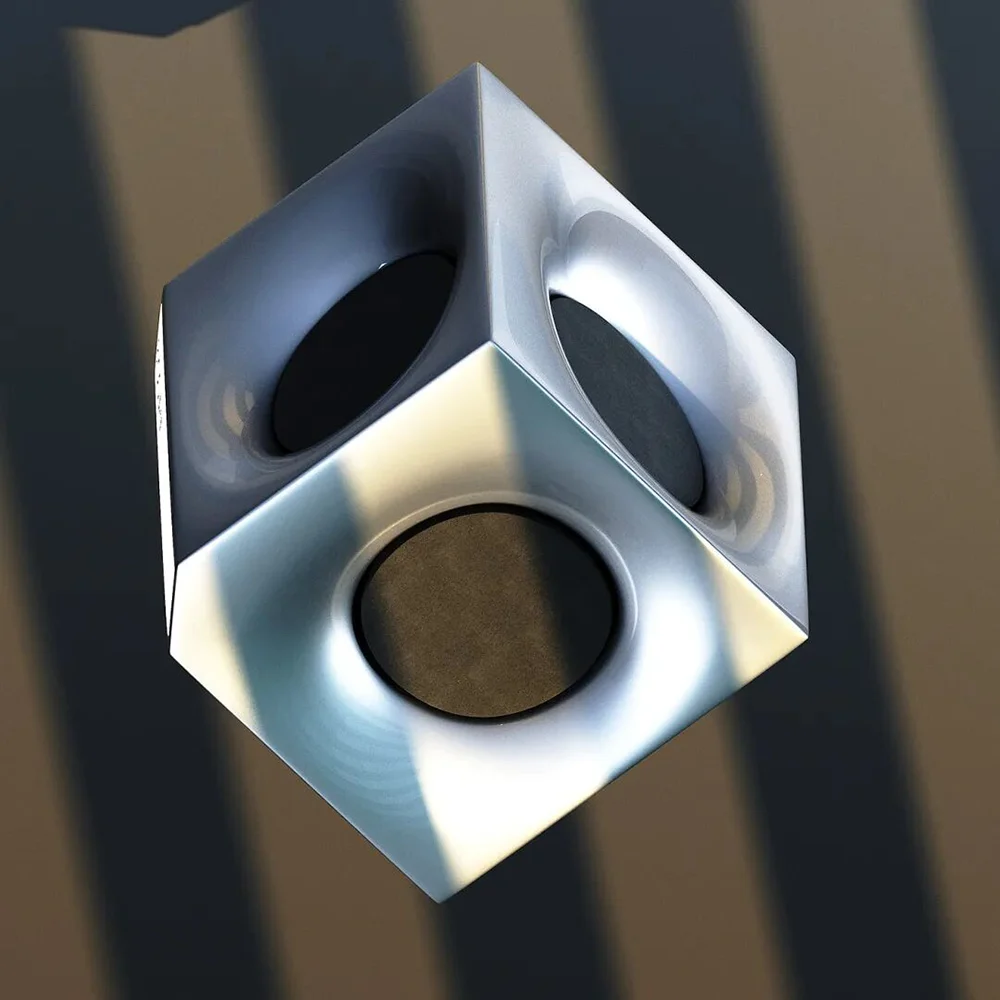
09. 360-Degree Perfect Sound Speaker
This product has a less common cube shape. The lines are clean and smooth, giving it a simple, modern look, and it has perfect 360-degree sound. Compared to the usual round or tube-shaped speakers, this shape sits more steadily and fits right into a modern, simple-style home.
Design Source: Muhammet Uzuntaş
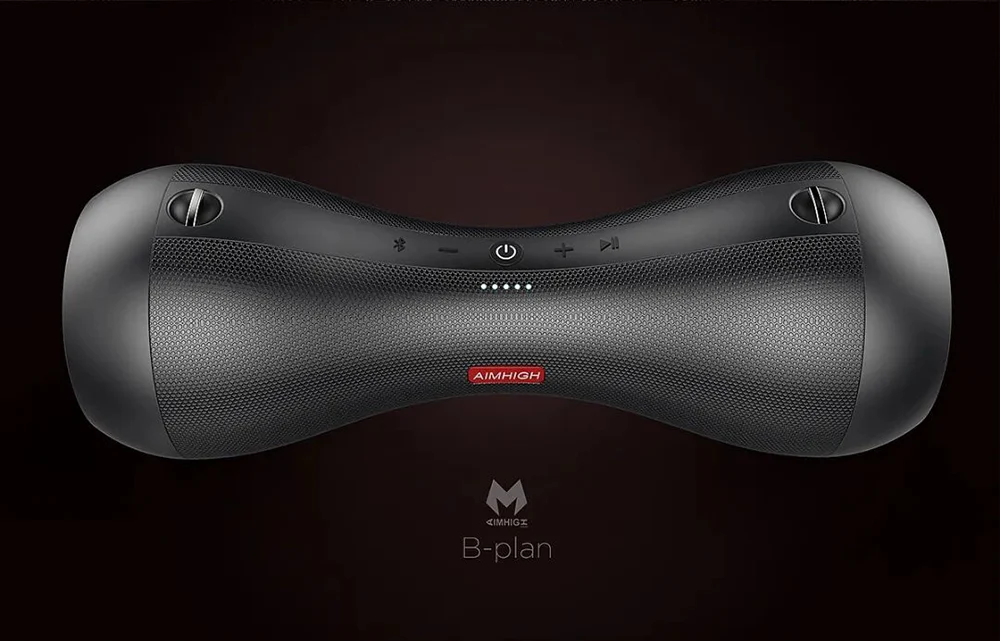
10. Dumbbell Bluetooth Speaker
It has a new dumbbell shape that feels both sporty and techie. The look is unique and easy to spot. It fits into places like the gym. The design is fresh and breaks away from what speakers usually look like.
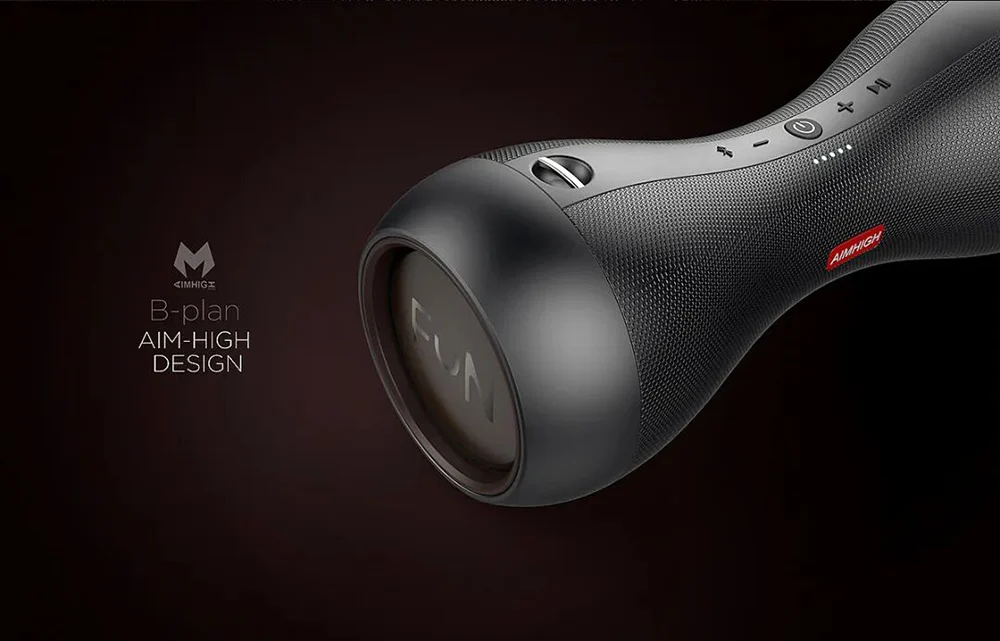

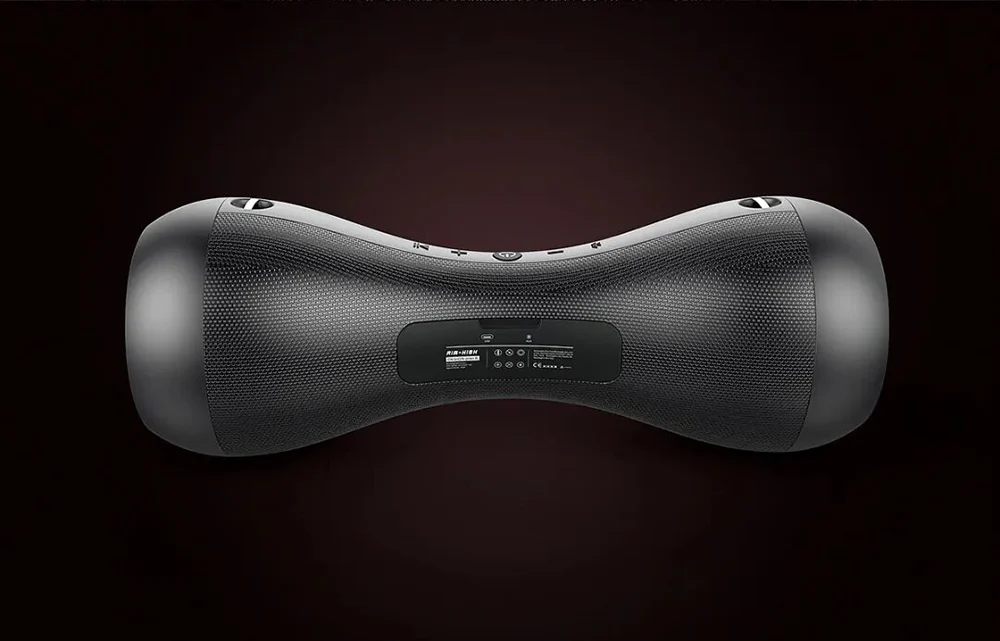
Design Source: Shang Jingli









 EN
EN  ES
ES  FR
FR  DE
DE  IT
IT  PT
PT  NL
NL  PL
PL  AR
AR  JA
JA  KO
KO  ZH
ZH