

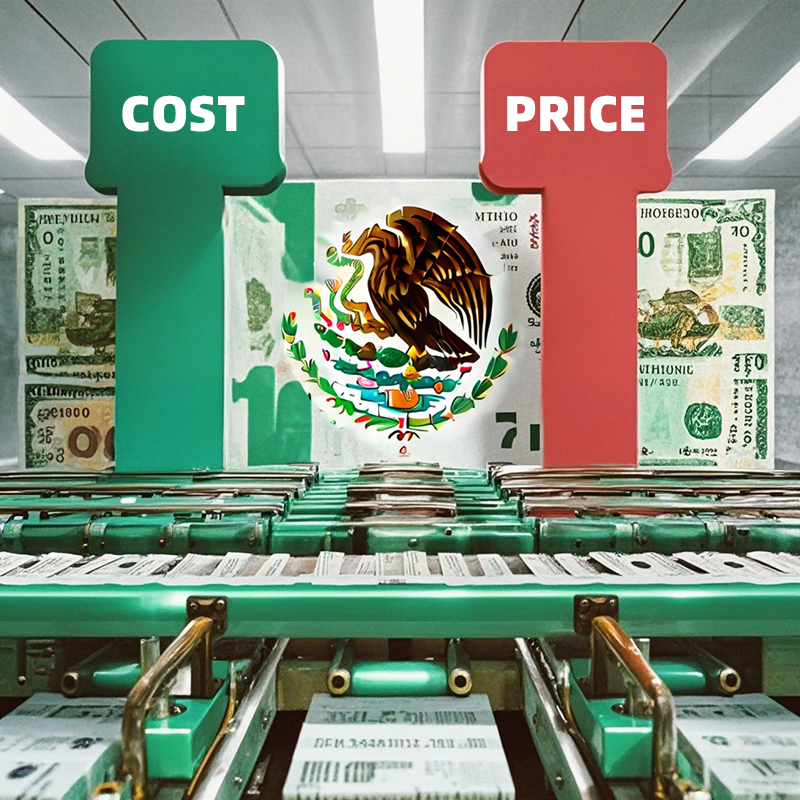
In modern manufacturing, growth opportunities depend on costs. To navigate the global manufacturing landscape, you require a keen understanding of the cost dynamic, specifically labor costs. For decades, many manufacturing companies, particularly in the U.S., have outsourced their production needs to countries like China and Mexico due to relatively lower labor costs. While China’s labor costs have increased over time, Mexico’s labor costs have remained competitive in some regions, though they can vary significantly depending on the specific location and industry.
Mexico has become a preferred manufacturing hub for many industries due to its proximity to the U.S. market, although its advantages also stem from factors such as skilled labor, infrastructure, and trade agreements. It has become the most preferred destination for nearshore manufacturing operations for industries looking for a home market while benefiting from cost advantage. Industries take advantage of good infrastructures and skilled labor to save on costs without sacrificing the quality and efficiency of their products. Additionally, nearshore manufacturing in Mexico facilitates easier collaborations, reduced transportation, and a short supply chain.
However, these expenses can vary depending on location and are influenced by regional incentives, labor rates, and industry clusters. For instance, cities near the U.S. border, like Ciudad Juárez and Tijuana, have higher costs but benefit from quick access to the U.S. market. Hubs like Guadalajara and Querétaro require specialized manufacturing concepts to tackle their unique cost structures.
This suggests that Mexican manufacturing costs can offer a competitive advantage in some sectors when compared to traditional manufacturing giants like the U.S. and China, though such advantages are often dependent on industry and region-specific factors. It will comprehensively explore the regional advantages of key Mexican cities and states for businesses considering Mexico for their production needs.
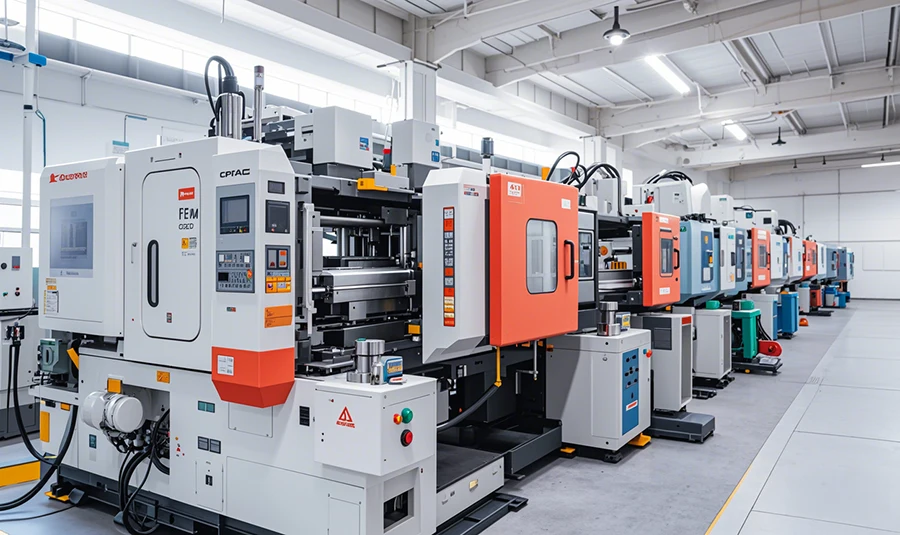
Factors Influencing Manufacturing Costs in Mexico
As a developing market economy, Mexico has a lower cost of living than the U.S. and, consequently, lower wages. It is shaped by various economic and logistical factors that impact the bottom line for businesses looking to establish or expand production. Energy, materials, and transportation are also much more affordable in Mexico than in the U.S. Understanding these variables is essential for companies to make informed decisions on where to place their operations.
1. Labor Services
Labor remains to be one of the most significant factors when it comes to manufacturing. Mexico’s labor market is characterized by skilled and unskilled labor that is best for some industries like automotive and electronics. Skilled labor characterized by specialized technicians and engineers generally demands higher wages than semi-skilled ones. However, it is more complex to determine the exact labor rates in Mexico, where payments and benefits can vary by region, municipality, and neighborhood.
For instance, the average wage for Mexico’s unskilled labor is about $ 4.86 per hour, $5.20 per hour for semi-skilled, and skilled laborers enjoy a range of $8.16 per hour. Cities with advanced industries, such as Monterrey and Querétaro, where demand for manufacturing skill sets is highest, should expect the pay to be higher. Meanwhile, the income is reduced in rural areas with a much more expansive hiring pool.
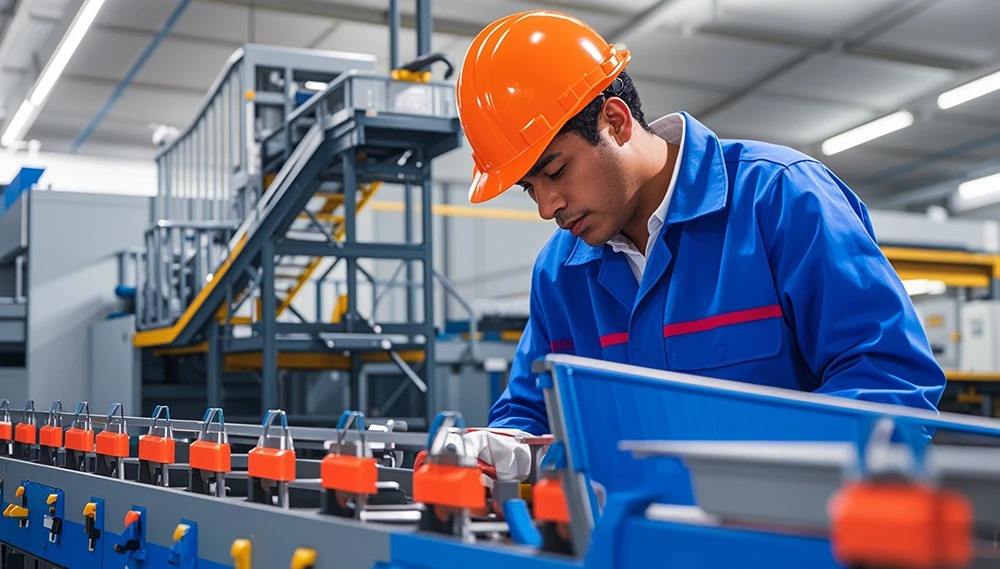
2. Energy and Utility Costs
Energy costs, particularly electricity, can differ between states. This results in the complete reliability of local or imported energy sources and regional energy infrastructure. In cities like Tijuana (Baja California), Ciudad Juárez (Chihuahua), and Monterrey (Nuevo León), the electricity rates are significantly higher due to infrastructure constraints. In contrast, central and southern cities like Mexico City and Mérida (Yucatán) may also experience increased energy prices due to logistical challenges. The average electric costs fall around $0.117 per kWh for most manufacturers.
When it comes to Natural gas, rates in Mexico can be around $0.034 per kWh for businesses. Of course, this will also vary depending on the region and monthly volume. The average price for water and sewer is about $0.007 per gallon. Nevertheless, it’s advisable to always confirm with the local providers to understand the stringent restrictions on utility usage and discharges.
For Internet services in Mexico, an 8mbps line monthly internet connection may cost approximately $20 compared to other countries.
Recently, Mexico has made significant improvements in energy sector reforms. Natural gas and renewable energy assist manufacturers to reduce operational costs due to their availability and cost-effectiveness. Embracing sustainable practices cuts expenses and aligns with global environmental trends.
3. Raw Material Availability
Raw material availability is the backbone of a competitive manufacturing sector. Proximity to the supplier reduces transport expenses and the lead time. Cities connected to extensive supplier networks have advantageous access to essential raw materials like plastics and metals.
4. Infrastructure and Logistics
Transportation costs are the next most attractive factor for manufacturers considering setting up a factory in Mexico. Its developed networks of roads, ports, air, and railways facilitate the seamless movement of goods and services within and across borders. Supply chain efficiency is made possible by reducing the overall production costs. Proximity to the U.S. border provides manufacturers with cost benefits compared to transport from popular low-cost manufacturing locations, particularly in Southeast Asia.
5. Trade Agreements and Incentives: A Favorable Business Environment
Mexico is in conjunction with trade agreements, including the United States-Mexico-Canada Agreement (USMCA) and the Comprehensive and Progressive Agreement for Trans-Pacific Partnership (CPTPP). These agreements lower international trade costs by providing tariff-free access to significant markets. Mexico also provides incentives, such as investment subsidies and tax breaks, to attract foreign investments.
6. Government Incentives
Most government incentives focus on attracting manufacturers and investors. States, such as Guanajuato and Nuevo León, have programs that offer tax benefits and subsidies to boost industrial investments. For instance, Nuevo León offers targeted tax breaks in sectors like aerospace, automotive, and electronics, which benefit from its robust infrastructure and close U.S. proximity. Guanajuato also incentivizes manufacturing investments with reduced taxes and streamlined permits. Beneficiaries are industries in designated clusters, such as automotive and consumer goods manufacturing.
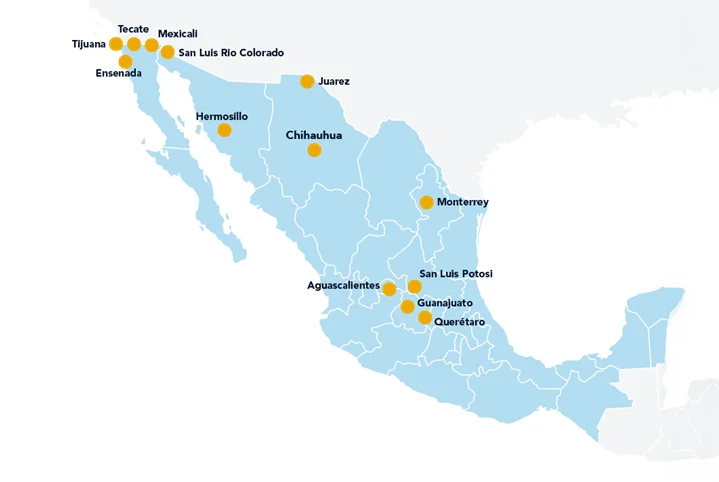
Key Manufacturing Hubs in Mexico and Their Costs
Whether you’re looking to expand operations in Mexico or you want to consider it as a fresh start for your manufacturing needs, understanding the nuances of Mexico’s manufacturing locales is crucial. Choosing wisely strategic sites to set up a company influences the cost of production and setup incurred. Here, we shall explore some manufacturing areas within Mexico today, highlighting the regions known for their specializations.
1. Tijuana, Baja California
The Mexican states of Baja California serve as manufacturing hubs for several multinational companies. Tijuana is Baja California’s largest city. It is famous for being the television manufacturing capital of the world. Tijuana is home to other manufacturing fields of aerospace and medical devices, as well as everything in between. Its proximity to major U.S. markets, alongside a highly skilled workforce and developed infrastructure, makes it an attractive location for companies in these highly technical sectors. Tijuana hosts facilities for corporations such as Foxconn, Samsung, Flextronics, Safran, BD Medical, and Medtronic. Other cities in this state are Mexicali, Tecate, Rosarito, Hermosillo, and more.
2. Monterrey, Nuevo León
Monterrey is Mexico’s third-largest city, with a strong industrial presence, particularly automobile production. It is the capital of the Mexican state of Nuevo León and is the national capital of advanced industry. Situated just below the edge of Texas, Monterrey is known for being the most “Americanized” city and having the country’s most significant per capita wealth. It’s home to the highest concentrations of technical universities in Mexico, providing manufacturers with a well-trained and experienced labor force. Monterrey’s infrastructures, such as convenient transportation routes and supplier availability, make it a central point for global opportunities. It’s near some Industrial cities such as Saltillo and Ramos Arizpe.
Some manufacturing companies found in Monterrey include KIA, Whirlpool, Polaris, Carrier, LG, Daimler, and Caterpillar.
3. Guadalajara, Jalisco
Guadalajara is a city in western Mexico and the capital of the state of Jalisco. It’s known as the “Silicon Valley” of Mexico, with a strong focus on technology. It is home to electronic manufacturers of high-tech components for industrial applications and consumer products. Some other industrial cities found within the area are El Salto and Tepatitlán. By leveraging the talent in the state’s engineering and software development, companies such as H.P., Intel, and IBM have operations here.
4. Ciudad Juárez, Chihuahua
Ciudad Juárez is the most populous city in Chihuahua and lies south of Texas, United States. It is the birthplace of the Mexican maquiladora programs. This program allows manufacturers to import duty-free raw materials provided finished goods are exported. Ci dad is the second largest binational metropolitan area known as the borderplex on the Mexico-US border. It is the second-largest city in North America and boasts a robust manufacturing hub. Major companies located within the area are Cummins Inc., Delphi Technologies, Bosch, and Electrolux.
5. Guanajuato
Guanajuato is considered a logistic center because of its superb highways, railroads, and international airport. It is located in Mexico’s El Bajío manufacturing region -encompassing states like Querétaro and Aguascalientes, Nuevo León. Guanajuato is the heart of Mexico’s automotive industry. Home to numerous International automotive and auto parts manufacturers such as GG.M. Mazda, Honda, and VV.W
6. Mexico City and the State of Mexico
As the country’s capital and commercial hub, Mexico City is home to numerous multinational corporations with a massive network of suppliers and service providers. Its enormous population provides companies with an extensive workforce to help meet the demands of diverse sectors. Mexico City harbors several universities and technical institutions that give a steady stream of skilled professionals. This broad pool makes it a considerable area for manufacturers seeking to serve domestic and international markets. Major companies found here include Ford Motor Company and Nissan Mexicana.
7. Querétaro
The city of Querétaro is a two-hour distance from Mexico City. Geographically, it’s one of the smallest states in Mexico and has access to more than 40 million consumers. Other cities found within the area are San Juan del Río and Celaya. It has become a center for the aerospace industry, offering tremendous growth opportunities and access to serve Mexico’s central and global markets. As one of the vital aerospace clusters in Mexico, the region hosts several significant companies, including Bombardier, Safran, and Eaton. These companies have established operations here, focusing on aircraft component production, assembly, and maintenance.
8. Puebla Coahuila Mexico
Puebla is strategically positioned with access to central and southern markets. With its proximity to Mexico City, it’s known as a hub for automotive and textile manufacturing. Nearby industrial cities are Tlaxcala and Atlixco. The state of the economy in this area has grown steadily as its GDP surpasses that of countries like Honduras, Panama, El Salvador, Paraguay, and Honduras. Companies such as Audi and Volkswagen benefit from its excellent infrastructure with rail and road connections
Comparative Analysis: Manufacturing Costs by Region
| Region/City | Location (Region) | Labor Costs | Utilities and Energy Costs | Real Estate Costs | Infrastructure | Cost-Sensitive Industries |
|---|---|---|---|---|---|---|
| Tijuana, Baja California | Northern Mexico | Moderate to Low | Low (proximity to UU.S.grid) | Moderate | High; excellent UU.S.border access | Electronics, Medical Devices, Automotive |
| Monterrey, Nuevo León | Northern Mexico | Moderate to High | Moderate | High (competitive for industrial land) | Highly developed industrial zones close to the U.S. border | Automotive, Aerospace, Heavy Equipment |
| Guanajuato, Guanajuato | Central Mexico | Moderate | Low to Moderate | Moderate | Good; connected by highways, rail | Automotive, Leather/Footwear |
| Guadalajara, Jalisco | Central Mexico | Moderate | Moderate | Moderate | Good: strong tech parks, rail, and airport | Electronics, Tech Manufacturing, Aerospace |
| Querétaro | Central Mexico | Moderate | Moderate | Moderate to High | Good; growing aerospace and tech parks | Aerospace, Automotive, Electronics |
| Ciudad Juárez, Chihuahua | Northern Mexico | Low | Low | Low | High; UU.S.proximity, strong border logistics | Automotive, Consumer Goods, Electronics |
| Mexico City/State of Mexico | Central Mexico | Moderate to High | High (due to high demand) | High (especially near the city) | Excellent; major logistics and transport hubs | Consumer Goods, Electronics, Automotive |
| Puebla | Central/Southern Mexico | Moderate | Low | Low | Good road and rail for regional logistics | Automotive, Textiles, Food Processing |
Conclusion
Manufacturing costs in Mexico propose a unique competitive edge for industries seeking to establish or expand their operations. Comprehending manufacturing costs across regions in Mexico is essential for companies focusing on maximizing their operations. Careful assessment of these regions is the key to making informed decisions and good results.
For companies comparing the costs in their country of origin against their preferred savings, moving to Mexico is the only way to feel secure in terms of cost savings. Mexico’s manufacturing sector is imperative and wide. Therefore, thorough research is essential to helping companies create a competitive edge.





 EN
EN  ES
ES  FR
FR  DE
DE  IT
IT  PT
PT  NL
NL  PL
PL  AR
AR  JA
JA  KO
KO  ZH
ZH