

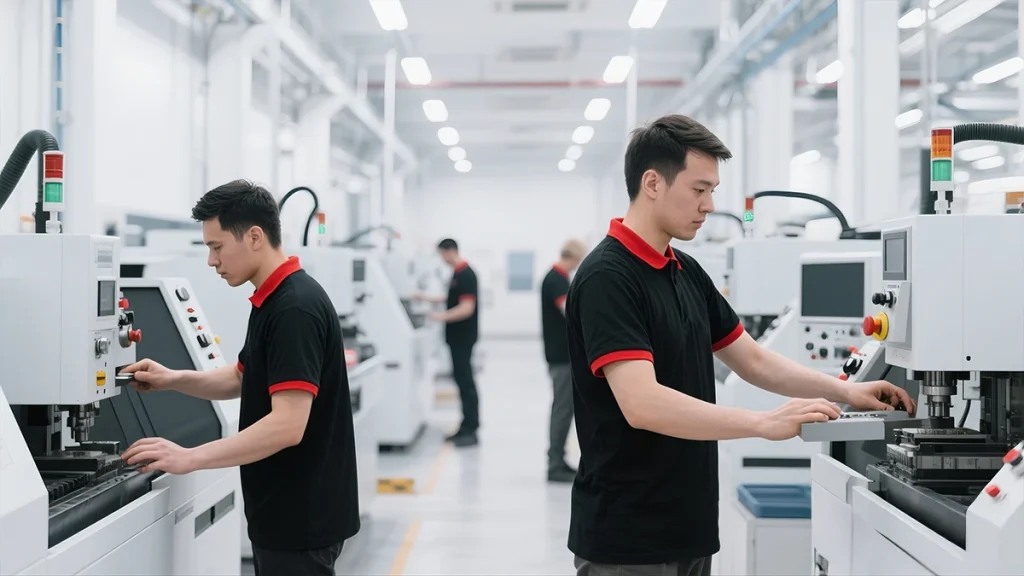
A Machine Shop, also referred to as an engineering workshop or engineer’s laboratory, is an environment where machinists perform the tasks of machining, which involves the manufacturing, repairing, and improving of raw materials such as metal, plastic, glass, and wood. The concept of a machine shop dates back to when communities had blacksmith shops, which maintained wagons and horses. Nowadays, this could be a standalone business or a section of a larger production facility equipped with different machine tools, like lathes and milling machines, each carrying out their specific purpose in the production process.
What Does a Machine Shop Do?
A Machine Shop is essential in manufacturing complex parts that form the foundation of different machines and their structures. There are several processes, each vital for various materials and applications. This is important for automotive, aerospace, and construction, as these processes create components with accurate dimensions and tolerance. The most common machine processes are:
- Turning: As the name suggests, this process involves spinning the workpiece against a sharp cutting tool, such as a lathe machine.
- Milling: Milling isahighly versatile approach in many machine shops. It involves a cutting tool that revolves around a stationary workpiece. With the help of milling machines, machinists can perform many operations and functions, from small, detailed tasks to significant ones.
- Drilling: Drilling is a cutting process that uses a drill bit to create a circular cross-section hole in solid workpieces. The drill bit removes material by rotating and advancing into the workpiece.
- Grinding: A spinning wheel covered in tiny abrasive bits cuts through the workpiece surface, removing a thin layer and resulting in the desired shape and size.
Machines in a Machine Shop
The structure and formation of a Machine Shop is similar to an artist’s studio in that each machine tool is more like a different point brush, each having a unique role that they carry out in creating a masterpiece. All machine tools in the Machine Shop utilize some means of constraining the workpiece to provide a guided motion of the section of the machine. The various types of machine tools used are:
Lathe Machine
This is a crucial machine tool in a Machine Shop. Invented by Henry Maudslay in the early 19th century, it spins a workpiece about an axis of rotation to execute several other operations, such as turning, facing, drilling, boring, knurling, threading, and sanding.
How does a Lathe Machine Work?
- Preparation and Setup: The first step in using the lathe machine and preparing the workpiece is to clean the lathe machine and ensure that all components are correctly aligned.
- Selection and Installation of Cutting Tool: The best cutting tool is selected depending on the type of material of the workpiece and the desired operation. After selection, the tool is tightly fixed onto the tool post and placed at an appropriate distance from the workpiece.
- Setting Spindle Speed: Set the spindle speed according to the material type and the specific cutting operation needed.
- Performing the Cutting Operation: The Lathe removes all unwanted parts from the workpiece, shaping it as it rotates.
- Monitoring and Adjusting: You need to monitor the cutting process, implement any required adjustments, and check the dimensions of the workpiece.
- Finishing: Inspection of the workpiece for its precision and finish. Stages like sanding and polishing can be performed on the lathe to get the desired surface finish.
Milling Machine
Milling machines were pivotal in advancing manufacturing, with early developments by figures like Eli Whitney around 1818 in New Haven, Connecticut. While some advanced milling centers are considered Multi-Tasking Machines (MTMs) due to their ability to perform various operations, traditional milling machines are primarily designed for milling, though they can also perform tasks like:
- Drilling
- Boring
- Threading
- Machining flat and irregular surfaces.
The Working Principle of a Mill Machine
- Part Design: The whole process begins with designing the part to have a vivid picture of what is required. It includes programming or having a basic blueprint that showcases the various dimensions.
- Machine Setup: A good setup involves adjusting various settings. Usually, adjustments occur to a program that is transferable to the control system.
- Workpiece Fixture: The workpiece is mounted tightly on the table. Any loose fixtures would lead to vibrations that cause a poor-quality milling process.
- Milling: After fixing the workpiece, the milling process begins. The cutters rotate, removing material from the surface a little at a time.
- Part Inspection: The part undergoes quality checks. It is transferred for further processing if its quality meets the required standards.
Drill Press
A machine in a machine shop that cuts holes through metal, wood, plastic, etc. Drilling machines use a drilling tool made of cutting edges at their points. Like others, drill press tools perform various operations such as reaming, boring, and counterboring.
The Working Principle of a Drill Press
- Machine setup: Machine setup begins with selecting the right drill bit, as this directly affects the hole’s diameter and depth.
- Checking other settings: Ensure the drill press is properly powered and that the selected speed and torque settings are appropriate for the workpiece material and drill bit size.
- Setting up the material: Secure the drilled material on a surface with clamps or a vice.
- Drilling: Ensure the drill tip touches the material before you start drilling. Position the drill bit at a reasonable angle. Engage the quill feed handle to lower the rotating drill bit slowly into the material.
- Examining the hole: After drilling, check the hole for accuracy. If it’s for a fastener, verify that the fastener fits easily.
Grinding Machine
This tool is also known as a grinder. It is a machine tool used for grinding. The development of the modern grinding machine involved contributions from various innovators throughout the 19th century, building upon earlier abrasive techniques. Significant advancements in precision grinding occurred as the demand for hardened steel parts with tight tolerances grew. This tool has an abrasive wheel as its primary cutting tool for finishing workpieces.
How does a Grinding Machine work?
- Setup: The process starts by selecting the right grinding wheel. This is based on the material of the workpiece and considers qualities like wheel diameter and grit size.
- Securing the workpiece: Tightly mount the workpiece on the machine.
- Grinding: The abrasive wheel rotates at high speed, and either the workpiece is fed into the wheel or the wheel is moved relative to the workpiece, removing material through a abrasive cutting action, which involves shearing, plowing, and rubbing at a microscopic level by the many small abrasive grains on the wheel.
- Coolant application: Apply a coolant through the grinding process to reduce the heat generated by the machine, which could cause thermal damage to the machine and the workpiece.
- Finishing and Inspection: To achieve the desired finish and dimensional accuracy, inspect the workpiece’s surface quality, size accuracy, and overall finish.
Selecting Your Ideal Machine Shop
Reliability and Reputation: The two things are non-negotiable. Customer reviews and testimonials gauge the overall reliability and service quality of the machine shop..
Quality of work: The quality of the parts a machine shop produces directly impacts your final product. Evaluate the Machine Shop’s ability to manufacture parts that meet your desired expectations. Examine their past projects and quality control processes.
Cost and Pricing: This is a major consideration when it comes to any kind of business. For instance, a lower price might seem attractive at first, but it could hide hidden costs. Therefore, it’s crucial to balance price with other vital factors like overall value proposition, quality of work, reliability, and customer service.
Safety Standards: The shop must follow safety standards when it comes to projects involving handling dangerous or complex processes.
Location: The location of a machine shop is critical. It means quicker turnaround times and streamlined logistics. For operations to move smoothly and faster, having a facility that’s closer to you makes everything easier.
Conclusion
Machine shops are a fundamental part of society, especially in engineering. They are alsoknown asengineeringworkshopsor engineers’ laboratories. They have contributed to many benefits, such as increasing production speed, quality control, and cost-effectiveness. This emphasizes it is a necessary part of the production process. The right environment for production is incredibly important. It dramatically impacts the success of your project and journey towards high-quality production and a profitable business. The machine shop is equipped with different machine tools, whether as a standalone business or a section of a more significant production, which includes lathes and drilling machines. The data provided outlines their importance in the production of complex machine structures. To choose the right environment, it’s crucial to check a few things: quality of work, reliability, and compliance with safety to ensure the achievement of the desired outcomes for manufactured parts.





 EN
EN  ES
ES  FR
FR  DE
DE  IT
IT  PT
PT  NL
NL  PL
PL  AR
AR  JA
JA  KO
KO  ZH
ZH