

3D printing has come a long way from making crude plastic prototypes. Manufacturers and designers today are able to produce parts that are very precisely engineered, with unique properties, such as transparency. The applications of clear 3D printing are gaining more and more significance in sectors where transparency, visual appearance, and light transmission are crucial for the functionality of the printed parts.
While it is not easy to print a flawless glass-like part, it is possible to create impressively clear parts with modern 3D printing technologies using the correct materials and post-processing techniques.
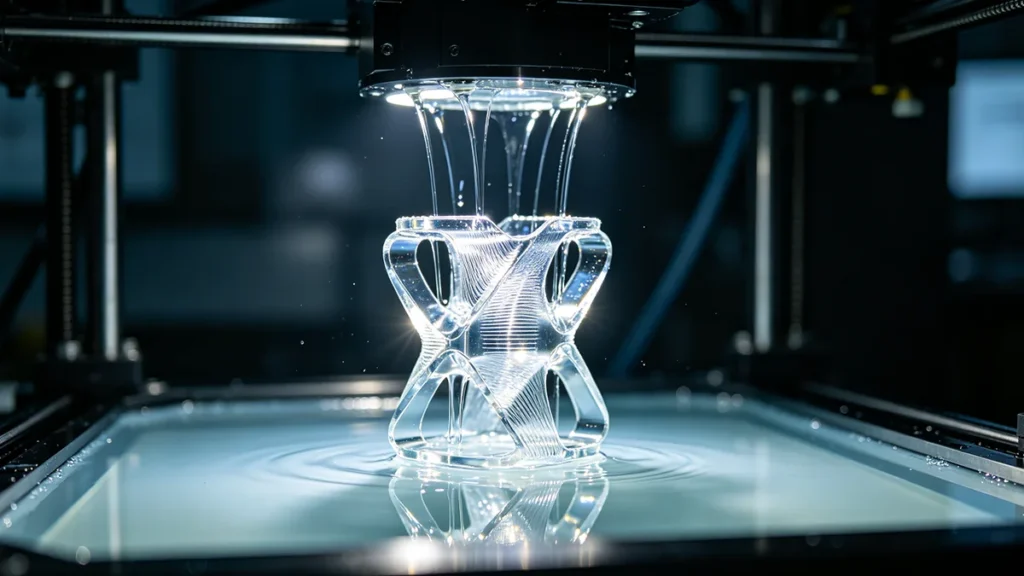
Why Transparency Matters in Modern Manufacturing
The value of clear 3D printing is that engineers, designers, and manufacturers can see inside the product, watch the movement of fluids, or see how a component aligns without having to disassemble it. Transparent components are also pleasing to the eye and are employed in consumer electronics, lighting equipment, medical devices, and automotive systems. A transparent model is used to assess the appearance of products in the prototyping process before manufacturing.
Can 3D Printers Actually Print Transparent Materials?
The modern 3D printers can be used to create transparent parts; however, the process of attaining total optical transparency is not as simple as using a transparent material. The process of printing 3D transparent objects comes with a cloudy or slightly frosted appearance because of the “layer by layer” approach.
The light scattering and irregularities on the surface and internal gaps impair visibility through the part. However, in recent years, the development of printing technology, materials, and post-processing has enabled the development of components with high transparency, which can be used in the industry, medical, and commercial sectors.
The Short Answer Explained
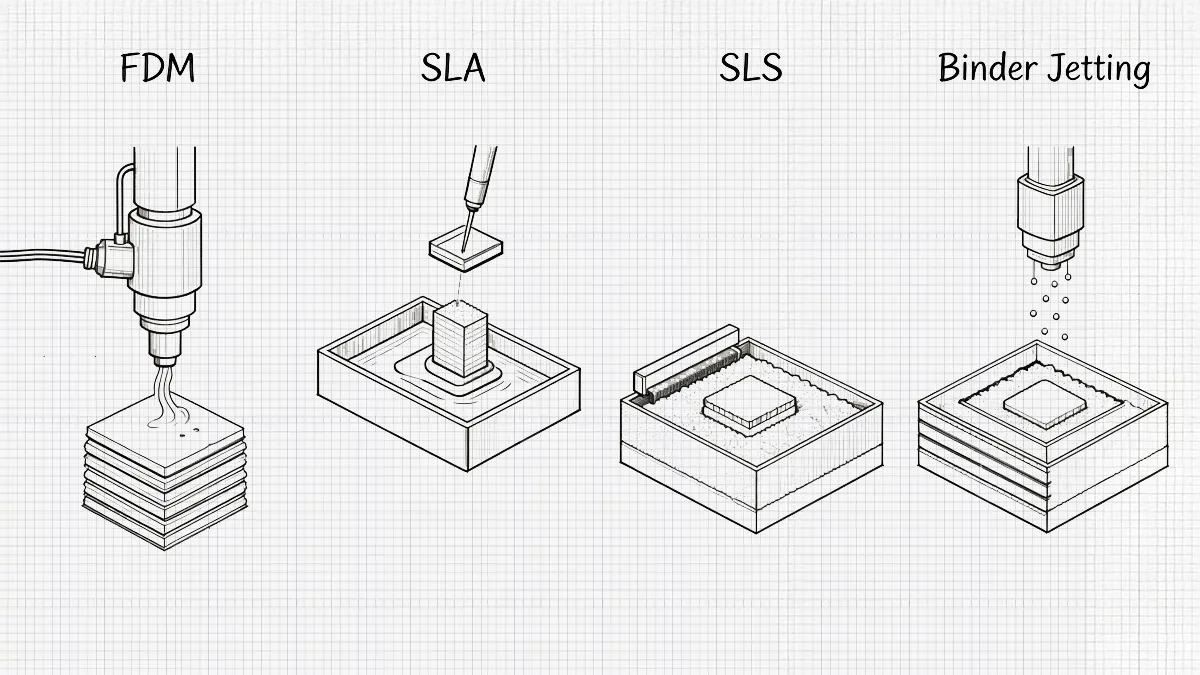
Yes, 3D printers can create transparent materials, and some technologies can produce very translucent results. Clear resin, transparent PETG, polycarbonate, and transparent PLA are specially formulated for this use. Industrial printers (e.g., SLA, DLP, and PolyJet printers) work particularly well as they deliver smoother surfaces and finer details than conventional filament printers [1].
Actually, the transparency level will depend on a number of variables such as printing technique, layer resolution, quality of the material used, and the finishing process. Newly printed transparent objects don’t always look like glass as soon as they are printed. The light transmission through most parts needs to be improved by sanding, polishing, applying resin, or smoothing with chemicals to remove visible layer marks.
The desired application also depends on the amount of clarity required. A translucent light cover, for instance, may not need to be transparent, while optical prototypes or fluid observation boxes need a higher transparency. “Good enough” transparency is acceptable in many industrial situations when the part isn’t as crystal clear as it could be.
Difference between Transparent, Translucent, and Clear Prints
These terms are sometimes used synonymously, but they refer to different degrees of optical quality of 3D printed parts. When choosing the material and printing technique, it is crucial to understand the difference between the two.
Transparent prints have a relatively large amount of light passing through them without significant distortion. What is behind the print area is still visible, but it might not be as sharp. Clear 3D printed parts are typically utilized in prototypes, holders, as well as protective covers.
Translucent prints also transmit light, but the light is greatly diffused by internal structure or surface defects. This results in the formation of an overcast or frosted look, obscuring objects behind the material. Many “clear” parts that are printed using FDM are translucent, not transparent, due to layer lines and even minute air gaps visible.
Clear prints are those that are extremely clear and have little distortion. These prints are closest to glass and/or polished acrylic. This degree of clarity is typically only possible with high-quality printing and a lot of post-processing. When producing a truly clear 3D printed part, it becomes more challenging and expensive to overcome any imperfection, since even the smallest imperfection can impact light transmission.
The difference between these terms is significant, as manufacturers will claim materials are “transparent” when they are not transparent, even after finishing, done by them.
Types of Transparent Materials Used in 3D printing
Transparent PLA
Among the easiest clear filaments to print with on an FDM printer is transparent PLA. It provides acceptable transparency and is popular for models for decoration and for making simple prototypes [2]. But PLA exhibits layer lines that can be visible unless the surface is carefully polished after printing, otherwise the surface can have a higher level of light scattering.
Clear Resin for SLA and DLP Printing
The resin used for transparent 3D printing is one of the most popular. In contrast to filament printers, SLA/DLP printers make use of liquid photopolymer resins that are cured by light to produce smoother surfaces with greater detail. Clear resin with proper polishing can have an excellent transparency level, which can be used in lenses, medical devices, and display prototypes.
Polycarbonat (PC)
Polycarbonate is a material that is recognized for its natural transparency, strength, and durability. It is more heat-resistant than a great deal of normal printing materials and is commonly used for industrial purposes. But printing polycarbonate is more difficult because of its high printing temperatures and control environments.
PETG Transparent Filament
PETG is a material that is easy to print, and it has decent transparency and strength. This clear 3D print filament is often utilized for containers, covers, and protective parts. PETG is often found to have smoother extrusion properties and improved layer bonding compared to PLA, which can result in cleaner prints.
Acrylic-Like Photopolymer Materials
Other industrial 3D printing systems utilize acrylic-like photopolymers that recreate the look and qualities of acrylic glass. With the high precision and transparency of these materials, they can be used for high-precision prototypes and presentation models.
Which 3D Printing Technologies Produce the Clearest Results?
FDM Printing and Its Limitations
FDM printing is inexpensive and fairly common, but has difficulty in achieving complete transparency. The extruded layers are visible, and there are small gaps within them that scatter light. Careful settings and polishing can enhance clarity, but typically, the FDM prints won’t be optically transparent [3].
SLA Printing for High Optical Clarity
The SLA printing method is one of the best techniques to make the transparent parts, as it creates very fine layers and smooth surfaces. The liquid resin process reduces the presence of layer lines or visible layer lines, so that light passes through more evenly. For situations where precision and quality of imagery are critical, SLA is a very common method.
DLP Printing for Smooth Transparent Parts
DLP printing is similar to SLA, except that it cures entire resin layers at a time by projecting light onto them. This process not only results in smooth surfaces with a good level of detail, but it can also lead to very transparent parts following post-processing. DLP is particularly advantageous for small, high-precision parts that need good optical quality.
PolyJet Technology for Industrial Applications
PolyJet Printing can create some of the clearest 3D printed parts of this day and age. It sprays thin layers of a photopolymer material and cures them in an instant using UV light. The technology gives a very smooth surface, and it is usually utilized for some medical models, optical prototypes, and high-quality industrial applications.
Factors That Affect Transparency in 3D printing
Layer Height and Surface Smoothness
Shorter layer heights produce smoother surfaces, which scatter less light. Thin layers increase optical clarity and decrease the visibility of ridges. In transparent applications, therefore, high-resolution printing is necessary [4].
Printing Temperature & Speed Settings
The wrong temperatures can lead to bubbles, uneven extrusion, or burnt material that will diminish transparency. Ensuring proper temperature control, it distributes light more evenly and ensures smooth material flow and bonding of the layers.
If printing is too fast, it can cause printing defects that impact transparency. The controlled print speeds enable better adhesion of layers and a smooth surface. The cooling parameters should also be properly set, as the cooling speed can cause internal stress and cloudiness.
Air Bubbles and Internal Imperfections
If there are minute bubbles of trapped air in the printed part, they diminish the optical clarity by scattering the light in the printed part, which could significantly affect the depth of field. Bubbles will frequently occur if moisture is present in the filament or resin. These defects can be reduced by having the appropriate materials in the printer and by proper printer calibration.
Material Quality and Moisture Content
Better materials usually give better results, as there will be fewer impurities. This can lead to printing defects such as bubbling and printing surface issues, particularly with hygroscopic materials such as PETG and polycarbonate. Dry materials are essential to get maximum transparency.
Common Challenges in Printing Transparent Materials
One of the most significant challenges to obtaining true transparency is still the layer lines. Subtle ridges can appear in even high-resolution prints and have an impact on light transmission and clarity. Some clear materials can turn yellow as they age, when exposed to heat, UV, or curing conditions that are not optimal. Long-term appearance is greatly affected by materials and the conditions of the environment.
If the cooling is uneven, transparent materials like polycarbonate can be warped or fractured. Temperature control and enclosed printing environments help to minimize these problems. The more transparent or see-through the part, the more noticeable the scratch will be. Cloudy surfaces can be formed during post-processing and may result in poor image quality when improper handling is used.
Applications of Transparent 3D Printing
The combination of visual clarity with the flexibility of 3D printing makes clear 3D printing popularly used across industries. In the medical field, the transparent anatomical models and surgical guides are used to study the internal structures and to plan complex surgery, so that the doctors can have a clearer picture of the surgery they want to perform. Clear printing materials are also used to make dental aligners and lab devices.
Transparent prototypes are used in automotive and aerospace industries to test internal systems like fluid channels, light and airflow systems, etc., before mass production. Clear housings and covers enable engineers to analyze designs without disassembling work parts, cutting the development time and costs [5].
Consumer-electronics makers use clear 3D printed models to test out the layout of their devices, cable routing, and product looks. Transparent casings are also useful to see the engineering details for presentations and product demonstrations.
In architecture, transparent 3D print elements are used for the construction of models with windows, skylights, and interior spaces. The models can enhance a client’s presentation and provide a designer with a visual representation of how light will behave in a structure.
Transparent printing is also useful in engineering and scientific research. The pipes, valves, and chambers for fluids in the system are transparent and can be used to visualize the movement of liquid and to identify design problems during testing. Clear models are utilized in the teaching of anatomy, mechanical systems, and engineering concepts in educational institutions.
Schlussfolgerung
True glass-like clarity with 3D printing is still not attainable for every material and printing technique, but the technology can be used to create transparent materials successfully. Because traditional filament printing techniques don’t produce as smooth of a surface or as high of a resolution as other technologies like SLA, DLP, and PolyJet, these are the most ideal.
Although there are still problems like visible layer lines, cloudiness, and material sensitivity, the continued development in the printer and transparent material is still improving print quality and optical performance. The technology of 3D printing is continuously developing, and transparent 3D printing is likely to play an increasingly significant role in industrial production and in creative applications in the future.
Referenzen
[1] Formlabs (2026). Guide to Transparent 3D Printing. https://formlabs.com/uk/blog/3d-printing-transparent-parts-techniques-for-finishing-clear-resin/
[2] Engineering (2020, June 24 ). How to work with transparent 3D printing materials. https://www.engineering.com/how-to-work-with-transparent-3d-printing-materials/
[3] JLC3DP (2026). Transparent & Clear 3D Printing Guide: Filaments, Tips & Tricks. https://jlc3dp.com/blog/clear-3d-printing-guide
[4] Ultimaker (2026). How to 3D print clear plastic parts. https://ultimaker.com/learn/how-to-3d-print-clear-plastic-parts/
[5] Gambody Team (2023, September 14). 3D Printing Articles3D Printing Tips: Tips for Making Clear 3D Prints in Transparent Filament and Resin. https://www.gambody.com/blog/tips-for-making-clear-3d-prints-in-transparent-filament-and-resin/




 DE
DE  EN
EN  ES
ES  FR
FR  IT
IT  PT
PT  NL
NL  PL
PL  AR
AR  JA
JA  KO
KO  ZH
ZH