

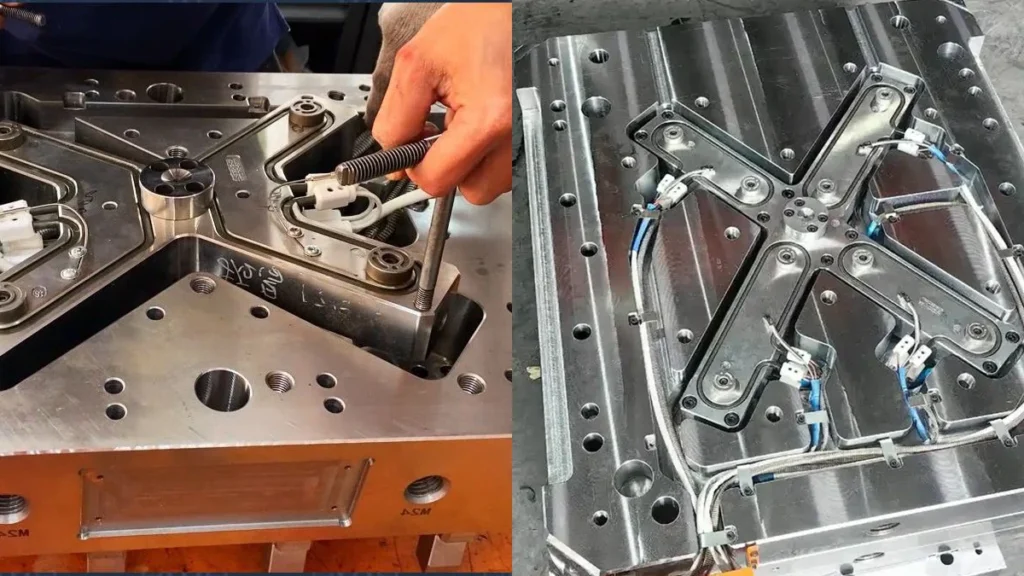
Injection molding is a mandatory process in the manufacture of plastic parts. The issue of whether to use the hot runner or cold runner is one of the options that manufacturers have been confronted with, and this decision directly affects material efficiency, part beauty, tooling cost, cycle time, and cost economy of production in its entirety. The decision of what system of runners to use is thus not a technical but rather a strategic decision. The article details the principles under which cold and hot runner systems operate in a detailed manner and provides a practical piece of advice on when it would be best to use either of the systems.
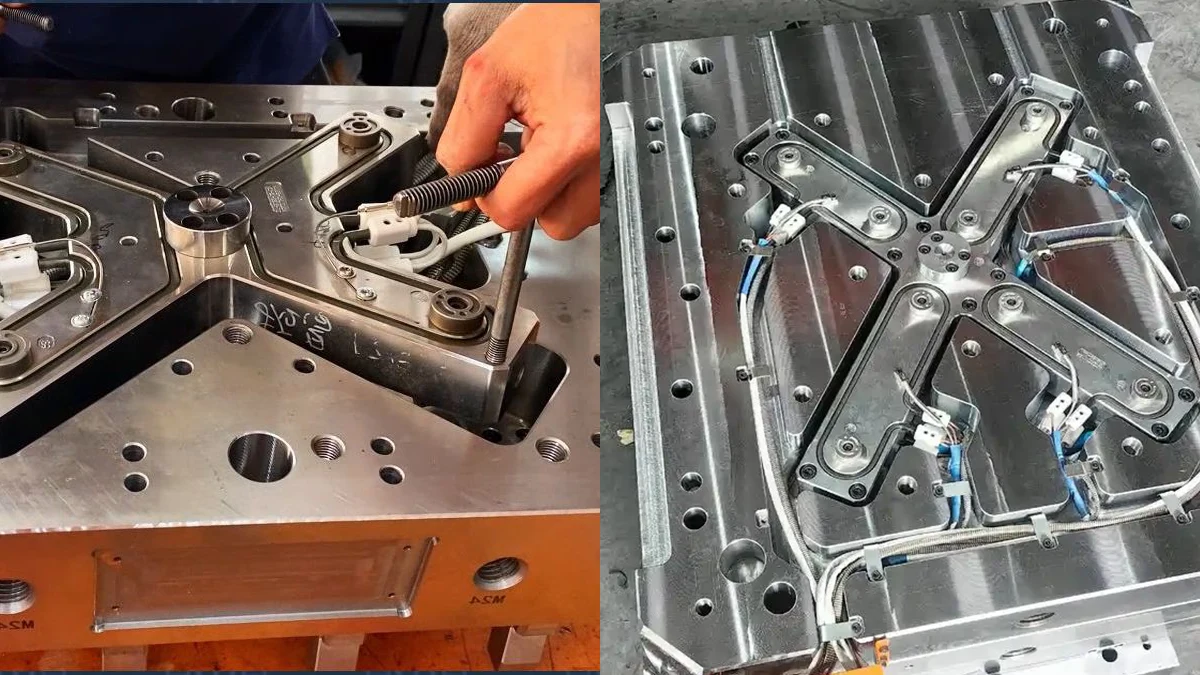
Foundational Principles and Mechanisms of Operation
What is a Cold Runner System?
A cold runner system is founded on the two or three-plate molding setup, where the molten plastic is injected into the mold through the sprue and the runner system. With this system, the runners and the sprue are not heated. After the injection and packaging processes are complete, the molded part and the runner solidify and are separated. The sprue directs the flowing molten plastic, forced out of the injection nozzle into the mold, and is made of a bushing, which is attached to the nozzle [1]. In order to reduce the level of waste and still maintain the full cavity fill requirement, cold runner sprues are manufactured with a smaller diameter, which allows enough packing pressure. The runner directs the molten content of the sprue to the gate, which is the final and small opening through which the plastic flows to the cavity of the mold.
In a two-plate design, the sprue, runner, gate, and cavity are located on the same side of the mold. A runner pusher plate separates the runner and the mold part in a three-plate design. Three-plate systems are pricier and have longer cycles, yet are normally utilized when aesthetics and quality matter [2]. Typically, cold runner systems have no temperature control, generate a lot of scrap, do not have an automation option, require regrinding, and have few components.
What is a Hot Runner System?
In comparison, a hot runner system uses a hot manifold and nozzles to push molten plastic into the mold cavity. The main feature of the system is that no cold sprue or solidified runner is needed. Hot runner systems may be used to reduce defects in parts, as well as to improve surface finish [3]. The system consists of a heated manifold, in which the flowing plastic will be directed, electrical nozzles wherein the material is to be injected within the cavity, and temperature controllers that control independent heating areas.
Different hot runner designs are possible depending upon part requirements. Hot-tip or pinpoint gate systems are normally used in small parts and have a small gate vestige. Sprue gate systems leave a miniature on the smallest part/runner. The mechanism is controlled by a valve gate system to open and close the gate with minimal or no residual and offer flow control [4]. Above all, these properties make valve-gated hot runners particularly suitable for a high-precision or appearance-sensitive application.
Tips: You may also like a dedicated article for a more comprehensive breakdown of additional injection molding gate types and hot runner application in injection molding process.
Head-to-Head Comparative Analysis
When it comes to a direct comparison, that is, the hot runners and the cold runners, one may notice that there are several differences in their functioning. Hot runner systems have minimal waste, whereas cold runner systems have an excessive amount of runner scrap. Hot runners tend to be more costly to invest in at first, but less costly in the long run. Cold runners tend to be low-cost to invest in at the beginning, but have recurring costs in waste and regrinding.
The hot runner systems can usually support more volume production, more complexity of design, but more work is needed in terms of maintenance. The more popular is more suitable for low to medium volumes of production, whilst cold runner systems are easier to maintain. The considerations of cycle time will depend on the application; however, the overall cycle time can be saved by hot runners since time loss is saved in cooling down the runners; cold runners will require a longer time to cool the part and the runner.
| Criteria | Hot Runner | Cold Runner |
|---|---|---|
| Material waste | Minimal | High |
| Cycle Time | High | Low |
| Upfront Cost | High | Low |
| Cycle Time | High | Low |
| Design Complexity | High | Medium |
| Maintenance | High | Low |
| Production Volume | High | Medium to Low |
Cold and Hot Runner Systems Overview and Demerits.
What are the Merits of a Cold Runner System?
Cold system runners have a series of advantages. Their barebone nature makes them cost-effective in regard to tooling and cost of operation, and hence supportive in start-ups, low batch production, and prototyping [5]. Cold runners are also suitable where thermally sensitive materials that are easily spoiled at high temperatures are used, since they do not have any contact with heated manifolds. What is more, their mechanical simplicity is converted into reduced maintenance and technical risk.
What are the Demerits of a Cold Runner System?
Cold runner systems, however, have severe drawbacks. They produce a lot of waste in the form of materials, and this may be very costly in the case of a large-scale production. Longer cycle times are needed because the runner is to be cooled and solidified at the end of each cycle. Some secondary processes, such as the removal of runners, regrinding, and disposal, could be necessary and exacerbate the workload. Further, this can influence part-to-part consistency, where the part is ejected as the component that is being molded.
What are the Merits of a Hot Runner System?
There are apparent advantages of hot runner systems in terms of material efficiency, in which case, there would be hardly any runner scrap. This renders them particularly helpful in highly costly engineering plastics runners. Hot runners increase the cycle time, quality of the part, and the overall efficiency of the equipment by removing the necessity of utilizing runner cooling in the cycle [6]. Exemplary repeatability in the melt temperature guarantees high dimensional stability as well as the surface finish until low injection forces reduce the mold stress and leave cleaner parts. Hot runner systems can also handle even more advanced shapes of the molds, like family molds, multi-cavity molds, and also allow maximum automation by eliminating the use of runners.
What are the Demerits of a Hot Runner System?
Despite such benefits, there are also difficulties in hot runner systems. More is required of them in terms of their starting capital and technical know-how to design, install, and operate. One design or thermal mistake can cause defect occurrence or temperature imbalance. It requires more intensive maintenance requirements that can lead to downtime unless it is well handled. In addition, not all thermally sensitive polymers can be used with hot runners since they do not resist degradation with exposure to high temperatures.
Technical Design Complexities
The hot runner systems have installation and design complexities. Manufacturers must employ qualified experts to develop prototypes that match manufacturing materials, part geometry, and production requirements. They cannot simply go for off-the-shelf solutions. Heating is also a major consideration, and in order to maintain a continuous flow and quality of the product, the manifold and nozzles should be heated evenly.
Maintenance charges and energy consumption should also be taken into consideration, particularly on systems that undergo long manufacturing cycles. The primary elements of minimizing downtime would be high-quality parts. The type of gate used is significant to the aesthetics and the functioning of the part, with the valve gates being more appropriate in the control of large or multi-gated parts and the hot-tip systems being more appropriate in the control of smaller parts. To minimize the cycle time, the factors of heating and cooling and injection are balanced to ensure that the unreasonable long cycles of production are eradicated.
Cold runner systems should be sized appropriately, as either large or small may lead to inefficiency of the system, or a lack of proper pressure or excessive waste. The compatibility of materials and temperature should be considered to prevent degradation of the polymer during the processing. The system should have adequate regrind management systems since cold runners generate waste. The results of the runners are to be gauged in relation to the venting time, cycle time, and quality of gates, particularly on those parts with complicated geometries, and hence the use of multi-gate designs may be beneficial.
The Overall Cost of Ownership Analysis
Although the hot runner systems are more expensive to run in the short run in terms of the tooling and maintenance, the overall cost of ownership is established by a broader scope of factors. Hot runners are time-saving tools that reduce the consumption of materials like wastage, reduce manpower through automation, and improve the time of the cycles with the help of high-quality thermal control. They also make high-quality parts, which is important in prototyping and also in commercial production. Despite the fact that cold runner systems are less costly to purchase and maintain, they possess a repetitive price of loss of materials, regrinding, additional human resources, and increased cycle time. Thus, cold runners are also cheaper for small-scale or low-volume production, but in large volume production and complex parts, hot runners are cheaper in the long term.
Material-Specific Guidance
The selection of the materials is dependent to a large extent on the selection of the runner system. Polymers such as polyethylene, polystyrene, and polypropylene are thermally stable polymers that are better suited to the hot runner systems since they can sustain longer working time at high temperatures without degradation. On the other hand, high thermal-sensitive materials, including flame-retardant resins, ABS, POM, glass-filled plastics, PVC, and certain specialty materials, are usually suitable for cold runner systems.
When to Use Cold Runners Vs When To Use Hot Runners
The cold runners would be the most appropriate for low- to medium-volume production, prototyping, frequent changeover materials or colors, cost-sensitive production, and when heat-sensitive plastics are to be used [7]. In large-scale manufacturing, high-performance or expensive materials, high-dimensional accuracy, multi-cavity or family tooling, and highly automated manufacturing, hot runner systems are superior. Ultimately, manufacturers do not need to have a dilemma over which system to use since each has its specific uses.
The Decision-Making Framework.
The hot versus cold runner systems are a trade-off on the level of production volume, initial investment, the complexity of the design, and the level of maturity. Hot runners are recommended for the production of high volumes and complicated shapes of parts, while cold runners suit low-budget applications and simple applications. Hot runner systems offer additional control, automation opportunities, and consistency; therefore, they can be very well applied in the high-technology process of manufacturing.
Conclusion
The question of which system, between the hot runner system and the cold runner system, is superior is not all-encompassing. The decision is only based on the production needs, the decision of materials, part complexity, and the cost to incur in the long run. It is also suggested that the producers ought to consult with expert tooling and molding experts to identify a permanent, energy-efficient, and purpose-oriented runner system to align with the operational goals.
References
[1] Lechner, L. (2022, October 12). Injection Molding Basics: Cold Runner Systems. https://www.echosupply.com/blog/injection-molding-basics-cold-runner-systems/
[2] Peng, F. (2022, October 17). Hot Runner Vs Cold Runner Injection Mold: Key Differences You Need to Know. https://www.rapiddirect.com/blog/hot-runner-vs-cold-runner-injection-mold/
[3] Naum, K. & Conninf, M. (2025, November 2025). Overview of Hot Running Injection Molding Systems. https://www.xometry.com/resources/injection-molding/overview-of-hot-running-injection-molding-system/
[4] NwmCadmin (2019, August 26). An Introduction to Hot Runner Systems In Injection Molding. https://rexplastics.com/plastic-injection-molding/introduction-hot-runner-systems-injection-molding/
[5] Richfields (2022, August 9). The 3 Advantages of Cold Runners in Injection Molding. https://richfieldsplastics.com/blog/advantages-of-cold-runner-injection-molding/
[6] Hitcontrols (2025). Hot Runner Systems: Advantages and Disadvantages. https://www.hitcontrols.com/hot-runner-system-advantages-and-disadvantages/
[7] Bozelli, J. (2024, December 29). Injection Molding: Another Way to Deal With Regrind. https://www.ptonline.com/articles/injection-molding-another-way-to-deal-with-regrind




 EN
EN  ES
ES  FR
FR  DE
DE  IT
IT  PT
PT  NL
NL  PL
PL  AR
AR  JA
JA  KO
KO  ZH
ZH