


It takes 2 to 4 weeks to create a simple mold in the automotive industry, while a complex mold can take around 6 to 10 weeks to be delivered. Rapid tooling for automotive parts production ensures that manufacturers get their mold delivered within 1 to 3 days for simple tools that use 3D printed polymer [1]. Simple soft steel or aluminum molds typically take 3 to 10 days to be delivered.
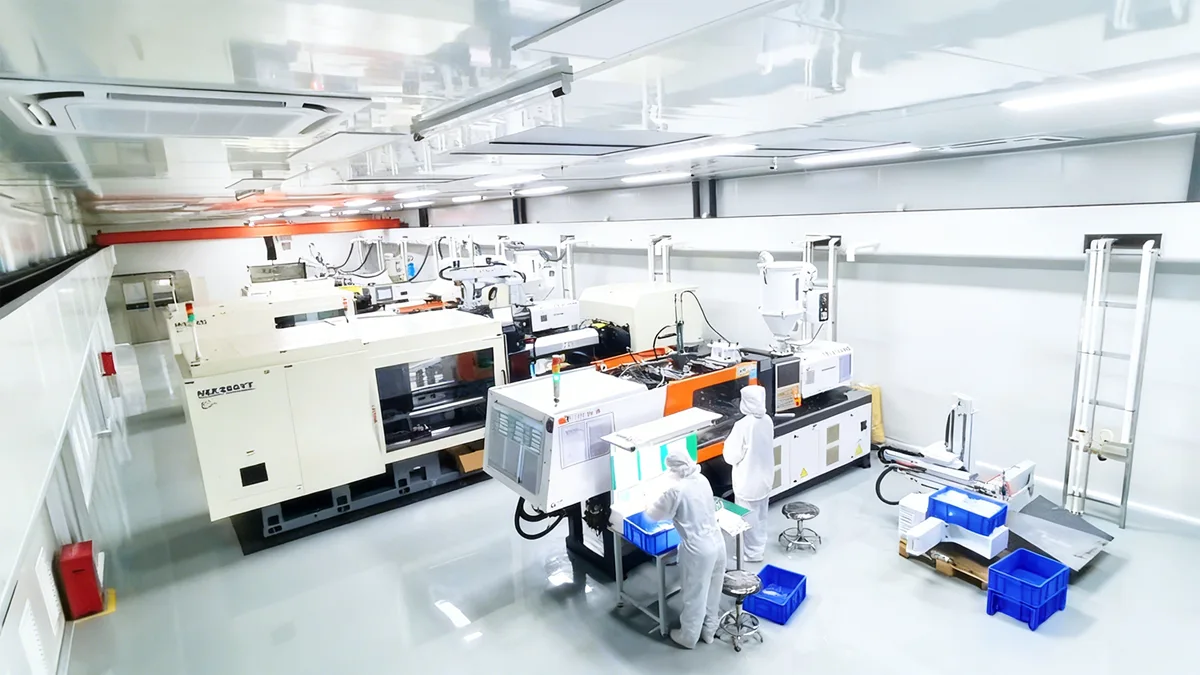
Automotive rapid injection molding allows manufacturers to start low-to-mid volume prototype production quickly. The time it takes to deliver the rapid tool depends on the material used and the complexity of the mold. In some cases, the choice of material for the mold is guided by material availability. The table below shows how prototype molds compare to production molds.
| Features | Prototype Molds | Production Molds |
|---|---|---|
| Design | Features straightforward designs with fewer cavities. Best for parts with basic shapes, flat surfaces, and intricate details | Has detailed features, multiple cavities, and is best for making parts with intricate details, internal threads, curves, and undercuts |
| Lead time | 1 to 10 days | 4-8 weeks |
| Cost | Tooling costs are usually lower because of simpler construction and lower engineering costs | Higher tooling costs because of a higher level of engineering required |
| Material | Fabricated using softer and less durable materials like soft aluminum or 3D printed polymers | Made with highly durable materials like steel to ensure long-term consistency of parts |
| Production volume | Suitable for one-off or low-volume production runs (less than 10,000) | Useful for high-volume, large-scale production runs (up to 100,000) |
| Part removal | The ejection mechanism for removing the part from the mold is usually straightforward | May include complex mechanisms to facilitate easier part removal |
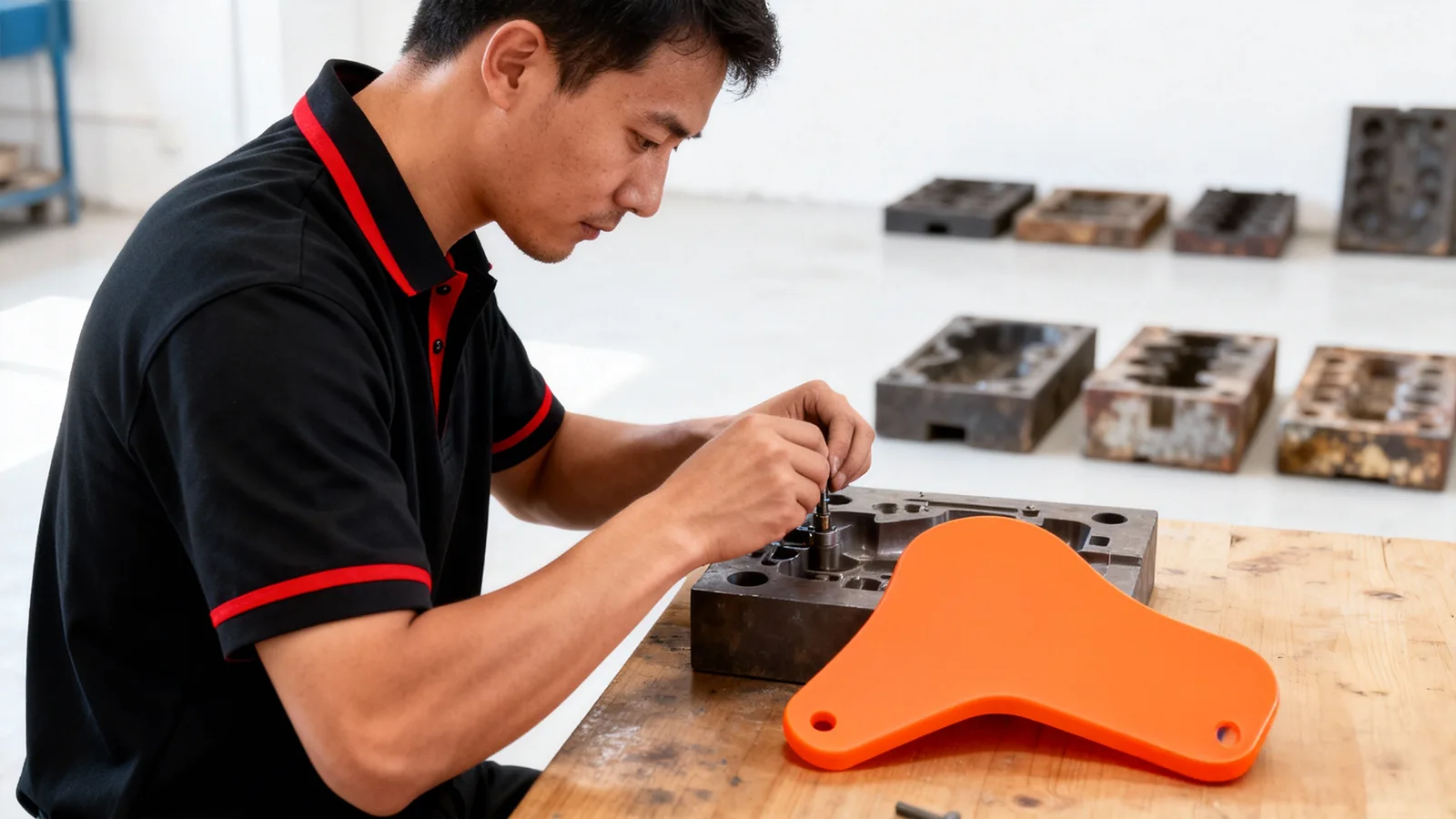
5 Benefits of Automotive Rapid Injection Molding
Automotive rapid injection molding is an important part of automotive prototype production. However, this process will not be possible without rapid tooling, which is used for making the mold.
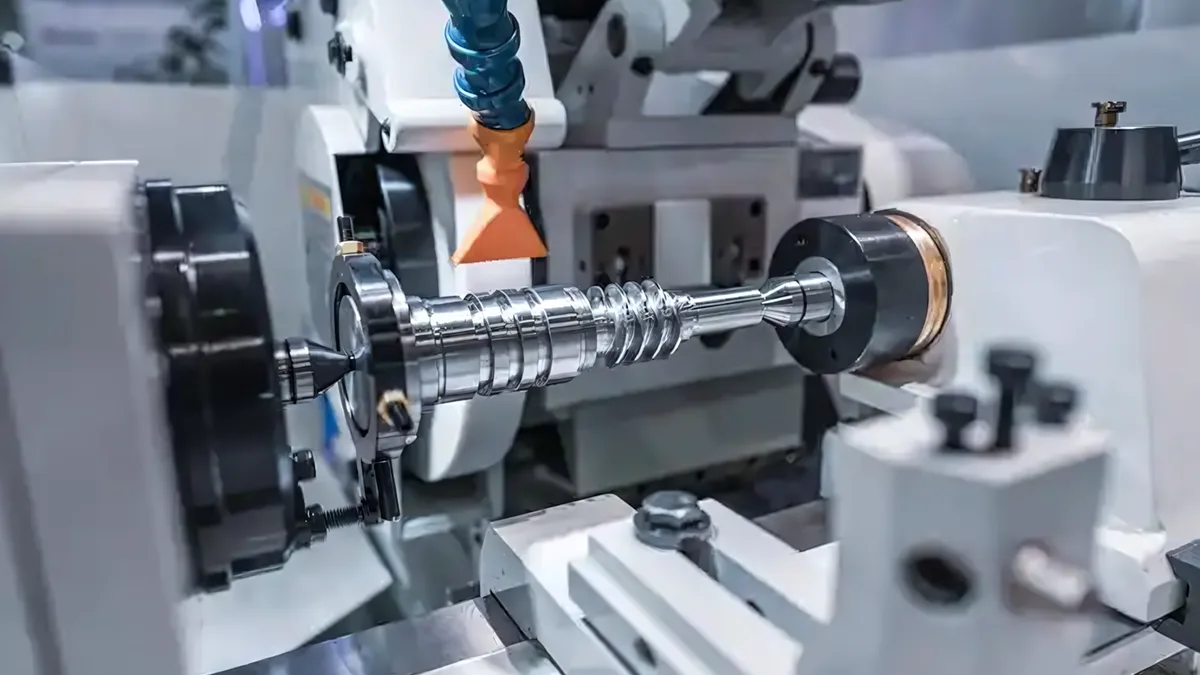
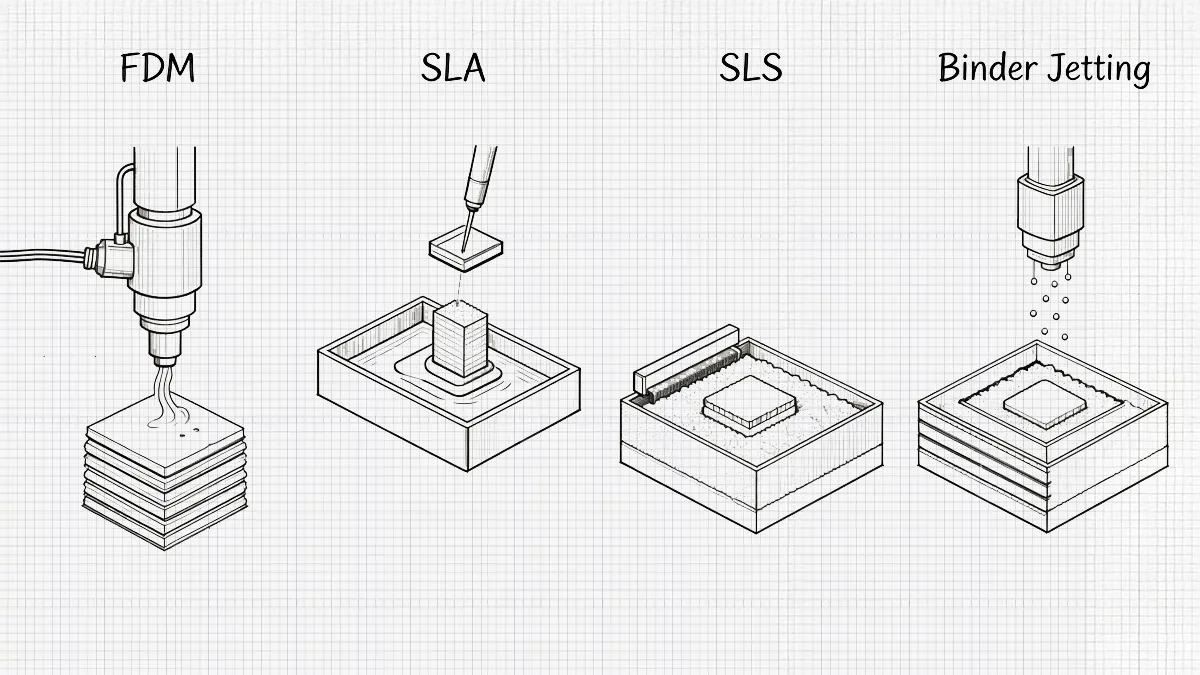
Advanced rapid tooling techniques often combine both additive and subtractive processes to create the mold. For example, hybrid approaches can combine 3D printing and CNC machining. The goal is usually to lower lead time and enhance the efficiency of the mold.
The benefits of rapid tooling for automotive part production are enormous. From cost reduction to the ease of transitioning from prototype to mass production, here are the top five benefits of rapid tooling to automotive part manufacturers.
1. Quick Alterations to Structural Designs
One of the biggest concerns of most manufacturers when working with a mold maker is getting accurate structural designs. Rapid tooling gives the manufacturer a chance to quickly assess the specialty of the mold maker and determine if they are the right fit for the project.
Rapid tooling for automotive part production also allows the manufacturer to make quick changes to their structural designs. Professional mold makers will leverage advanced technologies, like the Finite Element Analysis (FEA), to estimate how the automotive part will perform under different conditions [2].
This helps to lower the number of structural design alterations that may be required. To enjoy this rapid prototyping benefit, other factors to consider when choosing a partner for automotive rapid injection molding are:
- Effective communication: The mold maker should have open and clear communication channels and quickly respond to queries.
- Material expertise: The material selected for the prototype should closely mimic the thermal and mechanical properties of the material that will be used for the final product.
- Quality control: The mold maker should have robust quality control systems to test and validate the mold to ensure that products are consistent.
- Continuous iteration: The mold maker should use feedback from each test to improve subsequent designs until the finalization of the design.
2. Validate the Functionality of Structural Features
Rapid injection molding for automotive part production also helps manufacturers to validate the functionality of structural features, like deep cavities and thin-walled products. Before building the physical prototypes, professional mold makers would usually use computer-aided engineering software to perform load and stress analyses [3].
For example, virtual simulations of a thin-walled product can help the manufacturer determine how to optimize ribs to boost the strength, stiffness, and dimensional stability of the thin-walled part without excessive material use and to prevent defects like warpage and sink marks.
The purpose of virtual simulation is to identify potential design flaws early, optimize material usage, and lower the number of prototypes that would be required. However, physical prototypes are still required for real-world assessment, which cannot be fully replicated with digital models. Other reasons for automotive rapid injection molding validation using physical prototypes include:
- Durability test: The physical prototypes are subject to various wear and tear tests to see how well they will hold up in a real-world environment.
- Performance test: The structural integrity of the product is extensively tested, including how well it will perform under specific loads.
- Fit checks: Part of the reason for physical prototypes is to test how well the part will fit and interact with other parts.
3. Maximizing a Limited Production Budget
Automotive prototypes are important for identifying design flaws and correcting them early in the development cycle, when the changes are easier to implement. It prevents expensive reworks, material waste, and potential mass recalls that usually happen after mass production.
Physical automotive prototypes allow manufacturers to discover usability or technical issues that can be easily missed using computer models or sketches. Fixing a design or functional flaw can be 10—100 times cheaper during the prototyping stage compared to fixing the same issue after the product launch.
Automotive prototyping using rapid tooling allows manufacturers to produce a limited number of prototypes for subsequent structural and usability tests. This helps to prevent the overproduction of parts that may not work as intended, leading to significant material waste. Other ways automotive prototyping helps manufacturers to optimize costs include:
- Cheaper iterations: Rapid tooling for automotive part production allows manufacturers to make multiple rounds of refinements to designs based on feedback without committing to expensive tooling.
- Risk management: Manufacturers can use prototypes to gather useful feedback and validate market demand to avoid large investments in parts that will sit on the shelves, which may lead to financial losses.
- Setting expectations: A physical prototype lets the manufacturer align the expectations of all stakeholders (designers and potential customers), eliminating misunderstandings that could lead to delays or costly rework.
- Inventory management: For products with a slim market or demand, rapid tooling gives the manufacturer the leeway to properly manage inventory by increasing production as demand grows, eliminating costly upfront investment in steel molds.
4. Cutting Down Production Lead Times
Creating steel molds can take up to 6 weeks or more, which can lead to missed opportunities, especially when the manufacturer has a strict deadline to pitch their product to potential investors. Rapid tooling for automotive part production using cost-effective techniques like CNC machining with aluminum or 3D printing can quickly create molds and cut lead time.
Instead of waiting for weeks or months to get started with prototyping, rapid tooling ensures production can start in days or a few weeks. Besides the initial lead time, soft tooling also helps to accelerate design iterations.
For example, if a design change necessitates the creation of a new mold or the modification of an existing mold, the changes can be implemented in a few days, instead of waiting weeks to implement the change. Due to how quickly manufacturers can implement design changes, they can accommodate more tests and feedback, which will help them to create the best version of their product that properly satisfies the needs of their target consumers.
5. Flexible Transition from Automotive Prototyping to Mass Production
Rapid tooling for automotive rapid injection molding can be used to create prototypes that help the manufacturer to validate the design and conduct market tests. However, the manufacturer will need to transition to a more permanent solution for mass production, especially if hundreds or millions of automobile parts are required.
Rapid tooling is mostly designed to use production-grade automotive plastics. Although it cannot serve as a replacement, rapid tooling can be used for the temporary production of a finished part while waiting for the full-scale steel tooling to be ready. This helps to avoid long delays between prototyping and mass production. Consequently, manufacturers can begin rolling out products when the appeal is high among potential customers.
Rapid tooling for automotive prototyping also serves as a learning period for the manufacturer. It allows the manufacturer to understand how to independently run automotive rapid injection molding. This knowledge is carried over to mass production using a steel mold and prevents a long learning curve that may lead to extended downtime between prototyping and mass production.
Considerations For Choosing an Automotive Rapid Tooling Partner
The success of your automotive prototyping project will largely depend on the technical expertise, cost transparency, and communication of your chosen partner. Ensure that, like the team of experts at First Mold, your preferred partner has Design for Manufacturing (DFM) at the core of their design philosophy. Other factors to consider are:
- Volume and scalability: Verify if the mold maker has optimized systems for low-to-medium runs, and can easily scale to mass production when required.
- Reputation and certification: The opinion of people who have previously worked with the automotive rapid tooling maker and their certifications can give you a hint at what to expect when working with them.
- Communication speed and channels: Ensure the mold maker communicates clearly on things like turnaround time. Also, note how easily it is to reach out to them through different channels.
Partners that provide end-to-end service can provide long-term benefits by supporting your project beyond the prototyping phase. Asking the right questions is crucial to finding the right partners.
References
[1] SpecialChem. (2025, July 7). 3D printing polymers: Types, materials & processing methods. SpecialChem. https://www.specialchem.com/plastics/guide/3d-printing-polymers
[2] Ansys. (n.d.). What is finite element analysis (FEA)? Ansys. https://www.ansys.com/simulation-topics/what-is-finite-element-analysis
[3] Siemens. (n.d.). Computer-aided engineering (CAE). Siemens Software. https://www.sw.siemens.com/en-US/technology/computer-aided-engineering-cae/




 EN
EN  ES
ES  FR
FR  DE
DE  IT
IT  PT
PT  NL
NL  PL
PL  AR
AR  JA
JA  KO
KO  ZH
ZH