


Mexico is familiar with the mold-making industry. It has been growing in momentum as uncertain conditions and rising fuel prices overseas are driving international manufacturing companies closer to the U.S. market. With an estimated annual production value of over USD 20 billion, it’s clear that Mexico’s plastic manufacturing sector has gained progress in the country’s industrial landscape. Regardless of some scrutiny that has been imposed on plastic products in food and appliance packaging. However, the plastics manufacturing industry has demonstrated its resilience against market disruptions. In 2020, there was a rise of about 15% in plastic packaging production, driven by demand for food and beverages, washing products, and medicine.
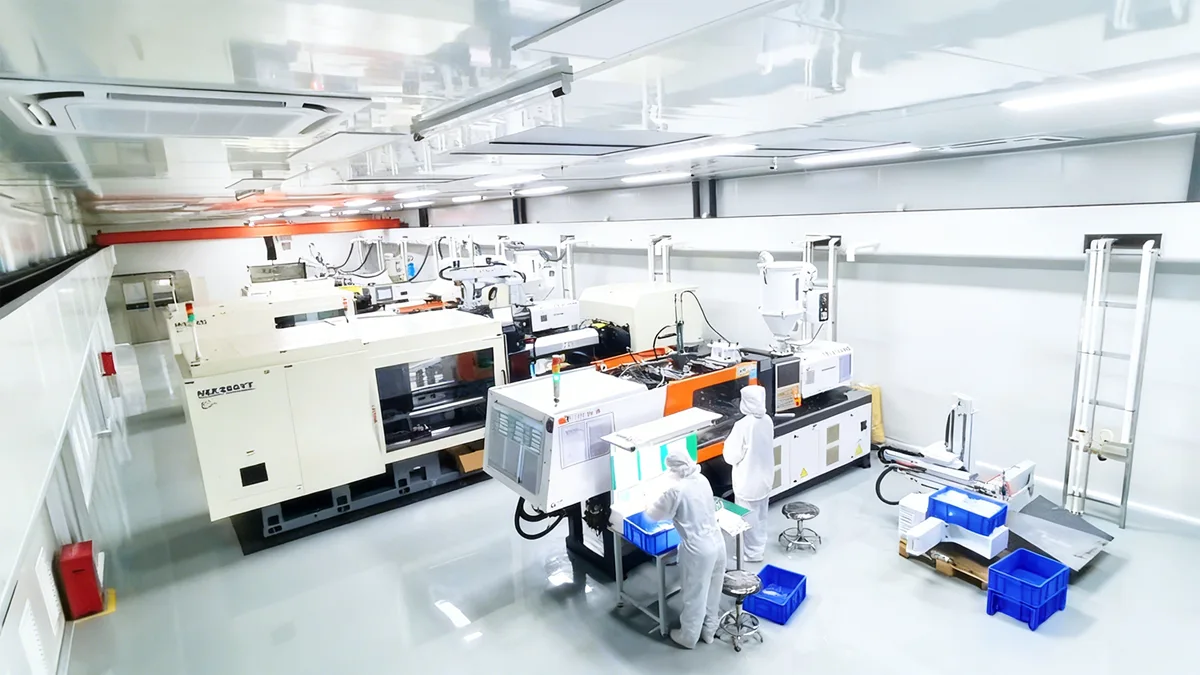
The country is renowned for its expertise in injection molding and mold-making services. These two processes play a critical role during the production process of plastic parts utilized in several industries. With a strong emphasis on quality and innovation, many companies seeking reliable manufacturing solutions have taken advantage.
Across different manufacturing industries, companies that focus on Mexico’s advantages tend to gain a competitive edge. With the rate at which plastic products are now consumed and viewed, the market for innovative plastic solutions has only grown.
Mexican factories offer several benefits compared to other big countries. Reduced cost of labor, a skilled workforce, and adherence to high-quality standards. In this article, we shall deepen our exploration of Mexico’s various benefits and compare them with those of other countries. We shall highlight why Mexico will remain at the top of the manufacturing sector.
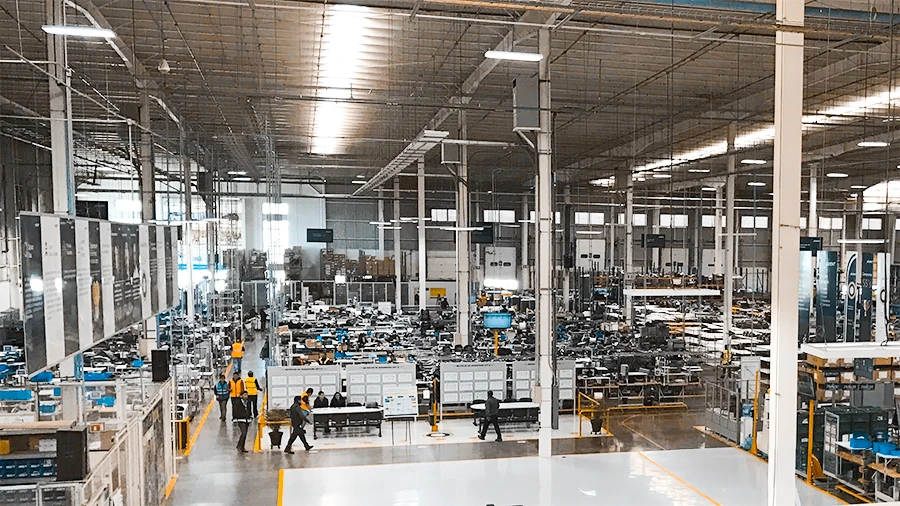
History of Manufacturing in Mexico
Mexico’s manufacturing industry’s excellent history of emerging from a modest sector to a global player stretches back several decades. This history has contributed to the growth and advancement of its operations. After the Bracero program of sending farm workers was halted in the 1960s, Mexico adopted manufacturing as its primary economic activity. During that same period, Mexican governments launched the Maquiladora program (IMMEX), which allowed foreigners to establish factories in Mexico’s border regions to curb the unemployment problem. This program facilitated the assembly of imported raw materials into finished goods and exported them to the U.S.
Foreign companies benefited from low labor costs and tax intensives, which led to significant growth for US-based manufacturers. Between the 1980s and 1990s, Mexico established several cooperative trade agreements with the U.S., which helped create a growing industry based on manufacturing for export. The most famous is the North American Free Trade Agreement (NAFTA) during 1994. NAFTA lifted multiple trade restrictions between Mexico, Canada, and the United States, reinforcing Mexico’s status as a critical manufacturing hub. This agreement encouraged new foreign investments, and Mexico rose from traditional sectors of agriculture and textiles to big industries like automotive and aerospace.
What began as simple assembly now includes increasingly sophisticated manufacturing. This has led to the emergence of:
- Academic institutions now partner directly with industry and develop specialized programs for training the future workforce.
- Establishment of trade links with major global markets owing to diplomatic efforts.
- Modern factories and industrial parks are now available to foreign investors because of modernization.
- The government has significant investments in critical infrastructural projects to support manufacturing.
Key Advantages of Mexican Mold-Making and Injection Molding
After a decision to establish a manufacturing site in a cost-competitive country, the next step is usually to decide which location it will be. In this case, here are factors that show why Mexico is the ideal option in most situations.
1. The IMMEX Program
IMMEX was previously known as IMMEX maquiladora program. It is a tax and duty-free program that helps end-to-end manufacturing in Mexico. Sometimes, it’s preferred as a twin plant where foreign companies maintain an administrative facility in their country while manufacturing at the maquiladora facility in Mexico. This program designates foreign investors willing to invest in Mexico. It allows foreign manufacturers to import raw materials into Mexico under the condition that the total of finished goods will be exported only out of Mexico and within a government-decreed time frame.
The motto of the IMMEX program is to allow foreign companies to engage in a competitive environment in Mexico, which in turn creates jobs. This has helped to raise employment levels, thereby strengthening its economy.
IMMEX also facilitates globalization, modernizing Mexico’s manufacturing standards by importing the region’s latest and most specialized technologies and knowledge.
This offers many benefits to both countries, which extend beyond financial savings. This pertains to:
- Mexico offers competitive labor costs compared to other regions, including the U.S. and certain Asian countries, making it an attractive location for manufacturing.
- Flexibility: Since the items are sold outside of Mexico, Maquilas can be located anywhere. Similarly, almost all products can be manufactured there.
- Accessibility to quality standards and processes is easier since the plants are owned and maintained by the original owner, so they can easily dictate the production.
- Healthy competition: Companies manufacturing through maquiladoras in Mexico are not directly competing with Mexican companies. Instead, they are leveraging their strengths to compete globally.
2. The Rise of Regionalism
Recently, global manufacturing has witnessed a shift towards the act of regionalism. It refers to when businesses opt to produce, source and have supply chains near main markets. The aim is to reduce lead time, lower supply chain risks, and help enterprises to adapt to global disruptions. For most North American businesses, Mexico has become a significant beneficiary of this, providing an ideal location for nearshoring. Likewise, what is now being produced in countries like China is being sold to Chinese or Asian markets. This trend is becoming normal, making Mexico the main manufacturing partner chosen for the North American region among plastics suppliers, molders, and other sectors.
Impact of Regionalism on Manufacturing
Trade Unpredictability
During the COVID-19 pandemic, many countries experienced geopolitical tensions and rising logistics costs. This pandemic revealed the weaknesses that were present in highly globalized supply chains. Many companies are now reconsidering distant manufacturing hubs. Problems such as shipping time and costs, freight costs, and unpredictable global trade can significantly impact trade. Regional trade offers fast, on-time deliveries, better inventory control, and quick response to market demands.
Coordination
Nearshoring for Mexico is its most significant advantage, allowing easier coordination and oversights. In complex manufacturing processes like mold-making, these aspects are highly valuable because of high precision and accuracy.
Economic Integration
Participation in some trade agreements, like the United States-Mexico-Canada Agreement (USMCA), simplifies trade processes. These agreements equip Mexico with a dependable trading framework and enhance its competitiveness against Asian and European manufacturing hubs.
Comparison with Global manufacturing
Countries like China have seen a tremendous rise in labor costs without forgetting unpredictable tariffs, making production expensive. Mexico offers competitive wages and adheres to high quality standards, aligning well with North American manufacturing needs. Regional manufacturing can also help reduce the environmental impact of long-distance shipping.
3. Free Trade Agreements in Mexico
Abbreviated as FTAs, these agreements greatly benefit companies seeking to invest in Mexico. These agreements are very beneficial as they encourage global competition by ensuring access to diverse international markets. FTAs reduce trade barriers and streamline cooperation between different countries. Mexican governments have played a significant role in the success of manufacturing. One of the most impressive facts is that Mexico has the most free-trade agreements in the world.
Mexico is one of the (WTO) World Trade Organization and has 14 FTAs with about 50 countries. These 14 agreements have opened commendable trade access to approximately 60% of the world’s gross domestic product.
For instance, NAFTA recently changed to USCMA (United States–Mexico–Canada Agreement) or CUSMA (Canada–United States–Mexico Agreement), a trade agreement between Mexico, the USA, and Canada. This agreement supports North American workers, farmers, and businesses. It protects their intellectual property and promotes opportunities in the U.S.
Further, with the newly established CPTPP, producers and traders can get tariff-free services to 11 countries in the Asia-Pacific (Canada, Australia, Chile, Japan, Malaysia, New Zealand, Brunei, Peru, Singapore, Vietnam, and Mexico).
These are just two examples of approximately forty-three trade agreements this country has. They permit duty-free and tax-free imports of raw materials and components and also the provision of shelter manufacturing.
4. Intellectual Property
Another significant advantage of manufacturing in Mexico is its strong reputation for protecting intellectual property rights. Most of these companies are subjected to similar I.P. laws to the ones in the United States and Canada.
While intellectual property protection can vary by country, Mexico offers a reliable legal framework that is aligned with global standards, providing a secure environment for companies. In case it occurs, there is legal recourse.
5. Government-Regulated Industrial Parks
In Mexico, there is a considerable number of industrial spaces. AMPIP’s records show there are 368 industrial parks in 24 of Mexico’s 32 states today. Foreign entities own 62% of them. One of the significant aspects of manufacturing in Mexico is the majority are advanced and well-equipped. Manufacturers can enjoy secure, strategically located facilities that match international standards from these specialized zones.
The parks’ certifications are awarded after they undergo several assessment processes and find out their economic, social, and environmental performance. This increases the park’s competitiveness and helps them stand out in the market.
Among these certificates are AEO (Authorized Economic Operator for Industrial Parks), Green Park Certification, and Smart Park Program.
Industrial parks are mainly established to support high-volume manufacturing, focusing on streamlining logistics. Many of these parks are pre-built or custom-built facilities with the amenities required for mold-making and injection molding. They offer adequate services like water treatment plants, security, steady power supply, and waste management systems.
To attract foreign investments, most of these government-regulated parks offer tax incentives.
6. Access to Skilled Labor
In the recent shifting economic landscape, general understanding and adjusting to labor dynamics is more crucial than ever for industries. Mexico boasts a highly educated workforce generally and has nothing to ask for virtually from any developed country. Mexico offers a pool of talented and highly skilled operational workers. They have professional managers and engineers who help companies expand beyond their initial expectations.
For a manufacturer, operations depend on a deep labor pool from which all the workers are drawn. From simple assembly to large operations, skilled labor is a priority.
The country has many academic institutions focused on industry needs. Their partnerships with manufacturing industries churn out thousands of specialized engineers and skilled manufacturing experts each year. More than 100,000 engineers graduate in Mexico annually, which is why skilled labor is increasing in capability.
7. Competitive Costs
The cost of a product mainly depends on its quality. Quality is a fundamental aspect that companies look for; when combined with cost savings, it’s like hitting the nail on the head. Mexico is excellent at maintaining its low costs and quality. Mexico’s workforce is around seventy percent less expensive than the United States and many other developed countries. This low cost of production explains why Mexico is prosperous in Injection molding industries. Quality products can be attributed to the adaptation of the latest technology and forms of manufacturing. As a result, many industries all over the country have attracted global manufacturing companies like Volkswagen, Bombardier, Bose, GM, and many more.
The above information explains reasons why Mexico is a go-to option for manufacturing companies, especially those from America and, to a lesser extent, for Europe. Through these advantages, Mexico has positioned itself as a strategic manufacturing hub.
Conclusion
Mexico will continue to provide the best if it focuses on these factors, which makes it a top choice for global companies. Understanding Mexico’s nature is imperative to investors seeking to capitalize on its potential and grow their businesses. While companies around the continents continue to choose Mexico because of its various factors, this country strengthens its economy. There are increases in exports and imports and the creation of jobs for Mexican people. Therefore, this is a win-win deal. In a world of complexity, manufacturing in Mexico makes more sense.





 EN
EN  ES
ES  FR
FR  DE
DE  IT
IT  PT
PT  NL
NL  PL
PL  AR
AR  JA
JA  KO
KO  ZH
ZH