

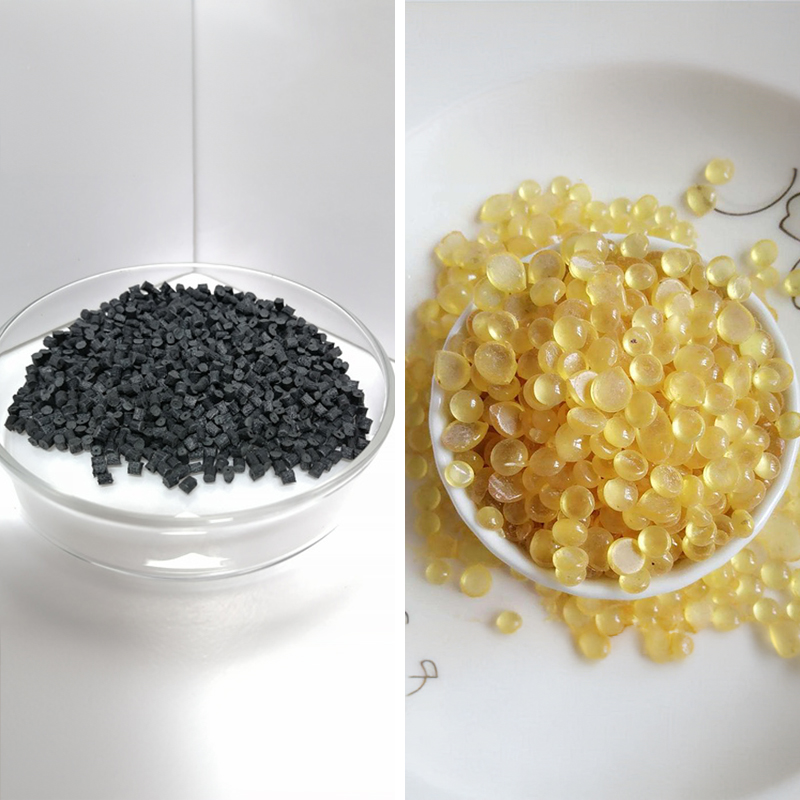
Plastics can be classified into thermosetting plastics and thermoplastics based on their surface properties when heated. Generally, plastics are solid or elastomers at room temperature. To process and mold them, they usually need to be heated to a viscous, flowable state, and then processed into the desired shape. This process creates certain differences between the two types. Today, we’ll discuss the differences between thermoplastics and thermosetting plastics in detail.
Basics of Thermoplastics and Thermosetting Plastics
Thermoplastics
Thermoplastics are a class of plastics that can be molded at a certain temperature, solidify upon cooling, and can repeat this process multiple times.
They are widely used and consist mainly of thermoplastic resins mixed with various additives. At certain temperatures, these plastics can soften or melt into any shape and retain that shape upon cooling. This state can be repeatedly achieved, and this process involves only physical changes.
Examples of thermoplastics include nylon (Nylon), polyethylene (PE), polypropylene (PP), polyvinyl chloride (PVC), acrylonitrile-butadiene-styrene (ABS), polystyrene (PS), polyoxymethylene (POM), polycarbonate (PC), polyurethane (PU), and polytetrafluoroethylene (Teflon, PTFE).
Thermosetting Plastics
Thermosetting plastics soften and flow upon initial heating. When heated to a certain temperature, they undergo a chemical reaction known as cross-linking, which causes them to harden irreversibly. Once set, they cannot be softened by reheating. This characteristic is utilized in molding processes: during the first heating, the plastic flows and fills the mold cavity under pressure, then it hardens to a fixed shape and size.
Thermosetting plastics harden through a chemical reaction upon heating, adding pressure, or introducing a hardener, which changes their chemical structure, making them hard and insoluble in solvents, and they do not soften upon reheating.
Examples of thermosetting plastics include phenolic, urea, melamine formaldehyde, epoxy, unsaturated polyester, and silicone plastics.
Their common applications include:
- Phenolic plastics (used for pot handles)
- Melamine formaldehyde (used for plastic laminates)
- Epoxy resins (used for adhesives)
- Unsaturated polyesters (used for boat hulls)
- Vinyl esters (used for car bodies)
- Polyurethane (used for shoe soles and foams)
Differences Between Thermoplastics and Thermosetting Plastics
1. Molecular Structure
The most notable difference between thermoplastics and thermosetting plastics is that thermoplastics can be reheated and softened after curing. In contrast, thermosetting plastics cannot be softened by reheating once molded; they will decompose at high temperatures.
- Thermoplastics: The molecular structure is linear and typically lacks reactive groups. They do not undergo cross-linking upon heating, allowing molecular chains to slide freely, thus they melt upon heating and dissolve in some solvents.
- Thermosetting Plastics: Before molding, they have a chain structure similar to thermoplastics. During molding, they undergo thermal or chemical polymerization to form a cross-linked structure. Once this reaction is complete, the polymer molecules form a three-dimensional network that prevents molecular chains from sliding, resulting in a non-melting, insoluble solid.
2. Melting Point
Thermosetting plastics have a melting point higher than their degradation temperature. They degrade before melting upon reheating after curing, making them non-recyclable. Thermoplastics, however, have a lower melting point, and there is a range between their melting point and thermal decomposition temperature where they can be processed in various forms, such as injection molding, blow molding, extrusion, and film blowing. It can be remelted multiple times, typically allowing up to seven recycling cycles before performance degrades.
3. Corrosion Resistance
Both types of polymers resist rust or corrosion and are suitable for outdoor applications and contact with corrosive media. However, thermoplastics are more resistant to chemical corrosion than thermosetting plastics.
4. Durability
In manufacturing engineering plastics for cars or appliances, heat resistance and durability are crucial. Generally, thermosetting materials are more durable than their counterparts. These polymers are usually lighter and have excellent strength, toughness, and impact resistance. They can be further reinforced with materials like fiberglass and carbon fiber. Thus, the structural advantages and dimensional stability of thermosetting plastics make them more suitable for durability.
5. Processing Techniques
- Thermosetting Plastics: Processed in their liquid form using methods like resin transfer molding (RTM) and reaction injection molding (RIM). The curing process includes inhibitors, hardeners, plasticizers, or fillers. The choice of reinforcement depends on the desired outcome.
- Thermoplastics: Can be processed using various methods, including injection molding, extrusion, vacuum forming, and thermoforming. Thermoplastics are excellent thermal insulators, resulting in longer cooling times compared to other plastics.
Identification of Thermoplastics and Thermosetting Plastics
Finally, let’s identify these common types of plastics using the following tables:
Table of Plastic Combustion Characteristics
| Material | Combustibility | Dripping | Flame Color | Odor | Burning Speed | Other Characteristics |
|---|---|---|---|---|---|---|
| PE | Burns | Yes | Blue with yellow tip | Parrafin-like | Fast | Leaves marks when scratched by nails |
| PP | Burns | Yes | Blue with yellow tip | Diesel-like | Slow | No marks when scratched by nails |
| TPX | Burns | Yes | Blue | None | Fast | Transparent like water |
| PS | Burns | Yes | Yellow | Styrene-like | Fast | Char and black smoke |
| HIPS | Burns | Yes | Yellow | Styrene and rubber-like | Fast | Char and black smoke |
| AS | Burns | Yes | Yellow | Styrene and bitter | Fast | Char and black smoke |
| ABS | Burns | Yes | Yellow | Bitter rubber-like | Slow | Char and black smoke |
| PMMA | Burns | Yes | Yellow | Alcohol-like | Fast | No smoke |
| POM | Burns | Yes | Yellow | Formaldehyde-like | Slow | No smoke |
| PET | Burns | Yes | Yellow with blue edges | Burnt rubber-like | Fast | Char and black smoke |
| Celluloid | Burns | Yes | Yellow with sparks | Acetic acid-like | Slow | Char and black smoke |
| PU | Burns | No | Yellow | Slight apple-like | Fast | Slight black smoke |
| SBS | Burns | No | Yellow | Styrene-like | Fast | Char and black smoke |
| SEBS | Burns | No | Yellow | Parrafin-like | Fast | No char or black smoke |
| PTFE | Non-combustible | No | No flame | None | Non-combustible | None |
| PVF | Non-combustible | No | No flame | Acidic | Non-combustible | None |
| CTFE | Non-combustible | Yes | No flame | Acetic acid-like | Non-combustible | None |
| PA | Self-extinguishing | Yes | Blue with yellow tip | Burnt hair-like | Slow | Bubbles |
| PSU | Self-extinguishing | Yes | Orange | Sulfur-like | Fast | Char and black smoke |
| PC | Self-extinguishing | Yes | Orange-yellow | Phenol-like | Slow | Char and black smoke |
| PPO | Self-extinguishing | No | Orange-yellow | Phenol-like | Slow | Difficult to ignite |
| PVC | Self-extinguishing | No | Yellow with green edges | Hydrochloric acid-like | Slow | White smoke |
Table of Additional Plastic Combustion Characteristics
| Material | Combustibility | Flame Color | Odor | Other Characteristics |
|---|---|---|---|---|
| Melamine | Self-extinguishing | Light green | Fishy | Expands and bursts |
| Phenol | Self-extinguishing | Yellow | Phenol-like | May continue to burn |
| Urea | Self-extinguishing | Yellow with green edges | Formaldehyde-like | Expands and bursts |
| UP (Fiberglass) | Burns | Yellow with blue edges | Acidic with cinnamon-like | Char and black smoke |
| Silicone | Burns | Bright yellow | None | Continues to burn |
| Epoxy | Burns | Yellow | Pungent amine-like | Black smoke |



 EN
EN  ES
ES  FR
FR  DE
DE  IT
IT  PT
PT  NL
NL  PL
PL  AR
AR  JA
JA  KO
KO  ZH
ZH