

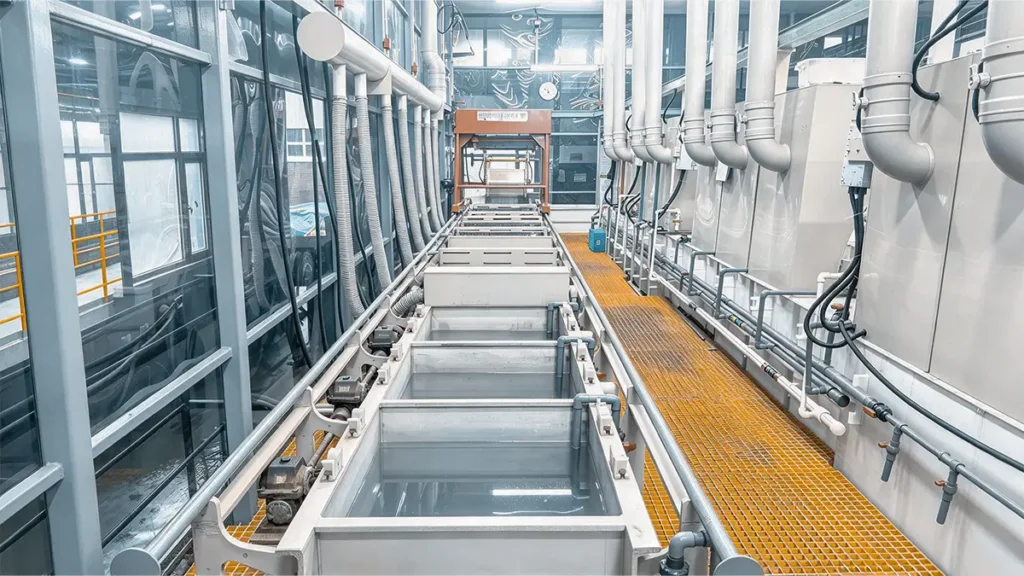
No mundo moderno, a procura de materiais continua a aumentar, exigindo novas tecnologias para melhorar o que já está disponível no mercado. A galvanoplastia é uma forma comum de melhorar estes materiais. Este processo reveste superfícies metálicas com uma fina camada de outro metal. A galvanoplastia é procurada, em parte, devido à crescente necessidade de materiais com propriedades melhoradas, tais como condutividade elétrica, resistência a fatores externos ou maior proteção contra a corrosão. Um desses processos é a galvanização de cobre e alumínio com prata. Sendo um metal precioso, a prata possui propriedades excecionais que se traduzem em vantagens quando utilizada na galvanoplastia. Este guia aborda os pormenores da galvanoplastia e o seu papel nos componentes elétricos.
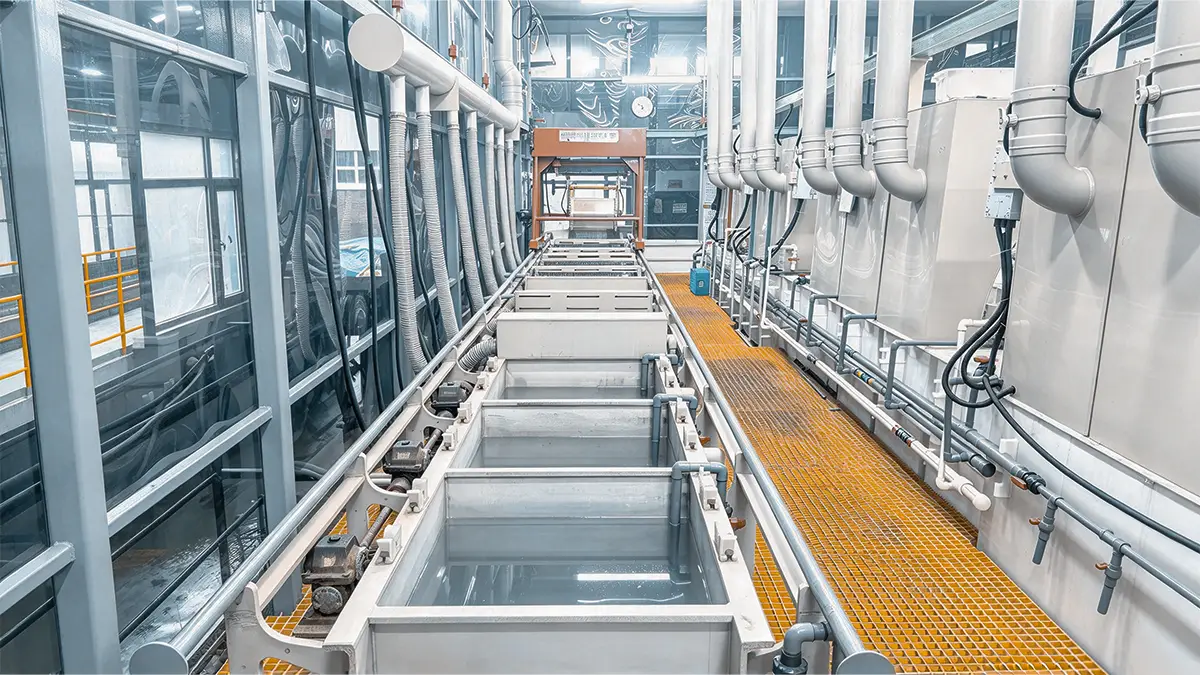
Qual é a importância do revestimento em prata para as peças elétricas?
O revestimento a prata oferece várias vantagens nas placas de cobre.
Condutividade excecional
A prata é conhecida pela sua excepcional condutividade elétrica. Possui apenas um eletrão de valência, que se move livremente com pouca resistência. Isto torna a prata o metal de revestimento mais condutor que existe. A elevada condutividade elétrica da prata torna-a indispensável na indústria eletrónica. Contribui para garantir que as placas de circuito impresso, os conectores, os semicondutores e outros componentes eletrónicos funcionem de forma eficiente e fiável. A prata é também um excelente condutor térmico. Isto torna-a popular em aplicações onde a dissipação de calor é essencial. Esta propriedade faz com que a prata seja frequentemente utilizada em dissipadores de calor para dispositivos eletrónicos. Impede que o calor excessivo danifique componentes sensíveis.
Rentável
A aplicação de uma camada de prata num substrato é muito mais económica do que investir em componentes de prata maciça. O banho de prata foi originalmente inventado para imitar objetos de prata maciça. O banho de prata por galvanoplastia é mais económico do que o banho de ouro e de platina, oferecendo, ao mesmo tempo, vantagens semelhantes.
Propriedades antimicrobianas
A prata oferece uma resistência natural às bactérias. Os seus iões eliminam microrganismos nocivos, tornando as superfícies banhadas a prata ideais para a resistência bacteriana. O setor da saúde recorre frequentemente ao banho de prata para criar revestimentos antibacterianos em equipamento médico e manter um ambiente seguro e saudável.
Maior resistência à corrosão e ao desgaste
A galvanoplastia de prata forma uma camada exterior protetora que resiste à corrosão, ao desgaste e ao embaciamento. Esta durabilidade reforçada mantém-se mesmo em ambientes adversos, onde os componentes estão constantemente sujeitos ao atrito e às intempéries. Esta durabilidade faz com que o revestimento de prata seja frequentemente utilizado em equipamento marítimo, maquinaria para uso no exterior e contactos elétricos.
Quais são as principais aplicações do revestimento a prata?
O revestimento a prata é amplamente utilizado na eletrónica, nos dispositivos médicos, na indústria aeroespacial e na engenharia industrial. Estas aplicações exigem superfícies soldáveis, elevada condutividade elétrica e térmica, lubrificação e resistência à corrosão. A prata é o metal com maior condutividade elétrica e térmica existente e apresenta a maior refletividade ótica na gama do visível.
Contactos e conectores elétricos
A prata proporciona um desempenho elétrico fiável e de baixa resistência numa vasta gama de aplicações de conectores e contactos. Os componentes mais comuns incluem pinos de contacto, terminais de conectores, molas, barras condutoras, contactos de baterias e interruptores em aplicações aeroespaciais, de defesa, de semicondutores e eletrónicas. A vantagem em termos de custo da prata em relação ao ouro torna-a o acabamento preferido para aplicações de conectores de grande volume, nas quais a condutividade é o requisito principal.
Semicondutores e Eletrónica
O revestimento a prata é utilizado em estruturas de chumbo, contactos de placas de circuito impresso e outros componentes eletrónicos que exigem elevada condutividade, soldabilidade e propriedades superficiais estáveis. Em comparação com metais menos condutores, a prata reduz o consumo de energia em muitas aplicações de condutores elétricos, prolongando a vida útil da bateria em dispositivos eletrónicos portáteis, de mão e vestíveis.
Instrumentos eletrocirúrgicos e médicos
O revestimento em prata é amplamente especificado para instrumentos eletrocirúrgicos, incluindo pinças bipolares, elétrodos eletrocirúrgicos, canetas de cauterização e dispositivos de ablação por RF. As pinças bipolares requerem um revestimento de prata nas pontas para garantir a condutividade térmica, reduzir a propagação do calor e proporcionar propriedades antiaderentes aos tecidos durante os procedimentos eletrocirúrgicos, assegurando que os parâmetros de desempenho estejam em conformidade com as orientações regulamentares federais para dispositivos eletrocirúrgicos [1].
Aeroespacial e Defesa
O revestimento em prata é especificado para contactos elétricos conformes com as especificações militares, conectores de aviónica e outros componentes aeroespaciais que exigem condutividade fiável e resistência à corrosão em condições extremas de temperatura, vibração e ambientais, cumprindo as rigorosas normas de fabrico para voos espaciais aplicáveis ao equipamento de interligação [2]. A capacidade lubrificante da prata a altas temperaturas torna-a também eficaz em aplicações anti-desgaste e anti-gripagem em porcas, calços, vedantes, juntas e superfícies de rolamentos em conjuntos aeroespaciais.
Componentes de RF e RM
A prata é amplamente utilizada em amplificadores de RF, bobinas de radiofrequência, antenas, alimentadores helicoidais, conectores e cabos coaxiais em equipamentos de imagiologia médica e de telecomunicações. As máquinas de ressonância magnética requerem revestimento de prata ou ouro para os conjuntos de bobinas de RF e os componentes dos ímanes supercondutores. Os fios, placas e bobinas de cobre banhados a prata presentes nos ímanes supercondutores têm de resistir ao arrefecimento até temperaturas criogénicas, ao mesmo tempo que conduzem correntes elétricas extremas para gerar os campos magnéticos necessários à obtenção de imagens.
Quais são os processos de banho de prata?
Existem vários métodos de prateamento que satisfazem as necessidades de aplicações específicas.
Galvanoplastia
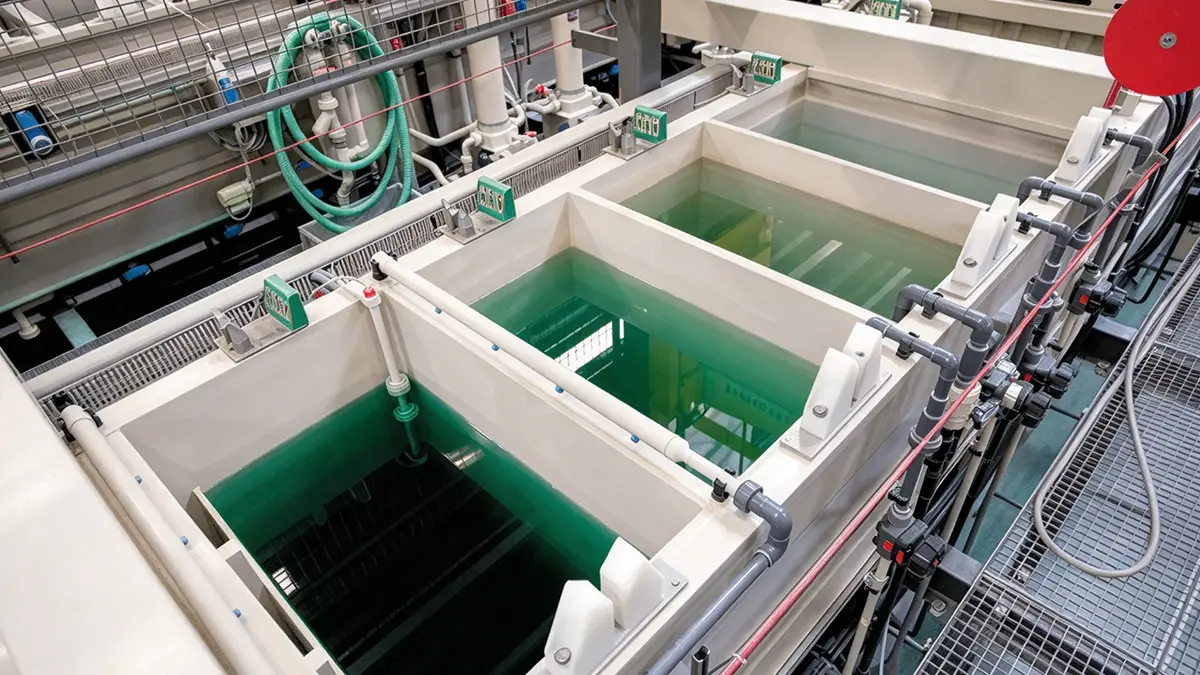
Este processo de eletrólise envolve a transferência de iões. Utiliza uma corrente elétrica para provocar a dissociação iónica. A eficácia do processo depende de uma preparação adequada do trabalho. As peças submetem-se a purificação alcalina, ativação ácida e lavagem. A solução de galvanização é uma solução complexa de cianeto de prata. As melhores soluções contêm 45 g/L. Mantenha as taxas de deposição de prata a uma temperatura constante de 20-30 °C.
A densidade de corrente é normalmente de 1 a 5 A/dm². Correntes mais baixas produzem um acabamento mais brilhante. A deposição ocorre mais rapidamente com correntes mais elevadas. Para uso comercial, a espessura varia entre 5 e 30 micrómetros, dependendo da aplicação. Os processos pós-galvanização envolvem enxaguamentos de neutralização ou revestimentos anti-manchamento. Estas etapas aumentam a resistência e ajudam a preservar o aspeto. A qualidade é testada através da adesão e da espessura.
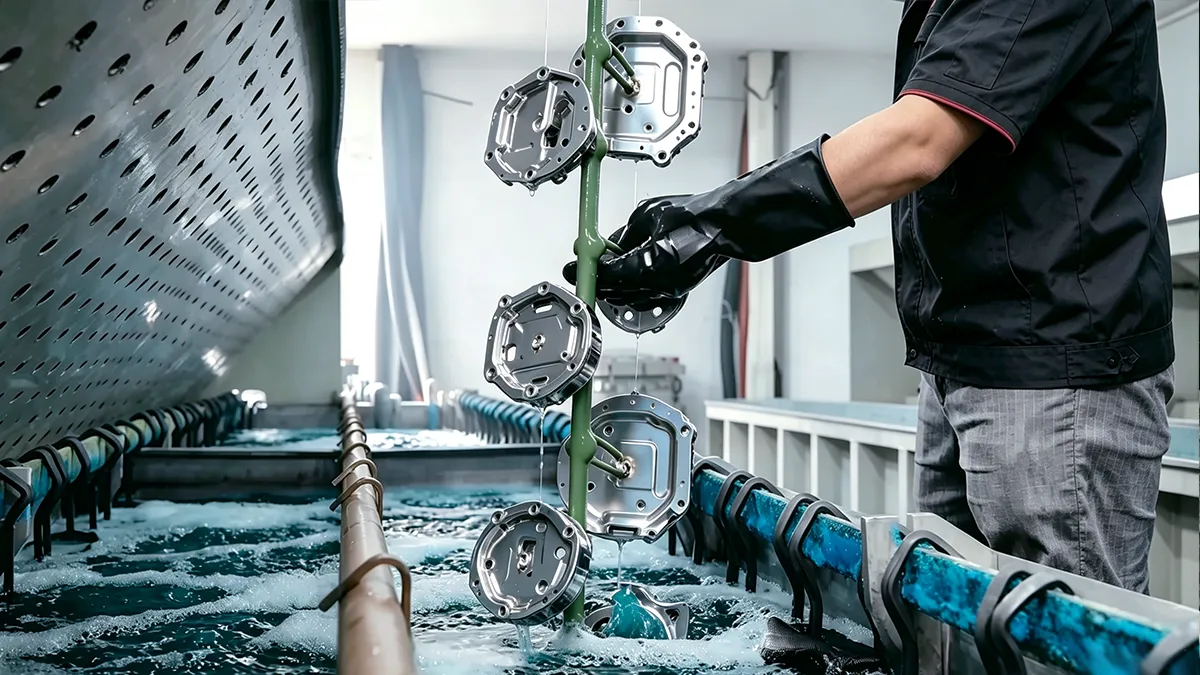
O processo de galvanoplastia é sequencial, começando pela inspeção das peças e terminando com a inspeção final após a deposição.
1. Inspeção e preparação das peças
A inspeção é essencial na galvanoplastia. Os aspetos fundamentais a observar incluem a composição do metal-base, a rugosidade da superfície, as marcas de maquinagem e as rebarbas. A preparação inclui a desengorduramento do componente numa solução alcalina para remover óleos, o enxaguamento para remover o pó e a ativação ácida para remover o óxido.
2. Galvanoplastia principal
O processo de galvanoplastia envolve a transferência de eletrões. Um ânodo e um cátodo criam uma diferença de potencial. No nosso caso, a placa de prata é ligada ao terminal positivo, criando um ânodo. Por outro lado, o componente de cobre é ligado ao terminal negativo, criando um cátodo. Tanto o ânodo como o cátodo são imersos num eletrólito que contém uma solução de complexo de cianeto de prata. Assim que a corrente contínua é ligada, o circuito empurra os iões de prata na direção do componente de cobre. Uma vez depositados, os iões de prata transformam-se em prata metálica, formando uma camada.
No ânodo, a prata metálica perde eletrões e transforma-se num ião, tal como descrito pela reação;
Ag(s) → Ag⁺(aq) + e⁻
No cátodo, os iões de prata próximos da superfície de cobre recebem eletrões, formando prata metálica sólida depositada no componente, conforme descrito pela reação:
Ag⁺(aq) + e⁻ → Ag(s)
3. Enxaguamento e pós-tratamento
Em todas as fases do processo de galvanoplastia, o componente é enxaguado. Após a eletrólise, o enxaguamento remove o eletrólito da superfície. O enxaguamento ajuda a prevenir a contaminação cruzada entre os banhos, e as águas residuais resultantes devem ser rigorosamente tratadas para cumprir as diretrizes federais relativas aos efluentes da galvanoplastia [3]. Após a lavagem, o componente é submetido a um pós-tratamento, que pode incluir vedação, passivação, tratamento anti-oxidação, lubrificação e secagem.
Revestimento de prata sem corrente elétrica
O revestimento não eletrolítico recorre à redução química. Um agente redutor, como o formaldeído, reduz os iões de prata ao estado metálico. O processo funciona particularmente bem com substratos não condutores. Até mesmo plásticos, cerâmicas e vidro podem ser ‘prateados’. No revestimento não eletrolítico, o aumento da espessura não depende da geometria. Cobre ‘orifícios’ e ‘depressões’ tanto no interior como no exterior. Esta uniformidade é essencial para a eletrónica e para os guias de onda.
Galvanoplastia por escovagem
Na galvanoplastia com pincel, a prata é aplicada ao cobre ou a outro componente-alvo apenas nas áreas necessárias, utilizando ferramentas manuais. Um ânodo húmido, coberto com um material absorvente, transporta a solução de prata. Esta abordagem seletiva evita o revestimento de secções indesejadas. O método requer equipamento limitado. Basta uma fonte de alimentação portátil, soluções de galvanoplastia e ferramentas especializadas. Esta facilidade de manobra torna-o também adequado para reparações e restaurações no local. A técnica permite um controlo preciso da espessura. Os operadores variam a corrente e o tempo para alcançar os resultados desejados.
Em que medida o revestimento a prata se compara com outros acabamentos elétricos?
A prata não é universalmente superior. O acabamento adequado depende dos requisitos elétricos, mecânicos, ambientais e económicos.
| Concluir | Principal vantagem | Limitação importante | Consideração típica |
|---|---|---|---|
| Revestimento em prata | Excelente desempenho elétrico/térmico | Sulfidação | Contactos para correntes mais elevadas |
| Revestimento a ouro | Excelente resistência à corrosão e superfície de contacto estável | Custo elevado; os teores de ouro mais baixos podem sofrer desgaste | Sinais de baixo nível e contactos sensíveis à corrosão |
| Estanagem | Boa soldabilidade e custo relativamente baixo | Risco de formação de «whiskers» de estanho em algumas aplicações | Terminais e componentes elétricos soldáveis |
| Niquelagem | Dureza e propriedades de barreira | Resistência elétrica superior à da prata/cobre | Aplicações em barreiras contra o desgaste e a difusão |
| Revestimento de cobre | Elevada condutividade e base útil | Oxidação e estabilidade superficial | Placas de base e superfícies condutoras |
Conclusão
O revestimento de prata sobre cobre produz um revestimento altamente condutor e resistente à corrosão. Um revestimento de prata sobre cobre proporciona uma superfície que conduz bem o calor e a eletricidade, tornando-o uma excelente escolha para peças que transferem calor ou eletricidade. O revestimento de prata encontra as suas aplicações mais críticas em indústrias de alto desempenho, incluindo semicondutores, aeroespacial, telecomunicações e dispositivos médicos avançados. Seja para maximizar a condutividade elétrica, proporcionar uma dissipação térmica fiável ou garantir uma excelente soldabilidade, o revestimento de prata sobre cobre continua a ser uma solução indispensável de acabamento de superfícies para a engenharia moderna.
Referências
[1] Administração de Alimentos e Medicamentos dos EUA (FDA). (2016). Pedidos de notificação pré-comercialização (510(k)) relativos a dispositivos eletrocirúrgicos para cirurgia geral. Documentos de orientação da FDA. Obtidos em https://www.fda.gov/regulatory-information/search-fda-guidance-documents/premarket-notification-510k-submissions-electrosurgical-devices-general-surgery
[2] Administração Nacional da Aeronáutica e do Espaço (NASA). (2022). NASA-STD-8739.4: Norma de execução para crimpagem, interligação de cabos, chicotes e fiação. Sistema de Normas Técnicas da NASA. Obtido em https://standards.nasa.gov/standard/NASA/NASA-STD-87394
[3] Agência de Proteção Ambiental dos EUA (EPA). (s.d.). Diretrizes relativas aos efluentes da galvanoplastia (40 CFR, Parte 413). Diretrizes da EPA relativas a efluentes industriais. Obtido em https://www.epa.gov/eg/electroplating-effluent-guidelines





 PT
PT  EN
EN  ES
ES  FR
FR  DE
DE  IT
IT  NL
NL  PL
PL  AR
AR  JA
JA  KO
KO  ZH
ZH