

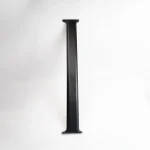
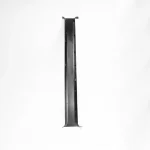
Putting automotive sunroof parts together is a complex task because lots of components must work together. Consequently, manufacturers must get the dimensions and designs of the different parts right. Parts of a sunroof include the glass, curtain, frame, rail body, slider/roller, seal strip, rail cover, drive motor, and control module.
Not every part of the sunroof is made using injection molding, although the manufacturing technique is used to create the majority of the components used in the system. Some of the reasons why sunroof components are injection molded include lowering weight, reducing costs, and achieving high precision with complex designs. Key sunroof parts created using injection molding include:
- Automotive sunroof rail cover: Various covers are designed to hide the mechanical rails. They are usually injection molded using polypropylene (PP).
- Sunroof frames: These are complex structures often made from glass-fiber reinforced plastics like Nylon 6 Long Fiber Thermoplastic (PA6 LFT) or Propylene with 30% glass fiber. This ensures high structural integrity, even though it is many times lighter than conventional metal frames.
- Bezels and interior trim: The control panels and interior trim are mostly made by injection molding acrylonitrile butadiene styrene (ABS) or polycarbonate (PC)/ABS blends for durability and great aesthetics.
- Mechanical components: Several smaller components, including clips, gears, fixation pins, and brackets, are crucial for the operation of the sunroof. These smaller parts are injection molded using durable engineering plastics like nylon or polyoxymethylene (POM).
- Seal Strip: Extrusion is usually used to produce long, continuous strips. However, injection molding is used to produce seal strips with precise shapes for joints and corners to achieve a perfect seal.
Automotive Sunroof Rail Cover Assembly Relationship With Other Components
The sunroof rail cover hides the other components that play functional roles. It is also the link between the vehicle’s interior headliner and the sunroof mechanism. The rail cover connects to different important components.
| Sunroof parts | How it connects to the sunroof rail cover |
|---|---|
| Support frame | Rail cover screws or clips into the support frame, the main structural component of the sunroof module. |
| Headliner | The rail cover often assists with securing the edge of the interior roof liner. The material used for the headliner is usually clipped or tucked around the sunroof opening edges. This aligns with the rail cover trim for a clean, finished look. |
| Guide rails | Rail cover primarily hides the guide rails, drive cables, and mechanical parts where the sunshade and glass panel sliding mechanisms operate. |
| Sunshade or sunblind | Whether the movable sunshade slide is located adjacent to the main guide rails or integrated into them, it is covered by the sunroof rail cover. |
クライアント要件
The client approached First Mold for sunroof parts manufacturing with detailed instructions on structure and appearance. Due to the long length of the sunroof part (approximately 110 cm), the manufacturer was also worried about achieving a clean finish without defects like warping.
Besides aesthetics, it was also necessary for the automotive sunroof rail cover to have precise dimensional tolerance. This was necessary for the numerous snap-fits that will be carried out during assembly. A wrong dimensional tolerance (above 0.05 mm) may create problems during assembly.
課題
Complex designs (including undercuts and bosses) could pose problems during ejection, managing large part size to prevent defects during molding, achieving tight tolerance for flawless operation (particularly quiet and smooth movement), and ensuring dimensional stability are some of the key challenges on the path to successful sunroof parts injection molding. The length of the part necessitates the creation of a large mold, which lengthens the lead time.
The client’s design blueprint required special attention to structure and appearance. This also meant increased attention to tolerance and mold surface finish. For the automotive industry, lightweighting of parts is extremely important to fuel economy. This was highlighted in the manufacturer’s blueprint. First Mold was meant to help create the thinnest automotive sunroof rail cover yet.
Arguably, the most important design challenge with this product is that it was meant to have some degree of curvature. It was important to meet the client’s unique blueprint design without compromising on automotive quality standards.
ソリューション
The client had a tight schedule for bringing the sunroof parts to their investors. First Mold’s ラピッドツーリングサービス was instrumental in helping the client to quickly get the product to the market within four weeks. The smooth, glossy finish of the mold ensured a similar appearance of the part, which was one of the client’s key requirements.
To prevent defects like short shots, flash, flow lines, and sink marks, First Mold fine-tuned the injection parameters, including temperature, pressure, and speed.
Large complex designs, undercuts, and bosses naturally lead to longer cycle times that could stretch into minutes. However, proper cooling and mold venting were factored into the mold creation such that the cycle time was under 90 seconds.
The cover was expected to snap-fit with other parts of the sunroof. Perfect fit ensures quiet and smooth rail movement, which is important for eliminating noise vibration and harshness (NVH). Consequently, the tolerance or dimensional accuracy set by the manufacturer was 0.02 mm.
First mold achieved this tolerance through the creation of a high-quality mold with consistent process parameter control. CNC machining was used in mold finishing to achieve the gloss finish. First Mold’s robust quality control checks ensure no aspect of the mold production is left to chance. The completed mold was also tested multiple times for consistent product delivery.
Client’s Gain by Working with First Mold for Sunroof Parts Injection Molding
First Mold’s rapid tooling service made it possible for the client to beat the project’s strict deadline. Failure to meet the deadline would have cost them millions of US dollars’ worth of investment.
Also, First Mold delivered a mold that created parts that met the strict appearance and performance requirements contained in the manufacturer’s blueprint. The modifications made by First Mold allowed the manufacturer to create sunroof parts without defects, solving one of their most dreaded problems. First Mold continued to provide after-sale guidance to the client.
よくあるご質問
First Mold holds the IATF 16949:2016 certification, which shows the mold maker’s attention to quality management standards. Also, First Mold holds the ISO 9001:2015 certification that proves its commitment to consistent quality, process control, and defect prevention.
It varies depending on the part size. However, First Mold always strives to deliver between 4 and 8 weeks, depending on the complexity of the part.

 JA
JA  EN
EN  ES
ES  FR
FR  DE
DE  IT
IT  PT
PT  NL
NL  PL
PL  AR
AR  KO
KO  ZH
ZH