
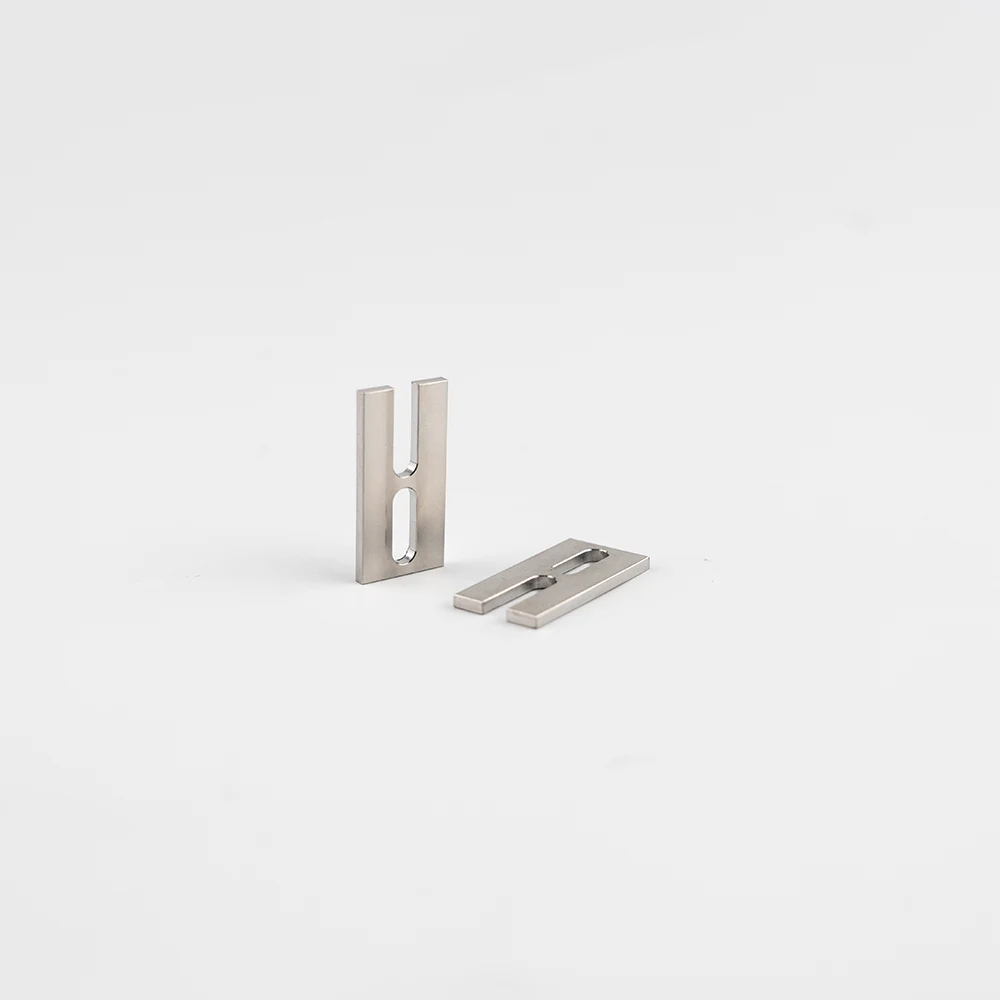
Eine Metallunterlegscheibe ist ein dünnes, flaches Metallstück, das häufig zum Ausfüllen kleiner Spalten zwischen Gegenständen verwendet wird. Zu den weiteren Anwendungsbereichen, in denen die Fertigung maßgeschneiderter Unterlegscheiben sinnvoll ist, gehören die Abstützung von Bauteilen, das Ausrichten ebener Flächen oder die Anpassung von Toleranzen in Maschinen.
Metallunterlegscheiben können aus Titan, Edelstahl, Aluminium, Kupfer oder Messing hergestellt werden. Zu den Gründen, warum Metallunterlegscheiben in zahlreichen Branchen zum Einsatz kommen, gehören unter anderem:
- Hohe Festigkeit und Langlebigkeit: Im Vergleich zu Kunststoff sind sie äußerst widerstandsfähig gegenüber hohen Temperaturen und Belastungen, wodurch sie sich für Anwendungen unter extremen Bedingungen eignen.
- Langfristig Kosten sparen: Metallunterlegscheiben dämpfen Vibrationen und gleichen Verschleiß aus und schützen so komplexe Maschinen vor Schäden. Dadurch lassen sich Reparaturkosten und Ausfallzeiten senken.
- Äußerst vielseitig: Sie werden in der Automobilindustrie häufig zur Abstandshaltung bei Motorkomponenten, zur korrekten Ausrichtung von Maschinen, im Hochbau zum Nivellieren von Trägern sowie in der Industrie zur Befestigung von Maschinen auf unebenen Oberflächen eingesetzt.
Zu den wichtigsten Aspekten bei der Herstellung von Metallunterlegscheiben zählen die Auswahl des richtigen Materials je nach Anwendungsbereich oder Umgebungsbedingungen, präzise Toleranzen zur Gewährleistung einer korrekten Ausrichtung sowie die Belastungsanforderungen. Weitere Faktoren, die bei der Fertigung eine Rolle spielen, sind die Dicke, die Form und die Ebenheit.

Anforderungen des Kunden
Ein Kunde kam in die Produktionsstätte von First Mold, um einen CNC-Fräsdienst für die Herstellung maßgeschneiderter Unterlegscheiben in kleinen Stückzahlen in Auftrag zu geben. Das vom Kunden für die Herstellung dieses Produkts bevorzugte Material war Titan. Die hergestellten Unterlegscheiben sollten ein standardmäßiges, glänzendes Erscheinungsbild mit einer sehr engen Toleranz von ±0,0254 mm aufweisen. Der Kunde legte besonderen Wert auf strenge Toleranzen hinsichtlich Ebenheit und Dicke.
“Das kann als kleine Herausforderung angesehen werden, insbesondere aufgrund der engen Toleranz und der Beschaffenheit des Materials”, sagte James Li, Geschäftsführer von First Mold. “Aber unser Fokus als Unternehmen lag schon immer darauf, die Bedürfnisse unserer Kunden an erste Stelle zu setzen.”
Herausforderungen und Lösungen
Obwohl es sich um ein relativ schlicht aussehendes Produkt handelte, stellten das gewählte Material und die maßgefertigte Titan-Zwischenlage – die in kleiner Stückzahl per CNC-Fräsen gefertigt wurde – besondere Herausforderungen dar. Titan ist teuer, und schon der Ausschuss eines einzigen Teils führt zu hohen Verlusten.
Dünne Bauteile aus Titanlegierungen sind bei der CNC-Bearbeitung besonders schwierig zu fertigen. Die meisten unserer Mitbewerber sind in der Regel nicht bereit, solche Aufträge anzunehmen, da sich Titanlegierungen nur schwer zerspanen lassen und sich die Bauteile umso leichter verformen, je dünner sie sind. Auch die Fertigung kleiner Stückzahlen ist unwirtschaftlich.
Fertigung von kundenspezifischen Unterlegscheiben in kleinen Stückzahlen
Der Grund, warum die meisten Lieferanten die Fertigung von Unterlegscheiben in kleinen Stückzahlen ohne Weiteres ablehnen, ist, dass dies unwirtschaftlich ist. Das CNC-Fräsen von Titan zur Herstellung einer maßgefertigten Unterlegscheibe ist mit hohen anfänglichen Fixkosten verbunden, die durch die Maschineneinrichtung, die Programmierung, die Werkzeugauswahl und die Prüfung entstehen. Diese anfänglichen Fixkosten müssen auf eine geringe Anzahl von Teilen umgelegt werden, was zu hohen Stückkosten führt. Weitere Gründe, warum Lieferanten die Fertigung maßgeschneiderter Unterlegscheiben in kleinen Stückzahlen ablehnen, sind unter anderem:
- Fehlende Skaleneffekte beim Materialeinkauf: Bei der Herstellung von Unterlegscheiben in kleinen Stückzahlen können Hersteller keine Mengenrabatte auf Rohstoffe in Anspruch nehmen, was zu höheren Rohstoffkosten führt.
- Erhöhter Arbeitsaufwand: Bei Kleinserien sind häufig umfangreichere manuelle Eingriffe, individuelle Anpassungen und der Einsatz von qualifiziertem Personal erforderlich, was die Gesamtproduktionskosten erhöht.
- Hohe Anforderungen an die Qualitätskontrolle: Im Gegensatz zur Großserienfertigung, die oft von automatisierten Prozessen profitiert, erfordern kleinere Produktionsmengen gründliche und zeitaufwändige manuelle Kontrollen.
First Mold hat enge Beziehungen zu Rohstofflieferanten aufgebaut und stützt sich zudem auf fortschrittliche Hardware- und Software-Lösungen für die CNC-Fräsbearbeitung. Die Kombination dieser Faktoren ermöglicht es uns, Titan-Unterlegscheiben in kleinen Stückzahlen herzustellen, deren Fertigung andere Anbieter nicht in Angriff nehmen würden.
Verformung dünner Titanbauteile
Nicht jeder Anbieter ist in der Lage, maßgeschneiderte Unterlegscheiben aus Titan herzustellen. Dies liegt am niedrigen Elastizitätsmodul bzw. der geringen Elastizität des Materials (~110 GPa im Vergleich zu ~200 GPa bei Stahl). Zudem weist es eine geringe Wärmeleitfähigkeit (etwa 1/7 derjenigen von Stahl) und eine hohe chemische Reaktivität auf. Diese Eigenschaften können während der Bearbeitung zu erheblichen Durchbiegungen, Ungleichgewichten bei den Eigenspannungen oder wärmebedingten Verformungen führen.
Beispielsweise wird bei der Bearbeitung die an der Schneide entstehende Wärme nicht durch Späne abgeführt, was zu konzentrierten hohen Temperaturen führt, die 1000 °C überschreiten können. Die lokal konzentrierte Wärme führt dazu, dass sich das dünne, spröde Titan während des Schneidvorgangs ungleichmäßig ausdehnt. Beim Abkühlen kann dies zu Verformungen oder erheblichen Verzerrungen führen. Weitere Faktoren, die bei der Bearbeitung von Titan zu Verformungen führen können, sind:
- Verformung durch Festklemmen: Unein gleichmäßige, radiale oder zu starke Klemmung kann zu einer Vorverformung der Unterlegscheibe führen. Sobald die Unterlegscheibe nach der Bearbeitung freigegeben wird, verzieht sie sich oder federt zurück.
- Verformung durch den “Rückfederungseffekt”: Bei jedem Durchlauf der Bearbeitungsmaschine während der Herstellung von Metallunterlegscheiben verformt sich die dünne Unterlegscheibe und federt in ihre Ausgangsposition zurück. Dies kann zu Maßabweichungen führen.
- Arbeitshärtung: Dies geschieht, wenn die Oberflächenschicht bei 30% aushärtet. In diesem Fall ist eine höhere Schnittkraft erforderlich, wodurch innere Spannungen entstehen.
First Mold verfügt über ein Team von Ingenieuren, die seit langem mit Titan arbeiten. Gemeinsam haben sie Lösungsstrategien entwickelt, um einige der Herausforderungen bei der Herstellung einer maßgeschneiderten Unterlegscheibe mittels CNC-Fräsen zu bewältigen. Zu den Lösungsstrategien, die First Mold anwendet, um die Anforderungen des Kunden zu erfüllen, gehören unter anderem:
- Verwendung von Klemmen mit weichen Backen: Dies trägt dazu bei, den Druck gleichmäßig zu verteilen und so eine übermäßige Druckkonzentration zu vermeiden.
- Einbindung von Hochdruck-Kühlmittel: Dies trägt dazu bei, die Wärmeentwicklung im Bereich der Schneidfläche zu regulieren und den Abtransport der Späne zu erleichtern.
- Verwendung eines scharfen Schneidwerkzeugs: Je schärfer das Schneidwerkzeug ist, desto geringer ist die Schnittkraft. Dies führt zu einer geringeren Wärmeentwicklung und einer geringeren Belastung der Unterlegscheibe.
- Stressabbau: Das Team unterzog die Unterlegscheibe vor der Endbearbeitung einem Glühvorgang, um innere Spannungen abzubauen. Diese Maßnahme stellte die Einhaltung strenger Ebenheits- und Dickentoleranzen sicher.
Maßgeschneiderte Lösungen und schnelle Lieferung von Prototypen
Während die meisten Lieferanten in China Aufträge für maßgefertigte Titan-Unterlegscheiben – CNC-Fräsen in kleinen Stückzahlen – ablehnen, ist First Mold dank unserer fortschrittlichen Technologie und der Partnerschaften, die wir im Laufe der Jahre aufgebaut haben, in der Lage, Projekte mit geringen Stückzahlen schnell zu liefern.
In diesem Projekt beispielsweise wollte der Hersteller, dass die Prototypen in weniger als vier Wochen geliefert werden. Die Beschaffung des Titans für das Projekt hätte den Großteil der verfügbaren Zeit in Anspruch genommen. Der Lagerbestand von First Mold sowie die Lagerbestände unserer Partner umfassen verschiedene Rohstoffe. Dank der Verfügbarkeit der Rohstoffe konnte das Team die Fertigung der maßgeschneiderten Unterlegscheiben-Prototypen beschleunigen.
Die Zeit, die bei der Materialbeschaffung eingespart wird, wird in die Optimierung des CAD-Entwurfs des Prototyps investiert. First Mold setzte zudem die hochmoderne 5-Achsen-CNC-Maschine ein, um die Rüstzeit um bis zu 40% zu verkürzen und gleichzeitig die Präzision zu steigern. Der Prototyp wurde mithilfe von Koordinatenmessgeräten (CMM) auf Maßgenauigkeit, Ebenheit und Dicke geprüft, um sicherzustellen, dass er den Vorgaben der Bauzeichnung des Kunden entspricht.
Herstellung von Metallunterlegscheiben für High-End-Branchen
Der Kunde war ein Hersteller von High-End-Produkten. Die Herausforderung bei der Herstellung maßgeschneiderter Unterlegscheiben für High-End-Branchen wie die Luft- und Raumfahrt, medizinische Geräte, hochwertige Sportausrüstung und Präzisionsmaschinen besteht darin, dass dabei äußerste Sorgfalt hinsichtlich Materialintegrität, Präzision und Fertigungstechnik erforderlich ist, um Fehler zu vermeiden.
So müssen beispielsweise Grate an den Kanten entfernt werden, da diese zu einer Fehlausrichtung führen oder Bereiche mit hoher Reibung verursachen können. Zu den wichtigsten Aspekten bei der Herstellung hochwertiger, maßgeschneiderter Unterlegscheiben gehören:
- Gleichmäßige Dicke: Die Unterlegscheibe muss äußerst enge Dickentoleranzen einhalten, um katastrophale Maschinenausfälle zu vermeiden. Die Dicke muss über die gesamte Oberfläche hinweg gleichmäßig sein, um Spannungskonzentrationen oder ungleichmäßige Belastung zu vermeiden.
- Oberflächenbeschaffenheit: Die Oberfläche muss glatt sein, um Verschleiß und Reibung zu minimieren. Da es sich bei dem Projekt um eine Kleinserienfertigung handelte, erreichte First Mold die gewünschte Oberflächenglätte und Ebenheit mithilfe der Läpptechnik.
Nach der CNC-Fräsbearbeitung für High-End-Anwendungen reinigt und verpackt First Mold die Unterlegscheibe, um eine Verunreinigung zu verhindern. Der Grund dafür ist, dass in der Luft- und Raumfahrt sowie in der Medizinbranche winzige Partikel zu Ausfällen führen können.
Was der Kunde durch die Lösung von First Mold gewonnen hat
Der Kunde konnte seine Begeisterung kaum verbergen, als er die maßgefertigten Prototypen der Unterlegscheiben vorzeitig erhielt. Nach der Prüfung bestätigte er, dass die Maßtoleranz, die Ebenheit, die Dicke und die Oberflächengüte genau den Angaben in der Bauzeichnung entsprachen.
“Wir sind First Mold wirklich dankbar, dass sie sich bereit erklärt haben, dieses Projekt zur Herstellung von Unterlegscheiben in kleiner Stückzahl zu übernehmen”, sagte der Kunde. “Tatsächlich waren sie der erste von etwa einem Dutzend Anbietern, die wir kontaktiert hatten, der sich bereit erklärte, dieses Projekt zu übernehmen. Das war eine große Erleichterung.”
First Mold hat dem Kunden nicht nur ein paar Prototypen geliefert. Wir haben genau die benötigte Anzahl an maßgefertigten Unterlegscheiben geliefert. Dank modernster Technologie und eines engagierten Ingenieurteams mit Fachkenntnissen in der Verarbeitung von Titan konnte dieses Projekt im Rahmen des vom Kunden vorgegebenen Budgets abgeschlossen werden.
FAQ
Die wünschenswerten Eigenschaften von Titan – darunter hohe Festigkeit, Hitzebeständigkeit und geringes Gewicht – erschweren dessen Bearbeitung, insbesondere bei der Herstellung dünner, filigraner und hochpräziser Teile. So führt beispielsweise die geringe Wärmeleitfähigkeit des Werkstoffs dazu, dass die beim Zerspanen entstehende Wärme an der Schnittstelle zwischen Werkzeug und Werkstück konzentriert bleibt. Dies kann zu Schäden am Werkzeug führen oder die Materialspannung erhöhen.
Die Entlastung von Restspannungen, die Spannkraft, thermische Spannungen durch Wärmekonzentration und Vibrationen während des Zerspanungsvorgangs sind einige der Faktoren, die bei der Bearbeitung von Titan-Unterlegscheiben zu Verformungen führen können.

 DE
DE  EN
EN  ES
ES  FR
FR  IT
IT  PT
PT  NL
NL  PL
PL  AR
AR  JA
JA  KO
KO  ZH
ZH