
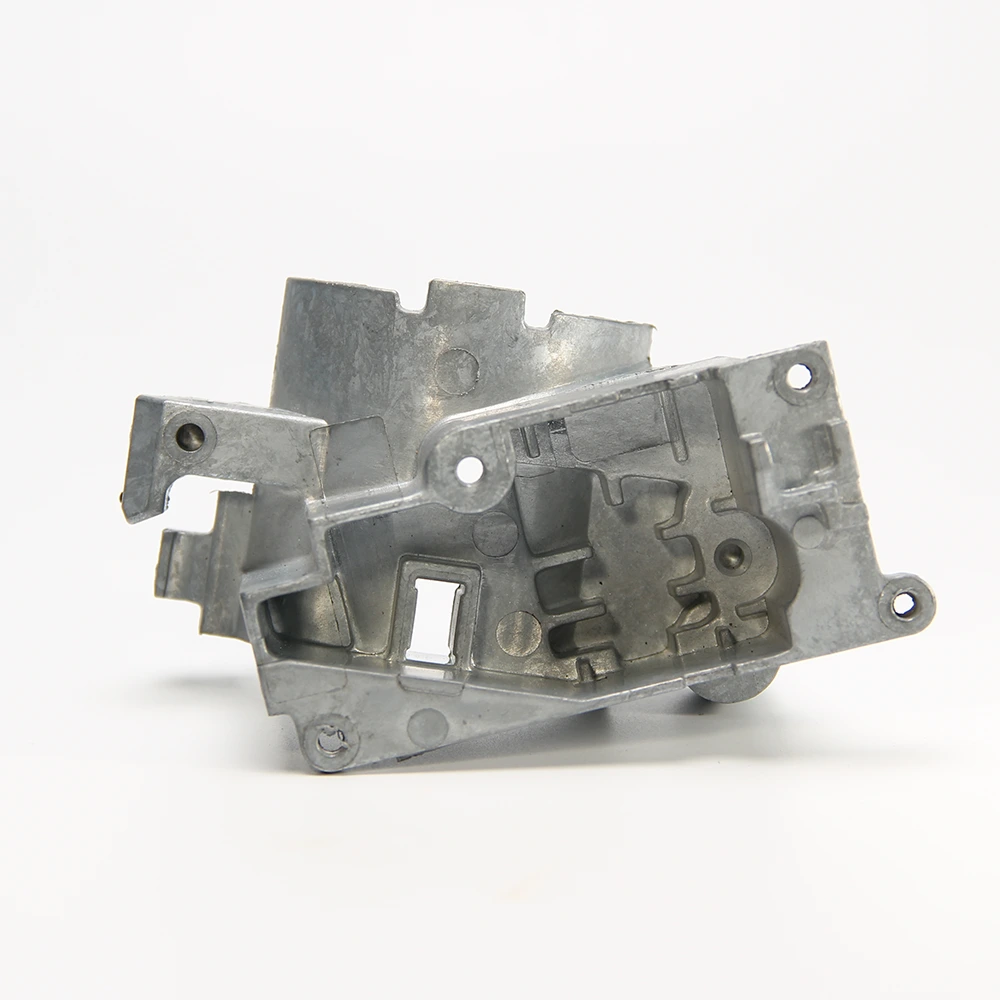
We received an order for the production of engine brackets via die casting—a process that demands precision, innovation, and a deep understanding of metallurgy.
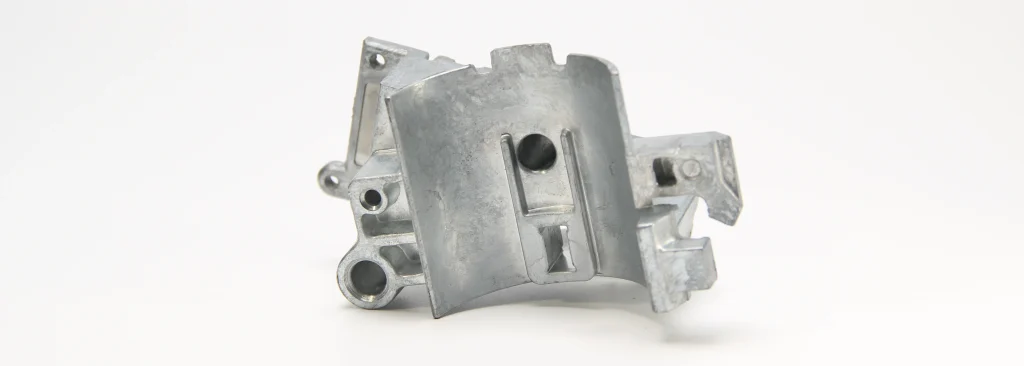
Understanding the Customer’s Needs:
The first step in our process was to comprehend the client’s specific requirements for the engine bracket. These included detailed specifications regarding dimensions, material properties, and the mechanical stress the part would endure. Our team of engineers and designers worked closely with the client to ensure a thorough understanding of the project’s demands.
Tooling:
We got the model from our customer, which was used to develop the die casting molds, a critical step that required meticulous attention to detail. The molds had to be engineered to withstand the high pressures and temperatures inherent in the die casting process while ensuring the part’s dimensional accuracy.
The Die Casting Process:
Our die casting process is a testament to our commitment to excellence. A Machine injected the molten aluminum alloy under high pressure into the precisely machined dies. The rapid cooling rate of this process results in a fine-grained microstructure, contributing to the part’s strength and durability.
Challenges and Solutions:
One of the primary challenges we faced was achieving the desired level of dimensional accuracy and surface finish. To overcome this, we employed advanced CNC machining post-die casting to refine the part’s contours and ensure a seamless fit with other engine components.
Another challenge was managing the heat treatment process to optimize the mechanical properties of the aluminum alloy. Our solution involved a carefully controlled heat treatment cycle that balanced hardness, tensile strength, and ductility, resulting in a part that can withstand the rigors of automotive applications.
Quality Assurance:
Our rigorous quality assurance protocols involve multiple stages of inspection, from initial dimensional checks to final visual and mechanical testing. We employ non-destructive testing methods such as X-ray fluorescence and ultrasonic testing to ensure the integrity of the engine bracket.

 EN
EN  ES
ES  FR
FR  DE
DE  IT
IT  PT
PT  NL
NL  PL
PL  AR
AR  JA
JA  KO
KO  ZH
ZH