


CNC milling is a popular manufacturing process applied in modern industry production. The technique belongs to the process of subtractive manufacturing in which material is removed from a solid block of work to achieve a sought-after geometry or scale. Unlike the machining processes of the past, where human control greatly influenced the machining process, CNC milling is a computer-controlled process whereby computer instructions are used to affect the movement of cutting tools.
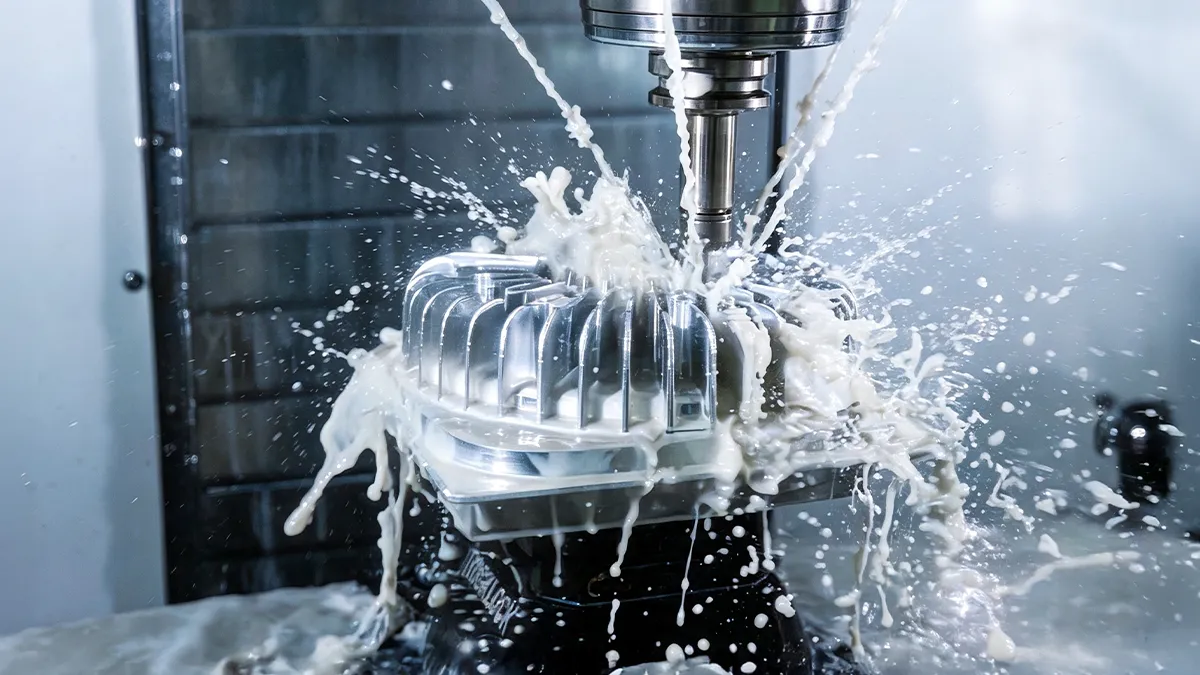
CNC 밀링 소개
CNC milling is a machining process in which a fixed workpiece is cut by rotating cutting tools controlled by a computer program. The acronym CNC stands for Computer Numerical Control, reflecting the digital instructions that govern the machine’s movements and operations.
In the normal CNC milling setup, a high-speed rotating tool cuts through a workpiece secured on a moving table. The machine controller interprets a digital program—often written in G-코드—and directs the machine axes to move according to the specified toolpath. The tool then cuts through the piece of work and gradually cuts away material to create the required form.
CNC 밀링은 전산화되어 최소한의 인력으로 매우 세밀한 부품을 가공할 수 있습니다. 기계의 다차원적인 움직임을 통해 슬롯, 포켓, 윤곽, 3차원 표면의 미세한 디테일과 같은 피처를 만들 수 있습니다.
The accuracy of CNC milling is one of its defining characteristics. Modern CNC machining centers, equipped with advanced volumetric error compensation algorithms, can consistently accommodate positioning tolerances of ±2 to ±5 microns. This extreme geometric accuracy is essential for high-performance engineering processes where micron-level precision is non-negotiable [1].
정확성, 유연성, 확장성 덕분에 CNC 밀링은 오늘날 제조 산업에서 초석이 되는 기술입니다.
CNC 밀링의 역사와 진화
CNC 밀링의 역사는 수동으로 제어하던 전통적인 밀링 머신으로 거슬러 올라갑니다. 기계공은 기계 레버를 손으로 돌리고 움직여 공구의 움직임을 제어했습니다. 전문 작업자가 훌륭한 결과를 얻을 수 있었지만 속도가 느리고 사람의 실수로 인해 영향을 받을 수 있었습니다.
1940년대와 1950년대에 수치 제어가 등장한 것은 기계 가공 기술 분야에서 엄청난 성과였습니다. 초기 CNC 기계는 펀칭 카드나 종이 테이프에 코딩된 지침을 사용하여 기계의 움직임을 지시했습니다. 이러한 시스템은 제조업체가 반복적인 가공 공정을 자동화할 뿐만 아니라 일관성을 향상시키는 데 도움이 되었습니다.
1970년대와 1980년대에 발명된 컴퓨터 기술은 컴퓨터 수치 제어 시스템을 탄생시켰습니다. CNC 컨트롤러는 기계식 명령 시스템을 대체하고 기계가 소프트웨어에서 생성된 디지털 명령을 읽을 수 있도록 했습니다.
이 기술 혁신은 밀링 머신의 강도를 크게 향상시켰습니다. CAD 및 CAM 소프트웨어를 사용하여 복잡한 공구 경로를 생성할 수 있게 되면서 엔지니어는 복잡한 부품을 훨씬 더 정확하고 효율적으로 가공할 수 있게 되었습니다.
오늘날의 CNC 밀링 머신은 첨단 센서, 고속 스핀들, 자동화된 공구 교환장치, 네트워크 제어 시스템을 통합하고 있습니다. 이러한 기계는 설계와 생산 간에 디지털 정보가 쉽게 전송되는 스마트 생산 시스템에 통합될 가능성이 높습니다.
CNC 밀링 머신의 부품은 무엇인가요?
CNC 밀링 머신은 고정밀 가공 작업을 수행하기 위해 함께 작동하는 복잡한 기계 및 전자 부품으로 구성됩니다.
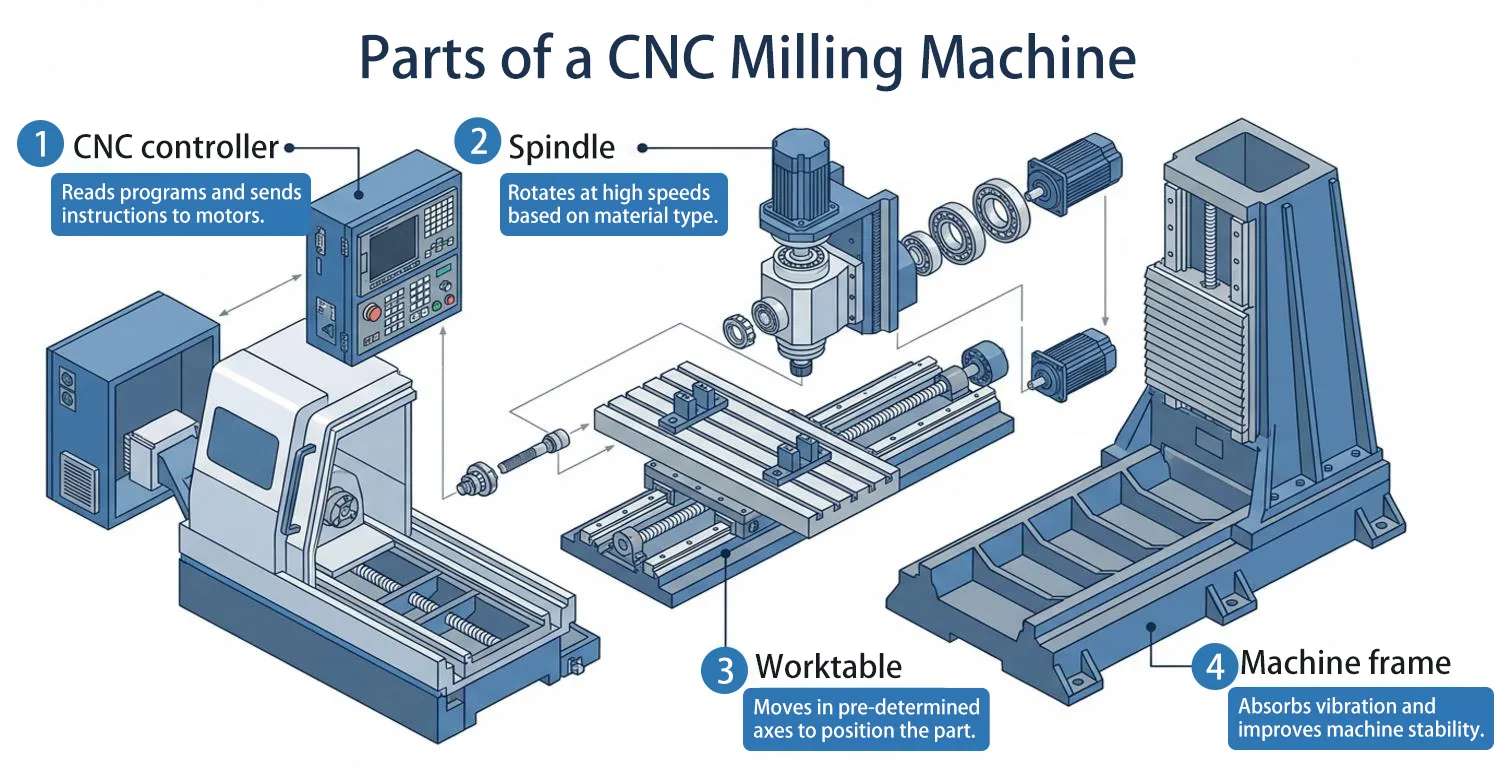
기계 프레임은 밀링 시스템의 구조적 기초를 형성합니다. 주철 또는 강철과 같은 경화된 재료로 구성되어 절삭 시 발생하는 진동을 흡수하고 기계의 안정성을 향상시킵니다.
The spindle is responsible for holding and rotating the cutting tool. The spindle speed varies based on the material being machined and the cutting tool. High-performance spindles utilized in High-Speed Machining (HSM) frequently operate between 20,000 and 40,000 RPM. This rapid rotation dramatically reduces cutting forces and thermal distortion, leading to significantly higher material removal rates (MRR) and superior surface finishes [2].
작업대는 가공 중에 공작물을 고정하는 곳입니다. 재료가 고정 장치, 클램프 또는 바이스로 고정되거나 고정된 다음 테이블이 미리 정해진 축으로 움직여 공작물을 절삭 공구로 제자리에 가져옵니다. 기계에는 CNC 컨트롤러라고 하는 중앙 처리 장치가 있습니다. 이 장치는 가공 프로그램을 읽고, 공구의 움직임을 계산하고, 기계 축을 움직이는 모터에 명령을 보냅니다.
최신 기계에는 기계가 가공 사이클을 실행할 때 여러 절삭 공구 사이를 전환하는 기능을 제공하는 자동 공구 교환장치가 포함될 수도 있습니다. 이러한 자동화를 통해 단일 설정 내에서 복잡한 부품을 제조할 수 있습니다.
CNC 밀링 머신의 종류는 무엇인가요?
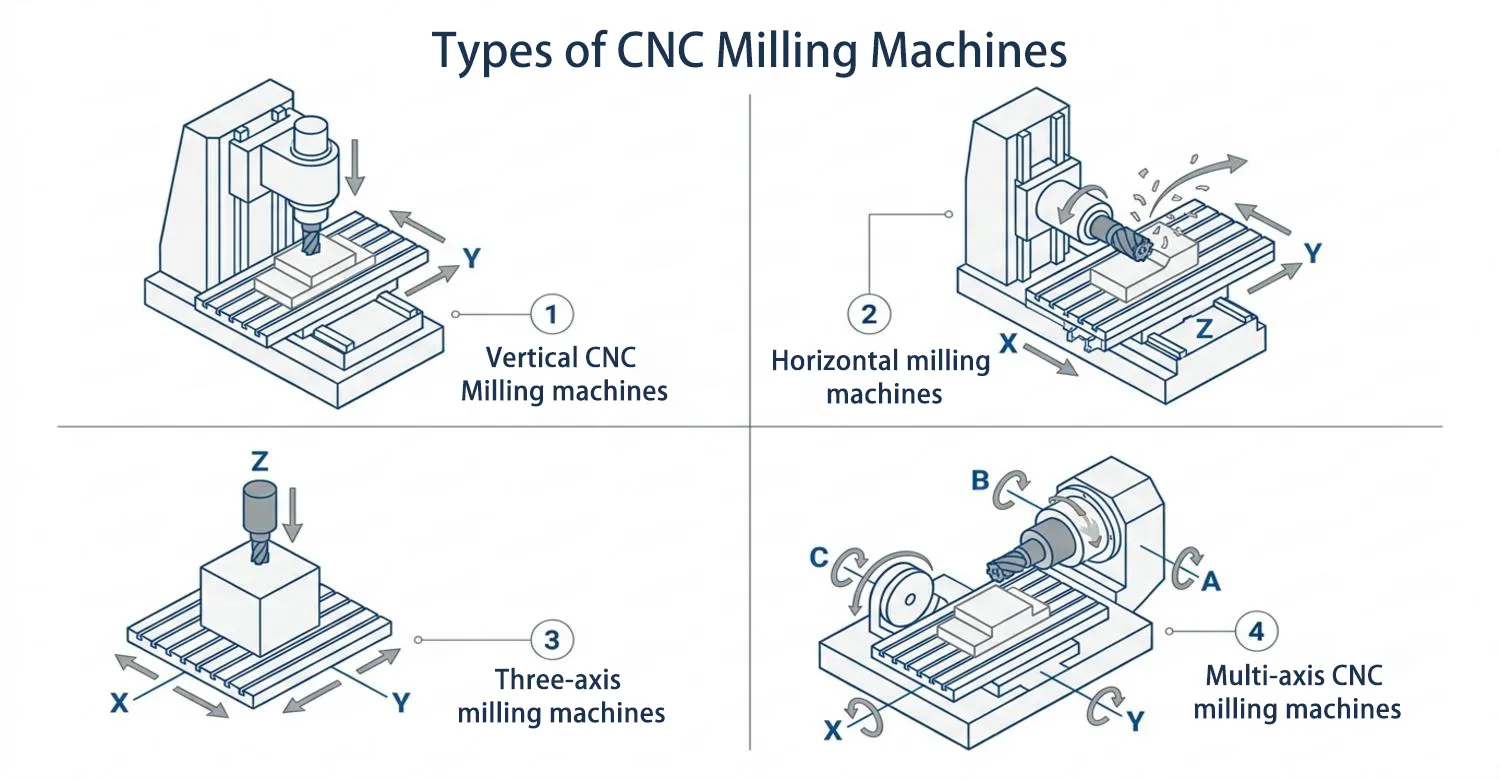
수직 CNC 밀링 머신
수직형 CNC 밀링가공기는 스핀들을 작업 테이블에 직각으로 배치합니다. 공작물 방향에 대한 절삭 공구의 수직 방향은 평평한 표면, 슬롯 및 캐비티 가공에 적합합니다.
The machines are widely used in machine shops due to their versatility and the fact that they occupy a comparatively small area. Vertical machining centers are used in prototyping, small batch production, and general machining.
수평 CNC 밀링 머신
수평 밀링가공기는 스핀들이 작업대와 평행하게 배치되어 있습니다. 이 설계는 기계 작동 중 만들어진 칩이 절삭 영역에서 멀리 떨어지도록 하여 절삭 효율을 높이고 열 발생을 줄입니다.
수평형 기계는 견고하고 무거운 공작물을 처리할 수 있기 때문에 대규모 산업 생산 환경에서 사용됩니다.
3축 CNC 밀링 가공기
3축 밀링 머신은 X, Y, Z 치수로 회전합니다. 이 기계는 다양한 부품을 생산할 수 있으며, 생산 공장에서 가장 일반적으로 사용되는 CNC 밀링 시스템 유형입니다.
다용도로 사용할 수 있지만 복잡한 형상을 가진 시스템에서는 3축 기계 시스템을 사용할 때 한 번 이상의 설정이 필요할 수 있습니다.
다축 CNC 밀링 가공기
4축 및 5축 CNC 밀링가공기에는 가공 중에 절삭 공구 또는 공작물을 기울이고 회전할 수 있는 추가 회전축이 통합되어 있습니다. 이를 통해 더 적은 설정으로 더 복잡한 부품을 제작할 수 있습니다.
Multi-axis machining is heavily applied in aerospace parts manufacturing 및 의료기기 제조, which require parts with complex shapes and tight tolerances.
표 1: 일반적인 CNC 밀링가공기 유형 비교
| 머신 유형 | 스핀들 방향 | 일반적인 축 | 일반적인 애플리케이션 |
|---|---|---|---|
| 수직 밀링 머신 | 세로 | 3-5축 | 일반 가공, 프로토타이핑 |
| 수평 밀링 머신 | 수평 | 3-4축 | 무거운 자재 제거, 생산 |
| 3축 CNC 기계 | 세로 또는 가로 | X, Y, Z | 표준 가공 작업 |
| 5축 CNC 기계 | 다방향 | X, Y, Z + 회전 | 항공우주 부품, 복잡한 형상 |
CNC 밀링 공정 워크플로
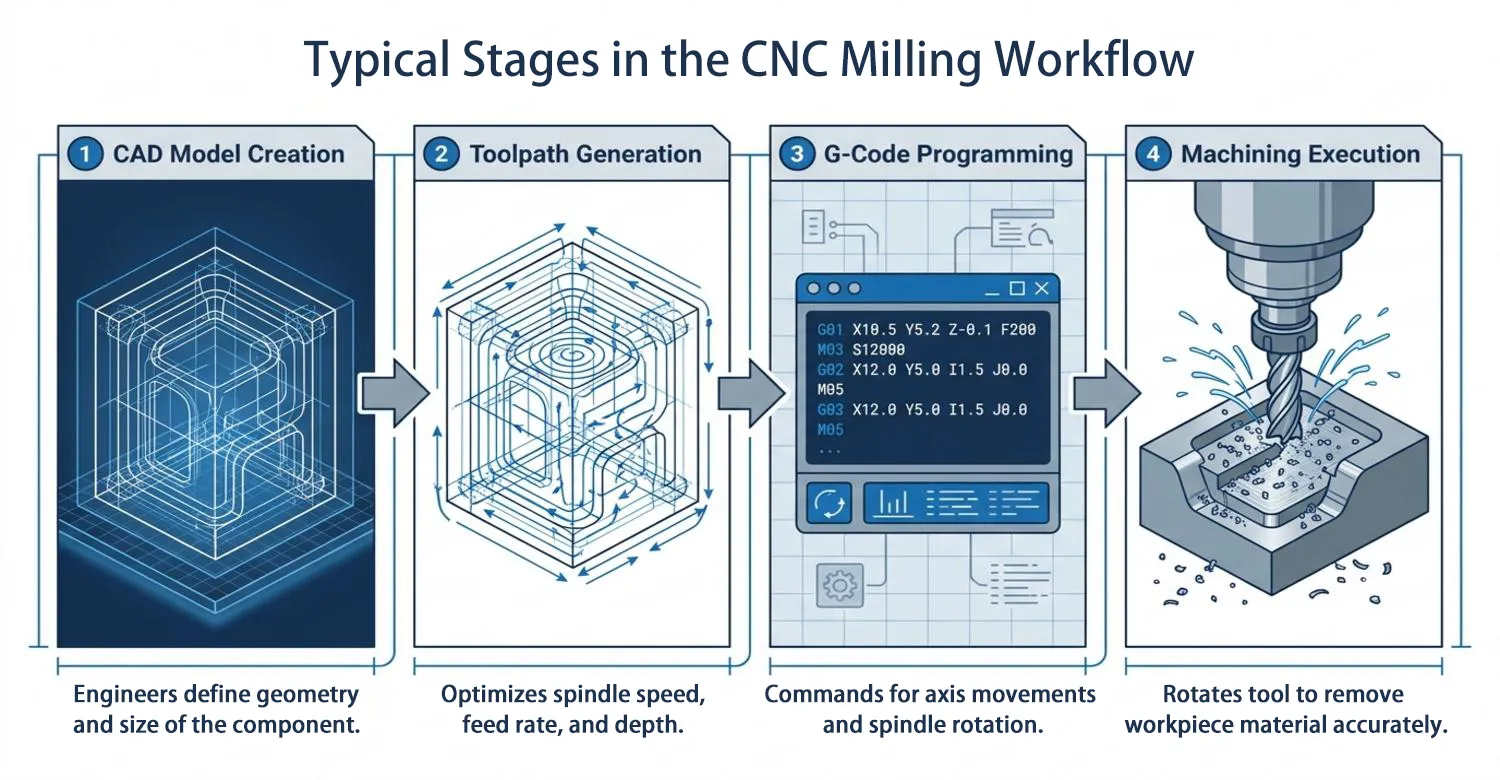
CNC 밀링 공정은 디자인에 대한 생각을 최종적인 실제 물리적 구성 요소로 변환하는 컴퓨터화된 체계적인 프로세스입니다. 프로세스의 각 단계는 최종 제품의 정확성과 효율성에 기여합니다.
CAD 모델 생성
CNC 밀링 워크플로는 컴퓨터 지원 설계 소프트웨어를 사용하여 3D 디지털 모델을 생성하는 것으로 시작됩니다. 이 단계에서 엔지니어는 부품의 형상과 크기, 특성을 정의합니다. 이러한 디지털 모델은 제조를 위한 청사진 역할을 하며 설계가 가공 지침으로 정확하게 변환될 수 있도록 합니다.
CAM 소프트웨어로 공구 경로 생성
The CAM system generates sophisticated toolpaths that dictate the precise movement of the cutting tool around the workpiece. Advanced CAM systems frequently utilize dynamic or trochoidal milling algorithms, which maintain a constant cutter engagement angle. This optimization can reduce roughing machining time by up to 40% to 50% while significantly extending tool life by preventing severe mechanical load spikes [3].
엔지니어가 지정하는 가공 매개변수 중 일부는 스핀들 속도, 이송 속도, 절삭 깊이입니다. 이러한 파라미터는 재료를 효과적으로 벗겨내고 공구 수명을 충분히 확보할 수 있도록 최적화됩니다.
G-코드 프로그래밍
공구 경로를 생성한 후 CAM 소프트웨어는 공구 경로를 기계가 읽을 수 있는 코드(G코드)로 변환합니다. 이 코드에는 축 이동, 스핀들 회전 및 기타 기계 작동을 위한 명령이 있습니다.
그런 다음 G코드 소프트웨어가 CNC 밀링 머신 컨트롤러로 전송됩니다.
머신 설정
작업자는 기계를 시작하기 전에 절삭 공구를 설치하고 공작물을 작업 테이블에 클램핑하여 기계를 준비합니다. 그런 다음 가공 작업에 적합한 좌표로 기계를 보정합니다. 적절한 기계 설정은 가공 프로그램이 잘 실행되도록 보장합니다.
가공 실행
프로그램이 시작되면 CNC 밀링 머신은 프로그래밍된 공구 경로를 자동으로 따릅니다. 공작물 재료를 제거하기 위해 절삭 공구의 높은 회전 속도와 높은 정확도로 기계 축을 이동하는 절삭 공정입니다.
이 작업은 파트의 원하는 최종 형상이 생성될 때까지 계속됩니다.
표 2: CNC 밀링 워크플로우의 일반적인 단계
| 워크플로 단계 | 설명 | 주요 도구 사용 |
|---|---|---|
| CAD 설계 | 디지털 부품 지오메트리 생성 | CAD 소프트웨어 |
| CAM 프로그래밍 | 공구 경로 생성 및 가공 전략 | CAM 소프트웨어 |
| G-코드 생성 | 공구 경로를 기계 명령어로 변환하기 | 포스트 프로세서 |
| 머신 설정 | 공작물 클램핑 및 공구 설치 | 고정 장치 및 툴링 |
| 가공 | 자동화된 자료 제거 | CNC 밀링 머신 |
일반적인 CNC 밀링 작업이란 무엇인가요?
CNC 기계는 많은 작업을 수행할 수 있으며, 이를 통해 제조업체는 공작물에 많은 기하학적 특징을 추가할 수 있습니다. 각 작업에는 절삭 공구와 재료 간의 관계를 결정하는 몇 가지 가공 전략이 있습니다.
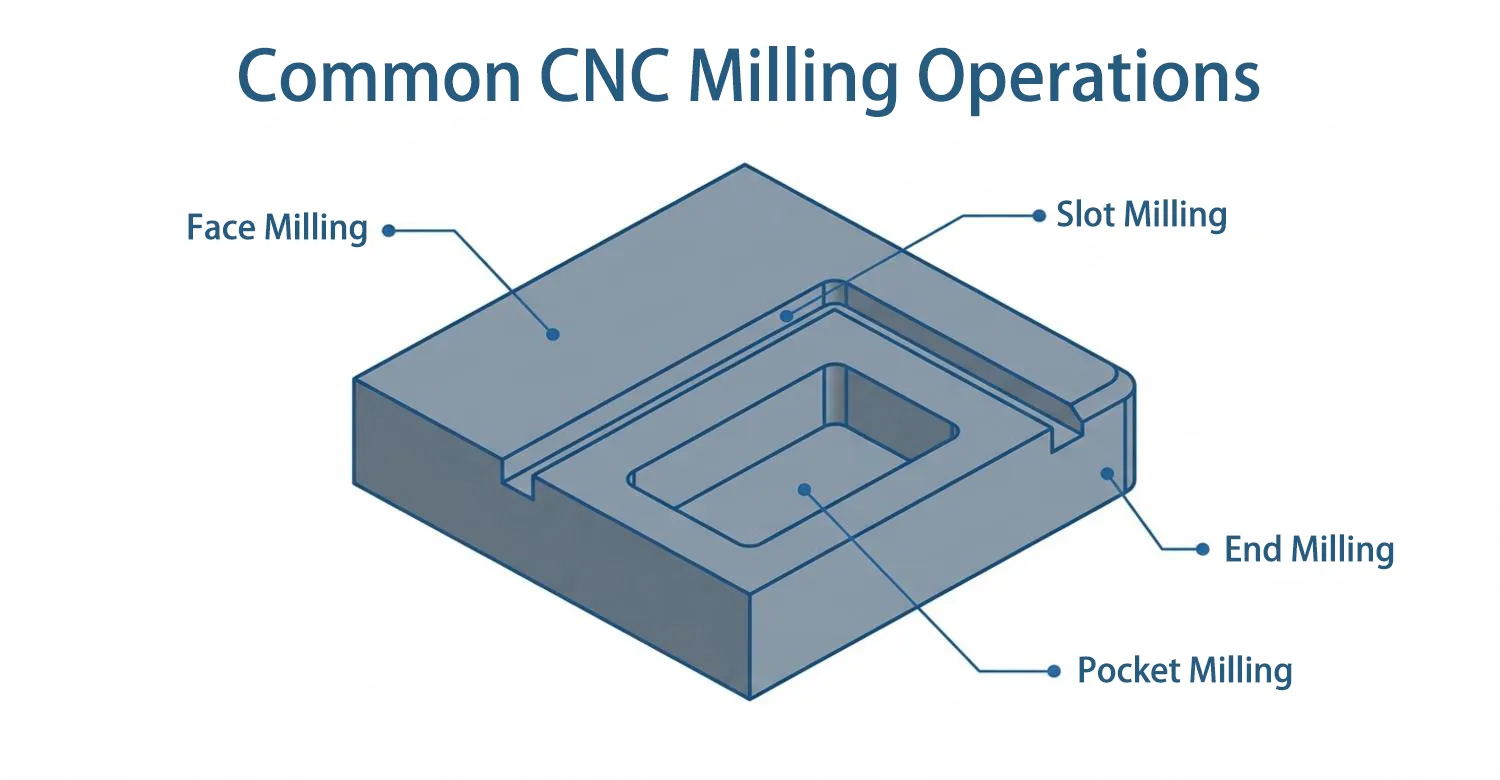
페이스 밀링
페이스 밀링(공작물 상단 표면의 재료 제거)은 평평한 표면을 형성합니다. 이 과정에서 페이스 밀이 회전하는 동안 공작물이 그 아래로 이동하면서 재료의 얇은 층을 서서히 깎아냅니다.
Face milling is also used for the preparation of raw stock material before subjecting the material to further machining processes. It is also applied in the production of flat mechanical components such as machine bases, mounting plates, and structural brackets.
엔드 밀링
엔드 밀링은 양쪽 끝과 끝이 날카로운 절삭 공구를 사용하여 수행됩니다. 이 공구를 사용하면 수직 및 수평으로 절단할 수 있으므로 매우 다양한 작업을 가공할 수 있습니다.
이 공정에서는 일반적으로 슬롯, 포켓, 프로파일 및 복잡한 3차원 윤곽을 만듭니다. 엔드 밀링은 금형, 금형, 하우징 및 복잡한 내부 특성이 필요한 제품의 기타 구성 요소를 제작할 때 종종 적용됩니다.
슬롯 밀링
슬롯 밀링의 목적은 공작물의 좁은 채널을 절단하는 것입니다. 이러한 채널은 기계 어셈블리의 키홈, 가이드 레일 또는 트랙과 같은 작업 채널로 활용될 수 있습니다.
자동차 제조 및 산업 기계 산업과 같은 다른 산업에서는 정밀한 정렬 기능이 필요한 부품을 생산하기 위해 슬롯 밀링을 적용하는 경향이 있습니다. 이 작업은 링이나 슬라이딩 기계를 부착하기 위한 홈을 생성하기도 합니다.
윤곽 밀링
컨투어 밀링은 공작물에 곡면 또는 고르지 않은 표면을 만드는 프로세스입니다. 절삭 공구는 컴퓨터 모델에 제공된 양식과 연결된 복잡한 3차원 경로를 따릅니다.
This is necessary, particularly in the aerospace and mold-making sectors. Contour milling might also be required for turbine blades, moulds, and highly detailed architectural models, such as this craft prototype of the Beijing Bird’s Nest
포켓 밀링
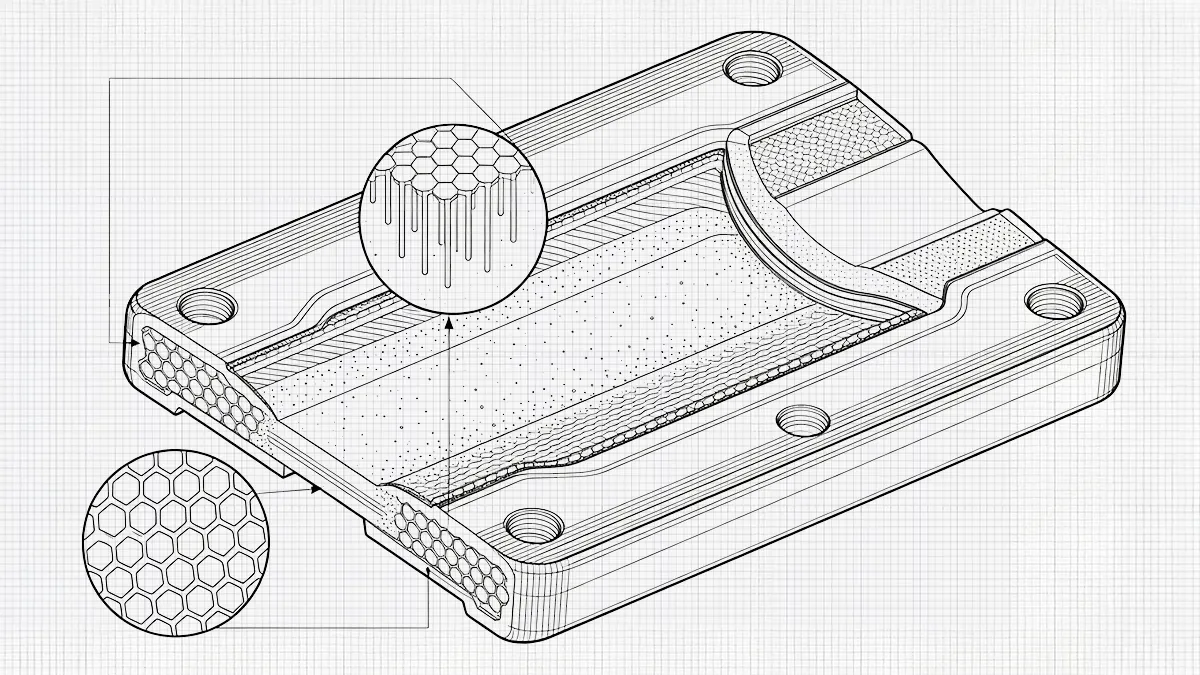
포켓 밀링 공정은 공작물의 알려진 영역을 내부적으로 절단하여 포켓 캐비티를 만드는 과정을 수반합니다. 부품을 캐비티에 장착하거나 일반적으로 부품의 무게를 줄이면서도 구조를 그대로 유지할 수 있습니다.
Pocket milling is widely used on aerospace structures, mechanical housings, and complex thermal management components like steel ventilated heat sinks. Through the tactical removal of the internal material, the engineers are able to maximize strength and weight.
CNC 밀링의 절삭 공구
절삭 공구는 공작물에서 소재를 얼마나 효율적으로 제거할 수 있는지를 결정하기 때문에 CNC 밀링 시스템의 기본 요소입니다. 공구 형상, 재료 구조 및 표면 마감에 따라 가공 성능과 수명이 결정됩니다.
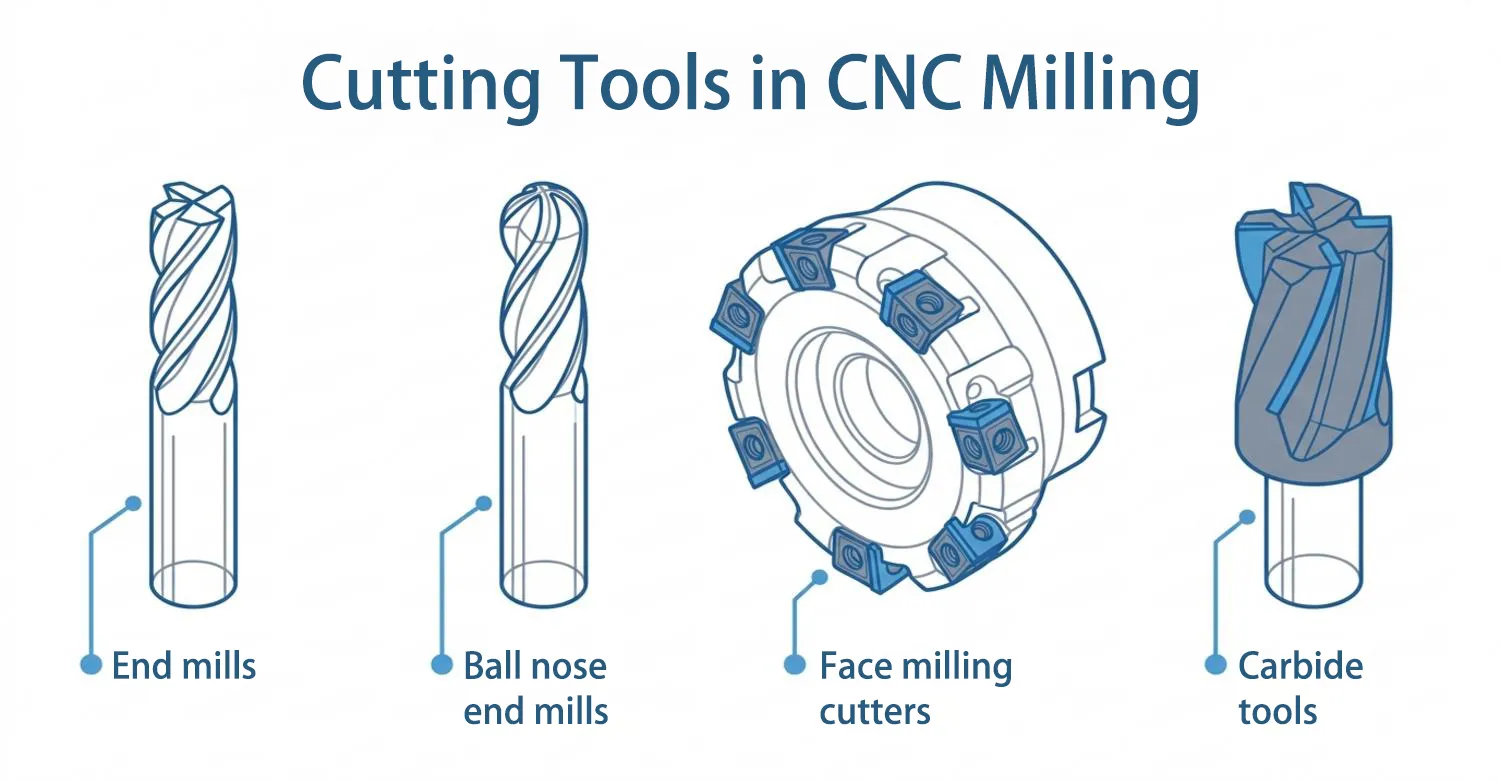
엔드밀은 CNC 밀링에 사용되는 가장 다재다능한 공구 중 하나입니다. 사용되는 모서리를 통해 프로파일링, 슬롯팅, 포켓 밀링과 같은 작업을 수행할 수 있습니다. 엔드밀은 가공 요구 사항에 따라 다양한 모양과 크기가 있습니다.
볼 노즈 엔드밀은 끝이 둥글기 때문에 매끄러운 곡면을 절단할 수 있습니다. 금형 제작 및 윤곽이 매끄러워야 하는 복잡한 표면 가공에 사용됩니다.
페이스 밀링 커터는 평평한 표면에서 재료를 제거하는 데 사용되는 대형 공구인 경우가 많습니다. 대부분의 밀에는 사용 후 회전하거나 교체할 수 있는 교체 가능한 카바이드 로터리 인서트가 있어 공구의 수명을 늘리고 운영 비용을 절감하는 데 도움이 됩니다.
절삭 공구를 제조하는 데 사용되는 재료는 매우 중요합니다. 예를 들어, 카바이드 공구는 고온에서도 경도를 잃지 않고 중장비 가공에 사용해도 손상을 입지 않아 인기를 끌고 있습니다. 질화 티타늄 및 질화 티타늄 알루미늄과 같은 다른 형태의 추가 코팅도 공구의 절삭 성능과 수명을 향상시킵니다.
가공 효율이 극대화되고 표면 조도의 품질이 향상되며 장시간 생산 공정에서 올바른 절삭 공구를 통해 절삭 공구 마모가 감소합니다.
CNC 밀링의 장점은 무엇인가요?
CNC 밀링의 장점은 다양하며, 이는 현대 엔지니어링에서 가장 신뢰할 수 있는 제조 공정 중 하나입니다. 가장 큰 강점 중 하나는 정확성입니다. 이는 디지털 지침을 사용하여 이루어지므로 CNC 기계는 매우 엄격한 공차와 큰 생산 차이로 부품 생산을 반복할 수 있습니다.
Another significant strength is versatility. The CNC milling machines can produce all types of geometries from a plain surface to a complex form. This is because of the flexibility that allows manufacturers to manufacture prototype parts and large production batches using the same equipment.
자동화는 또한 생산성을 높여줍니다. 기계 세트를 설정하고 가공 프로그램을 설치하면 많은 작업자 없이도 기계가 작동할 수 있습니다. 이는 제조 공정의 효율성을 높이고 인적 오류의 위험을 배제하는 데 도움이 되는 기능입니다.
CNC 밀링은 최신 디지털 제조 시스템과도 호환성이 높습니다. CAD와 CAM 소프트웨어의 통합으로 엔지니어는 설계와 생산을 어려움 없이 연결할 수 있어 제품 개발에 소요되는 시간을 크게 절약할 수 있습니다.
CNC 밀링의 한계는 무엇인가요?
이러한 장점에도 불구하고 CNC 밀링에도 한계가 있습니다. 가장 두드러진 문제 중 하나는 재료 낭비입니다. 이 공정은 단단한 블록에서 재료를 절단하는 데 적용되기 때문에 원래 재료의 많은 부분이 칩이나 스크랩이 됩니다.
또 다른 한계는 기계 및 툴링 비용이 상대적으로 높다는 점입니다. CNC 밀링 머신은 대규모 자본 투자가 필요합니다. 첨단 다축 CNC 기계는 가격이 엄청나게 비쌀 수 있습니다.
A three-axis machine can also require multiple setups or special fixtures to be utilized with complicated part geometries. Although multi-axis machines can overcome this issue, they need sophisticated programming and extravagant operational costs. Nevertheless, professional CNC 밀링 서비스 remain one of the most effective and frequently utilized solutions in the manufacturing industry today due to its reliability, precision, and flexibility.
참조
[1] Schwenke, H., Knapp, W., Haitjema, H., Weckenmann, A., Schmitt, R., & Delbressine, F. (2008). Geometric error measurement and compensation of machines—an update. CIRP 연보, 57(2), 660-675. https://doi.org/10.1016/j.cirp.2008.09.008
[2] Fallböhmer, P., Rodríguez, C. A., Özel, T., & Altan, T. (2000). High-speed machining of cast iron and alloy steels for die and mold manufacturing. 재료 가공 기술 저널, 98(1), 104-115. https://doi.org/10.1016/S0924-0136(99)00311-8
[3] Otkur, M., & Lazoglu, I. (2007). Trochoidal milling. 『국제 공작기계 및 제조 저널』, 47(9), 1324-1332. https://doi.org/10.1016/j.ijmachtools.2006.08.002




 KO
KO  EN
EN  ES
ES  FR
FR  DE
DE  IT
IT  PT
PT  NL
NL  PL
PL  AR
AR  JA
JA  ZH
ZH