
홈 / 오버몰딩 서비스
오버몰딩 서비스
Bond soft rubber directly onto hard plastic parts. We deliver comfortable grips and waterproof seals that never peel off, crack, or leak.
- 50+ Validated Rigid-Soft Pairings
- Zero Delamination & Flash-Free Edges
- Shore A 30 to D 80 Custom Grips
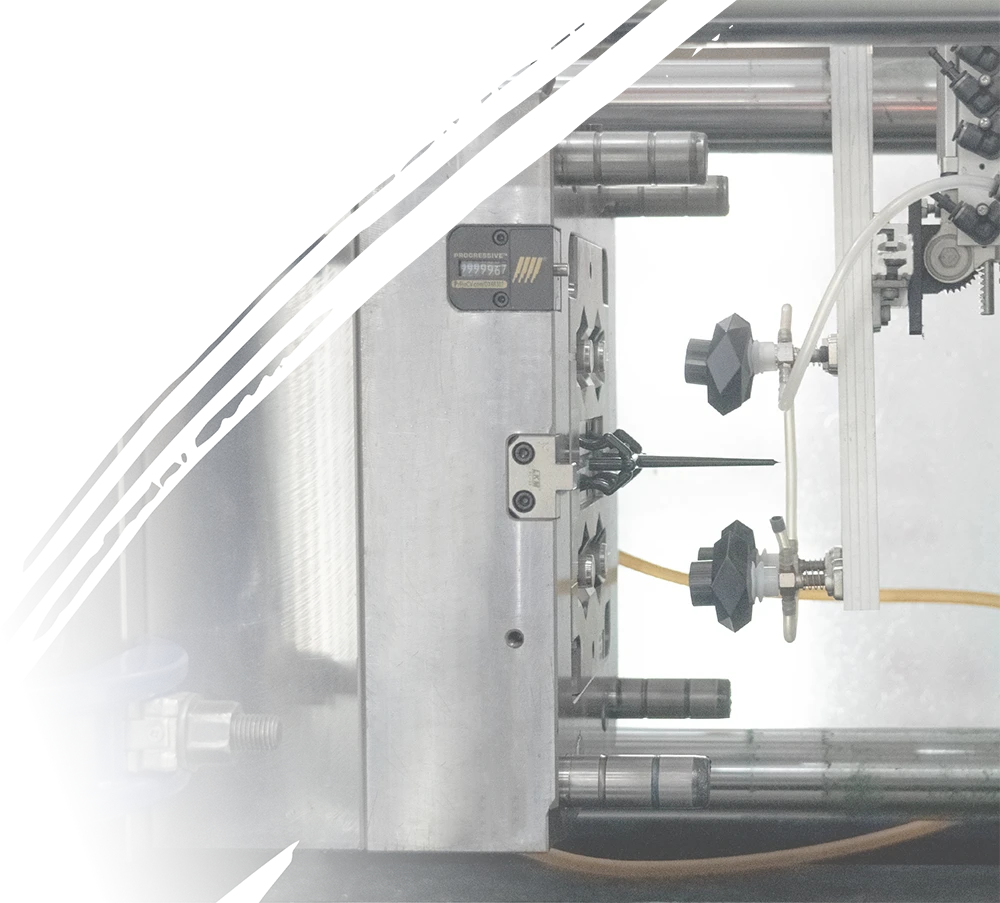
Compatible Overmolding Applications
In product design, you often need to improve grip, add waterproofing, or enhance appearance by wrapping a soft material (like TPE, TPU, or silicone) around a rigid plastic base. This is exactly what overmolding achieves. You see this everyday in tool handles, toothbrush grips, and rugged phone cases.
Unlike manual assembly or gluing, overmolding is a multi-step injection process that permanently bonds the second material directly onto the hard plastic substrate. For your projects, this means instantly adding ergonomic or protective features with no assembly gaps and zero peeling.
Tactile Surfaces
Adds soft, non-slip TPE or TPU to hard plastic parts. Commonly used for power tool handles, wearables, and control knobs.
Integrated Seals & Gaskets
Bonds rubber directly to housings to replace separate O-rings. Creates reliable IP67/IP68 waterproof and dustproof seals.
Impact Protection & Insulation
Uses thick rubber layers to absorb shock or provide electrical insulation. Ideal for rugged device corners and cable strain reliefs.
Two-Tone Aesthetics
Combines different colors or materials in one part to reduce assembly. Used for brand logos, cosmetic finishes, and soft hinges.


Case Study: Resolving Shrinkage in Thick-Walled Parts
Thick plastic components, such as cosmetic caps, often develop sink marks due to uneven cooling. In this video, our Engineering Director explains how splitting a thick section into a two-step overmolding process eliminates surface distortion while maintaining the required structural thickness.
Overmolding Equipment & Specifications At First Mold
Two-step overmolding runs on standard injection molding machines, meaning the true quality of the part is determined by the mold tooling. To machine exact shut-off surfaces and prevent liquid rubber from flashing, we build our molds using industry-leading equipment, including Haas 5-axis CNCs, GF+ high-precision CNCs, and Makino EDMs. The specifications below outline our production capabilities and key design parameters.
| 사양 | 기능 | 사양 | 기능 |
|---|---|---|---|
| Elastomer Hardness | Shore A 30 – Shore D 80 | Optimal Overmold Thickness | 1.5 – 2.5 mm (for ideal tactile feel); feasible down to 1.0 mm |
| Min. Substrate Thickness | ≥ 1.5 mm (general guide to withstand injection pressure) | Recommended Draft Angle | 1.0° – 2.0° standard; add 0.5° – 1.0° for textured surfaces |
| 본딩 방법 | Chemical Adhesion & Mechanical Interlocking | Adhesion Testing Standard | ASTM D903 (Peel) / ASTM D3359 (Cross-Hatch) |
| Parts Standard Tolerance | ±0.1mm (±0.004″) | Shut-off Precision (No Flash) | ±0.05mm (±0.002″) |
| Custom Color Matching | Pantone, RAL, Masterbatch Compounding | 재료 적합성 | RoHS, REACH, FDA Class VI, Biocompatible |


오버몰딩 기술을 위한 재료 조합
Handling 2+ new overmolding production commissions every month, First Mold’s engineering team has mastered the practical application of diverse resins and elastomers. We know exactly how to achieve a permanent, glue-free bond and prevent delamination.
| Soft Overmold | Excellent Bond | Good Bond | Poor Bond | 적용 사례 |
|---|---|---|---|---|
| TPE | PP | ABS, PC, PS | POM, Nylon | Automotive anti-rattle overmolds; strain-relief boots; diagnostic equipment grips |
| TPU | ABS, PC, PC/ABS | 나일론(PA) | PP, PE | Valve spool encapsulation; robotic cable joints; rugged sensor housings |
| TPV | PP | Nylon (special grade) | ABS, PC | Under-hood duct seals; EV charging weatherseals; outdoor equipment gaskets |
| TPR | PS, HIPS | PP | PC, Nylon | Precision instrument isolation pads; soft/soft suction cups; anti-vibration mounts |
| 바이오 기반 TPE | PLA, PBAT | PP | – | Diagnostic device housings; personal-care grips; compostable closures |
Why Partner with First Mold for Overmolding?
Ask yourself about your current supplier: Are their molds built in-house or outsourced? What is their aging degradation data for peel strength? When production defects arise, do they solve the root cause, or just point fingers?
Overmolding is an unforgiving process. Here is how First Mold ensures absolute accountability, verifiable quality, and the lowest total cost of ownership.
One Team for Tooling & Molding
Whether an overmolded bond holds and whether the shut-off stays clean are about 80% decided during mold design. Because our tooling makers and molding engineers work together under one roof, no one points fingers. You never have to act as the go-between for different vendors—if a problem comes up, we find the root cause and fix it ourselves.
Tested Precision & Proven Bond Strength
We measure adhesion and precision—and prove it with data. Our parts consistently achieve 180° peel strength of 1.5–3.0 N/mm (≥4.5 N/mm with plasma activation). We hold flash at critical shut-offs to ≤0.05 mm and parting-line clearance to <0.01 mm. In 72-hour salt spray tests, we validate zero delamination.
Deeper DFM Review
Every factory offers DFM, but we go further. We simulate flow to avoid air traps, screen material compatibility, and keep shut-off gaps safely within the process window. Using our historical defect database, we recommend proactive design changes—before any steel is cut.


Overmolding Design Guidelines for Product Designers
Successful overmolding starts with good CAD design. Our engineering team handles the complex tooling, thermal balance, and venting. Follow these design best practices to get a clean, flash-free bond from the first shot.
- Keep the soft overmold layer 1.5–3.0 mm thick. Never go below 0.5 mm. This helps the plastic flow evenly and gives a comfortable grip.
- Make the rigid substrate at least 1.5× thicker than the soft overmold. This keeps the part from warping under the high pressure of injection molding.
- Avoid sharp corners. Use a minimum radius of R0.5 mm on all corners. This reduces stress and prevents air from getting trapped.
- Avoid large flat bonding areas. Instead, add mechanical locks—such as undercuts, through-holes, or ribs—in the rigid substrate. These features physically hold the soft material in place.
- For deep holes or grooves deeper than 5 mm, add a reverse undercut at the end. This gives the rubber a place to hold and helps it release cleanly from the mold—without tearing or sticking to the mold cavity during ejection.
- Design a clear step or groove with a sealing edge of at least 1.2 mm. This gives the mold a clean surface to seal against, which helps prevent flash (excess material leaking out).
- Keep the soft/hard material boundary parallel or perpendicular to the parting line (where the mold halves meet). If an angle is needed, keep it below 45° to reduce tool wear and avoid rough edges.
Which Process Do You Need? Overmolding vs. 2-Shot vs. Insert Molding
Many designers use “overmolding” for any multi-material part. But choosing the wrong process can mean higher tooling costs or slower cycle times. Use this quick comparison to confirm the right process for your part—or visit our service pages for details.
| 프로세스 | 최상의 대상 | How It Bonds | 툴링 비용 | Typical Cycle | Typical Parts |
|---|---|---|---|---|---|
| 오버몰딩 | Soft grip on a hard plastic part | Chemical bond between soft and hard plastics (material compatibility required) | Medium | 30–60 sec | Tool handles, medical grips |
| 인서트 몰딩 | Plastic around a metal or plastic insert | Mechanical lock around the insert | Medium | 45–90 sec | 자동차 커넥터, 의료용 전극 |
| Two-Shot Molding (2K) | Two-color or multi-material plastic parts | Two plastics molded in one cycle and bonded/merged | 높음 | 20–40 sec | Two-color taillights, translucent keys |
Plastic Injection Molding FAQ

What files and information do I need for an accurate overmolding quote?
For a preliminary assessment within 24 hours, just send your 3D CAD file and estimated annual usage (EAU). If details are not finalized yet, we can quote based on reasonable assumptions and confirm them during DFM. We are also happy to sign an NDA before you send files.
For a more accurate quote, please also provide:
- Design files: 3D CAD (STEP, IGES, or native), 2D drawings (critical tolerances and cosmetic requirements), overmold boundaries, and mating parts for sealing/assembly review.
- Material & performance: Resin grades for the rigid and soft layers, Shore A hardness, operating environment (medical, outdoor, food contact, etc.), and test standards (peel strength, IP rating, salt spray).
- Project scope: Pilot and mass-production volumes, expected tool life, and target lead time.
What is the typical lead time for an overmolding tool and T1 sample?
It depends on the tool type.
- Quick tooling: as fast as 7 days for simple structures; typically 7–15 days.
- Production tooling: typically 3–6 weeks; complex tools can take up to 6 weeks.
Lead times start from DFM approval, PO/deposit, and confirmed production slot. T1 sample timing is confirmed in the quote.
Can I supply my own rigid substrates and ship them to First Mold for overmolding only?
Yes, but we don’t recommend it. Substrate tolerances, surface condition, and shut-off areas directly affect bond quality and flash. If you supply the substrates, we will quote incoming inspection and first-article approval; our responsibility covers the overmolding process only. We recommend letting us produce the substrate or review your supplier early.
Can you perfectly color-match the soft overmold to the hard substrate?
We can achieve a very close match, but not always a “perfect” one—soft and hard resins, pigments, gloss, and texture can cause slight differences. We match to your Pantone/color chip, confirm on T1 samples, and control production to an agreed ΔE tolerance. For best results, specify gloss and texture, and use the same colorant supplier where possible.
 KO
 EN
 ES
 FR
 DE
 IT
 PT
 NL
 PL
 AR
 JA
 ZH