

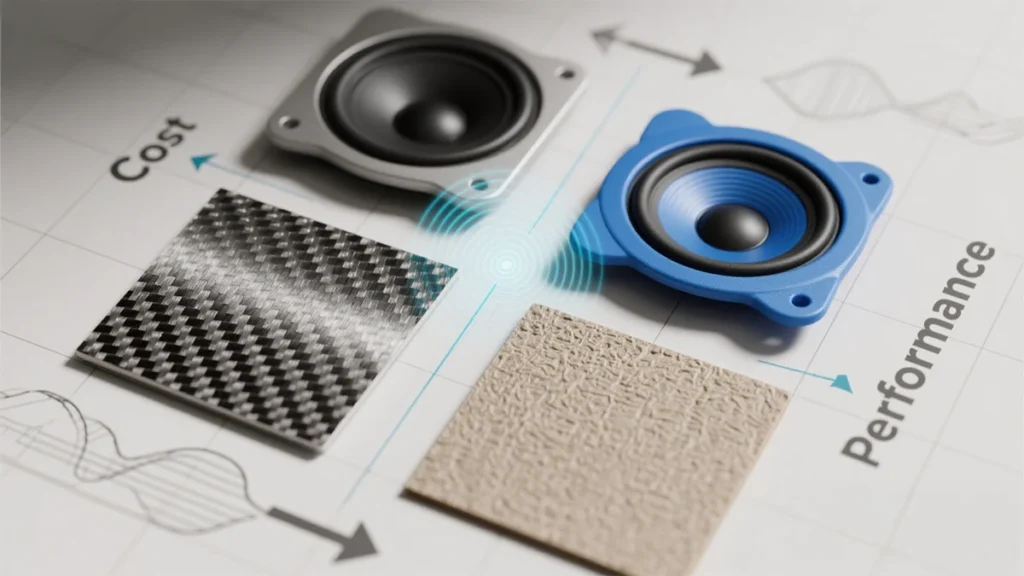
Speaker components are selected from a variety of materials based on rigidity, damping, and weight. The choice of speaker material will vary depending on the type and product. However, the ultimate goal is always to optimize sound reproduction. This is because the quality of sound and materials is directly related.
Speaker component materials can range from polypropylene to carbon fiber and metals for cones. Surround speakers typically use foam and rubber. Here’s how the different material properties can affect performance:
- Damping material: Damping is the ability of the material to stop vibrating when the signal stops. They lower unwanted vibrations and resonance. Plastics and rubber have good damping properties.
- Rigid material: They prevent the flexing and potential distortion of the cones at high volumes.
- Weight of material: Lighter materials like foam and paper are more responsive, while heavier materials handle high power. Each of these can affect the overall sound signature.
Speaker materials are the primary drivers of costs. It includes the costs of the raw material and the manufacturing complexity that will be required to use them to create high-fidelity sound.
The use of premium materials like metal alloys (titanium and aluminum) and special woods will significantly increase the costs. These materials are more durable and have superior acoustic properties. Budget speakers are usually made using plastic or paper.
Manufacturers of mid-range speakers usually include paper or plastic in certain areas to reduce costs. However, the speaker grill material is usually aluminum to give it a premium finish. Aluminum has excellent resistance to corrosion. Therefore, speakers with aluminum grills have the extra advantage of being suitable for indoor and outdoor use.
Other advantages that favor the use of aluminum as speaker grill material is their durability and lightweight. They can offer better protection for the internal components without significantly increasing the weight of the product.
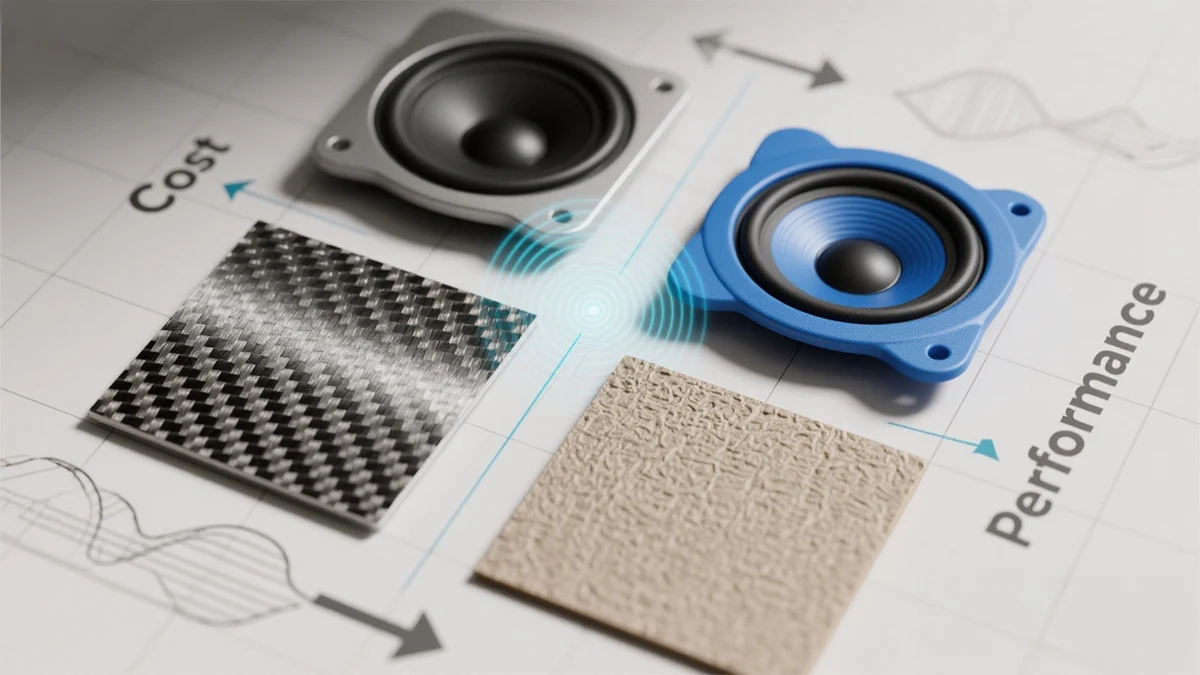
Material Costs Associated With Different Speaker Components
Working with high-end speaker material often necessitates the employment of intensive and specialized labor. For example, some parts may require over 100 manual soldering operations or extensive research and development to optimize the cabinet design. This will also push up the production costs.
Premium speaker materials like metal or wood are usually heavier compared to budget materials. Shipping and logistics costs of heavier materials will be higher compared to budget material. This is particularly an important consideration for overseas speaker manufacturers who would like to outsource production to companies in China or elsewhere.
Speaker Component Material Costs for Enclosure or Cabinet
As the name suggests, this is a rigid enclosure that houses one or more speaker drivers. The cabinet protects the delicate speakers and other components from external impact. The cabinet also shapes sound by separating front-projected sound waves from the ones projected from the rear. In other words, it prevents phase cancellation.
A cabinet or enclosure is the final link in the audio chain. It enhances bass and reinforces sound quality. Drivers (tweeters or woofers), wiring, and sometimes crossovers to separate high and low frequencies are contained in the cabinet. Here are speaker cabinet materials and their cost implications.
1. Metal like Aluminum (High Cost)
Fabricating a speaker cabinet with aluminum requires specialized labor, which comes with a steeper hourly wage. Nevertheless, aluminum, for example, proves its worth in durability compared to other speaker materials. It also reduces cabinet resonance. This premium choice comes with increased cost.
2. Plastic like Polypropylene or Polycarbonate (Low to High Cost)
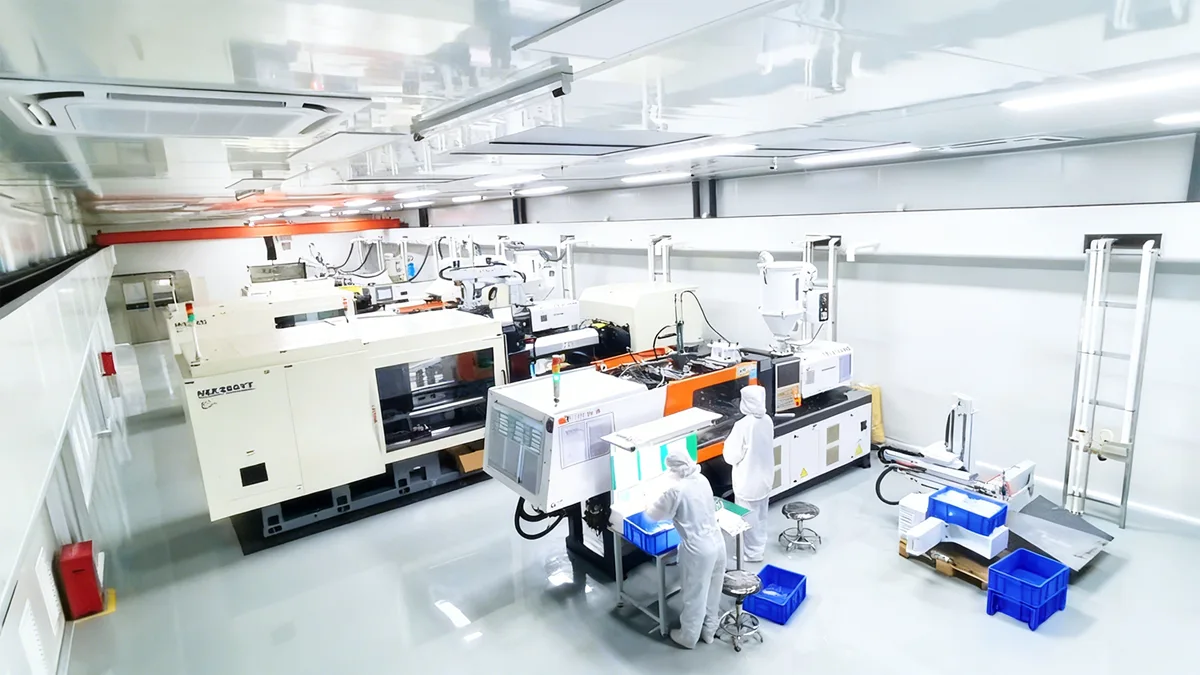
Plastic presents manufacturers with a means to create products of varying costs for different target customers. For example, plastic cabinets can be mass-produced using injection molding, which is cost-effective. However, the initial cost of creating steel injection molds adds high upfront costs. Plastic is mostly used for the mass production of budget, portable speakers.
3. Wood or Plywood (Moderate to High Cost)
Plywood is usually the choice for creating vintage-style speakers. They offer better acoustic properties. However, their greatest appeal is arguably in aesthetics. The artistic value placed on vintage-style speakers has contributed to pushing up their market value. Currently, wood is mostly associated with higher-end speakers.
4. Medium-Density Fiberboard (Moderate Cost)
MDF is a great speaker material choice for creating cabinets. It is commonly found in budget-to-mid-range speakers. They are mostly used because of their density and great resonance damping.
Speaker Driver Materials and Associated Costs
Speaker drivers can be compared to the engine of automobiles. It consists of transducers within the speaker cabinet that convert electrical audio signals into physical sound waves through vibrations.
It uses magnets and voice coils to move a diaphragm or cone back and forth to produce sound. Other components of a speaker driver include suspension (surround) and frame.
The different types of drivers include tweeters (the smallest for high-frequency sounds), mid-range (for middle frequencies like vocals), and woofers and subwoofers (the largest for low-frequency bass sounds). Below is a breakdown of the speaker materials that can be used for the cone or diaphragm, and how they can impact cost.
1. Beryllium (Extremely High Cost)
This speaker component material is reserved for elite, top-of-the-class speakers. It offers superior stiffness despite being lightweight. You will only find a few speakers on the market with cones made of beryllium.
2. Metal Alloy like Aluminum or Titanium (High Cost)
They are favored for high-frequency sound reproduction. It has a high rigidity-to-weight ratio, which allows for precise, low-distortion sound reproduction. The twin factors of lightweight and high response to electrical signals lead to excellent transient response, a vital property for reproducing sudden, sharp sounds. On the flip side, expensive engineering must be deployed to handle resonance.
3. Carbon Fiber (High Cost)
The high durability and excellent stiffness-to-weight ratio are properties that make carbon fiber desirable. It is a high-end speaker material, used for woofers and subwoofers. The rigidity allows the diaphragm to move like a piston rather than deforming. This reduces cone breakup and harmonic distortion. They can withstand high-energy, high-volume scenarios without warping. These benefits come with a huge cost.
4. Plastic like Polypropylene (Low to Moderate Costs)
Plastic offers a balance between performance and durability, without the high costs attached to the alternatives. The lower cost factor makes them the primary choice for budget speakers. Their resistance to moisture and other environmental factors makes them excellent for both indoor and outdoor use.
5. Paper (Low Cost)
It offers an excellent balance between lightweight and internal damping. Its high rigidity allows it to produce natural, warm, and detailed sound. However, their most important property for manufacturers is cost-effectiveness. Paper can be customized with coatings to improve durability and resistance to environmental factors.
Speaker Grill Material and Associated Costs
Speaker grills are protective screens placed in front of the speaker drives. It protects the drivers from damage from dust, children or pets. They can be made from plastic, metal, or fabric. They serve both aesthetic and functional roles.
Speaker grills can easily blend into room décor by hiding the drivers for an understated appearance. In rare cases, manufacturers can use grills to slightly diffuse or soften high-frequency sounds. Below is a detailed explanation of how different speaker grill materials can affect cost.
1. Metal like Aluminum (High Cost)
They are made with perforated aluminum. Aluminum use allows manufacturers to create different designs on the grills, including diamond and hexagonal shapes. They offer superior durability and protection against dents and scratches. While metal has a high upfront cost, higher durability will eventually lead to lower maintenance and replacement costs. Metal grills require more specialized manufacturing techniques, which pushes up their costs.
2. Plastic like Polystyrene and ABS (Low Cost)
Plastic is a great option for mass-producing budget-friendly speakers. The plastic grill can easily be produced in a single shot using custom molds. However, since plastic is not as durable as aluminum, it may wear out faster when exposed to harsh environmental conditions compared to metals.
3. Fabric like Acoustic Cloth (Medium Cost)
Specialized fabrics can be designed to protect the drivers while allowing sound to pass through with minimal distortion. An acoustically transparent cloth is usually more expensive than a non-permeable cloth. However, clothes can easily be damaged by pets or children. This leads to higher replacement costs in the long run.
| Speaker component material | Budget speaker material | High-end speaker material |
|---|---|---|
| Enclosure or Cabinet | Plastic, Thin MDF | Thick MDF, Hardwood, Metal |
| Diaphragm or Cone | Paper, Plastic | Carbon Fiber, Metal, Beryllium |
| Grills | Plastic | Fabric, Metal |
Other Factors that Affect Speaker Cost
Speaker component material is not responsible for the entire price you pay when you pick up a speaker from the shelf. Other factors that directly impact the cost of a speaker include:
- Performance: Speakers that handle 100+ watts are designed to be durable to avoid damage at high volumes.
- Features: The higher the number of features packed into the speaker, including active and passive noise cancelling, Bluetooth connectivity, Wi-Fi, and so on, the higher the cost will be.
Speaker sound and material are directly related. In other words, the material used for making the different components of a speaker will affect how it will sound. Manufacturers must find a way to balance sound and material, with the target market in mind.






 EN
EN  ES
ES  FR
FR  DE
DE  IT
IT  PT
PT  NL
NL  PL
PL  AR
AR  JA
JA  KO
KO  ZH
ZH