采用嵌入成型工艺生产电动滑板车轮毂

备注

我们与所有客户都签订了上市前保密协议。您看到的所有案例都已与我们的客户沟通过。我们对一些敏感信息进行了镶嵌处理。所有图片均来自 FirstMold 内部拍摄,感谢您的支持与合作~。

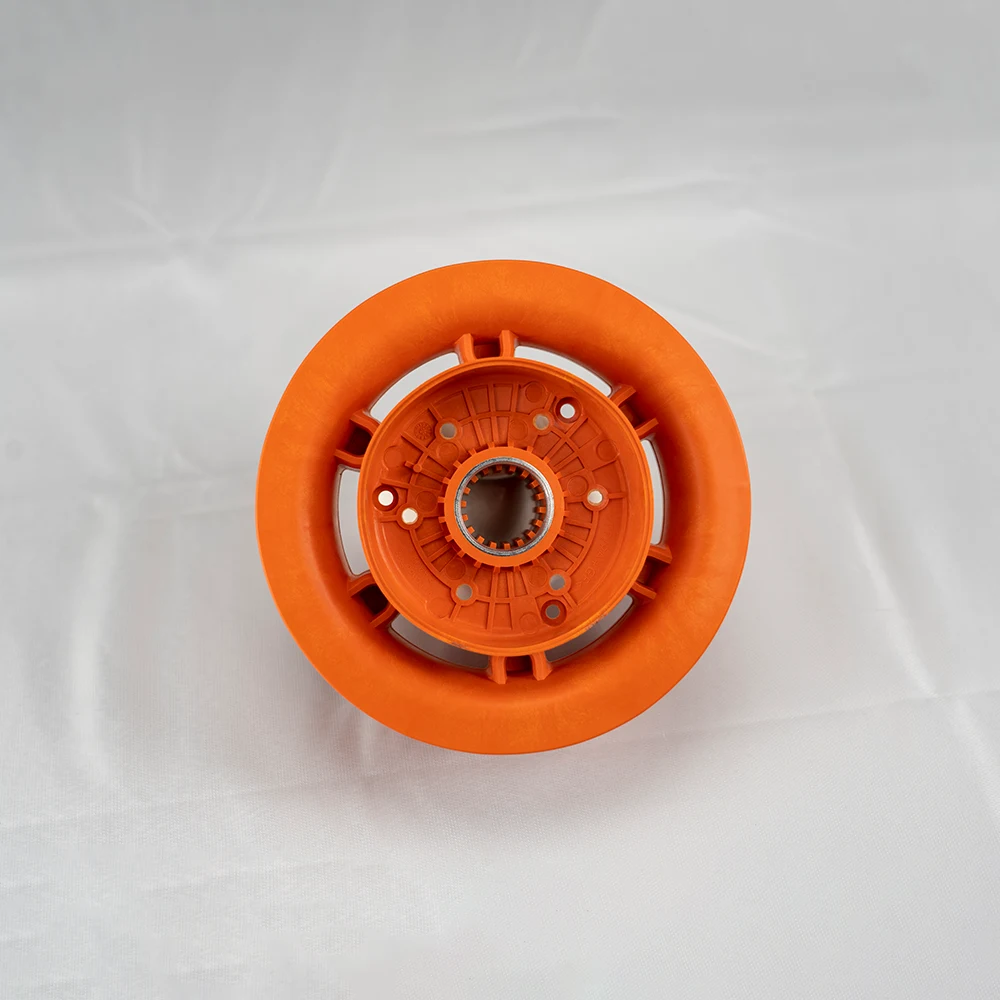
The rear electric scooter wheel hub has three key functions. Firstly, it serves as a structural load-bearing component. Secondly, it must be manufactured with precision dimensions, including an insert molded component, so that other components, like the electric scooter hub motor, can fit into it. Thirdly, it adds to the aesthetics of the scooter, just like automobile rims. The following considerations are necessary to achieve these goals.

  • 材料选择: Due to the load-bearing requirement, high-strength engineering plastic like polyamide (PA6/PA66) reinforced with fiberglass (GF) for stiffness is usually the preferred material. It has good wear and heat resistance, too.
  • Design optimization: This is necessary to prevent common defects like sink marks and warpage in electric scooter wheel hub manufacturing by maintaining consistent thickness. Ribs can also be added to increase strength without increasing thickness.
  • Mold design optimization: The electric scooter wheel hubmold design must optimize gate location, material flow path, and cooling channels to prevent defects. It should also have a provision for insert molding for steel or aluminum bearing housing.
  • Injection molding optimization: The injection molding of electric scooter wheel hub must optimize the molding parameters like melt temperature, mold temperature, injection speed, and holding time, depending on the material in use, to prevent degradation.
  • Structural integrity analysis: Finite Element Analysis (FEA) and Computer-Aided Engineering (CAE) are used to optimize hub support. The goal is to ensure the wheel can withstand repeated loads and impact.
  • Surface treatment and environmental adaptability: The surface treatment applied to the electric scooter wheel hub adds to its aesthetics. In addition to making the surface more appealing, the surface treatment should help the material to resist environmental elements like UV rays, temperature changes, and humidity for long-term stability.
  • Quality assurance: Electric scooter wheel hub production must implement a strict quality control process, from online inspection to process control and final product testing, to ensure the wheel hub meets design specifications and performance requirements.

客户要求

A well-known electric scooter manufacturer in China and a long-time friend of First Mold’s General Manager, James Li, approached our facility for comprehensive plastic mold making and insert molding services for electric scooter wheel hub manufacturing.

During the round table discussion to review the product blueprint and requirements, the client said, “First Mold is one of the mold manufacturers in China that we greatly respect, because of how they have assisted many manufacturers in bringing complex ideas to life. And we are confident this project will not be an exception.”

In response, the company’s Deputy General Manager, Ray Liu, said, “First Mold has been privileged to have some of the smartest engineers in the country. Leveraging advanced technologies, there is no limit to what our team can achieve”.

 The electric scooter wheel hub manufacturer wanted a production tooling that could handle PA6+30%GF. The surface of the electric scooter wheel hub mold should be polished enough to give a standard smooth surface to the molded part. The required tolerance for automated assembly was ±0.1mm. Also, the client wanted the mold to be optimized to prevent common defects.

挑战与解决方案

The electric scooter wheel hub manufacturer pointed out key critical concerns based on their previous experiences. This includes the shifting of the steel insert during material injection, inconsistent part tolerance that makes automated assembly difficult, and low production yield (≤90%).

Reacting to the concerns, Li said, “Every tool that leaves our facility passes through rigorous quality control screening to ensure they meet, and in most cases exceed, the customer’s expectations.”

Insert Shifting and Coaxiality Deviation

The central steel sleeve is the core of power transmission in electric scooters. During injection molding, the high-pressure molten plastic flow can impact the metal insert, causing shifting, tilting, and coaxiality deviation. If the deviation exceeds 0.05mm, the entire hub is scrapped and cannot be matched with the motor shaft.

Most factories lack precision insert positioning tooling, leading to a high rate of steel sleeve shifting during mass production. Some of the possible outcomes from steel insert shifting include motor assembly jamming and abnormal noise.

The best way to solve this problem is during the mold design. The team of First Mold engineers solved this problem using precision-machined pins in the electric scooter wheel hub mold to hold the steel sleeve in place. The outer surface of the steel sleeve was also modified to improve mechanical adhesion.

To further prevent the shifting of the steel sleeve, the team optimized the injection speed and pressure to minimize the impact force of the molten resin on the insert. The gate location was optimized, too. The gate was positioned in such a way that the molten resin gently fills around the insert rather than pushing it.

Shrinkage and Deformation Control of PA6 + 30% GF

Frequent issues reported with PA6+30GF include glass fiber blooming, shrinkage, and warpage. These problems lead to poor appearance and dimensional inconsistency. Consequently, the manufactured part will fail to pass high-end brand audits.

Some of the defects reported with PA6 are due to its high water absorption. Insufficient drying before molding can lead to bubbles and cracking. However, the shrinkage rate fluctuates significantly after reinforcement with 30% glass fiber.

In this electric scooter wheel hub project, the hub’s complex reinforcing ribs and grid structures, as well as uneven wall thickness, also cause inconsistent cooling shrinkage. This makes the part highly prone to warpage and deformation, which affects rim roundness and assembly accuracy.

First Mold overcame these challenges through a combination of processes that include process parameter optimization and mold design improvements. This includes drying the PA6 + 30% GF at a temperature range of 80°C to 90°C (176°F – 194°F) for 4-6 hours before injection molding. The goal is to achieve a moisture content of 0.1%-0.2%.

Additionally, the mold temperature was increased to the upper limit of the material’s specification. The team also made the following mold design improvements:

  • Optimizing gating to facilitate flow and lower shear
  • Proper venting, especially in areas where weld lines occur, to facilitate the removal of trapped air
  • Utilizing thick and short runners and gates to prevent excessive shear on the material

Insufficient structural strength

The grid reinforcing ribs, toothed structures, and mounting holes in this electric scooter wheel hub project feature a deep-cavity, thin-walled, and dense rib design. During injection molding, this can easily lead to:

  • Short shots (insufficient filling)
  • Insufficient weld line strength, making stress areas prone to fracture
  • Glass fiber blooming (fiber exposure), which affects appearance and weather resistance

Weld lines are prone to fracture, creating safety hazards under bumpy road conditions and leading to customer returns and recalls. First Mold eliminated weld lines through thoughtful mold design and adjusting process parameters.

Stringent Tolerance Requirements (±0.1mm)

As the core transmission component, the electric scooter motor hub requires tight tolerances of ±0.1mm for coaxiality, mounting hole positions, and rim dimensions—far higher than those of ordinary injection-molded parts. This poses a significant test for mold precision, injection molding processes, and inspection capabilities.

Large dimensional fluctuations make it impossible to meet the ±0.1mm precision requirement, limiting use to only low-end manual assembly. Dimensional fluctuations can make it hard for the electric scooter hub motor components to fit seamlessly, resulting in part rejection.

The team of First Mold engineers achieved the desired tolerance through design for manufacturability and by leveraging advanced hardware and software technologies. The mold design included uniform cooling channels and accounted for the specific shrinkage rate of PA6 + 30% GF. These interventions, combined with optimized processing conditions, helped the team to achieve a consistent ±0.1mm tolerance.

Balancing Efficiency and Stability in Single-Cavity Mass Production Molds

Single-cavity molds inherently have low efficiency. The situation was worsened by the hub’s complex structure, which makes debugging extremely difficult. Some of the major challenges that industry peers face include:

  • Frequent production shutdowns for mold adjustments
  • Low yield and uncontrolled costs
  • Inability to meet large-scale, stable supply demands

These challenges usually stem from insufficient experience in single-cavity mold debugging. When the mass production yield is below 90%, it leads to delayed delivery and situations where costs will far exceed the budget. The team achieved a production yield above 95% by optimizing the cooling system, optimal gate design, and precise parameter tuning.

客户使用 First Mold 解决方案的收获

The electric scooter wheel hub blueprint featured a complex design; the manufacturer faced the risk of being forced to redesign their product if they couldn’t find a mold maker that would create the right tool. Product redesign takes a lot of time, and can be costly too. By working with First Mold, the client was able to avoid that eventuality.

“We had already formed our marketing around the design in the blueprint,” said the client when they received their tooling with test samples. “Changing the design midway would have been a serious dent on our brand image and create distrust among our customers”.

First Mold did not just accept the electric scooter wheel hub mold manufacturing project, but also made sure the client received the working tool well ahead of the deadline. The collaboration also gives the client access to expedited maintenance and replacement parts.

常见问题

如何防止电动滑板车电机轮毂嵌入成型中的钢套移位?

在设计层面上,模具制造商可以使用弹簧销、磁力座、机械陷阱、关闭表面、机械固定特征和过盈配合来防止钢套筒在嵌件注塑中移位。具体使用哪种技术通常取决于设计限制。.

如何提高单腔嵌件成型的成品率?

优化镶件设计以防止树脂注射过程中的漂移、改进模具设计(如优化浇口位置和适当的排气)以及适当的工艺优化,这些对于提高单腔电动滑板车电机轮毂镶件模具的成品率都至关重要。.
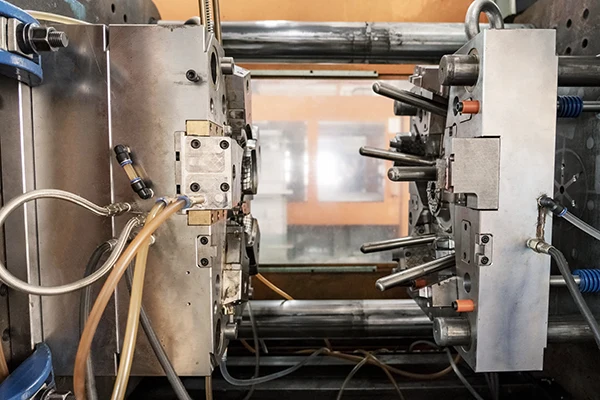
使用镶件模具通过注塑工艺制造汽车车轮
使用镶件模具通过注塑工艺制造汽车车轮
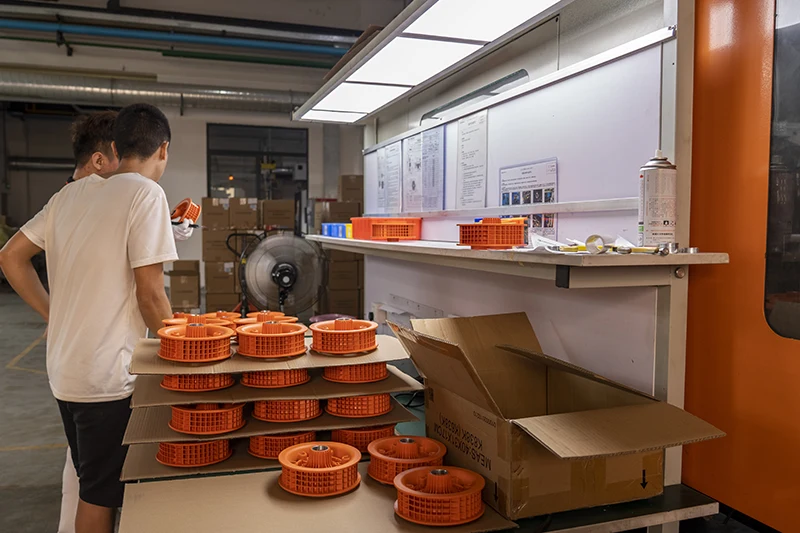
工人们正在登记已完成注塑的车轮数量,并准备装箱
文章标签
zh_CNZH