

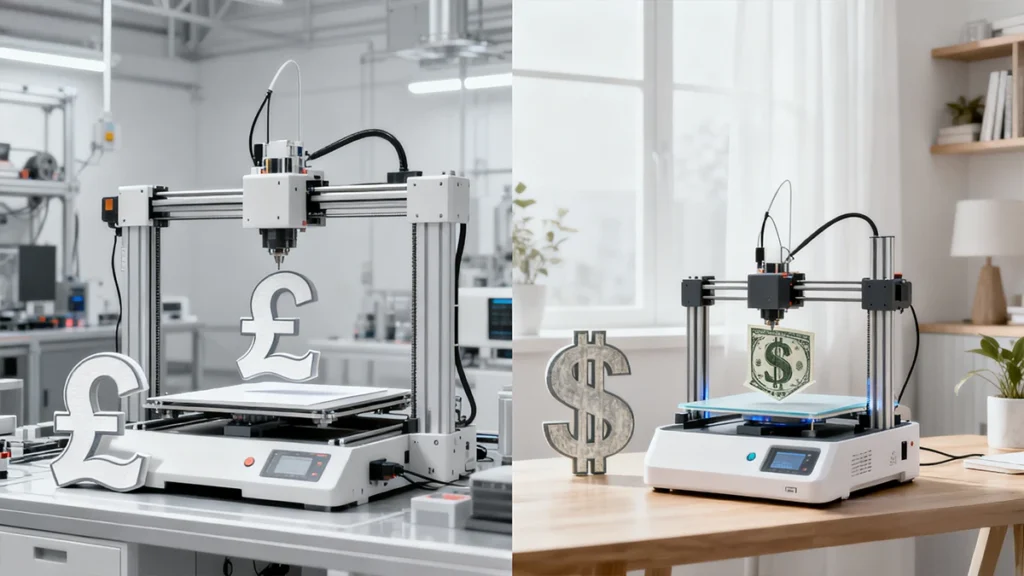
The quest for more efficient automation of manufacturing processes and the building of precision products led to the creation of 3D printers. They use additive methods to build three-dimensional objects from a digital model created using CAD software. While this technique is fascinating, manufacturers often weigh the 3D printing price and wonder if it is worth it in the long run.
Printing production technique allows manufacturers to create complex geometries with high precision. Other reasons why 3D printing is considered for manufacturing are that it allows faster prototyping, significantly cuts down material waste, and makes production accessible to all sizes of businesses.
Manufacturers hoping to exploit the printing technique have the option to either outsource the process or do it themselves (DIY). The cost of 3D printing will significantly vary depending on how the manufacturer handles the production. This article will highlight everything you need to know about the true price of 3D printing.
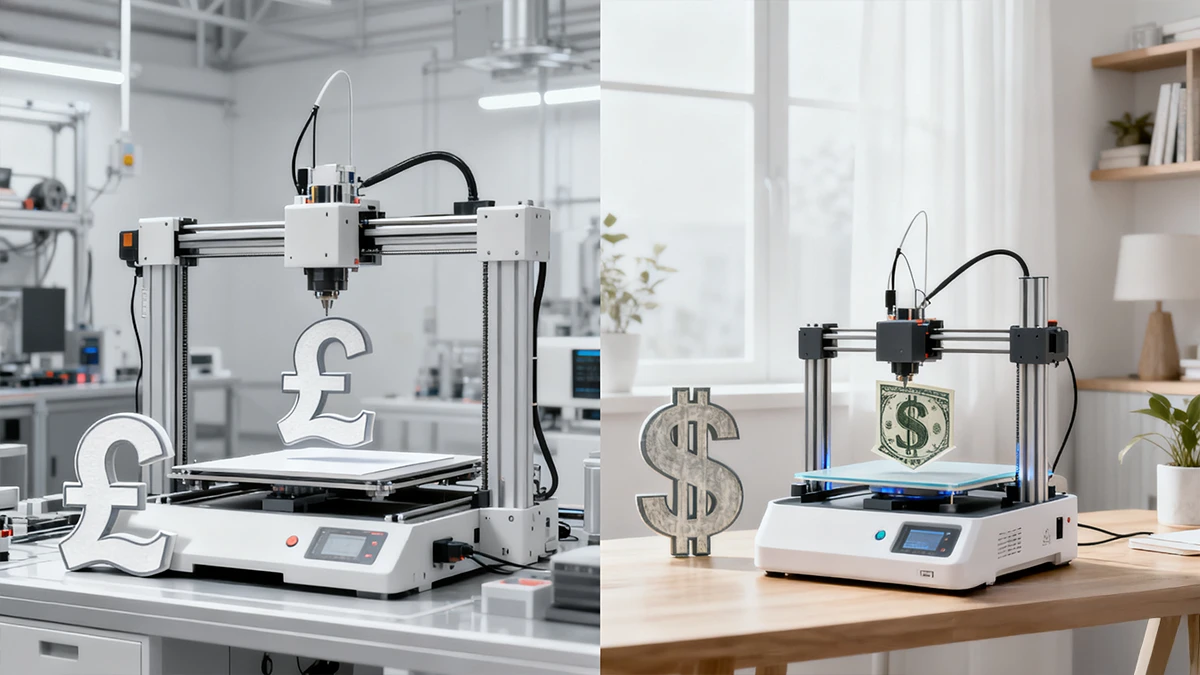
Breakdown of 3D Printing Costs When Outsourcing
Outsourcing your 3D printing removes the need for upfront capital investment in acquiring the technology. In the prototyping phase or small-scale runs, doing this frees up funds for the manufacturer to invest in other critical sectors.
Several factors will affect the 3D printing outsourcing cost, including the size and number of parts, the complexity of the design, the type of 3d printing material, the exact technique that will be used in developing the product, and the quantity and quality of labor that will be involved in post-processing.
Size and Number of Parts
The larger the size of the part to be produced, the more material will be required. Direct material costs usually take up 30% to 70% of the entire production costs, depending on the industry [1]. The automotive industry usually has higher material costs. Likewise, the greater the number of parts you want, the more materials will be required, which will also add to the cost.
Complexity of the Design
Complex designs will usually require more materials, which pushes up the 3D printing price. Additionally, more labor will be required in the post-processing of complex designs to fine-tune the details. As you already know, labor is expensive, especially if you are manufacturing in the United States. One way to cut down on labor costs is through nearshoring.
The Type of Material
3D printing can be done with different materials, including plastics (nylon, PLA, TPU, and so on), photopolymer resins, and metal or carbon fiber powders. The choice of material will depend on the 3D printing technology in use and the intended properties of the part in production.
Plastic materials are mostly used with FDM printers or Fused Filament Fabrication (FFF) printers. Metal powders are usually used with Direct Metal Laser Sintering (DMLS) or Binder Jetting, while resins are used with Stereolithography (SLA). Each material has its cost implications [2]. Plastic is the most common and most affordable.
| 3D Printing Materials | Properties | Cost ($) per kg |
|---|---|---|
| Plastics | BiodegradableEasy to printBrittle and less heat-resistant | PLA: 15 – 40ABS: 20 – 50Nylon: 40 – 100TPU: 40 – 100 |
| Resins | Offers a good balance of mechanical propertiesHigh-quality surface finish | Standard resin: 20 – 50ABS-like resin: 40 – 200 Medical resin: varies |
| Metals | High-strength and durabilitySuitable for printing complex parts | Aluminum: 50 – 100Stainless steel: 50 – 100Titanium: 300 – over 1,000 |
The 3D Printing Technology
There are different 3D printing technologies, and the materials they handle differ. Fused Deposition Modeling (FDM) melts and extrudes plastic filaments to create the product. They are the most common and most affordable. However, the products from this machine need more post-processing, which is labor-intensive. The table below shows the comparison of the different 3D printing costs.
| 3D printing method | Materials used | Process | Industrial application | Cost profile |
|---|---|---|---|---|
| FDM | Thermoplastic filaments | Melts and extrudes materials to build a product | Low-volume production of automotive parts | Most affordable |
| SLA | Liquid resins | Light cures liquid resin to form solid parts | Highly detailed, smooth surface parts | Moderately affordable |
| SLS | Powder material (mostly nylon) | Use a laser to bind powder materials | Medical, automotive, aerospace | Moderately affordable |
| Direct Metal Laser Sintering | Metal powder | Use a laser to melt metal powder | Aerospace for engine parts and brackets | Most expensive |
When to Outsource 3D Printing to Save Cost
Outsourcing is best for a manufacturer trying to prototype a new product or validate a production process. Here are some of the times when you can save on 3D printing costs by outsourcing the printing process.
- Your budget doesn’t allow investment in tooling, staff training, materials, and maintenance of the technology.
- If you only need a few parts per project or every month, it is better to outsource than invest in a machine that would be idle most of the time.
- When a part needs a tight tolerance or is too complex to be manufactured in-house, outsourcing to specialized service providers will help you overcome the problem.
- Outsourcing 3D printing can help you to scale production on demand and stay on top of fluctuating market needs for your product.
- Outsourcing is also a great way to learn about 3D printing technologies, especially if you are planning to integrate it into your workflow.
The DIY Cost of 3D Printing
To 3D print your products in-house, you must understand the cost implications so that you can adequately prepare for it. The major cost implication that is easy to see is purchasing the printer and the material. However, there are other hidden 3D printing costs that you should consider as well. Two of the hidden costs that will test the efficiency of your DIY process over time include electricity and maintenance costs.
Cost of the 3D Printer
The price of a 3D printer has continued to drop since it first hit the market. Depending on the type of printer you want, the precision, and build volume, the price can start from just above $100 and rise to thousands of dollars. Here are the estimated prices of popular printers:
- Basic FDM printers: $150 – $500
- Prosumer printers: $800 – over $2,000
- Resin printers: $300 – over $1,000, excluding curing station
| Types of printers | FDM Printer | SLA Printer |
|---|---|---|
| Equipment price | $150 – $500 | $300 – $1,000+ |
| Material cost | $15 – $40 per kg | $50 – $200 per kg |
| Efficient material use | Less efficient due to support structures and infill. Failed prints are also possible | More efficient due to hollow out prints |
| Energy usage | 50 to 150 watts during printing | Consumes more energy than FDM, up to 250 watts |
| Cost of maintenance | Nozzles wear out frequently and cost $15 to $20 to change | The resin vat’s FEP film needs occasional replacement, as well as the light source |
| Labor cost | Requires labor-intensive post-processing | Post-processing requires less intensive labor |
Cost of 3D Printing material
The price of 3D printing material will have a significant impact on your overall expenses. A standard PLA filament will cost around $15 to $40 per kilogram, depending on your supplier, while a kilogram of resin can cost $50 to $200. However, the price of specialty materials can exceed $100 per kg.
Ideally, 1kg of PLA can print 30 to 40 phone pouches or small phone stands. That will mean each product costs $1 or less. However, printing is not a hundred percent efficient. Adjusting for failed prints will push up the 3D printing cost.
Cost of electricity
3D printers work with electricity and would usually consume 50 to 250 watts of electricity per hour, or 0.05 to 0.25 kWh. If a print lasts for 10 hours, the printer would have consumed 0.5 kWh to 2.5 kWh of electricity.
Since the average electricity rates in the United States range from $0.12 to $0.15 per kWh, running a machine with an energy consumption of 0.5 kWh will cost $0.06 to $0.075 per print in the electricity bill [3]. While that may seem small, it can add up if you print a lot.
Cost of maintenance
The nozzles of 3D printers will clog, and the belts will wear out. The standard nozzles made of brass will cost around $5 to $25, and depending on usage, will last anywhere from 3 to 6 months. Specialty filaments will cause the nozzles to wear out faster.
Wear-resistant or hardened steel nozzles can cost anywhere from $20 to $60. If you are manufacturing products that are constantly in demand, the real 3D printing cost will be the financial loss from the downtime.
Cost of the model
If you have no idea of how to create the model using CAD software, you will need to outsource or purchase one. Purchasing a model can cost over $50, while hiring a designer to create a custom model can cost around $17 to $30 per hour on Upwork.
When to DIY your 3D Printing Project
Outsourcing is usually done to speed up production and cut down upfront tooling costs. It is important to know when outsourcing makes sense and when it is more profitable to do the production in-house. To cut down the 3D printing price in the long run, produce in-house if:
- You make small product runs: 3D printers will pay for that initial upfront cost if you produce repeated small product runs, since filaments are highly affordable
- You want total control of your production process: In-house printing allows the manufacturer to create fully customized parts or accessories, which can be used for promotions
- Your business print-on-demand: This eliminates the risk of investing in the creation of products that won’t sell
- The prototyping project involves multiple feedback loops: In-house printing will allow for quick testing and refining of the product prototype
- 3D printing is at the center of your company’s innovation strategy: Having a 3D printer will allow the manufacturer to learn about how it works and give them the opportunity to innovate around the hardware
How to Cut 3D Printing Costs Without Sacrificing Quality
How you design your 3D model will determine the quantity of the material that will be used during the printing. Therefore, it is always important to optimize your 3D model to cut down on material use, which, by extension, will lower the cost of production. Cutting down on the material usage will also shorten the printing time. Some of the design modifications that can help cut 3D printing price include:
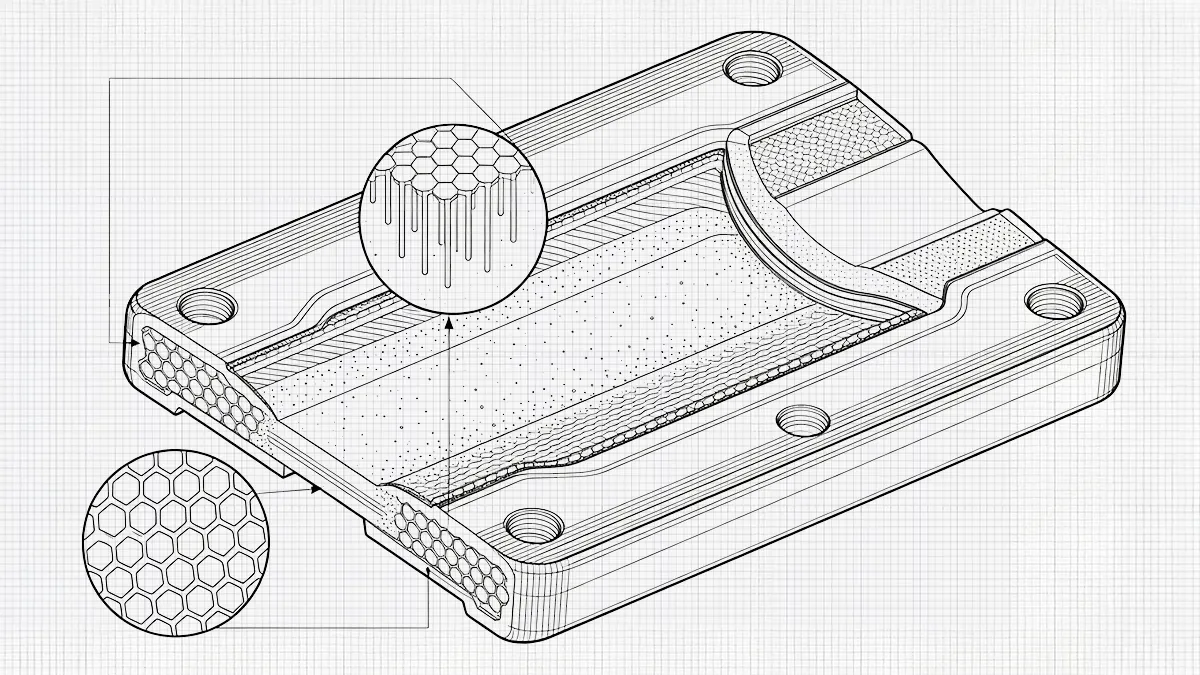
1. Create honeycomb or gyroid infill patterns
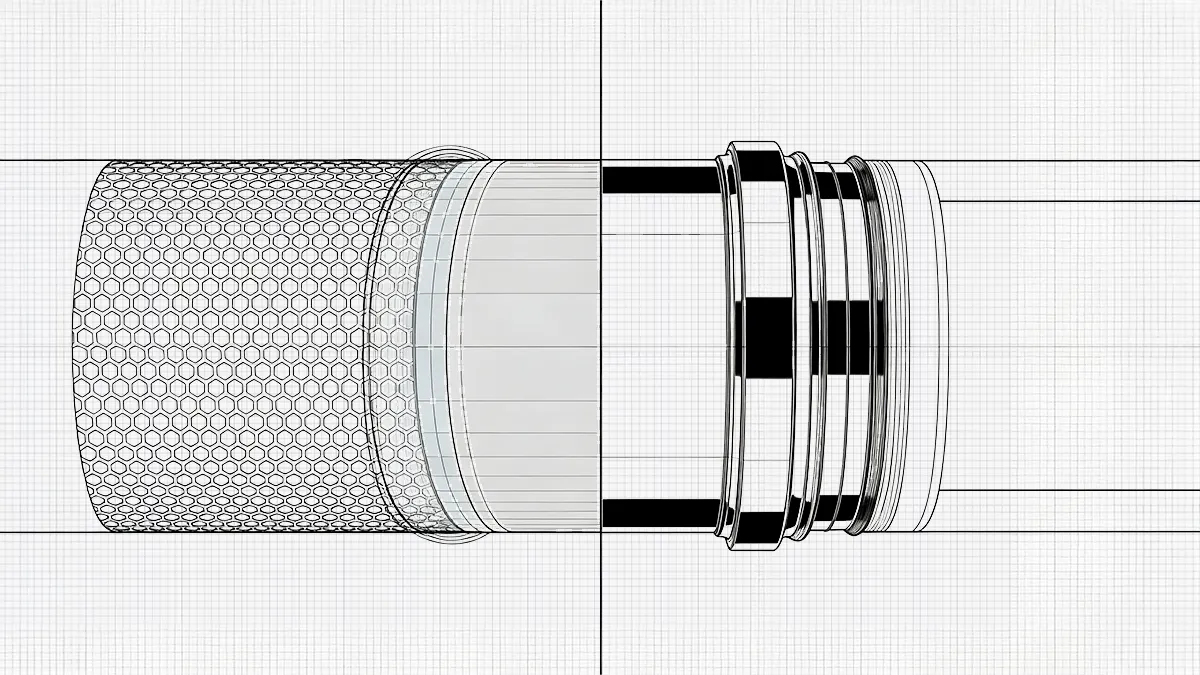
Instead of 100% solid fill, which consumes more material, use 10 to 20% gyroid or honeycomb infill patterns in FDM to create strong, lightweight parts without compromising on thermal, mechanical, and vibrational properties. When using resin or powder printing, hollow out the inside of the model and add a drainage or holes for unused materials to escape.
2. Make parts with thinner walls
Conduct multiple tests to find the minimum wall thickness required to maintain the integrity of the part for the intended application. Adjusting the wall thickness to use less material will save on 3D printing costs. Thinning the walls of non-load-bearing parts will significantly save material. Designers can use specialized software to analyze and identify non-load-bearing areas.
3. Combining parts
Where possible, consolidate parts into a single print rather than printing multiple separate parts that will be joined during the assembly. Printing one single unit will not only lower assembly time but also eliminate the need for fasteners or other part joining techniques, which will add to the cost of 3D printing.
Supplier Selection: The Ultimate 3D Printing Cost-Saving Checklist
Managing the cost of 3D printing starts with selecting the right supplier, especially if you are outsourcing your printing process. The right partner should also advise you on areas where you can save costs. Here’s a checklist that will guide you in picking the right supplier.
Purpose of the Project
Is the product intended to be a visual prototype, a functional mechanical part, or a polished display model? Properly defining the project will guide you in the material and technology selection.
Choice of Technology
FDM is the most affordable and best for the production of low-cost functional prototypes, if a polished finish is not necessary. SLA produces smooth surfaces but costs more.
Selection of Appropriate Material
While standard PLA filament is very affordable, design optimization may allow you to use higher-quality material without increasing the 3D printing price. The right supplier should guide you on appropriate material selection.
Post-Processing costs
Determine if you will need post-processing and the exact method that would be used. The right supplier should detail necessary post-processing services rather than automatically adding them to your quote.
Compare Quotes
Get quotes from different suppliers and compare for both price and transparency. Also factor in the delivery time when making your decision.
Access their Experience
Ask the supplier to provide you with samples to evaluate the quality and dimensional accuracy of their deliveries. Conduct an independent investigation to find reviews from their previous clients.
Communication
Always choose a supplier that will proactively tell you about the progress of the project.
Logistics
When outsourcing overseas, consider the logistics, how fast it can be delivered, and whether you are supposed to pay duties or it will be handled by the supplier.
After obtaining the quote for 3D printing costs, it may be a great idea to compare it with the costs of other methods, like injection molding, to see which method better serves your purpose at the lowest possible budget. First Mold 3D printing service will not only offer a transparent 3D printing quote but also help you with the comparison and better advise you on the way forward.
Tips: You may also like “Comparison between injection molding & 3D printing“.
References
[1] Samani, N. (n.d.). All you need to know about direct material costs. Deskera. https://www.deskera.com/blog/direct-material-costs/.
[2] MET3DP. (n.d.). Cost analysis of 3D printing metal powder. MET3DP. https://met3dp.com/3d-printing-metal-powder-202404034/.
[3] ElectricChoice. (2025, September 16). Electricity rates. ElectricChoice. https://www.electricchoice.com/electricity-prices-by-state/.




 EN
EN  ES
ES  FR
FR  DE
DE  IT
IT  PT
PT  NL
NL  PL
PL  AR
AR  JA
JA  KO
KO  ZH
ZH