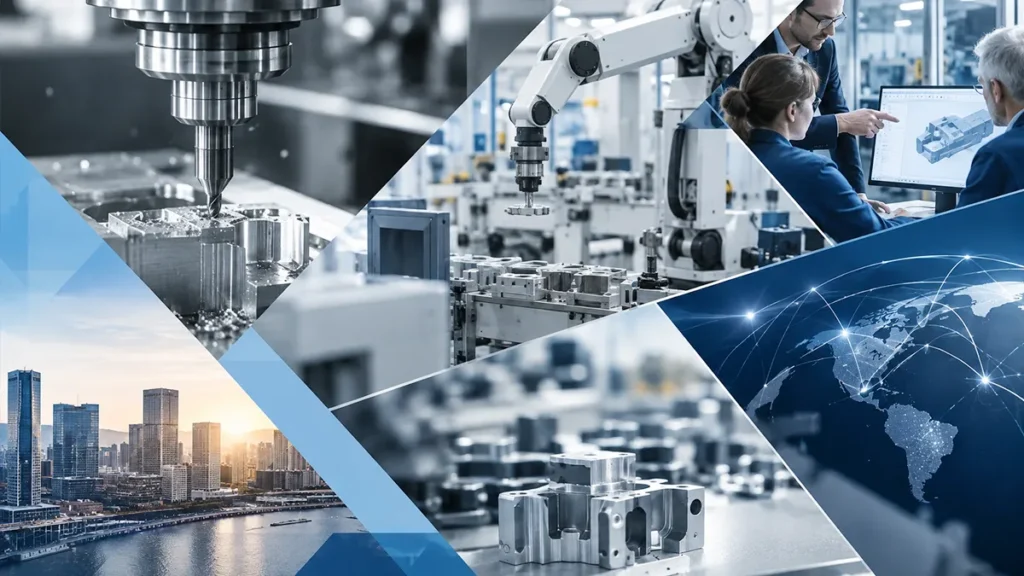
Les usines ne deviennent pas plus simples. Contrôle qualité piloté par l’IA, chaînes d’approvisionnement qui ne cessent de se rompre, systèmes OT qui n’ont jamais été conçus pour communiquer avec des plateformes cloud… la liste des problèmes non résolus ne cesse de s’allonger. Les ERP traditionnels gèrent les achats. Mais ils ne gèrent pas un automate programmable qui affiche des codes d’erreur à 3 heures du matin. Cet article passe en revue sept fournisseurs qui s’efforcent réellement de combler cette lacune, et explique comment déterminer lequel correspond le mieux à votre activité.
Qu'est-ce qui pousse les fabricants à enfin moderniser leurs installations ?
Quatre éléments qui ont changé la donne
Pendant des années, la “ transformation numérique ” s'est surtout limitée à des présentations PowerPoint. Ce n'est plus le cas aujourd'hui.
- La convergence entre les technologies opérationnelles (OT) et les technologies de l'information (IT) est désormais inévitable. Les systèmes SCADA, les plateformes MES, les progiciels ERP et les capteurs IoT sont censés partager des données en temps réel. Or, l'infrastructure sur laquelle reposent la plupart des usines n'a pas été conçue à cette fin. Combler ce fossé demande un travail considérable.
- Les ransomwares ont touché le secteur industriel plus durement que tout autre secteur. La campagne Cl0p de 2023 constitue un bon exemple : des dizaines de fournisseurs industriels touchés, des temps d'arrêt importants, des pertes financières considérables. Le modèle « Zero Trust » n'est désormais plus une option.
- La mise en conformité avec la réglementation européenne est rapidement devenue complexe. REACH, ELV, le « passeport batterie » de l'UE. Si vous approvisionnez des équipementiers européens, la traçabilité des matériaux est désormais au cœur des préoccupations techniques.
- Le retard en matière d'IA commence à se faire sentir. Les usines qui ont mis en œuvre la vision par ordinateur pour la détection des défauts et la maintenance prédictive entre 2023 et 2024 fonctionnent de manière plus efficace. Celles qui ne l'ont pas fait s'en rendent compte.
Comment choisir le bon partenaire technologique
Ce qui compte vraiment lors de l'évaluation des fournisseurs
Oubliez la présentation des compétences. Posez les questions qui font réfléchir :
- Gèrent-ils l'intégration OPC-UA et l'informatique en périphérie, ou s'agit-il uniquement de tableaux de bord SaaS ?
- Quels outils propriétaires proposent-ils, au-delà des certifications de partenaires ?
- Peuvent-ils démontrer leur capacité à assurer la conformité aux normes IMDS ou ELV à l'aide d'exemples concrets de clients ?
- Quel est le calendrier de mise en œuvre réel chez un client comparable ?
- Les études de cas de référence contiennent-elles des chiffres précis — ou se contentent-elles de mentionner une “ amélioration de l'efficacité ” ?
Les fournisseurs ci-dessous ont été sélectionnés pour leur diversité géographique et leur expertise technique. Il s'agit d'un grand acteur et, pour le reste, d'entreprises de taille moyenne — car celles-ci sont souvent plus spécialisées.
Les entreprises à suivre en 2026
DXC Technology

Plus de 45 ans d'expérience dans les technologies de l'information appliquées à l'industrie. Ce n'est pas un argument marketing : l'entreprise gère plus de 300 environnements critiques à l'échelle mondiale et a développé des outils propriétaires qui en témoignent. MaCS gère la fabrication connectée. IMDS assure la conformité des matériaux. CDX gère les échanges numériques tout au long de la chaîne d'approvisionnement.
Des résultats concrètement avérés : le groupe KION a réduit le délai de mise à disposition du matériel de 12 semaines à 12 heures sur Azure. Un fournisseur de titane a évité $8,7M d'amendes administratives par trimestre grâce à la plateforme IoT et d'analyse de DXC. IDC l'a désigné comme « leader » dans le domaine de l'IoT industriel en 2025. Pour en savoir plus sur les services destinés au secteur manufacturier, cliquez ici : https://dxc.com/industries/manufacturing
Siemens Digital Industries Software

Teamcenter, Opcenter, Xcelerator : Siemens a développé une suite logicielle dédiée à la fabrication qui a fait ses preuves depuis des décennies dans les secteurs de l'aérospatiale, de l'automobile et des équipements lourds. Ses fonctionnalités de jumeau numérique comptent parmi les plus abouties du marché.
La collaboration de 2024 avec NVIDIA sur la simulation d'usine dans le métaverse industriel était bien réelle et concrète. Elle convient particulièrement aux grands fabricants disposant de plusieurs sites, où les systèmes PLM et MES doivent fonctionner comme un seul et même système. Ce n'est pas l'option la plus simple, mais c'est justement sa richesse qui fait toute la différence.
Hexagon AB

Basée en Suède, une entreprise à la fois discrète et sérieuse. La plateforme d’Hexagon couvre la gestion de la qualité, la métrologie (machines à mesurer à coordonnées PRISMO, systèmes à bras articulé ROMER), la planification de la production et la simulation — le tout relié via son environnement Nexus.
Nexus relie les données de conception, d'ingénierie et de production tout au long du cycle de vie complet. Particulièrement performant dans les secteurs de l'aérospatiale et de la fabrication de précision, où la généalogie des pièces et les tolérances dimensionnelles sont déterminantes. Sans fioritures. Indispensable dans les flux de travail de certains des plus grands équipementiers européens des secteurs de la défense et de l'automobile.
Aras Corporation

Une solution PLM d'entreprise destinée aux fabricants évoluant dans des secteurs où la complexité est la norme : aérospatiale, défense, dispositifs médicaux, automobile. Ce qui distingue Aras, c'est son architecture : sa plateforme « low-code » permet aux fabricants de configurer des flux de travail sans avoir à modifier le code source.
Cela se traduit par des mises à niveau plus rapides et moins coûteuses. GE Aerospace et Airbus figurent tous deux parmi nos clients. Aras Innovator est utilisé dans plus de 100 pays. Nous ne cherchons pas à rivaliser sur les prix, mais sur la configurabilité dans des environnements où les plateformes génériques échouent.
Interfaces Tulip

Sans code, axé sur l'atelier, rapide à déployer. Tulip permet aux ingénieurs des procédés — et non aux développeurs — de créer des instructions de travail numériques, des listes de contrôle qualité et des tableaux de bord pour les opérateurs à l'aide d'une interface de type « glisser-déposer ». S'intègre d'emblée aux automates programmables (PLC), aux systèmes ERP et aux capteurs des machines.
Medtronic, Johnson & Johnson et JABIL comptent parmi ses utilisateurs. Une solution idéale pour les fabricants de taille moyenne, tiraillés entre des processus analogiques et des ambitions numériques, qui ont besoin d’une solution opérationnelle en quelques semaines plutôt qu’en plusieurs trimestres. Un positionnement simple, et qui fonctionne.
Fabrication critique

Basée au Portugal, cette entreprise est spécialisée dans la production de semi-conducteurs, de composants électroniques et de dispositifs médicaux — des secteurs où le suivi de chaque composant tout au long de centaines d’étapes n’est pas une option, mais une nécessité.
CM MES gère la généalogie, le SPC et l'intégration des équipements à un niveau que les plateformes plus générales ne parviennent généralement pas à atteindre. L'entreprise ne cherche pas à couvrir tous les secteurs d'activité. Elle dispose d'une solide base de clients parmi les usines de semi-conducteurs et les fabricants électroniques sous contrat de premier rang en Asie et en Europe. Un champ d'action restreint, mais une exécution irréprochable.
Hitachi Vantara

La société mère, Hitachi Ltd., fabrique des trains, des ascenseurs et des équipements électriques. Ce contexte opérationnel n’est pas anodin : il a influencé la manière dont Hitachi Vantara a conçu sa plateforme Lumada Industrial IoT, qui relie les données OT (technologies opérationnelles) des usines aux analyses et aux charges de travail d’IA avec une approche plus concrète que la plupart des autres solutions.
Déployé dans les secteurs de l'énergie, de l'automobile et de l'industrie lourde. Le projet d'usine connectée de Stellantis constitue une référence concrète et vérifiable. Fortement implanté au Japon et en Asie du Sud-Est. En pleine expansion en Europe, notamment dans les secteurs de l'énergie et de l'industrie discrète.
Conclusion
Aucun fournisseur ne constitue à lui seul la solution idéale pour tous les fabricants. DXC et Siemens disposent de l’expertise la plus approfondie à l’échelle de l’entreprise. Hexagon et Critical Manufacturing se concentrent sur des domaines précis et approfondis : la précision, les systèmes MES et la conformité. Aras, Tulip et Hitachi apportent chacun une solution à un problème spécifique différent. La vraie question n’est pas de savoir quelle entreprise ressort le mieux dans un tableau comparatif, mais laquelle a déjà résolu votre problème concrètement – dans une usine, et non pas lors d’une présentation commerciale.
FAQ
Un fournisseur proposant des logiciels, des services ou des plateformes destinés à optimiser la production, le contrôle qualité et les opérations de la chaîne d'approvisionnement. Cela peut inclure des solutions MES, PLM, l'IoT industriel, l'analyse par IA ou des outils de mise en conformité — parfois l'ensemble de ces éléments.
Les progiciels de gestion intégrée (ERP) gèrent les processus métier : finance, achats, planification. Les systèmes de gestion de l'exécution de la production (MES) gèrent l'atelier : ordres de fabrication, équipements, contrôles qualité, traçabilité. Ils sont conçus pour fonctionner ensemble. Mais ce n'est souvent pas le cas.
Renseignez-vous sur la prise en charge du protocole OPC-UA, la conformité à la norme IATF 16949 ou la manière dont ils gèrent la traçabilité des processus dans un environnement à forte diversité de produits. Des réponses vagues ou le fait de se référer à la présentation commerciale sont des signes révélateurs.
Pour la détection de défauts par vision artificielle, la maintenance prédictive des équipements rotatifs et la prévision de la demande — oui. Avec des résultats avérés. Pour les discours généraux sur la “ transformation par l'IA ” sans cas d'utilisation spécifique — le scepticisme est la réaction qui s'impose.
Connecter les systèmes de l'usine (automates programmables, SCADA, machines CNC) aux plateformes cloud, aux outils d'analyse et aux progiciels de gestion intégrée (ERP) afin qu'ils partagent des données en temps réel. Lorsque cela fonctionne correctement, la visibilité ainsi obtenue est réellement utile. Dans le cas contraire, on se retrouve avec des tableaux de bord auxquels personne ne fait confiance.





 FR
FR  EN
EN  ES
ES  DE
DE  IT
IT  PT
PT  NL
NL  PL
PL  AR
AR  JA
JA  KO
KO  ZH
ZH