
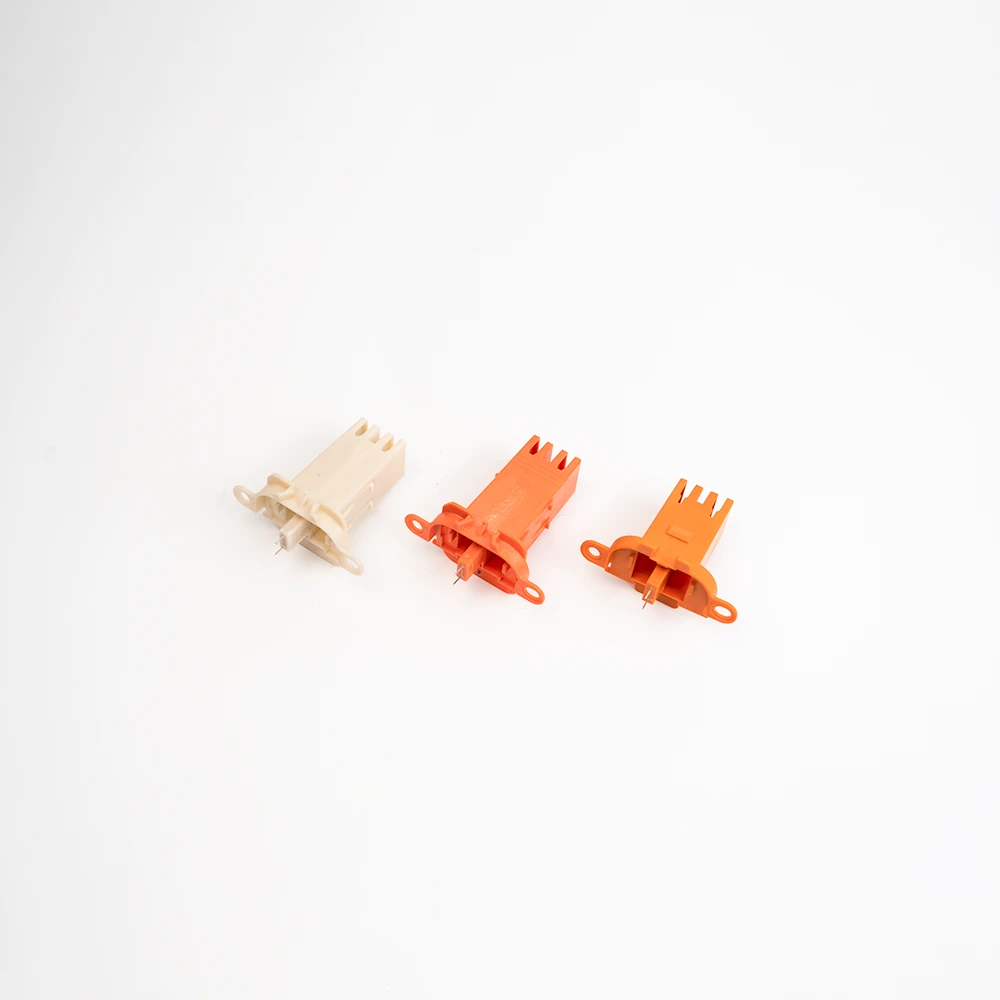
An electrical automotive connector (sometimes called an automotive wire harness connector) is a precision-molded plastic that links circuits in automobiles. They make the assembly, diagnosis, and maintenance of electrical wiring easier. They come in numerous forms, including board-to-board, spade, and pigtail. The purpose, which may be for sensitive data transmission, battery connections, or high-amp, will determine the type that will be used.
An automotive connector housing, on the other hand, is a specialized injection-molded outer plastic shell or casing that protects electrical terminals in automobiles. Without it, the vehicle’s wiring harness would become a “tangled mess,” and it would be almost impossible to connect electrical components in an orderly manner.
The housing also serves as an insulated enclosure that ensures data and power transmissions are uninterrupted in harsh environments. Other roles played by the housing include:
- Ensures mating connectors are securely locked together
- Serves as a mechanical support that keeps the connection secure during vibrations
- Automotive connector housing manufacturers design it to prevent shorts by keeping electrical contacts separated
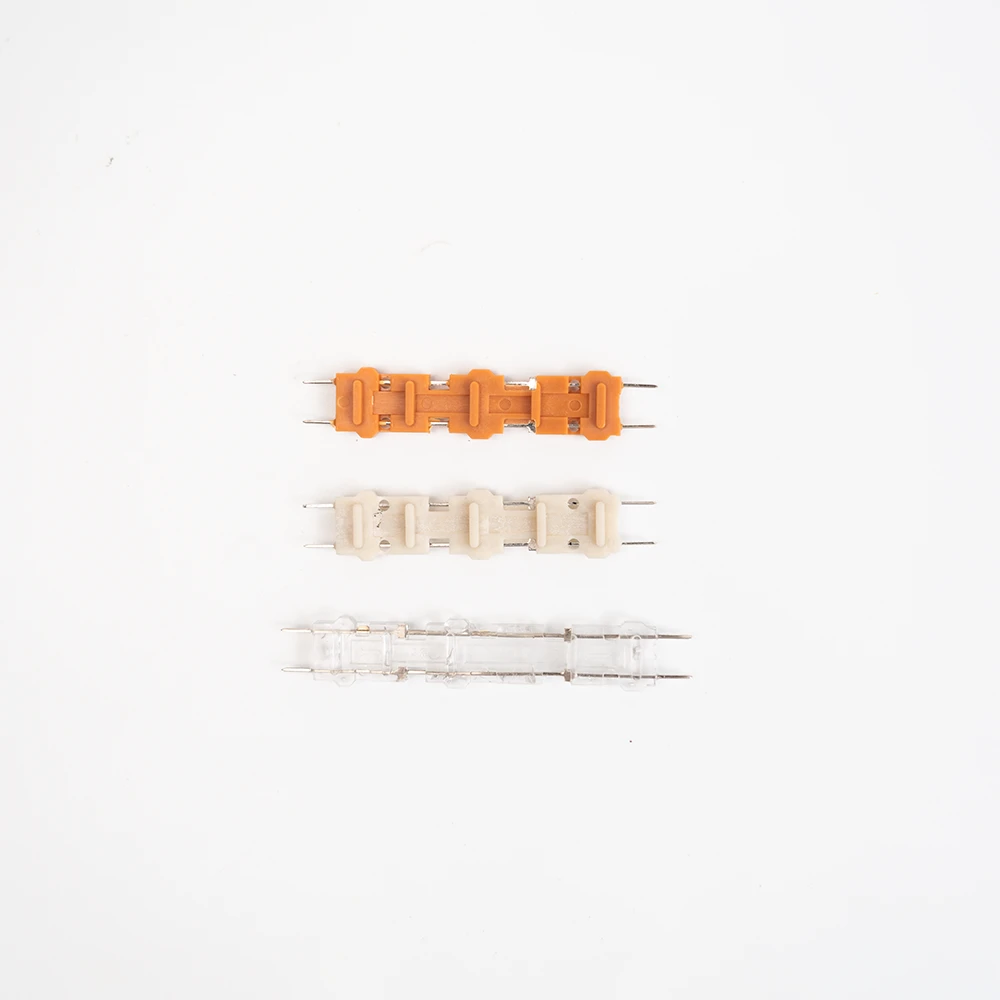
Differentiating Automotive Wire Harness Connector Shell
With hundreds of wires running under a vehicle’s chassis, misconnection is inevitable without proper guidance. An automotive harness or connector ensures every wire is connected to the right circuit or component. Automotive connector manufacturers use shapes, colors, and forms to visually guide electricians to ensure wires are properly joined.
For example, connectors usually have male and female mating halves. Only the correct mating halves will fit together. This makes it harder to force a wrong connection without causing harm to the unit. Some connectors come with varying pin counts for different applications to minimize the risk of wrong installation.
There is usually an average of 274 automotive connectors in every vehicle. Each connector has four parts, namely the housing, the pins and sockets, the retainer, and the seal. The table below shows the different types of connectors that can be made using injection molding.
| Automotive connector types | How they are used |
|---|---|
| Group A to D | These connectors link the head unit to different car components, particularly the infotainment system. |
| Multi-pin sealed connector | All connectors with 2 to 8 pins are grouped under this category, as long as they have a sealed enclosure. |
| Terminal connector | Instead of stripping and joining wires and wrapping the joined ends with an insulation tape, terminal connectors leave a neat finish. Here, the stripped wires are inserted into both ends and screwed. |
| Wire-to-wire | Link two wire harnesses with terminated cables. In most instances, they link two male-terminated wire harnesses. |
| Board-to-board | They link two automotive circuit boards, sometimes without wires or spaces in between. |
Automotive Connector Housing Manufacturing
There are strict standards for manufacturing automotive connector housing, starting with the choice of material. These automotive components are expected to meet several technical requirements for safety, reliability, and performance in harsh environments, including:
- Flame retardancy: According to safety regulations, materials used in vehicles must be self-extinguishing to minimize the risk of fire hazards. This is more so for components that stay under the hood, where the temperature is usually high.
- Thermal resistance: Wires can heat up during operations, especially if the operation involves heating. For example, the hood of ICE vehicles is usually hot due to the heat generated by the engine’s combustion activities. Therefore, the material used for automotive connector housing must have excellent thermal stability. It must resist degradation or deformation from heat.
- Excellent environment protection: Automotive connector housing must protect the connection from environmental elements like dust, moisture, and other contaminants that may lead to circuit failure.
- Durability of plug-and-play: The male and female mating halves are designed to be plug-and-play. The connectors must be designed to endure a specific number of mating cycles. Usually, it should maintain the plug-and-play functionality throughout the vehicle’s operational life without the sockets and pins losing connection or wearing out.
Common Materials Used for Automotive Connector Housings
High-performance engineering plastics like polycarbonate (PC), nylon, and polybutylene terephthalate (PBT) are usually chosen because of their lightweight, high mechanical strength, heat and chemical resistance, durability, and electrical insulation properties. The common materials used for automotive wire harness connector shells include:
- PBT: Has great strength and chemical resistance. Mostly used in flame-retardant connectors. However, they are prone to shrinkage problems.
- Nylon (PA6T, PA66): Possesses high mechanical strength and hardness. It also has good wear resistance and is available in flame-retardant versions.
- PC: Has excellent impact resistance and UV stability.
- Liquid Crystal Polymer: Can withstand temperatures up to 300 °C (527 °F), making it ideal for connections that will generate high heat.
Client Requirements and Concerns
The client approached First Mold for automotive connector housing manufacturing with two main concerns. The first had to do with the dimensional consistency of the connector housing. First Mold was required to balance the key dimensions and tolerances for a hitch-free assembly and seamless operation.
The client was also genuinely concerned about the cost of production, considering the large number of connectors that go into every vehicle. In other words, the client wanted to work with a mold maker who would guarantee the lowest cost per automotive connector part for mass production.
Challenges
The small size and performance specifications of automotive wire harness connectors present a unique precision manufacturing challenge. For example, each male connector is expected to mate with only the corresponding female connector to prevent incorrect mating, which can happen from human error or slight dimensional discrepancies.
Maintaining dimensional consistency and tolerance (which the manufacturer set at 0.02 mm) was extremely important to prevent wrongful mating and ensure the parts join firmly. Therefore, it was necessary to implement a design for error-proofing. For example, each mating half was designed to have specific buckle orientations that perfectly click when the two come together.
However, all modifications to the automotive connector housing had to be done in line with established automotive performance standards, like the USCAR-20. In other words, the design had to meet industry-wide reliability and consistency requirements.
Since the client was aiming at the mass production of the part, it was necessary to have a mold that could create hundreds of thousands of parts. The experts at First Mold worked closely with the client’s blueprint to deliver custom solutions to the unique challenges presented by the project.
Solution
To meet dimensional consistency and the tight tolerance required by the client for their automotive wire harness connector, First Mold had to make several injection molding modifications, including optimizing part design, precision mold engineering, and implementing rigorous process control.
Automotive Connector Design Optimization
First Mold understands that the first step in ensuring dimensional consistency happens at the design stage. Therefore, it was important to adhere to Design for Manufacturability principles, including:
- Maintaining uniform wall thickness to ensure consistency in cooling, which minimizes the risk of differential shrinkage.
- Using radii of at least 0.5x wall thickness to facilitate material flow and make ejection easier. This strategy also prevents stress concentrations.
- First Mold used simulation software to predict and solve potential issues like weld lines and warpage.
Material Selection for Client’s Automotive Connector
Choosing the right material was important in maintaining dimensional stability as well as ensuring the product meets the regulatory standards. Based on the client’s unique requirements for the automotive connector housing, the decision to use polyamide (PA) reinforced with 30% glass fibers was made.
Polyamide on its own is tough and wear-resistant. It also possesses good chemical resistance to fuels and oils. Reinforcing it with 30% glass fiber increases its strength and stiffness, dimensional stability, heat resistance (within the range of 120 °C and 180 °C), and creep resistance.
Mold Design for Automotive Connector Housing Manufacturing
Creating precision connectors with dimensional consistency and tolerance starts with building high-quality molds. First Mold used high-precision CNC machining to create a mold with extreme attention to the cavity to ensure it meets the client’s exact specifications.
Also, multiple gates were strategically placed to ensure uniform material flow and pressure distribution. This was necessary to minimize sink marks and warpage.
Achieving Cost Effectiveness in Automotive Connector Housing Manufacturing
After properly assessing the client’s design blueprint, First Mold suggested different mold modifications that would help cut down costs in the short and long term, as follows:
- Multi-cavity molds: The use of high-efficiency, high-capacity multi-cavity molds, instead of single-cavity molds, ensured the client produced more of the connectors in a single mold cycle. This helped the client cut their energy and labor costs.
- Optimized cooling channels: First Mold also designed effective and uniform cooling channels to ensure consistent temperature distribution across the mold. This was crucial in preventing internal stress and shrinkage as well as shortening mold cycles.
- Production scheduling: First Mold assisted the client with strict production management to maximize workshop productivity. This includes setting the start and finish times for a mold cycle as well as identifying factors that could lead to downtime.
FAQ
Design for Manufacturability, material selection, and the quality of the mold all play important roles in achieving dimensional stability in automotive wire harness connectors.
It is a specialized rectangular shell made with engineered plastics without contacts. As an insulator, it serves various protective purposes, including preventing the different wires from touching each other. It also prevents improper mating between male and female connectors.

 EN
EN  ES
ES  FR
FR  DE
DE  IT
IT  PT
PT  NL
NL  PL
PL  AR
AR  JA
JA  KO
KO  ZH
ZH