
Home / Automotive Injection Molding
High-Precision Automotive Injection Molding
Offering complete solutions compliant with the IATF 16949 standard, we are your injection molding partner committed to optimizing the performance and cost of your automotive plastic components.
- 500+ Global Successful Projects
- 30%+ Clients Achieved Cost Reduction
Injection Molded Components for Every Zone of the Vehicle
Automotive injection molded parts are usually split into three main groups according to their location and functional needs: interior, exterior, and functional/structural components. Each category demands certain material properties, surface finishes, and adherence to rigorous performance standards.
Interior Components
Focus on visual finish, tactile feel, and assembly integrity. Solutions for matte, scratch-resistant, and long-lasting interior parts.
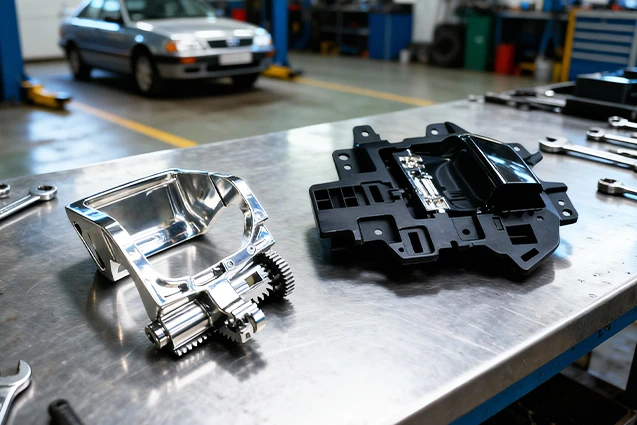
Door Handle Base
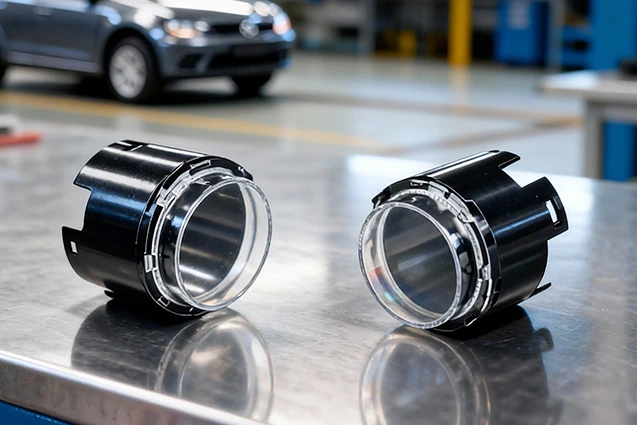
Ignition Button Cover
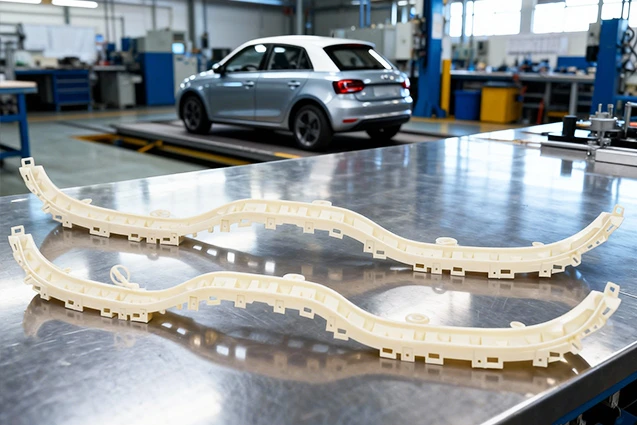
Ambient Light Bracket
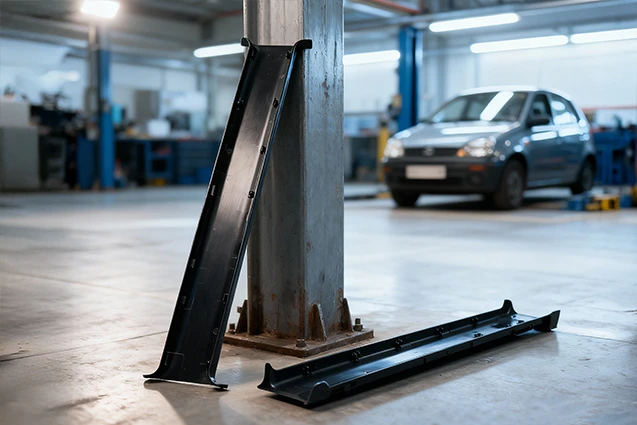
Sunroof Rail Cover
Exterior Trims

Anti-Collision Housing
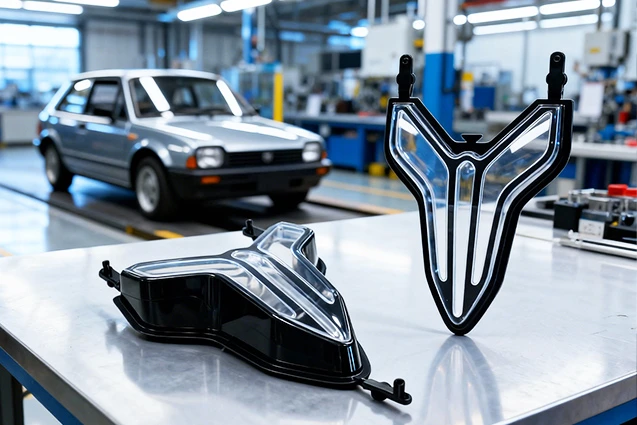
Car Emblem
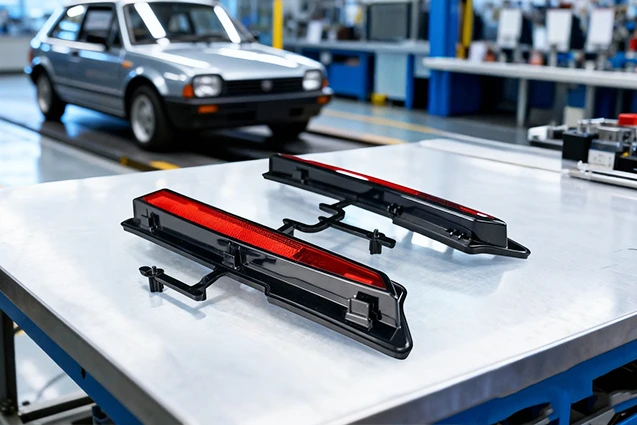
Taillight Cover
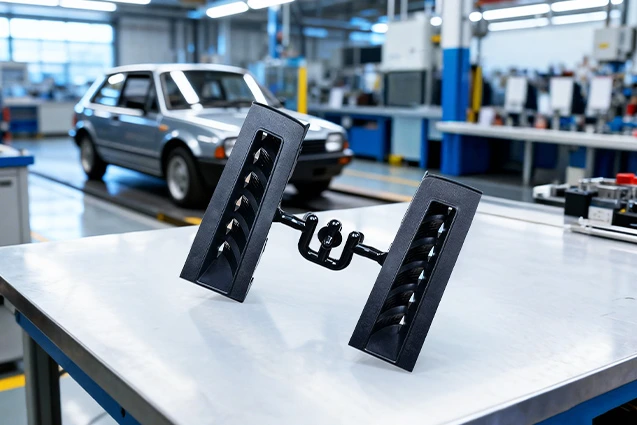
Rear Fog Light Reflector
Functional & Structural Parts
Focus on compliant material performance, dimensional stability, and structural strength in tough environments (thermal cycling, vibration, chemical exposure).

Car Airbag

Automatic Door Gearbox

Busbar Backplate
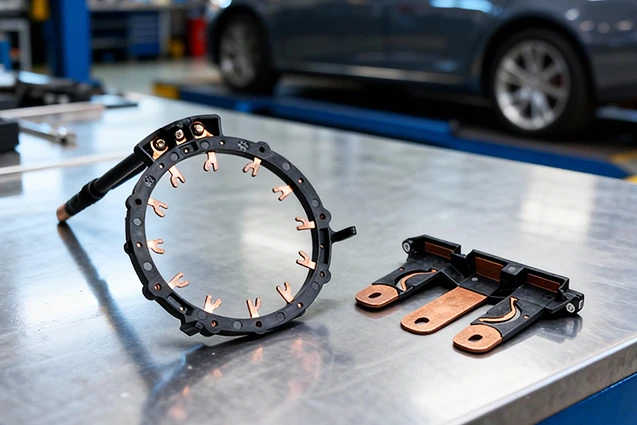
Engine Upper Connector
Core Technologies in Automotive Injection Molding Part Manufacturing
As a leading CNC machining company, we deliver proven manufacturing solutions helping automotive, medical device, aerospace, and electronics manufacturers overcome production challenges. Our CNC machining services enable 30% cost reduction and 50% faster time-to-market through technical innovation.
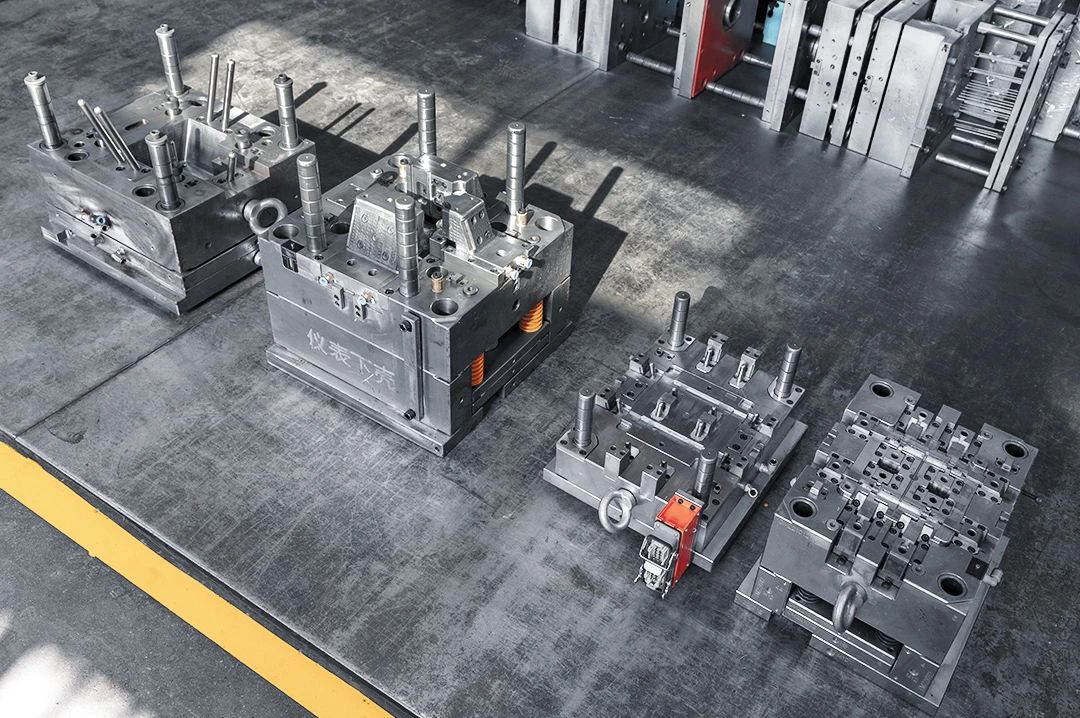
Automotive Mold Making
- Automotive molds made to last and stay stable.
- We have rapid tooling, production tooling, two shot mold, etc.
- Use of hot runner systems and accurate temperature control.
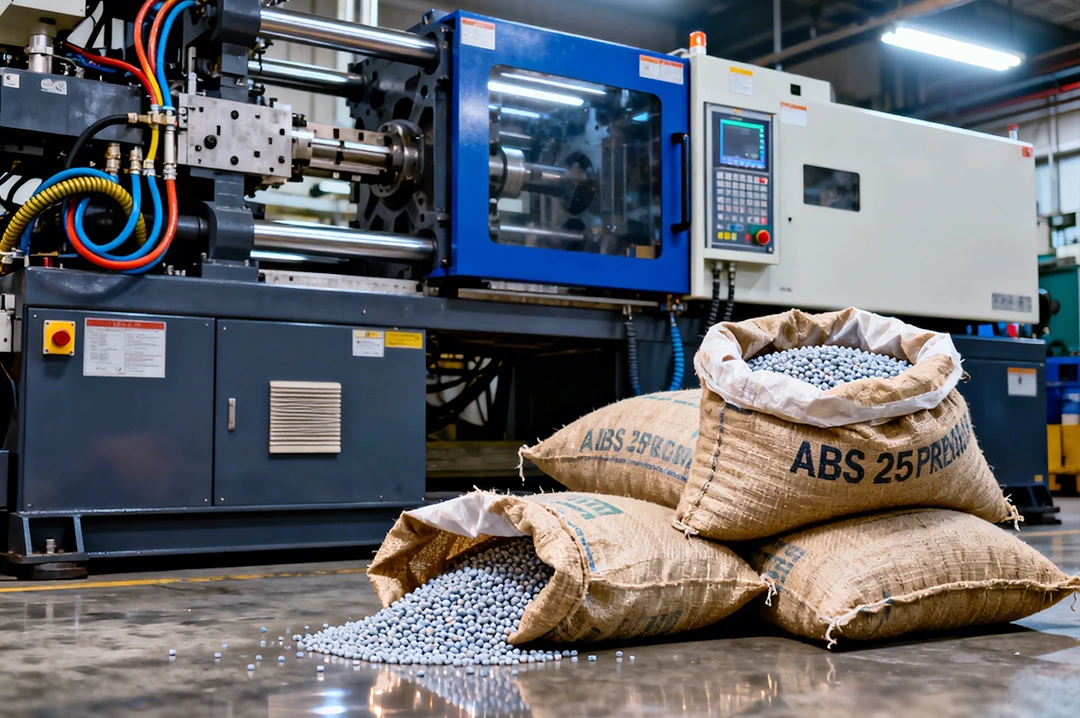
Controlled Car Parts Molding
- Processes are set up and written down to meet strict PPAP requirements for production approval.
- We have overmolding, two shot molding, etc.
- Working with all types of engineering plastics.
Electroplating
Screen Printing
Matte Finishing
Specialized Surface Treatment
- We can handle all common surface finishing processes available on the market.
- Finishes are checked for adhesion, wear, and chemical resistance.
- We can provide finished, assembly-ready parts.
Engineering Materials for Automotive Plastics
Engineering plastics constitute approximately 10% of a modern vehicle‘s weight, a key factor in lightweighting. The market is dominated by a few versatile families: PP leads with 29.9% share, followed by PUR, PA and PE.
Proportion of Automotive Plastics by Type
We have been working with all these automotive materials for over a decade and possess comprehensive knowledge of them. First Mold also has extensive experience with modified materials, reinforced materials, and specialty materials.
We recommend that when selecting automotive plastics, you should prioritize the material’s rigidity, heat resistance, freeze resistance, and heat aging resistance.
On this basis, you also need to consider whether the material possesses the following characteristics: light weight, good processability, excellent comprehensive physical and chemical properties, superior decorative effects, energy efficiency, and environmental friendliness.
Examples:
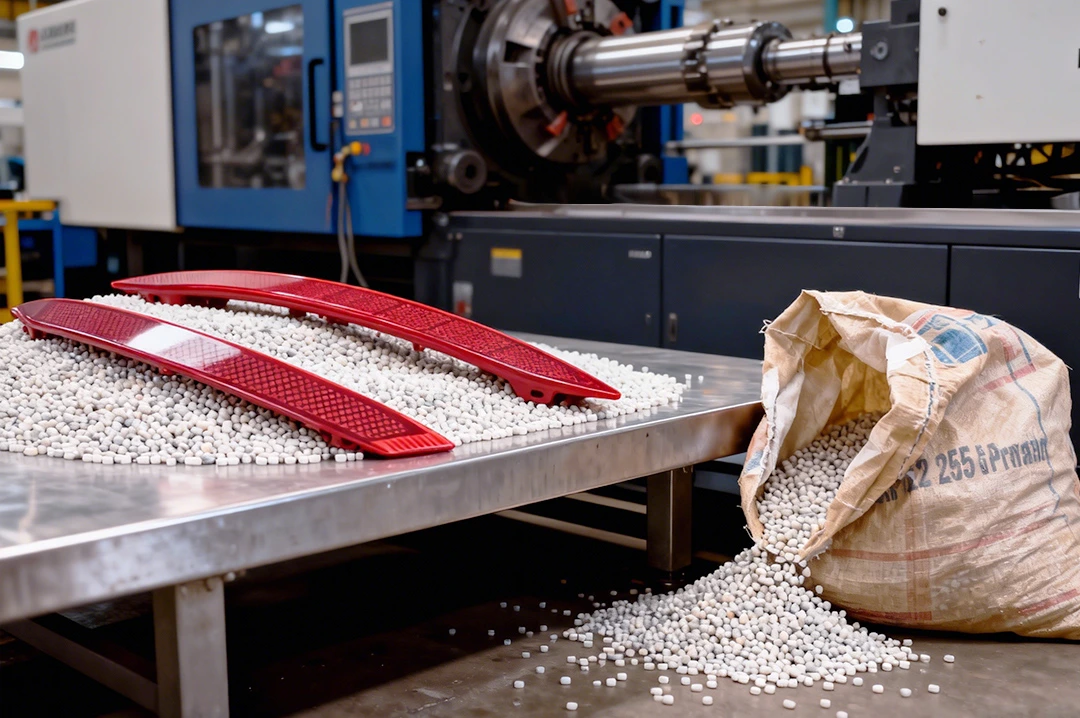
Requirements for Headlight Materials:
- Withstand the impact of road debris (e.g., kicked-up stones) during driving.
- Fulfill the primary function of illumination.
- Resist deformation, aging, and other forms of degradation in harsh environments (e.g., wind, sun exposure, rain).
- Maintain structural integrity without deforming under prolonged exposure to heat from the light source.
- Meet the requirements of the injection molding process.
- Facilitate the design of injection molds.
Recommended Materials: Modified PC, PMMA.
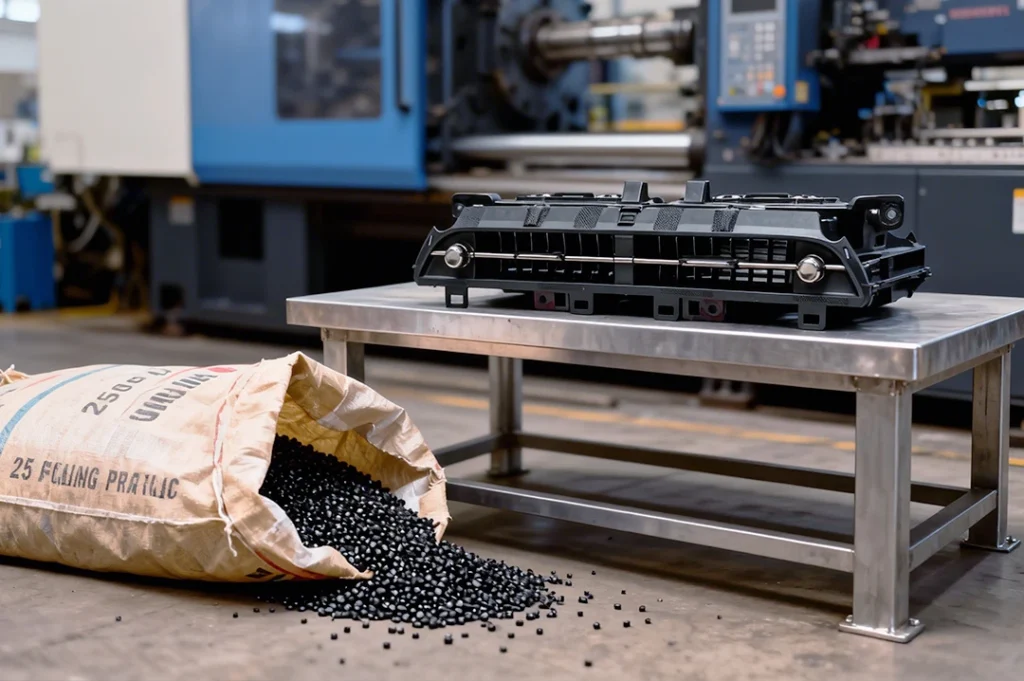
Requirements for Grille Materials:
- Be suitable for subsequent electroplating processes.
- Resist deformation and aging under high-temperature exposure and sunlight.
- Maintain dimensional stability during long-term operation.
- Meet the requirements of the injection molding process.
- Facilitate the design of injection molds.
Recommended Materials: ABS, ABS/PC.
Explore our material database, including technical data sheets and IMDS compliance information for over 100 engineering plastics.
Our All-In-One Quality And Compliance Program
IATF 16949
Core of Quality Management in the Automotive Industry
ISO 9001
Establishes automotive quality management foundation and builds standardized quality control system
PPAP
Ensures automotive production part approval processes to guarantee product consistency and compliance
IMDS
Manages global material data reporting and compliance to meet environmental and industry requirements
Automotive Project Workflow
Upload 3D Files
You: Upload 3D data of automotive parts (e.g., STEP, IGES) and technical requirements (material specifications, surface treatments, etc.).
DFM Analysis
Factory: Analyze your vehicle part’s design to ensure it can be produced efficiently. Check factors like wall thickness, draft angles, etc.
Proposal and Quotation
You: This is your decision point. You can request the factory’s quotation with sufficient details based on your requirements.
The following processes for automotive rapid molds and production molds are largely identical. Their differences are in manufacturing lead time, precision, and trial runs.
Mold Manufacturing
Factory: Based on your selected option, our mold workshop builds the dedicated injection mold for your automotive part.
First Sample Delivery
You: You receive functional samples to test design, fit, or market readiness. Confirm the samples meet your standards.
Production
Factory: We carry out injection molding and conducts random or full inspection based on specific circumstances.
FAQ for Automotive Injection Molded Parts

Do I need a 3D file to get a quote?
We suggest you send us 3D files in STEP, IGS, or STP formats. You also need to let us know the material you want and how many products you need to make. If you only have a rough idea or drawings of the product, we suggest you finish the 3D file first — we can’t give you a price quote otherwise. First Mold can give tips for mold design and production, but we don’t do professional product design.
Who owns the mold? How is the mold handled if the project ends?
The mold definately belongs to you (the client). If your mold is used here for injection molding, we’ll keep it stored for some time even when the project ends.
How can we track mass production progress and quality?
Usually, clients doing large-scale production send people to check in now and then, or have someone stay here full-time to keep track of how the project’s going. If that’s not easy for you, our project manager can send you photos/videos of key progress points regularly, or do online video calls to go over how things are going.
How are engineering changes handled during mass production?
When we start the formal ECN review process, we’ll give you a change plan, how it’ll affect timelines, and a cost quote — we’ll only move forward after you approve it.
What are the payment terms for molds and production?
For automotive molded parts: Pay 50% when you place the order, then pay the other 50% when production’s done (before we send the goods).
What are your MOQ and new product trial policies?
Technically, we don’t have a strict MOQ (Minimum Order Quantity). But we suggest making at least 50 pieces of your product. Please note: fewer pieces will make each one more expensive.
What’s your confidentiality and NDA policy?
Of course. We can sign an NDA even before you send us the 3D files. We keep your info safe using encrypted data and a tiered access system. Everyone working on your project will also sign privacy contracts.
How do you prevent the quality issues we’ve had with other suppliers?
Tell us about working with your last supplier. From the problems you had, our engineers will hold special meetings to fix those exact issues. Also, we can make things more precise to match what your product needs exactly — these are standard steps under the IATF 16949 system.
Do you have reserved capacity for rapid growth?
Sure. We have extra production space saved, plus ways to quickly scale up. We also make backup production plans for key clients to help them grow.
Why injection molding over other processes for automotive?
It lets us make complex, precise, lightweight automotive parts quickly — so the vehicle parts are strong but not expensive, which works really well for large-scale car production.
How does part design affect quality and cost?
Design decides how complex the mold is, how much material we use, and how fast we can make automotive parts. Good design is key to getting high quality, low cost, and fast mass production.
 EN
EN  ES
ES  FR
FR  DE
DE  IT
IT  PT
PT  NL
NL  PL
PL  AR
AR  JA
JA  KO
KO  ZH
ZH