


Uma balança digital para bagagem é um dispositivo eletrónico portátil concebido para pesar com precisão sacos e malas. O dispositivo ajuda os viajantes a evitar o pagamento de sobretaxas por excesso de peso na bagagem.
Normalmente vem equipada com um gancho ou uma alça que se prende à pega do saco que se pretende pesar. Depois de fixada ao saco, a balança é levantada para retirar o saco do chão. Isto permite obter leituras instantâneas do peso até 110 libras (50 kg) num ecrã LCD.
Os fabricantes de balanças para bagagem concebem estes dispositivos para serem portáteis e leves, tornando-os fáceis de utilizar por praticamente qualquer pessoa. O seu formato compacto permite que caibam facilmente num bolso ou numa mala. A maior parte dos componentes das balanças digitais para bagagem é fabricada em plástico resistente. Os principais componentes de uma balança digital para bagagem estão listados abaixo.
- O sensor ou célula de carga: É o elemento central do dispositivo portátil. É constituído por um componente metálico que mede a deflexão ou deformação causada pelo peso da bagagem.
- Ecrã LCD: O ecrã digital mostra o peso da bagagem suspensa. A leitura pode ser apresentada em kg ou lb. Alguns modelos dispõem de retroiluminação para melhorar a visibilidade em condições de pouca luz.
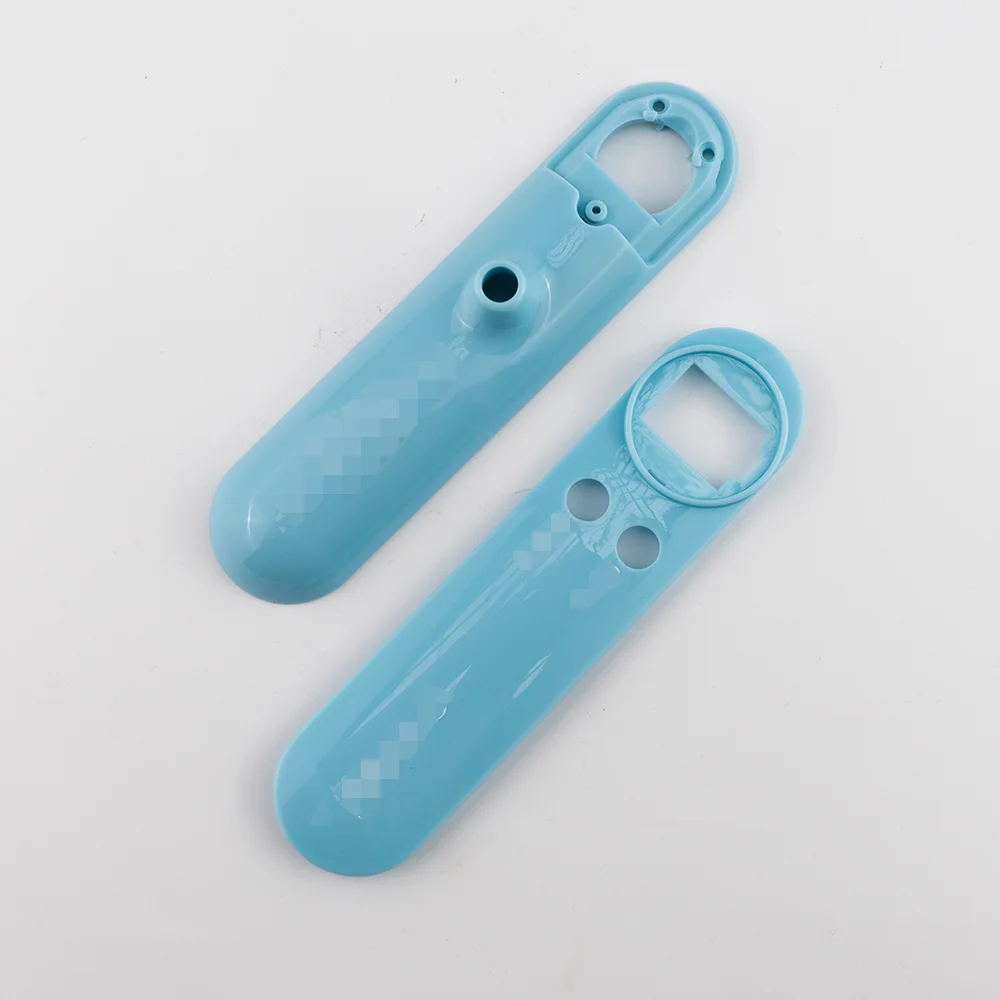
- Caixa do componente da balança de bagagem: Esta é a pega de plástico que protege os componentes eletrónicos internos.
- Mecanismo de suspensão: Pode ser um gancho de liga metálica, uma fita de tecido ou uma correia de nylon, concebido para prender a bagagem.
- Botões: Todos os modelos terão botões de alimentação para ligar ou desligar o aparelho. Alguns modelos terão botões adicionais para reiniciar o aparelho ou alternar a unidade de medida entre kg e lb.
- Compartimento das pilhas: Um pequeno compartimento, frequentemente fixado com um parafuso, que contém a bateria que alimenta o dispositivo.
- Placas de circuito e componentes: Trata-se de um processador que converte os dados dos extensómetros em valores digitais que são apresentados no ecrã LCD.
Requisitos do cliente
Um fabricante de dispositivos digitais de pesagem de bagagem contactou a First Mold solicitando moldes que o ajudassem a dar vida aos seus produtos. O cliente pretendia moldar um total de seis componentes diferentes para a balança digital de bagagem. Um dos moldes deveria ser utilizado para moldar um material transparente, o que permite que o ecrã digital subjacente seja visível.
O cliente pretendia um molde para produção em série. Um dos seus requisitos era que o molde da balança digital para bagagem tivesse uma durabilidade superior a 500 000 ciclos de produção. Além disso, o cliente pretendia que a caixa do componente da balança digital para bagagem tivesse um design de encaixe por pressão. Para facilitar a montagem, a tolerância deve ser de ±0,05 mm, com uma precisão de ±0,02 mm.
Outro requisito importante do fabricante era que a superfície da caixa tivesse um acabamento brilhante. Uma vez que a empresa se estava a posicionar como uma marca global, o cliente pretendia que os seus produtos transmitissem uma sensação de alta qualidade.
Desafios
O primeiro desafio que a equipa de gestão do projeto First Mold teve de superar foi decidir se deveria criar um molde de cavidade única ou um molde de família. A escolha de um molde familiar permitirá à equipa reunir os seis componentes diferentes num único molde. Além disso, o molde familiar pode evitar diferenças de cor entre as peças distintas. No entanto, se a equipa optar por um molde de cavidade única, terá de criar seis moldes diferentes para cada um dos componentes da balança digital de bagagem do cliente.
Acabamento de superfície de alto brilho
A criação de moldes para superfícies de alto brilho implica um trabalho adicional. A superfície do molde necessita de um polimento adicional, o que requer mais horas de trabalho. Obter a superfície polida pode prolongar o prazo de entrega. Por isso, representa sempre um desafio adicional para projetos com prazos apertados.
Seleção de materiais
Espera-se que uma balança digital para bagagem seja submetida a esforços durante a sua utilização. Quando utilizada num ambiente aeroportuário, pode servir para pesar milhares de malas por dia. Por conseguinte, é importante que o material utilizado na sua produção apresente uma excelente resistência ao desgaste, de modo a garantir uma maior durabilidade do produto.
Conceção para a fabricabilidade
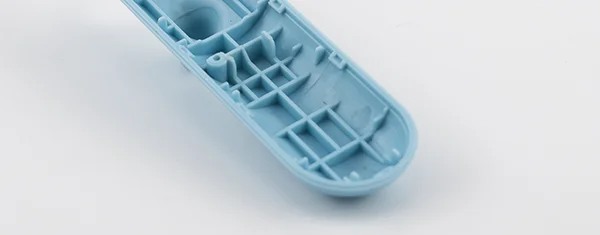
A estrutura da balança digital para bagagem apresentava paredes reforçadas com nervuras para melhorar ainda mais a rigidez, garantindo que não se partisse durante o funcionamento. Além disso, o projeto apresentava raios de borda amplos. Os raios são uma característica importante que melhora o fluxo do material, minimiza o encolhimento e reduz a concentração de tensões. Aumentam a resistência global da peça. No entanto, raios de borda amplos também podem ser a causa de defeitos como rasgos ou deformações, se não forem devidamente concebidos.
Solução
Após várias deliberações com o fabricante de balanças digitais para bagagem e após ponderar os prós e os contras, a equipa de gestão de projetos da First Mold decidiu que um molde de cavidade única se adequa melhor aos objetivos do fabricante. Embora a utilização de moldes da mesma família possa evitar diferenças de cor, o cliente não considera essas diferenças como uma preocupação significativa no processo de fabrico, uma vez que o produto será submetido a pintura por pulverização.
Os moldes familiares são mais rápidos na produção simultânea de várias peças diferentes. No entanto, apresentam frequentemente um desequilíbrio de pressão, o que conduz a taxas de defeitos mais elevadas em determinados componentes. A decisão de optar por um molde de cavidade única foi tomada devido às vantagens que este proporcionaria ao fabricante, nomeadamente:
- Baixo custo de produção: O projeto de um molde de cavidade única é, normalmente, mais simples do que o de um molde de família. Essa simplicidade no projeto traduz-se em custos de ferramentas mais baixos, devido ao menor número de horas de trabalho necessárias. O orçamento do cliente favorecia os moldes de cavidade única.
- Prazo de entrega mais curto: O design mais simples significa também que os moldes de cavidade única podem ser produzidos mais rapidamente em comparação com um molde familiar. Um prazo de execução mais curto significa que o fabricante de balanças digitais para bagagem pode iniciar a produção em massa dos seus produtos no menor tempo possível. O cliente também se queixou de estar a trabalhar com um prazo apertado e pretendia que o(s) molde(s) estivesse(m) concluído(s) rapidamente. Por isso, optar por moldes de cavidade única para os componentes das balanças de bagagem foi uma decisão fácil.
- Ajustes rápidos durante o teste: É mais fácil e mais económico efetuar alterações em moldes de cavidade única do que em moldes de família. Uma vez que o fabricante também referiu, durante a discussão, que gosta de rever e atualizar os seus produtos de dois em dois anos, o molde de cavidade única revelou-se a opção mais adequada.
- Elevada taxa de rendimento: Nos moldes de cavidade única, não é necessário equilibrar diferentes geometrias e parâmetros, como a temperatura e a pressão. Isto resulta num maior rendimento e no menor número de defeitos, em comparação com os moldes de família.
- Menor custo de manutenção: As reparações de moldes de cavidade única limitar-se-ão apenas a um molde específico e não interromperão a produção de outras peças. No entanto, nos moldes de família, qualquer reparação paralisará a produção. Uma vez que o cliente também fornece componentes digitais para balanças de bagagem a outros fabricantes, investir num molde de cavidade única foi uma forma de garantir a sustentabilidade futura da sua cadeia de abastecimento.
Obter um acabamento de superfície de alto brilho
A razão pela qual o fabricante solicitou um acabamento de superfície de alto brilho foi o desejo de reduzir o pós-processamento. Pretendiam que a superfície estivesse pronta para ser submetida a serigrafia ou pintura com pulverizador logo após a moldagem. Para obter o acabamento de superfície de alto brilho, a equipa de engenheiros da First Mold poliu a superfície do molde com lixas de grão 12 000. O processo exigiu muita habilidade e precisão para evitar defeitos.
Escolher o material certo para garantir desempenho e durabilidade
A qualidade de qualquer produto começa pela seleção do material adequado. A equipa da First Mold teve uma longa discussão com o cliente sobre a seleção de materiais. O acrilonitrilo-butadieno-estireno (ABS) acabou por se revelar o melhor material para a produção da sua balança digital para bagagem. Em termos de fabrico, este material pode ser facilmente maquinado, lixado ou colado, permitindo acabamentos detalhados e de alta qualidade.
O ABS também é reciclável (100%). Uma vez que o fabricante estava consciente do impacto ambiental da sua produção, a utilização do ABS permitiu-lhe reduzir a sua pegada ambiental através da mistura de materiais reciclados com plásticos virgens. Os benefícios da utilização do ABS para o consumidor são igualmente enormes.
- Relação custo-eficácia: A utilização de ABS facilita aos fabricantes a produção de grandes quantidades de balanças digitais para bagagem a um custo mais baixo. O baixo ponto de fusão torna a moldagem por injeção a alta velocidade mais eficiente. Estes fatores reduzem o tempo e os custos de produção.
- Leve: O ABS é leve, uma característica que se reflete no produto. A utilização deste material garante que o produto seja leve, facilitando a sua mobilidade.
- Elevada durabilidade: O ABS é rígido, robusto e resistente a impactos e riscos. Estas características tornam-no ideal para proteger os componentes eletrónicos sensíveis no interior contra manuseamento descuidado e quedas.
- Flexibilidade de conceção: Ao contrário de outros tipos de plásticos, o ABS pode assumir facilmente várias cores e texturas de superfície. Isto torna-o ideal para pintura com aerógrafo, que o fabricante pretende utilizar como acabamento de superfície.
- Resistência ambiental: O ABS é resistente à água e pode funcionar sob variações moderadas de temperatura sem sofrer deformações. Consequentemente, pode ser utilizado em diferentes regiões com climas diversos.
O que o cliente ganhou ao trabalhar com a First Mold
Ao colaborar com os engenheiros da First Mold, o fabricante de balanças digitais para bagagem aproveitou os mais de 50 anos de conhecimento combinado da equipa na área da fabricação de moldes para decidir qual o tipo de molde que lhes proporcionaria a melhor relação qualidade-preço para o seu projeto. A equipa manteve uma comunicação clara e transparente e acompanhou o cliente em todas as etapas do processo de produção do molde dos componentes da balança para bagagem.
A comunicação clara e o trabalho de investigação prévio ajudaram a equipa da First Mold a entregar seis conjuntos de moldes num tempo recorde, superando as expectativas do cliente. A colaboração com a First Mold permitiu ao cliente e à sua equipa conhecer tecnologias modernas e inovações na área da moldagem por injeção. A melhor parte da colaboração, segundo o cliente, foi o facto de as suas expectativas terem sido superadas, mantendo-se dentro do orçamento.
FAQ
O ABS é a melhor opção para a produção em grande volume e com atenção aos custos de caixas leves para balanças digitais de bagagem. O policarbonato (PC) também pode ser utilizado em produtos em que a durabilidade é a principal preocupação.
A maioria das balanças digitais para bagagem comuns consegue pesar, no máximo, 110 libras (50 kg).

 PT
PT  EN
EN  ES
ES  FR
FR  DE
DE  IT
IT  NL
NL  PL
PL  AR
AR  JA
JA  KO
KO  ZH
ZH