Início / Fabricação de moldes automotivos
Automotive Injection Mold Making
We have kept steady growth for more than ten years in the highly competitive automotive mold industry.
- 15% Menor custo do ciclo de vida
- Mais de 50 bibliotecas de texturas padrão
- Processo em conformidade com a IATF
Types & Technologies - Automotive Mold Portfolio
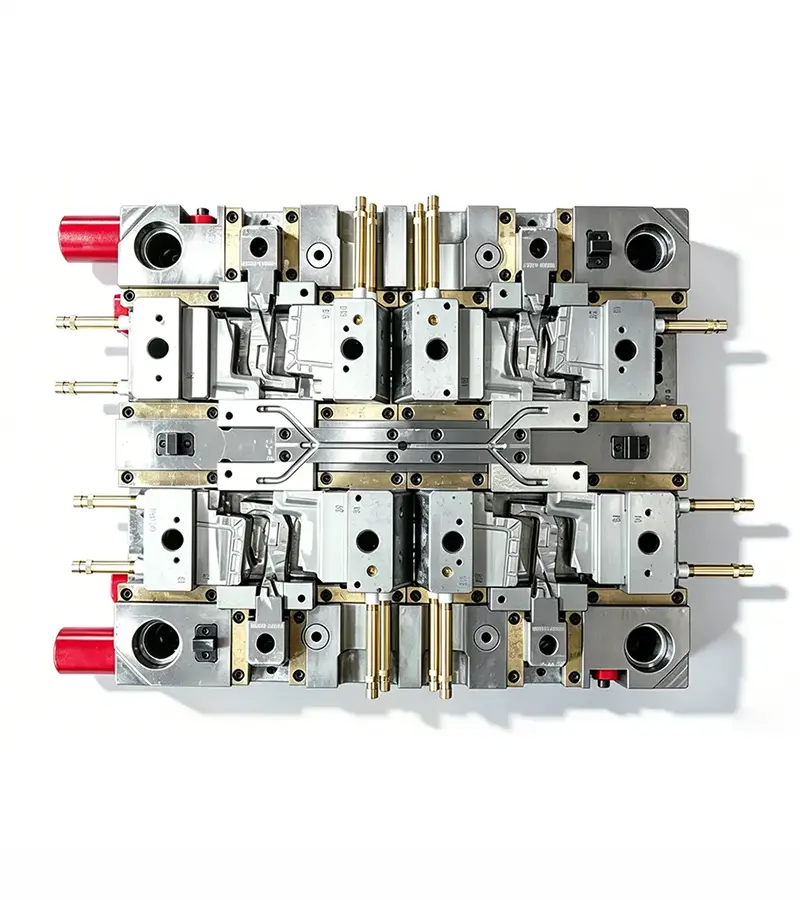
Automotive Multi-Cavity Mold
Offers high-cavity precision mass production, especially for the large-scale production of small automotive electronic components.
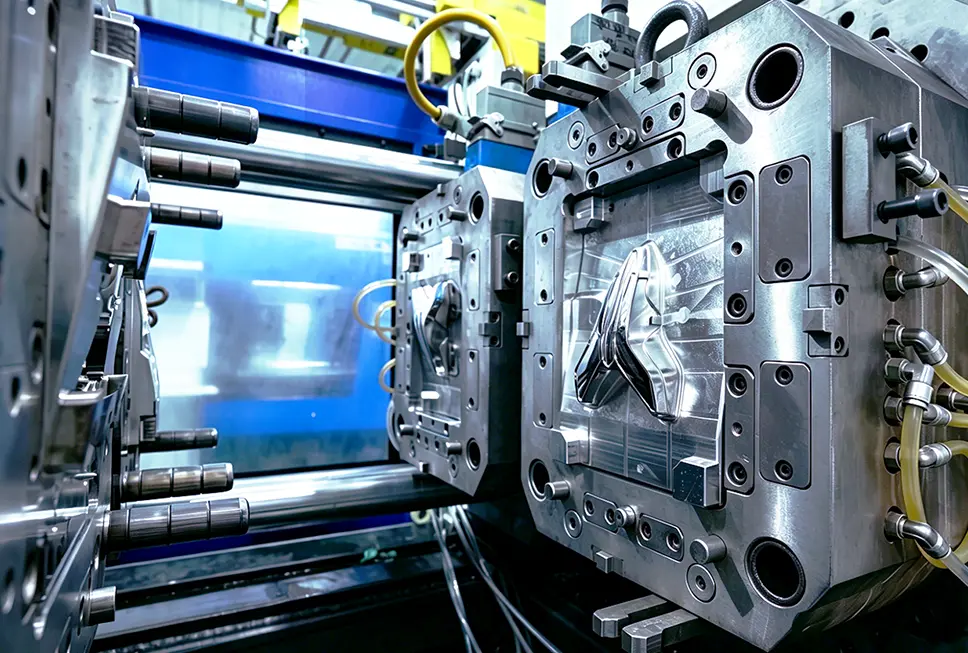
Automotive Hot Runner Mold
Recommended for larger automotive exterior parts to get a scrap-free and efficient production plan.
Automotive Two Shot Mold
Meets the appearance and functional needs of multi-material or multi-color for automotive interior parts.
Automotive Over Mold
Provides reliable soft-hard rubber overmolding solutions for parts that need sealing or a comfortable touch.
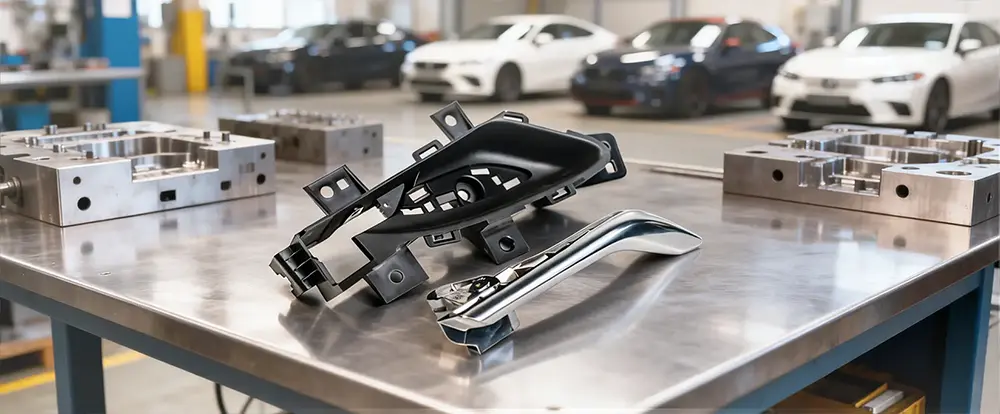
Automotive Molds We Made
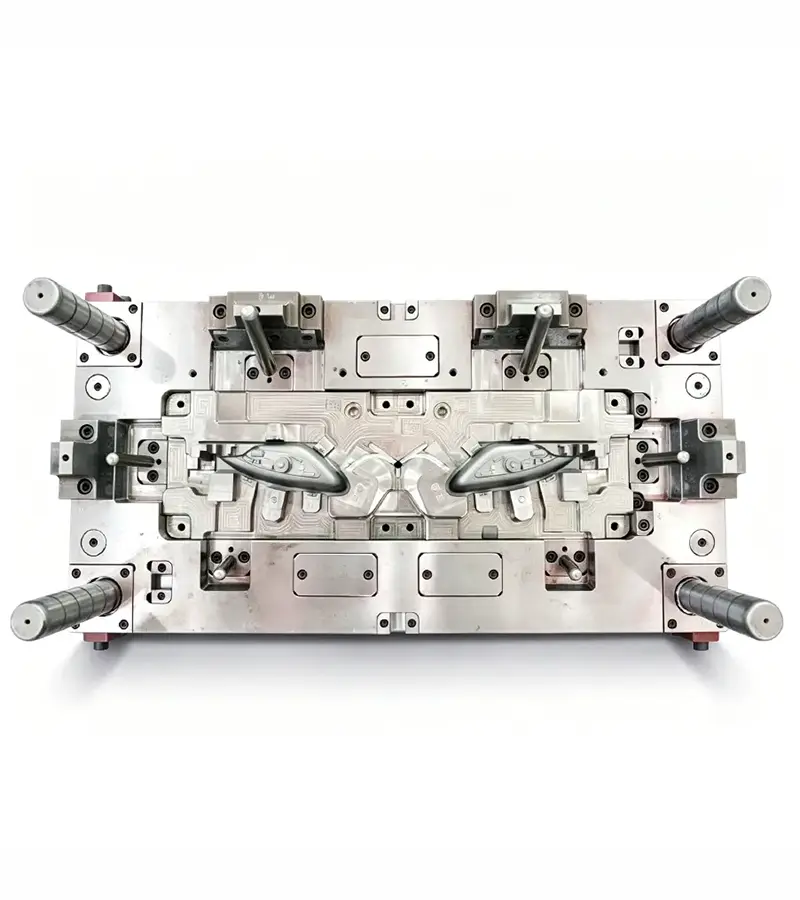
Automotive Emblem Mold
Door Armrest Mold
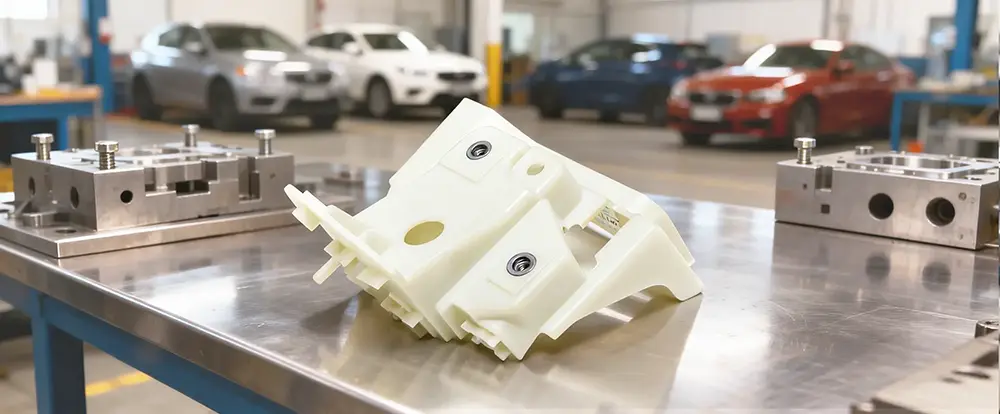
First Mold started with rapid tooling and expanded into making production molds a decade ago. Today, we have stood out in the highly competitive field of automotive molds, becoming a reliable high-quality component supplier working with automotive clients.
Automotive Mold Surface & Texture
Besides basic durability, a mold‘s surface decides the final part‘s look, feel, and performance. We’re good at many kinds of finishing technologies to fit strict automotive requirements—from scratch-hiding textures to high-gloss Class-A surfaces.
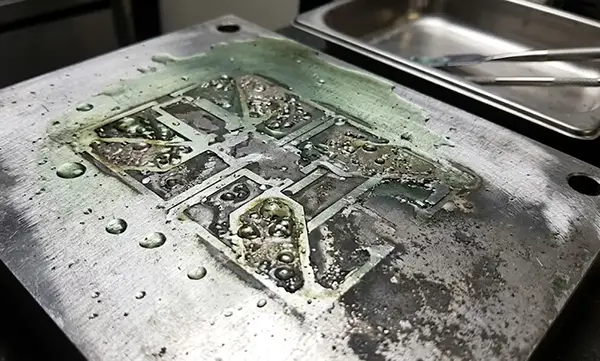
Texturing Process (Etching/Engraving)
▼
Texturing Process
Chemical etching to create textures
Mold After Texturing
Mold with specified textures
Final Automotive Part
Automotive components with matching textures
Most interior parts use texturing. Components like dashboards, door panels, and center consoles get better texture, less plastic look, no glare, and hidden parting lines. We have a standard texture library and custom texture development that fits your design needs, helping you get unique brand recognition.
Precision Polishing (Mirror Finish)
▼
Polishing Process
Mechanical mirror finish grinding
Polished Mold
Mold surface with mirror finish
Final Automotive Part
High-gloss vehicle part
Precision polishing is needed for high-gloss exterior parts (grilles, trim strips) and transparent optical parts (lamp covers, lenses). We always achieve various polish grades from matte (VDI 18) to super mirror finish (SPI A1). Our polished automotive parts have no flow marks , and meet the strictest appearance standards.
Performance Coating (Wear & Corrosion Resistance)
▼
Coating Process
DLC coating deposition
Coated Mold
Mold with protective coating
Final Automotive Parts
No special visual effect
By putting an ultra-thin special material (e.g., titanium nitride, diamond-like carbon DLC) on the mold surface, it can stop parts sticking. We can make wear resistance stronger (good for glass fiber reinforced materials), and increase thermal conductivity.
What makes a good automotive injection mold?
First Mold's automotive molds have four key features: high precision requirements, long service life, high structural complexity, and strong customizability. Our company also has the technology, management, experience, and resources, so we can produce high-quality automotive molds more easily than others.
Design-Led Projects
First Mold believes that automotive mold design determines the quality foundation of the mold, while the processing technology decides the actual results.
Clear roles and responsibilities
First Mold uses the Amoeba management model, with clear responsibility at each stage. Our team works together efficiently, so the customer’s cost for automotive molds is only kept low, not high.
Hands-on experience
70% of First Mold’s employees have taken part in over 100 automotive mold projects, so they can prevent or solve all kinds of defects in automotive parts.
Mature supply chain resources
The company has built long-term, stable partnerships with high-quality raw material suppliers, surface treatment partners, and well-known hot runner brands. We provide one-stop service for automotive molds.
Automotive Mold Life Standards
| Project Phase & Business Goal | Mold Life Design Standard | Typical Automotive Application |
|---|---|---|
| Concept Validation & Design Iteration | 10,000 – 50,000 cycles | Parts for concept cars, design review prototypes, supporting rapid design changes. |
| Engineering Validation & Testing (DVP) | 50.000 - 200.000 ciclos | Parts for durability, crash, environmental (thermal, corrosion) testing. |
| Pre-Production & Tooling Verification | 200,000 – 500,000 cycles | Off-Tool Samples (OTS), line integration trials, low-volume pilot builds. |
| Mid-Volume Production Program | 500,000 – 1 million cycles | Mid-cycle refresh components, specific parts for electric vehicles. |
| Full-Lifecycle High-Volume Production | 1 million+ cycles | High-wear interior components, key exterior body panels for platform vehicles. |
Note on Industry Standards: The above life cycles are engineered based on project requirements. For detailed information, please refer to our dedicated guide: Understanding SPI Mold Standards.
How Do We Extend Their Service Life?
We create and carry out specific steps to make your mold last longer, no matter what its its design cycle target is. To protect the money you spent on your tooling, we focus on preventing problems and making your molds last.
Error Prevention in the Mold Design Phase
We avoid potential risks by optimizing the structure, matching the characteristics of automotive parts, reserving maintenance space, and using defect databases and other methods.
Mold Post-Processing
Regular Mold Maintenance
ou
1 month
50000 cycles
ou
3 months
Check the cavity size tolerance with a coordinate measuring machine; grind and repair guide pillars and guide bushes if the clearance is too large; re-perform nitriding treatment if the surface hardness decreases.
100000 cycles
ou
6 months
Fully disassemble the mold, inspect the mold base, cavity and core for fatigue cracks; replace aging seals (e.g. O-rings); carry out overall anti-rust treatment on the mold.
Your Auto Mold Project Workflow
If you pick a rapid prototype mold or a high-volume production tool, you go through the same six organized stages. The difference is in how much engineering and validation there is at every step and delivery time.
| Etapa | Our Shared Actions | Automotive Rapid Tooling | Automotive Production Tooling |
|---|---|---|---|
| 1. Upload 3D Files | You upload stp files; we make initial review. | Fast feedback on design for prototyping. | In-depth review for optimal manufacturability and cost. |
| 2. Design & Engineer | We create mold designs; you review and approve. | Simple, efficient design focused on fast production | Full simulation and lifecycle design. |
| 3. Build & Machine | We manufacture; you receive progress updates. | Strategic methods to minimize lead time. | High-tolerance machining and surface hardening. |
| 4. Sample & Test | We conduct T1 trial; you evaluate parts. | Form & Fit: Verifying design, assembly, and basic function. | Performance & Data: Comprehensive testing and PPAP documentation for approval. |
| 5. Refine & Approve | We adjust; you give final approval. | Quick Turnaround: Implementing essential modifications swiftly. | Process Lockdown: Finalizing all parameters and delivering full PPAP package. |
| 6. Deliver & Support | We deliver the mold and provide support. | Smooth Handoff: Providing essential documentation and startup guidance. | Launch Partnership: Full documentation, spares, and ongoing production support. |
FAQ for Auto Molds Making
Para além dos ficheiros 3D, o que mais é necessário para a avaliação do molde?
O que influencia o custo de um molde de injeção para a indústria automóvel?
O orçamento para moldes de injeção de automóveis abrange normalmente: honorários de conceção do molde (não mais de 5%), custos de material (35%–45%), honorários de processamento e fabrico (35%–45%), taxas de teste e modificação do molde (não mais do que 5%), além de taxas de gestão e lucro (10%–15%). Os nossos orçamentos são claros e válidos, sem quaisquer custos ocultos. Quaisquer taxas adicionais só serão aplicáveis se houver alterações ao contrato (por exemplo, alterações ECN da sua parte) e devem ser confirmadas por escrito com antecedência.
O que está incluído num orçamento para um molde automóvel? Existem custos ocultos?
Os principais custos num orçamento de moldes para a indústria automóvel incluem normalmente os custos dos materiais (aço, canais quentes, etc.), os honorários de conceção e engenharia, as despesas de maquinagem e fabrico, o tratamento térmico ou acabamento de superfícies, bem como a montagem e os testes de funcionamento. Não há custos ocultos com um fornecedor transparente como a First Mold — discriminamos claramente cada item do orçamento. No entanto, eventuais custos adicionais (por exemplo, alterações de projeto após a aprovação, entregas urgentes ou testes adicionais fora do âmbito acordado) serão sempre discutidos e aprovados por si previamente.
Quem é o titular do projeto do molde e dos direitos de propriedade intelectual?
Estes são, sem dúvida, os seus recursos personalizados exclusivos. Isto será claramente indicado no contrato do projeto. Após o pagamento do saldo final relativo ao molde, entregar-lhe-emos o conjunto completo de documentos de conceção. Note-se que os direitos de propriedade intelectual relativos à experiência geral de conceção, às bibliotecas de processos ou aos dados de peças padrão dos fornecedores utilizados na conceção do molde continuarão a pertencer aos respetivos proprietários originais.
Como é que se garante a precisão da maquinação dos núcleos de moldes para a indústria automóvel?
Before machining: we do pre-treatment on the mold materials, run DFM analysis on your 3D files, and get high-precision equipment ready for production.
During machining: core components use a step-by-step process of rough machining → semi-finishing → finish machining → precision finishing.
After machining: our company has high-precision testing tools like CMM (Coordinate Measuring Machine), 2D image measuring instrument, laser scanning detector, and height gauge to check the dimensions of key parts like mold cores and inserts.
É possível transformar um molde protótipo para peças automóveis num molde de produção?
But if you talk this through fully with us at the start of the project, we may leave room for reinforced structures and use upgradeable steel during the initial mold design. In this case, the rapid car mold might be upgraded to a production mold. Still, in most cases, our answer to this question will be no.
Qual é o vosso cálculo do prazo de entrega e qual é a vossa política em caso de atrasos no que diz respeito aos moldes para a indústria automóvel?
Lead time is figured out based on a scientific evaluation of mold complexity and clearly written into the contract. The main factors are: design hours, procurement time for long-lead materials (e.g., special steel), processing and assembly hours, and a buffer period for mold testing.
If the delay is on our side, we will let you know right away, start a catch-up plan, and may take on corresponding responsibilities as stated in the contract. If the delay comes from your changes (ECN) or slow approvals, the lead time will be pushed back—and we will update the plan promptly and keep you in the loop with full transparency.
What are the acceptance standards and failure process for car molds?
Acceptance standards are mainly based on the Mold Technical Agreement and Sample Approval Form signed by both sides. If your company hasn’t set up its own mold acceptance standards, you can refer to our article “Guia de Normas de Aceitação de Moldes de Injeção“.
How are costs and responsibilities handled if an automotive mold fails testing?
The key to dividing responsibilities is Root Cause Analysis (RCA):
Our responsibility: If failure is caused by mold design flaws, machining mistakes, or material problems, we will cover all the costs and hours needed for fixes.
Joint responsibility / Your responsibility: If failure is caused by unmanufacturable flaws in your product design (that weren’t pointed out during the DFM phase) or temporary change requests (ECN), the related costs will need to be discussed separately.