Casa / Produzione di stampi per il settore automobilistico
Automotive Injection Mold Making
We have kept steady growth for more than ten years in the highly competitive automotive mold industry.
- 15% Costo del ciclo di vita ridotto
- 50+ librerie di texture standard
- Processo conforme alla normativa IATF
Types & Technologies - Automotive Mold Portfolio
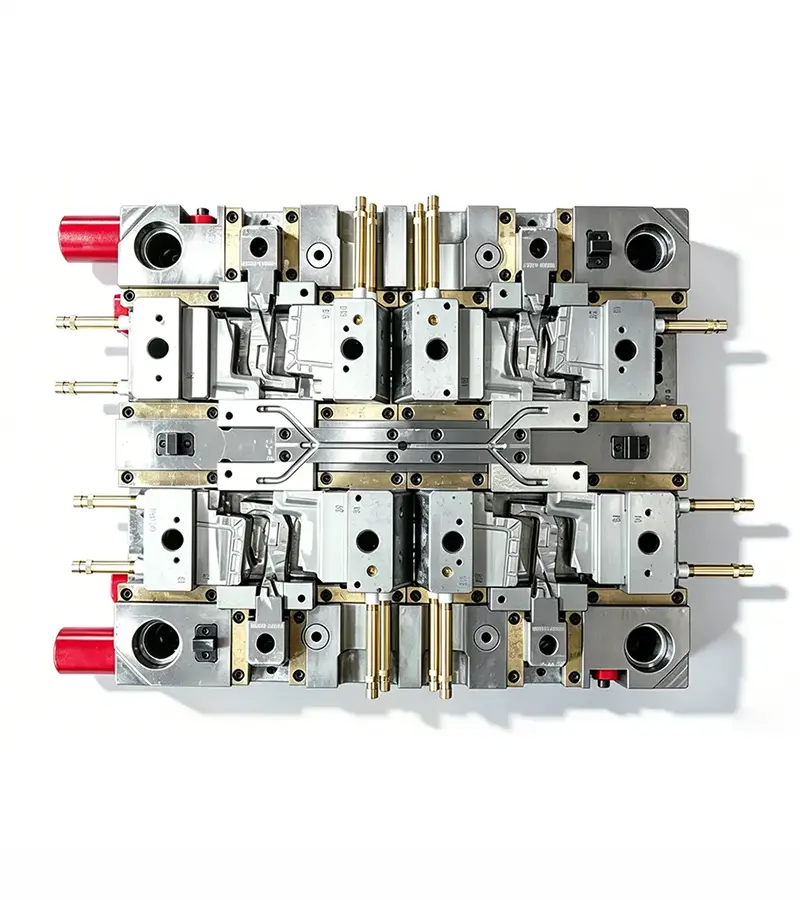
Stampo a più cavità
Offers high-cavity precision mass production, especially for the large-scale production of small automotive electronic components.
- sensors
- connectors
Stampo a canale caldo
Recommended for larger automotive exterior parts to get a scrap-free and efficient production plan.
- paraurti
- door panels
Two Shot Mold
Meets the appearance and functional needs of multi-material or multi-color for automotive interior parts
- buttons
- decorative trims
Over Mold
Provides reliable soft-hard rubber overmolding solutions for parts that need sealing or a comfortable touch.
- steering wheels
- sealing strips
Stampo per inserti
Enables precise integration of metal and plastic in automotive powertrain or electronic units.
- wire harness connectors
- sensor housings
Automotive Molds We Made
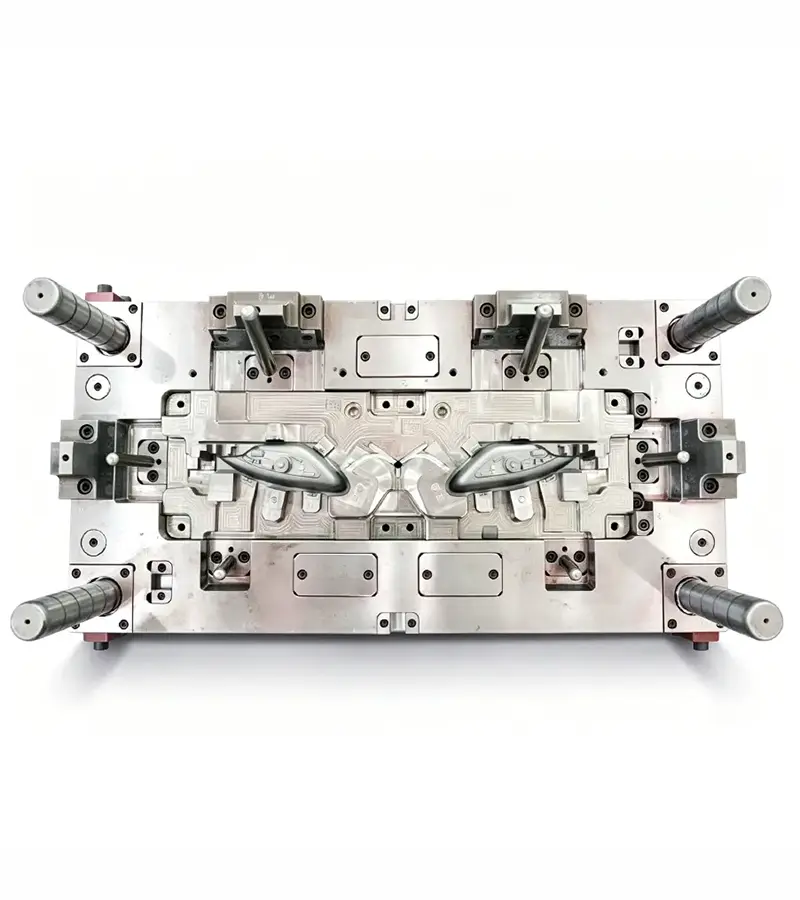
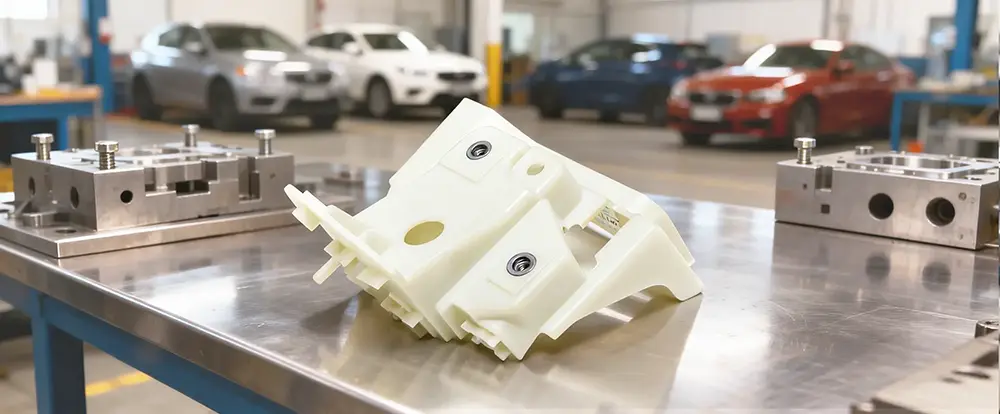
Automotive Emblem Mold
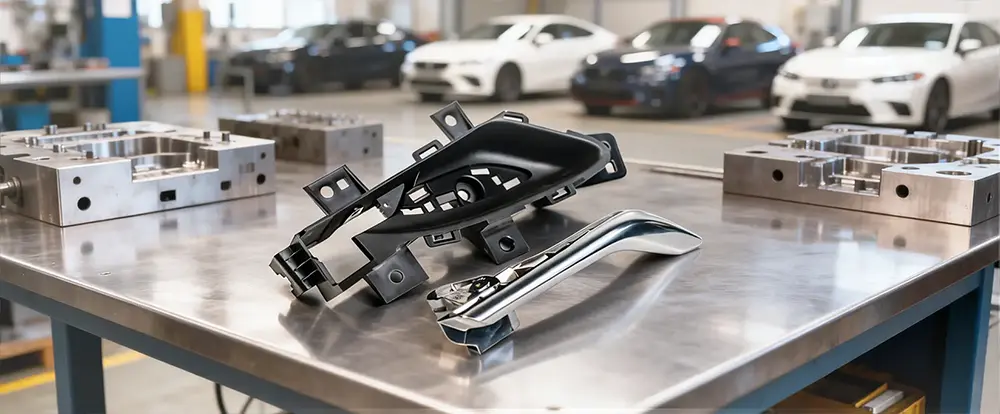
Door Armrest Mold
First Mold started with rapid tooling and expanded into making production molds a decade ago. Today, we have stood out in the highly competitive field of automotive molds, becoming a reliable high-quality component supplier working with automotive clients.
What makes a good automotive injection mold?
Design-Led Engineering
Design decides the mold’s “inherent design essence”, while machining affects how well this “inherent essence” is achieved. Our engineering team leads in doing in-depth DFM and structural optimization, using a group of high-precision equipment like 5-axis machining centers and EDM machines.
Accountability Management
Experience-Based Databases
From hundreds of automotive mold projects, we have met and fixed all kinds of technical defects. We have slowly built up a unique “defect database” and “solution library”. We actively use these in design and machining to avoid all sorts of possible problems.
Verified Resource Network
We have set up stable cooperation with top material suppliers, surface treatment partners, and famous hot runner system brands. We ensure reliable materials and spraying processes, trying our best to meet customers’ needs for one-stop services.
Automotive Mold Life Standards
| Project Phase & Business Goal | Mold Life Design Standard | Typical Automotive Application |
|---|---|---|
| Concept Validation & Design Iteration | 10,000 – 50,000 cycles | Parts for concept cars, design review prototypes, supporting rapid design changes. |
| Engineering Validation & Testing (DVP) | 50.000 - 200.000 cicli | Parts for durability, crash, environmental (thermal, corrosion) testing. |
| Pre-Production & Tooling Verification | 200,000 – 500,000 cycles | Off-Tool Samples (OTS), line integration trials, low-volume pilot builds. |
| Mid-Volume Production Program | 500,000 – 1 million cycles | Mid-cycle refresh components, specific parts for electric vehicles. |
| Full-Lifecycle High-Volume Production | 1 million+ cycles | High-wear interior components, key exterior body panels for platform vehicles. |
Note on Industry Standards: The above life cycles are engineered based on project requirements. For detailed information, please refer to our dedicated guide: Understanding SPI Mold Standards.
How Do We Extend Their Service Life?
We create and carry out specific steps to make your mold last longer, no matter what its its design cycle target is. To protect the money you spent on your tooling, we focus on preventing problems and making your molds last.
Error Prevention in the Mold Design Phase
Mold Post-Processing
Regular Mold Maintenance
o
1 month
50000 cycles
o
3 months
Check the cavity size tolerance with a coordinate measuring machine; grind and repair guide pillars and guide bushes if the clearance is too large; re-perform nitriding treatment if the surface hardness decreases.
100000 cycles
o
6 months
Fully disassemble the mold, inspect the mold base, cavity and core for fatigue cracks; replace aging seals (e.g. O-rings); carry out overall anti-rust treatment on the mold.
Mold Surface & Texture
Texturing Process (Etching/Engraving)
▼Texturing Process
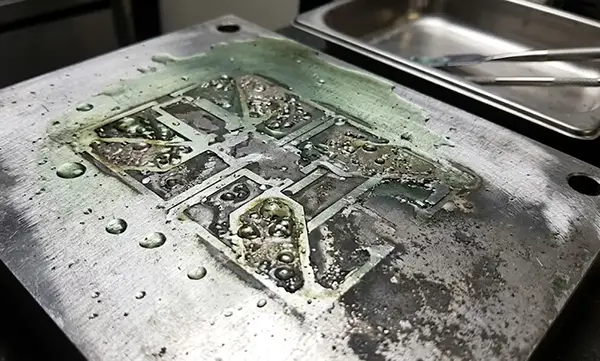
Chemical etching to create textures
Mold After Texturing
Mold with specified textures
Final Automotive Part
Automotive components with matching textures
Most interior parts use texturing. Components like dashboards, door panels, and center consoles get better texture, less plastic look, no glare, and hidden parting lines. We have a standard texture library and custom texture development that fits your design needs, helping you get unique brand recognition.
Precision Polishing (Mirror Finish)
▼Polishing Process
Mechanical mirror finish grinding
Polished Mold
Mold surface with mirror finish
Final Automotive Part
High-gloss vehicle part
Precision polishing is needed for high-gloss exterior parts (grilles, trim strips) and transparent optical parts (lamp covers, lenses). We always achieve various polish grades from matte (VDI 18) to super mirror finish (SPI A1). Our polished automotive parts have no flow marks , and meet the strictest appearance standards.
Performance Coating (Wear & Corrosion Resistance)
▼Coating Process
DLC coating deposition
Coated Mold
Mold with protective coating
Final Automotive Parts
No special visual effect
By putting an ultra-thin special material (e.g., titanium nitride, diamond-like carbon DLC) on the mold surface, it can stop parts sticking. We can make wear resistance stronger (good for glass fiber reinforced materials), and increase thermal conductivity.
Your Auto Mold Project Workflow
If you pick a rapid prototype mold or a high-volume production tool, you go through the same six organized stages. The difference is in how much engineering and validation there is at every step and delivery time.
| Passo | Our Shared Actions | Automotive Rapid Tooling | Automotive Production Tooling |
|---|---|---|---|
| 1. Upload 3D Files | You upload stp files; we make initial review. | Fast feedback on design for prototyping. | In-depth review for optimal manufacturability and cost. |
| 2. Design & Engineer | We create mold designs; you review and approve. | Simple, efficient design focused on fast production | Full simulation and lifecycle design. |
| 3. Build & Machine | We manufacture; you receive progress updates. | Strategic methods to minimize lead time. | High-tolerance machining and surface hardening. |
| 4. Sample & Test | We conduct T1 trial; you evaluate parts. | Form & Fit: Verifying design, assembly, and basic function. | Performance & Data: Comprehensive testing and PPAP documentation for approval. |
| 5. Refine & Approve | We adjust; you give final approval. | Quick Turnaround: Implementing essential modifications swiftly. | Process Lockdown: Finalizing all parameters and delivering full PPAP package. |
| 6. Deliver & Support | We deliver the mold and provide support. | Smooth Handoff: Providing essential documentation and startup guidance. | Launch Partnership: Full documentation, spares, and ongoing production support. |
FAQ for Auto Molds Making
Cos'altro devo fornire oltre ai file 3D per valutare la soluzione di stampo a iniezione per autoveicoli?
Quali sono i principali fattori che influenzano il prezzo totale di un set di stampi a iniezione per autoveicoli?
Il preventivo per gli stampi a iniezione per auto copre in genere: spese di progettazione dello stampo (non più di 5%), costi dei materiali (35%-45%), spese di lavorazione e produzione (35%-45%), spese di collaudo e modifica dello stampo (non più di 5%), oltre a spese di gestione e profitto (10%-15%). I nostri preventivi sono chiari e validi, senza costi nascosti. Eventuali costi aggiuntivi si applicano solo in caso di modifiche al contratto (ad esempio, modifiche dell'ECN da parte vostra) e devono essere confermati per iscritto in anticipo.
Quali costi sono principalmente inclusi nel preventivo per gli stampi per autoveicoli? Ci sono costi nascosti?
Chi è di solito il proprietario dei disegni di progetto e dei diritti di proprietà intellettuale (DPI) di questi stampi?
Come controllare e garantire l'accuratezza della lavorazione dei componenti centrali dello stampo?
Before machining: we do pre-treatment on the mold materials, run DFM analysis on your 3D files, and get high-precision equipment ready for production.
During machining: core components use a step-by-step process of rough machining → semi-finishing → finish machining → precision finishing.
After machining: our company has high-precision testing tools like CMM (Coordinate Measuring Machine), 2D image measuring instrument, laser scanning detector, and height gauge to check the dimensions of key parts like mold cores and inserts.
Se per prima cosa realizziamo uno stampo per prototipi rapidi per testare i nuovi componenti di un'auto, è possibile passare successivamente a uno stampo per la produzione a ciclo completo?
This is a pretty special situation. Normally, it isn’t possible. Because rapid vehicle molds usually use simplified designs to cut costs and save time—their basic structure can’t stand up to the stress of long-term mass production. In such cases, making a new production mold is the go-to choice for most projects.
But if you talk this through fully with us at the start of the project, we may leave room for reinforced structures and use upgradeable steel during the initial mold design. In this case, the rapid car mold might be upgraded to a production mold. Still, in most cases, our answer to this question will be no.
Come viene calcolato scientificamente il lead time degli stampi per autoveicoli? Cosa succede se la consegna è in ritardo?
Lead time is figured out based on a scientific evaluation of mold complexity and clearly written into the contract. The main factors are: design hours, procurement time for long-lead materials (e.g., special steel), processing and assembly hours, and a buffer period for mold testing.
If the delay is on our side, we will let you know right away, start a catch-up plan, and may take on corresponding responsibilities as stated in the contract. If the delay comes from your changes (ECN) or slow approvals, the lead time will be pushed back—and we will update the plan promptly and keep you in the loop with full transparency.
Quali sono gli standard di accettazione per gli stampi per auto? Qual è la procedura da seguire se non vengono accettati?
Acceptance standards are mainly based on the Mold Technical Agreement and Sample Approval Form signed by both sides. If your company hasn’t set up its own mold acceptance standards, you can refer to our article “Guida agli standard di accettazione degli stampi a iniezione“.
If our automotive mold fails testing multiple times, how to define responsibilities and costs?
The key to dividing responsibilities is Root Cause Analysis (RCA):
Our responsibility: If failure is caused by mold design flaws, machining mistakes, or material problems, we will cover all the costs and hours needed for fixes.