

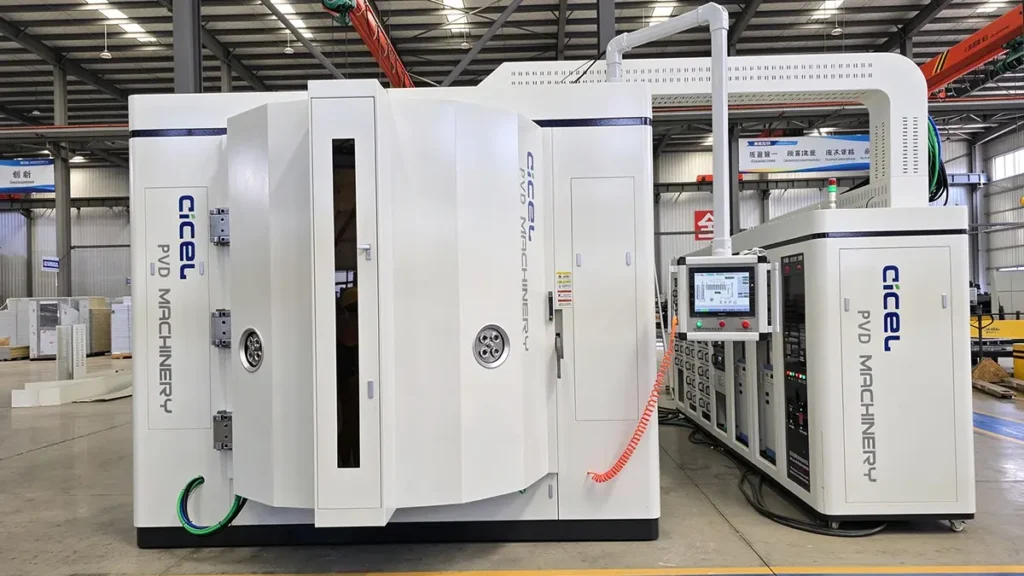
Coating is an important aspect of manufacturing finishing. It protects against damage, corrosion, and wear. Through coating, a material can achieve a better appearance, improved performance, easier cleaning, reduced environmental impacts, energy savings, and added functionality. Among the many methods used to achieve these coating enhancements, Physical Vapor Deposition (PVD) coating is one of the preferred methods for some manufacturers. It is a variety of thin-film deposition techniques in which a solid material is vaporized in a vacuum environment and deposited on substrates as a pure material or alloy coating. During PVD coating, a metal or other solid material is vaporized by physical means and then deposited onto the substrate material. This contrasts with chemical vapor deposition (CVD), where precursors are vaporized by heat.
Brief Description of PVD
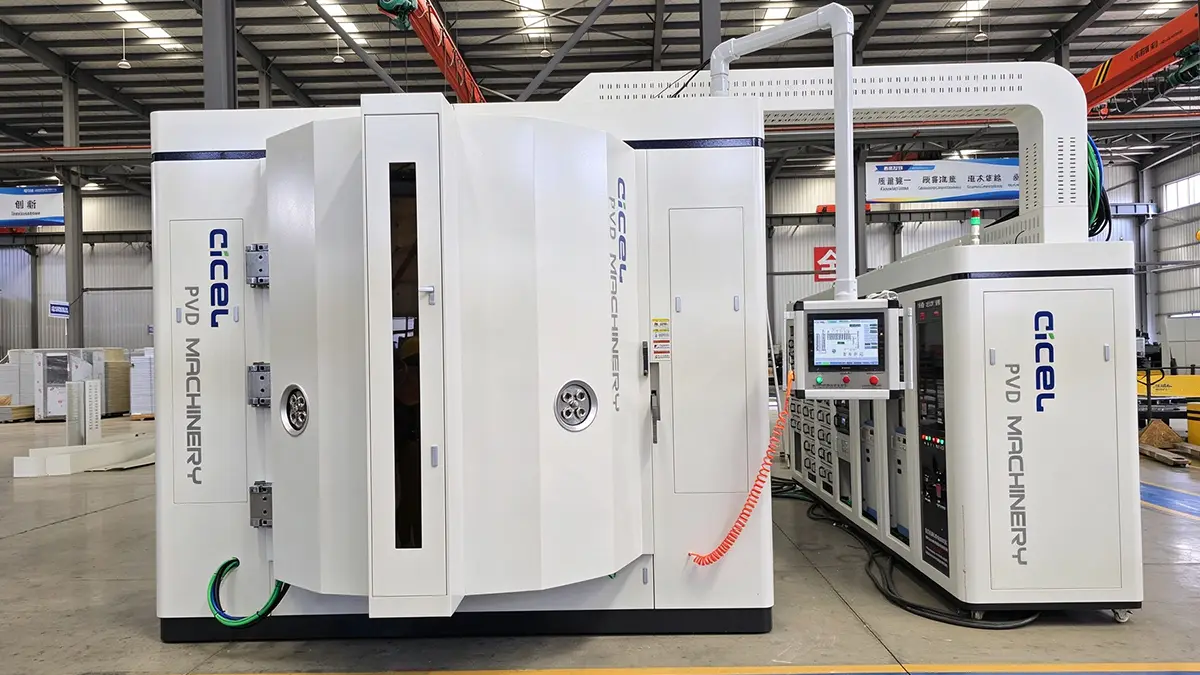
PVD encompasses several high-vacuum thin-film technologies, with sputtering and cathodic arc vaporization being the most prominent. In these processes, the chamber is evacuated and then backfilled with a low-pressure inert gas, commonly argon. The solid coating material (target) is vaporized—either by energized ion bombardment (sputtering) or by a high-current electrical arc (cathodic arc). The vaporized atoms then travel through the vacuum and deposit onto the substrate (your part). This low-temperature atomic deposition differentiates PVD from high-heat thermal evaporation, making it a preferable technique for parts that cannot withstand extreme temperatures.
What is the PVD Coating Process?
PVD coating is a multi-stage process that starts with surface preparation. The process can be grouped into four stages.
Stage 1: Surface Preparation
Proper surface preparation significantly affects final product quality. A perfect coating demands a perfect surface. The surface should be flawlessly cleaned to avoid premature failure. Surface preparation removes contaminants such as residual cooling oils, tiny dust particles, or fingerprints. These contaminants create weak points, preventing the coating from forming a critical molecular bond.
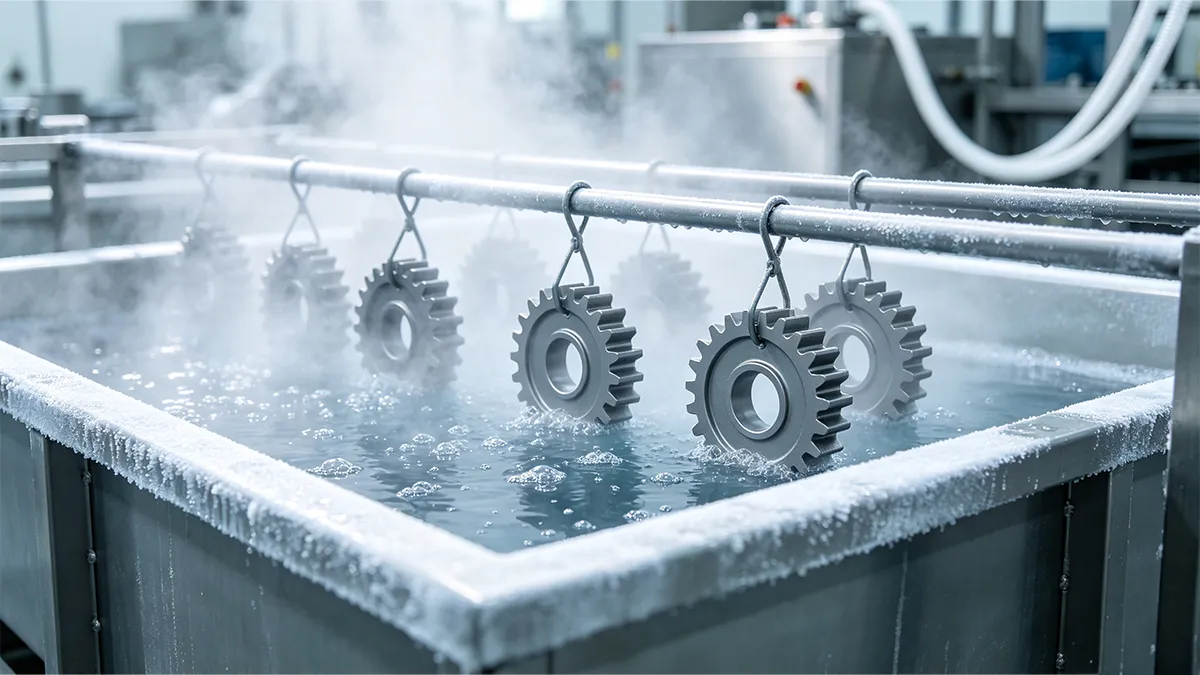
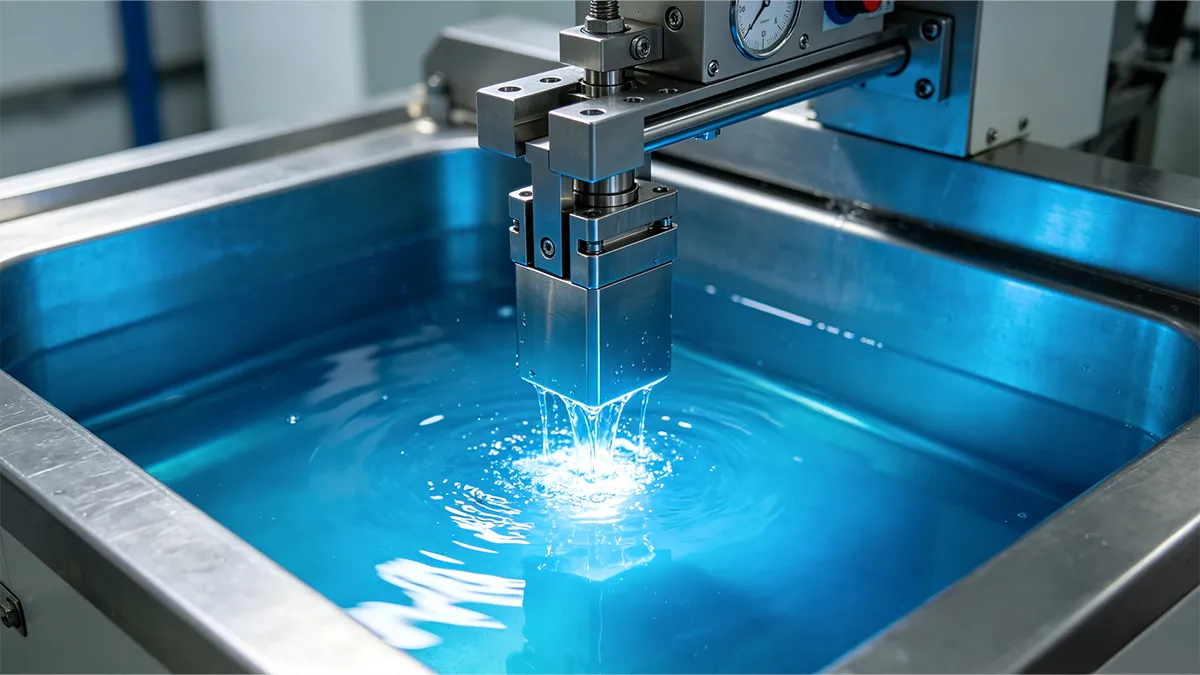
We use a triple-check approach for surface cleaning. First, every item is visually inspected for gross contamination or physical damage before any washing begins. An oversight in this inspection can allow contaminants to be deposited with the materials, leading to errors. After inspection, the parts are cleaned. Manufacturers prefer ultrasonic cleaning tanks to guarantee effective cleaning. These chambers use high-frequency sound waves to create minute scrubbing bubbles throughout the solution. Ultrasonic cleaning shakes off contaminants, reaching into the smallest pores and deepest channels that cannot be cleaned manually.
After cleaning, pure water removes the cleaning agents. Cleaning is repeated multiple times to ensure no chemical residue remains, aligning with federal effluent guidelines to reduce hazardous discharges in metal finishing operations [1]. The parts are then carefully dried in a controlled, heated environment to prevent any trace of moisture. Final inspection then follows. This confirms the parts meet the demanding standard of molecular cleanliness. This rigorous approach is the single biggest predictor of long-term coating success.
Stage 2: Fixturing and Achieving Deep Vacuum
After surface preparation, the next step is preparing the environment for the atomic-level transformation. Fixturing requires expertise to ensure all angles are well set. Components must be mounted on custom fixtures, not just tossed in; fixturing ensures that the coating source has a clear line of sight to all critical surfaces. This is essential to achieving consistent thickness and uniform coverage across every part in the batch.
After fixturing, the chamber is sealed, and the pumping process begins. In this process, powerful vacuum pumps remove nearly all the atmospheric air, driving the pressure down to a high vacuum. Deep vacuum serves a purpose. If air molecules remained, they would collide with the coating atoms during deposition, causing them to bounce away. High vacuum ensures the coating atoms travel cleanly from the source to your component, resulting in a purer, denser, and stronger film.
The next step in this phase is thermal preparation. The components are pre-heated to a specific temperature. This thermal preparation helps the coating atoms bond effectively upon impact.
Stage 3: Physical Vapor Deposition
This is the coating process where molecular armor is built. Inside the controlled vacuum, the solid coating material (the target) is turned into a plasma cloud. This sequential process involves three key steps.
Cathodic Arc Vaporization. An extremely high electrical current is passed through the target material. This creates a powerful electrical arc that instantly vaporizes the solid material, releasing a cloud of highly energetic, charged particles (plasma). This method is exceptional for producing the densest and hardest coatings, such as those required for high-stress applications like Cutting Tools.
The Critical Reaction: At this point, a reactive gas, such as Nitrogen or carbon, is strategically introduced into the chamber. This gas immediately bonds with the metal vapor ions in the plasma.
The Bond: A controlled electrical bias (a negative charge) is applied to the components being coated. Because the plasma atoms are positively charged, this bias dramatically pulls them towards the surface. They don’t just float down; they are accelerated and forced to bond, ensuring phenomenal adhesion at the atomic level. The required thickness is typically between 1 and 5 microns.
Stage 4: Cooling, Quality Assurance, and Release
After the coating is sufficiently supplied, the chamber temperature is gradually and carefully reduced. This controlled cooling cycle is vital. Rapid cooling could introduce thermal stresses or micro-cracks in the newly formed coating layer, completely compromising its effectiveness. Once safely cooled, the parts are removed from the fixtures. Rigorous quality control then follows, involving adhesion testing, thickness verification, and visual and performance inspection.
What are different types of PVD Coatings?
Different PVD coatings have distinct strengths and limitations.
Titanium Nitride (TiN)
This is probably the most recognizable PVD coating, mostly because of its gold color. It provides high hardness and noticeably improves wear resistance on many substrates. It is commonly used on cutting tools, molds, medical instruments, and decorative hardware. For medical devices, TiN’s robust structure withstands the repeated, aggressive thermal cycling required by federal healthcare steam sterilization protocols [2]. In these applications, TiN coating offers durability and aesthetic functions. Its main limitation appears at higher cutting temperatures, where more advanced coatings like AlTiN or TiAlN hold up better over time.
Titanium Carbonitride (TiCN)
This coating builds on TiN by adding carbon into the structure. The result is higher hardness and lower friction, which makes it useful in abrasive machining conditions. TiCN is commonly applied to tool inserts, stamping tools, and wear components where abrasion is aggressive. The tradeoff is that TiCN can be more brittle depending on coating design and thickness, so you must consider impact loading carefully.
Titanium Aluminum Nitride (TiAlN/AlTiN)
TiAlN and AlTiN coatings are designed for high-temperature environments, especially in dry or high-speed machining. At elevated temperatures, these coatings form a protective aluminum oxide layer that improves oxidation resistance.
Chromium Nitride (CrN)
Chromium nitride is often selected when corrosion resistance matters just as much as wear resistance. Compared to TiN, it generally offers better oxidation resistance and lower friction in many environments. CrN is widely used on automotive components, mechanical parts, tooling, and some medical devices. It is a strong option for parts exposed to moisture, mild chemicals, or repeated temperature changes.
The following table compares different types of PVD coatings applicable in industrial setups.
| Rivestimento | Aspetto tipico | Typical hardness | Typical application characteristics |
|---|---|---|---|
| TiN | Oro | ~2,500–2,800 HV | Wear resistance, general tooling |
| TiCN | Red-brown / blue-grey | ~2,800–3,500 HV | Higher hardness and wear resistance |
| CrN | Silver/grey | ~2,000–2,300 HV | Corrosion resistance, plastic processing |
| AlTiN | Dark grey/anthracite | ~3,200–3,300 HV | High-temperature and wear applications |
| DLC | Black/anthracite | ~1,500–2,500 HV | Low friction and sliding wear |
| ZrN | Pale gold | ~2,000–2,500 HV | Wear resistance and decorative applications |
What is the Role of PVD Coating in Injection-Molding Manufacturing?
Enhancing Mold Surface Hardness
Materials comprising PVD coatings such as TiN, CrN, and TiAlN exhibit extremely high hardness. This feature significantly improves mold wear resistance and extends lifespan.
Preventing Mold Surface Corrosion
Certain plastics release corrosive gases (such as chlorine and fluorine) during injection molding. PVD coatings form a dense protective layer on the mold surface, preventing corrosion.
Reducing Friction and Wear
The smooth surface and low friction coefficient of PVD coatings reduce wear from sliding and contact during injection molding, improving production efficiency.
High-Temperature Resistance
PVD coatings exhibit excellent high-temperature resistance and maintain stable performance even in high-temperature injection molding environments. This makes them suitable for processing high-melting-point plastic materials.
Improving Demolding Performance
PVD coatings’ low adhesion and high-temperature resistance minimize plastic sticking to the mold surface, improving demolding performance.
Sintesi
Physical Vapor Deposition (PVD) is a highly effective surface finishing technology that enhances component durability, performance, and lifespan. By understanding the deposition process and specific material characteristics (such as TiN or CrN), manufacturers can easily select the ideal coating for their needs. Ultimately, integrating the right PVD coatings into demanding applications—like injection molding—ensures reduced wear, increased efficiency, and consistent part quality.
Riferimento
[1] U.S. Environmental Protection Agency (EPA). (n.d.). Metal Finishing Effluent Guidelines (40 CFR Part 433). EPA Industrial Effluent Guidelines. Retrieved from https://www.epa.gov/eg/metal-finishing-effluent-guidelines.
[2] Centers for Disease Control and Prevention (CDC). (2008). Steam Sterilization | Disinfection & Sterilization Guidelines. National Center for Emerging and Zoonotic Infectious Diseases (NCEZID). Retrieved from https://www.cdc.gov/infectioncontrol/guidelines/disinfection/sterilization/steam.html




 IT
IT  EN
EN  ES
ES  FR
FR  DE
DE  PT
PT  NL
NL  PL
PL  AR
AR  JA
JA  KO
KO  ZH
ZH