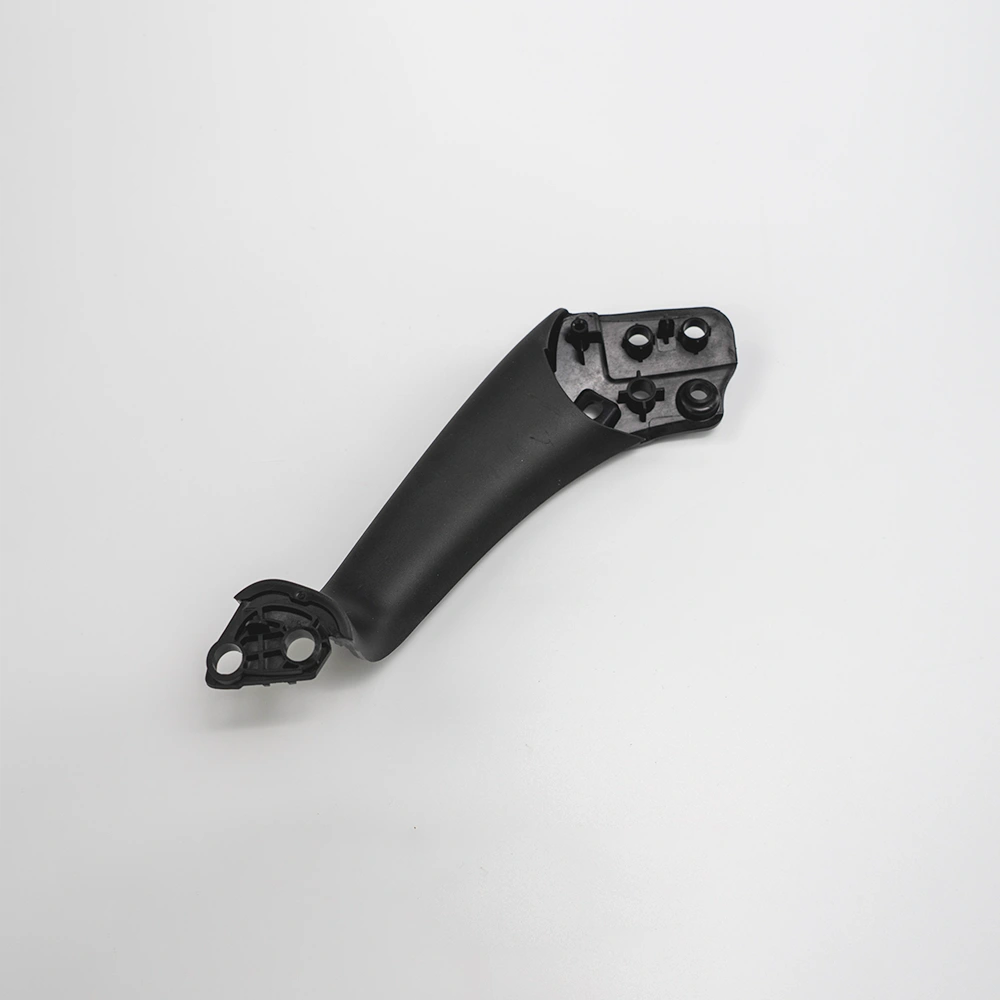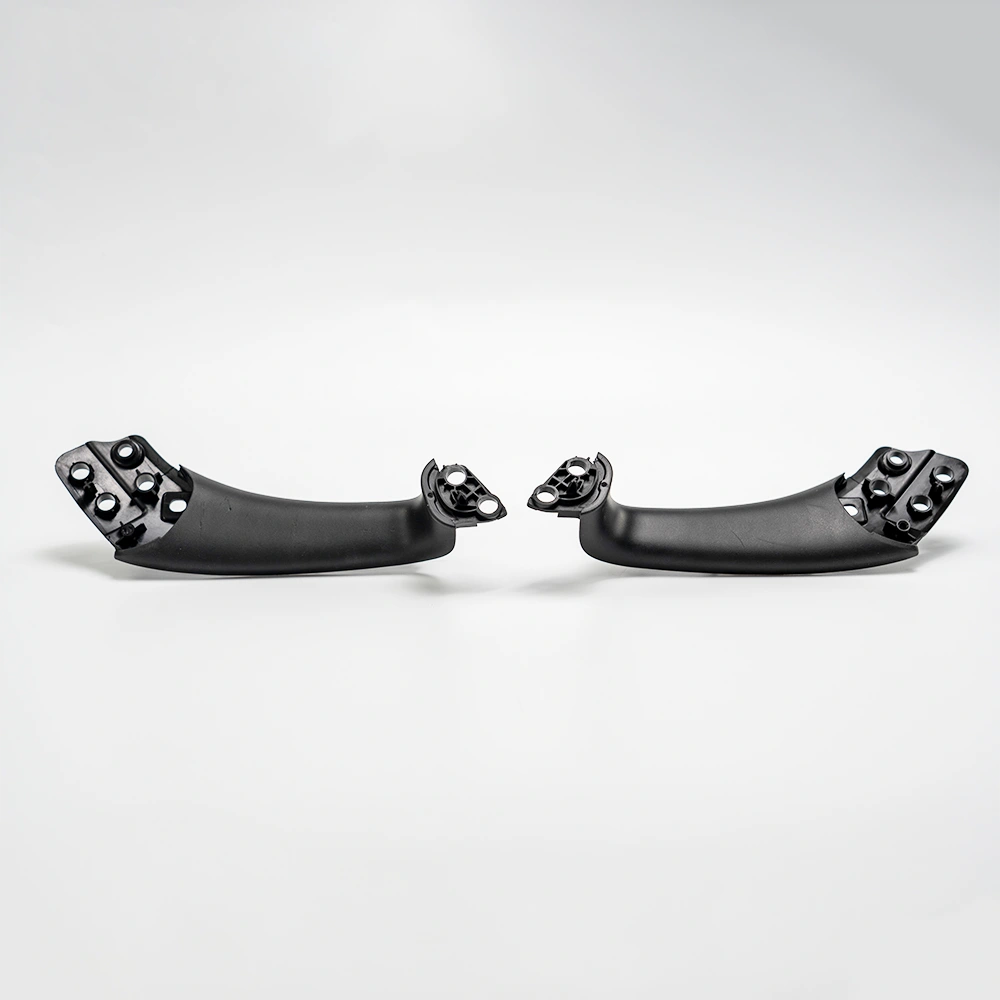
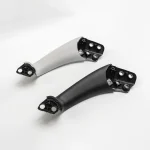
2색 사출 성형 공정을 통한 자동차 내장 도어 핸들 제조

참고:

저희는 모든 고객과 시장 출시 전 기밀 유지 계약을 맺고 있습니다. 귀하가 보는 모든 사례는 고객과 소통한 것입니다. 일부 민감한 정보는 모자이크 처리했습니다. 모든 사진은 퍼스트몰드 내부에서 촬영한 사진으로, 고객 여러분의 성원과 협조에 감사드립니다.

Automotive door handles play both functional and aesthetic roles, which present a unique challenge to any manufacturer. During the molding process, the maker is not only focused on achieving the dimensional accuracy but also on delivering the desired flawless surface finish.

Automotive interior door handle manufacturers need to be extra careful to deal with issues like weld lines, pores, and cold material marks. These faults can affect the part’s mechanical strength and appearance.

Another important part of interior door handle manufacturing is material selection. The choice of material will affect the molding process, functionality, and surface finish. For example, Polyamide has great mechanical strength but poor electroplating properties and is highly moisture absorbent. Therefore, it may need to be blended with other materials to achieve the desired surface finish and strength.

In terms of functionality, automotive door handles must be molded to the right precision to seamlessly fit with the door trim panel or housing and work with other internal mechanisms. Additionally, it must withstand repeated use, even in extreme environments like freezing conditions.

다중 언더컷 및 보스 디자인의 자동차 암레스트 구성 요소

Key Considerations for Interior Door Handle Manufacturing

Arguably, the most important considerations every manufacturer must prioritize during door handle injection molding are safety and regulatory compliance. The design must make it possible for a quick and easy emergency exit as well as comply with strict safety standards. Other key considerations when designing or molding a car interior handle include:

  • Design must avoid sharp edges and be made comfortable for diverse users
  • Selected material should be flame-retardant, lightweight, and possess the desired surface finish properties
  • High-volume production may require high-pressure injection molding, which requires precision mold design
  • Secondary finishing may include powder coating, electroplating, or polishing to meet the brand’s interior quality standards.
  • Sustainability and meeting environmental regulations, especially for EV door handle production, should be at the center of the design philosophy.

Client Requirement

The client approached First Mold for the production of automotive interior door handle housings with a detailed blueprint that specified the appearance and functionality requirements. The door handle had a unique shape and precision that must be met so that it will sit firmly in the housing and work with all the other mechanisms.

Prior to contacting First Mold, the client had partnered with another factory where they experienced several shortfalls in their key appearance requirements, including several appearance defects. According to the client, the dealbreaker was the unresponsive communication from the mold maker.

The inability of the previous mold maker to meet the automotive door handle appearance and efficiency, the constant need to adjust the machine, which led to prolonged downtime, and the lack of proper communication led to the abrupt termination of the partnership. This left the client desperate for a dependable supplier that would fill the void.

Concerns and Challenges

The client’s primary concerns included the ability of First Mold to meet the desired product appearance (particularly freedom from molding defects) and product efficiency. Also, they wanted to avoid the challenging experience of having to frequently adjust the machine, which disrupted output.

To avoid a repeat of their previous experience, the client’s representative requested a physical tour of First Mold’s factory and facilities to ascertain the company’s production capability and expertise. Upon completion of the assessment, the representative gave overwhelmingly positive remarks and proceeded to discussions on project specifics.

First Mold’s preliminary diagnosis after receiving problematic samples and drawings from the previous supplier revealed the following:

  • CMM measurement revealed that the roundness of the mounting holes exceeded the desired tolerance by 0.03mm.
  • Disassembly of a warped part confirmed insufficient mold alignment precision (>0.02mm).
  • Inspection of flow marks on the soft material identified an unreasonable gate design.

솔루션

After thoroughly considering the three issues identified from the preliminary diagnosis of the failed automotive interior door handles, First Mold proposed three solutions to address the problems and exceed the client’s expectations. The client was constantly in touch with First Mold’s customer service team and was carried along every step of the way through the resolution of the issues.

1. Comprehensive Mold Upgrade

First Mold proceeded with the creation of a customized high-precision two-shot mold. The custom mold had dual guide pin positioning and a fan-shaped soft material gate. These modifications reduced the mold rotational alignment precision to within 0.01mm.

The hard material cavity underwent nitriding treatment that tripled its wear resistance. These modifications were necessary to prevent the formation of flash during mass production. First Mold created the customized high-precision two-shot mold for the automotive interior door handle through the steps highlighted below.

  • Designing the custom two-shot mold using in-house CAD software: During this process, First Mold engineers also conducted flow analysis to achieve the 0.01 mm tolerances required by the client.
  • Mold building: The mold was built with two sets of cavities to accommodate the sequential injection. First Mold added technical features, including a sliding system to move the first shot part to the second cavity.
  • 마무리: To achieve the high degree of precision and required surface finish, the mold cavity underwent secondary finishing using CNC machining solution. In this stage, the quality control team also checked the custom automotive two-color injection molding machine for perfect alignment to prevent flash.

2. Process Lock-in

Material processing and the time between injection of the two different materials are extremely important for proper bonding. Injecting the soft material too early risks ruining the integrity of the hard material, while injecting too late leads to improper bonding between the two materials.

For this project, the client’s material of choice was polypropylene (PP) reinforced with 10% Glass Fibers (GF). The blending of PP with 10% GF enhances its rigidity, tensile strength, impact resistance, heat resistance, and dimensional stability, compared to pure PP. Below are the process modifications that First Mold implemented for the best interior door handle manufacturing results.

Material Drying

Through rigorous tests, First Mold implemented enforcement of material drying at 80 °C for three 3 hours. Drying of the plastic resin before injection molding is crucial for preventing the degradation of the polymer. When heated, moisture reacts with plastic and breaks down the polymer chains. Splay, streaks, and bubbles are common defects that come from the presence of moisture in the plastic polymer. This can lead to weak, brittle parts with an unpleasant appearance. Proper drying is vital for the plastic to maintain its mechanical properties, ensure proper stability, and reduce waste from material failure.

Segmented Temperature Control

For the door handle injection molding, First Mold implemented segmented temperature control for thermoplastic polyolefin (TPO) injection (barrel 190 °C and nozzle 200 °C). This technique is important for reducing cycle times, maximizing part quality, and lowering the risk of warpage. Having multiple heating zones ensures good flow characteristics are achieved without degrading the material. This segmented temperature control addresses the fact that different mold areas for automotive door handle parts heat and cool at different rates.

Cooling Period Implementation

First Mold also established an 18-second cooling period for the hard material before the injection of the soft material to ensure micro-bonding fusion at the interface. The residual heat and high pressure of the second injection force the polymer chains of the two materials to fuse together at the interface, creating a strong, integrated bond. This eliminates the need for secondary assembly. Another important advantage of automotive two-color injection molding is that it eliminates the need for the use of bonding agents in assembly, which can increase the weight of the part.

3. Dual Inspection

First Mold implemented a 5000K standard lighting inspection in the interior door handle manufacturing line, with both visual equipment and manual checks for appearance flaws. This strategy indirectly improved efficiency and lowered the chance of missed defects.

The technique refers to the use of a light source with a color temperature of 5000 Kelvin, a type of lighting that mimics natural midday daylight. A 5000K standard lighting is an industry standard for quality control because it provides high clarity, brightness, and accurate color rendering that is needed to detect small defects in plastic parts.

A 5000K lighting environment also promotes alertness among workers. With this implementation, First Mold helped the client to reduce eye strain and fatigue among their workers, a condition that is common with prolonged, detail-oriented inspection tasks. Below are other ways First Mold supported the client with inspection guidelines for automotive door handle injection molding.

  • Batch sampling: First Mold conducted batch sampling for strength tests (using a minimum of 10 pieces), with a requirement of ≥5N/25mm for the soft material before release. The process used an Acceptable Quality Limit (AQL) table to determine a statistically significant sample size and acceptance criteria.

자주 묻는 질문

What is the best material for automotive interior door handle manufacturing?

The choice of material will depend on the properties that the manufacturer needs to achieve, including the surface finish. However, the properties of the material and the design must conform to regulatory requirements.

What is automotive two-color injection molding?

This is a technique that combines two materials or colors into a single part, in this case, the interior door handle of cars. Two-shot molding combines aesthetic and functional components. For example, the door handle will have soft-tough grips that feel more comfortable and a hard outer part that improves durability.

문서 태그
ko_KRKO