


The main components of a hair dryer include a fan (driven by an electric motor), heating elements (mostly nichrome wire), and a protective casing. The greatest challenge often encountered during plastic injection molding for hair dryer is designing the air duct or air inlet.
During hair dryer manufacturing, the engineers must ensure the design strikes a balance between high-speed airflow, noise reduction, thermal management, and weight. If the air duct is poorly designed, it can lead to increased noise, lower performance, and overheating. Below are the important parts of a hair dryer.
- Motor-driven fan: This is a powerful motor that spins the attached fan blades that play the dual role of sucking in cooler air and pushing our heated air to the user’s hair.
- Heating element: It is mostly made using bare, coiled nichrome wire that is wrapped around mica insulators. It uses electricity to heat the air.
- Hair dryer housing or shell: This is the outer, heat-resistant plastic that protects the internal components.
- Buttons or controls: Helps the user to adjust the fan speed and heat intensity to achieve the desired drying level.
- Air inlet or filter: A grill or screen at the back of the hair dryer that prevents debris from entering the device.
- Nozzle or concentrator: This is the front opening that directs airflow to the spots the user wants.
Requisiti del cliente
A foreign-based hair dryer maker walked through the front door of First Mold’s office with a product blueprint. Their goal was to find a mold maker that would help them make a professional haid dryer mold. The manufacturer already had a brand in the market and had collected pieces of feedbacks (using online surveys) from their customers, which they want to implement in the next generation of hair dryers.
The major feedback they received from the users of their first hair dryer generation is that the product sometimes gets too hot that it becomes uncomfortable to hold. The other mostly reported concern was the hot spot. The first generation was not as durable or quiet as most users wished. The only reason the hair dryer manufacturer was able to remain on the market was because of their competitive pricing and the extreme lightweight of their product.
The client wanted plastic injection hair dryer molds that would help them to resolve the issues raised by their customers while keeping the benefits of their first generation of hair dryers. They were willing to make adjustments to their blueprint if the assessment of their ideal hair dryer mold partner demanded.
Sfide e soluzioni
First Mold’s engineers studied the first model of the client’s hair dryers to verify some of the concerns raised by users. The findings of the study were instrumental in finding a solution that will prevent a recurrence. During the investigation, First Mold engineers discovered that the problems reported with the first products were partly related to the material used and partly to the air duct components’ design.
Using Computational Fluid Dynamics (CFD), First Mold was able to simulate and optimize flow paths, ensuring the maximum air velocity of around 23 m/s, while keeping noise below 80 dB. Some of the suggestions from First Mold engineers to solve the problem of overheating and loud noise include adjusting the guide vanes, minimizing sharp corners, and polishing the internal surfaces to prevent vortex formation.
Selezione del materiale
Instead of the Polycarbonate + Acrylonitrile Butadiene Styrene (PC+ABS) blend used in the first-generation hair dryer production, First Mold suggested an improved blend made from Polyamide 66 with 30% Glass Fiber (PA66+30%GF), polypropylene (PP), and polystyrene (PS).
- PA66+30%GF: It has very high strength (up to 180 – 190 MPa), dimensional stability, hardness and rigidity. It also has low thermal expansion compared to PA66 and high heat resistance, with heat deflection temperature often reaching 250 – 260oC. PA66+30%GF has good chemical and wear resistance.
- PP: This is the lightest commercial plastic with a density of approximately 0.90 – 0.91 g/cm³. It has great resistance to organic solvents and can withstand temperatures of up to 160 – 170oC. Unlike polyamides, it has low moisture absorption.
- PS: The most attractive physical property of PS is that it is transparent in its amorphous, unmodified form. However, it has low heat resistance (100oC), moderate chemical resistance and excellent dimensional stability.
The right material blend was necessary to hold in the heat generated by the heating element within the hair dryer and solve the overheating problem reported by most users of the previous hair dryer produced by the client.
Hair Dryer Mold Production
First Mold designed plastic hair dryer case injection mold and a few other molds for the client. Since the case and the other components featured a snap-fit design, it was important to make the tolerance as tight as possible (0.03 mm) for easy assembly without the need for additional glue.
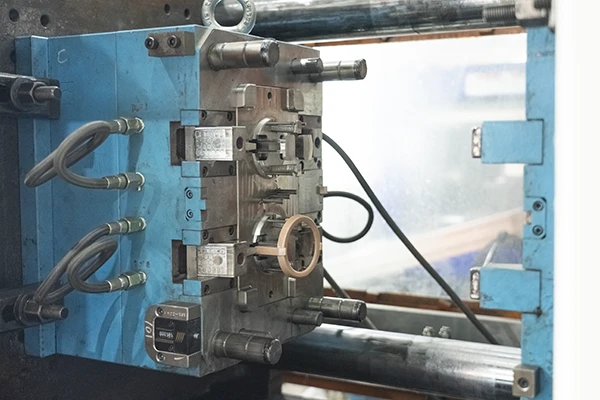
Since the client desired a mold for mass production, First Mold settled for a steel hair dryer mold because it would offer hundreds of thousands of production runs before needing replacement. First Mold engineers created the precision mold with the required tolerance using 5-axis CNC machining technology.
Hair Dryer Air Duct Mold Design
First Mold engineers identified several issues with the air duct and component design of the client’s first generation of hair dryers. The shape of the duct was poorly designed, which caused turbulence and the inlet wasn’t carefully thought through, which increased turbulence.
The curvature of the fan blades also contributed to air turbulence that led to the increased noise in the first generation. Here are the four critical air duct design considerations made by First Mold engineers while manufacturing hair dryer molds for the client.
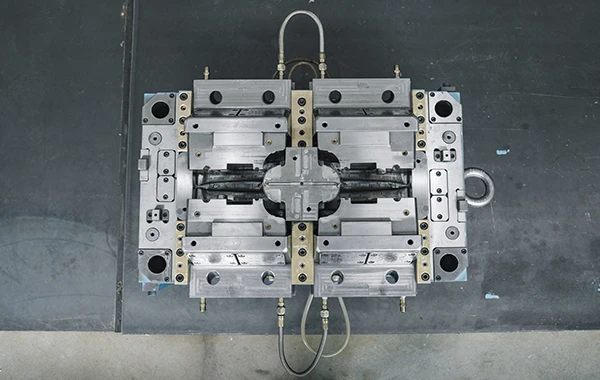
1. Optimizing Internal Geometry for Aerodynamics
The air inlet or duct was designed such that it can transition from high-pressure air at the motor to a high velocity output. Poor duct shape creates turbulence that will reduce efficiency and lead to energy waste.
Sharp blade turns, and blunt edges will increase air resistance and decrease airflow. When the air duct is too restrictive, it creates back pressure that will force the motor to work harder, which may lead to overheating. Bearing these nuances in mind, First Mold created high-precision molds for the fan blades and air duct design that cut the noise from the first generation by more than a third.
2. Ensuring Thermal Safety and Management
The air duct and other injection-molded hair dryer plastic components were made with a heat-resistant plastic blend as mentioned earlier. This solved the overheating problem experienced in the first generation. With the improved material, the new generation of hair dryers would be comfortable to operate for a longer duration.
Besides the safety concern about the hair dryer, there is also the safety concern for the user. First Mold engineers thought through the design of the air duct so that it properly distributes the heat produced by the heating coil to prevent hotspots that can burn the hair and scalp.
3. Acoustic Engineering for Noise Reduction
White noise is generated when air passes through a narrow channel at high speed. The more powerful the motor, the higher the noise level will likely be. Noise levels above 85 decibels can be a huge turnoff for many customers.
One of the constraints that hair dryer manufacturers must overcome is creating a balance between duct geometry and motor speed. The ducting design must be done in such a way as to avoid resonant, loud airflow. First Mold achieved this balance using simulation software.
4. Design for Compactness and Maintenance
To avoid hand fatigue during use, it was important to manufacture a hand dryer to be lightweight and as compact as possible. For that reason, the duct was designed to fit into a small form factor that houses a variety of components, including heating elements, fan blades, a motor, and negative ion generators, for uninterrupted airflow. First Mold achieved the desired compact, lightweight design using thin walls reinforced with ribs.
Ease of maintenance is another important factor that hair dryer manufacturers must consider because of its impact on durability. The rear air intake and internal ductworks are prone to blockage from lint and hair accumulation. Once the vents are blocked, air flow will be restricted, which forces the motor to work harder. Working with the manufacturer, First Mold created a snap-fit rear with embossed directions on how to take it apart for cleaning.
Cosa ha guadagnato il cliente lavorando con First Mold
Through effective communication and collaboration, the client tapped into the decades of knowledge of First Mold engineers to solve the critical problems that users of their first generation of air dryers complained about. Three of the most important benefits that the client expressed deep satisfaction with include:
- Fast lead time: First Mold delivered molds for injection molding parts of the hair dryer within three weeks. The fast lead time ensured the client was on track with their marketing budget and delivery timelines.
- Leggero: Working with First Mold, the client created a new generation of hair dryers that were more than 100 grams lighter than the previous generation.
- Riduzione dei costi: The client achieved their hair dryer mold manufacturing goal within their budget.
FAQ
A hair dryer uses an electric motor to draw in air into the casing. The heating elements within the casing heat the air and the fan blows the hot air to the hair through the nozzle. The hot air accelerates the evaporation of water from wet hair.
Yes, the shape of the fans will affect efficiency, noise, and overall drying performance. The best fan design for optimal airflow is usually achieved using Computational Fluid Dynamics.



 IT
IT  EN
EN  ES
ES  FR
FR  DE
DE  PT
PT  NL
NL  PL
PL  AR
AR  JA
JA  KO
KO  ZH
ZH